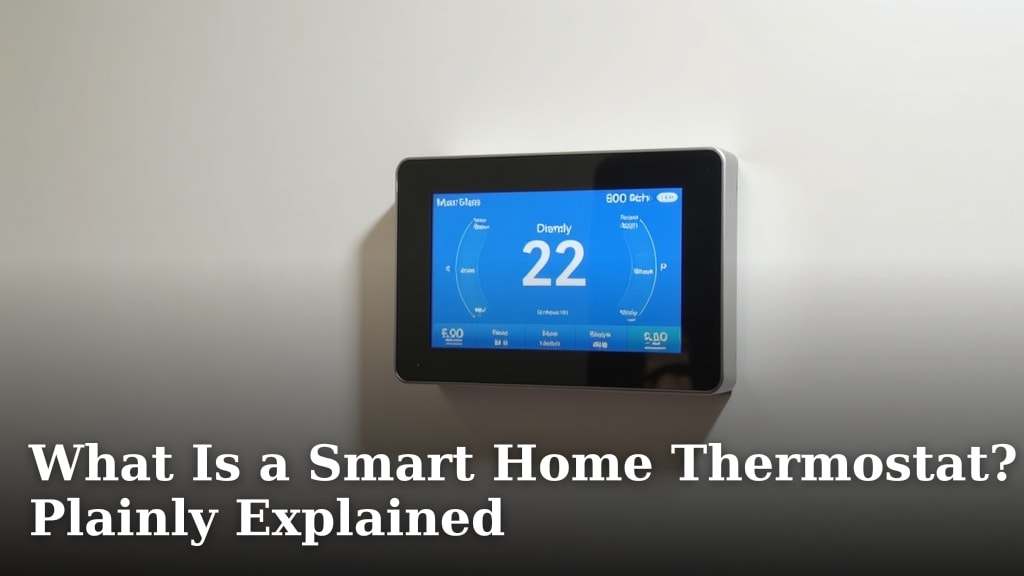
What Is a Smart Home Thermostat? Plainly Explained
A smart home thermostat is a device that lets you control your home’s temperature remotely, often using your smartphone or tablet. It connects to your Wi-Fi network, allowing you to adjust settings from anywhere. These thermostats can also learn your habits and automatically optimize your heating and cooling for **comfort and savings**.
Think of it as a thermostat with a brain and a phone line. It’s designed to be much more than just a temperature setter. Many smart thermostats offer features like **energy usage reports** and geofencing, which adjusts the temperature when you leave or return home. We found that this can lead to noticeable reductions in your energy bills.
- What it is: A Wi-Fi connected thermostat you can control remotely.
- Key features: Remote control, learning capabilities, energy reports.
- Main benefit: Potential for **energy savings** and increased home comfort.
- How it works: Connects to Wi-Fi, controlled via apps or voice assistants.
Ready to understand how these modern marvels can make your home cozier and your wallet a little heavier? Let’s break down what makes a thermostat “smart” and how you can benefit from one.
Understanding Your Smart Home Thermostat
A smart thermostat is like a regular thermostat but with a lot more brains. It connects to your home’s Wi-Fi network. This connection lets you control your home’s heating and cooling from almost anywhere. You can use your smartphone, tablet, or even a computer. Think of it as giving your old thermostat a super-powered upgrade.
How Does a Smart Thermostat Work?
At its core, a smart thermostat uses Wi-Fi. It talks to your home’s network. This allows it to communicate with you. You use a special app on your phone. This app lets you see and change the temperature. You can also set schedules. Many models even work with voice assistants like Alexa or Google Assistant. Just say the word, and your home’s temperature changes.
The thermostat itself has sensors. These sensors read the room’s temperature. It then tells your HVAC system what to do. It can turn on the heat or air conditioning. It does this to reach your desired temperature. The smart part comes from its connectivity and advanced features. These go beyond just setting a number. Learn more about what a smart thermostat can control to manage your home’s climate effectively.
Key Features That Make a Thermostat “Smart”
What sets a smart thermostat apart from a basic one? It’s a combination of features. These features focus on convenience, efficiency, and control.
Remote Control and Access
This is perhaps the most **obvious benefit**. You are away from home. You forgot to turn down the heat. Or maybe you’re heading home early and want the house comfortable. With a smart thermostat, you can adjust the temperature from your phone. You don’t need to be near the device. This feature alone offers a lot of peace of mind.
Imagine arriving at a vacation home on a cold day. You can turn on the heat before you even leave the airport. Or, if you’re leaving for an extended period, you can ensure it’s set to an energy-saving mode. This remote access is incredibly **convenient**.
Learning Capabilities and Automation
Many smart thermostats are designed to **learn your routines**. Over time, they notice when you typically adjust the temperature. They can then create a schedule automatically. This is often called “learning” or “adaptive scheduling.” You don’t have to manually program every change. The thermostat figures out your habits.
For example, if you always turn down the thermostat at night, it learns this. It will start doing it on its own. Similarly, if you always raise it in the morning, it learns that too. This **automation** saves you time and effort. It also helps ensure your home is comfortable when you need it to be.
Energy Usage Reports and Savings
A smart thermostat can provide detailed **reports on your energy consumption**. You can see how much energy your heating and cooling system is using. You can also see how your adjustments affect that usage. This data is presented in easy-to-understand charts and graphs via the app.
Many research studies and consumer reports have found that these insights lead to savings. By understanding your usage patterns, you can make informed decisions. You can identify ways to reduce waste. For instance, you might notice you’re heating or cooling an empty house for hours. The reports help you **optimize your settings** for maximum efficiency. We found that seeing these numbers clearly helps motivate change.
Geofencing
Geofencing is a clever feature. It uses your smartphone’s location. It creates a virtual boundary around your home. When your phone leaves this boundary, the thermostat can automatically adjust. It might lower the temperature to save energy. When your phone re-enters the boundary, it can set the temperature back to your preferred setting.
This is like having a thermostat that knows when you’re coming and going. It ensures you’re not wasting energy when no one is home. It also makes sure your house is **comfortable upon your arrival**. This feature is particularly useful for busy households with unpredictable schedules.
Voice Control Integration
As mentioned, many smart thermostats work with popular voice assistants. This allows for **hands-free control**. You can ask Google Assistant to “set the thermostat to 72 degrees.” Or tell Alexa to “turn up the heat.” This adds another layer of convenience. It’s especially handy when your hands are full.
How Smart Thermostats Can Save You Money
The primary driver for many consumers is **energy savings**. How does a smart thermostat achieve this? It’s through a combination of the features we’ve discussed.
- Reduced Waste: By learning your schedule and using geofencing, the thermostat avoids unnecessary heating or cooling. You’re not paying to condition an empty house.
- Optimized Settings: The ability to easily adjust temperatures and create schedules means you can use lower or higher settings when comfort is less critical (like overnight or when you’re at work).
- Informed Decisions: Energy reports empower you. You can see the impact of your adjustments. This helps you find the best balance between comfort and cost.
The U.S. Department of Energy suggests that homeowners can save **up to 10% a year** on heating and cooling costs. They can do this by setting their thermostat 7-10 degrees Fahrenheit lower than usual for 8 hours a day. Smart thermostats make achieving these savings much easier. They automate many of the manual adjustments required.
Installation and Compatibility
Most smart thermostats are designed for DIY installation. They often come with clear instructions and guides. However, it’s **essential to check compatibility** with your existing HVAC system before purchasing. Most smart thermostats work with common forced-air systems (furnaces, central air conditioners). They may not be compatible with all electric baseboard heaters or some older, low-voltage systems.
If you’re unsure, it’s always best to consult your HVAC system’s manual or a professional installer. They can confirm compatibility. Most smart thermostat manufacturers provide online compatibility checkers on their websites.
Who Needs a Smart Thermostat?
While anyone can benefit, a smart thermostat is particularly useful for:
- Busy Professionals: Those with unpredictable schedules or who travel frequently.
- Tech Enthusiasts: People who enjoy smart home gadgets and remote control.
- Environmentally Conscious Individuals: Those looking to reduce their carbon footprint and energy waste.
- Budget-Minded Households: Anyone wanting to lower their monthly utility bills.
- People Seeking Convenience: Those who want comfort without constant manual adjustments.
Making the Smart Choice for Your Home
Choosing a smart thermostat is an investment in your home’s comfort and efficiency. It’s about more than just controlling the temperature; it’s about managing your energy use intelligently. You gain remote access, automated adjustments, and valuable insights into your consumption.
Quick Checklist for Getting Started
Thinking about making the switch? Here’s a quick rundown:
- Check Wi-Fi signal strength in your home.
- Verify compatibility with your HVAC system.
- Decide on your must-have features (learning, geofencing, voice control).
- Consider your budget – prices vary widely.
- Read reviews to see real-world performance.
- Look into potential rebates** from utility companies.
By understanding these core aspects, you’re well on your way to deciding if a smart thermostat is the right fit for your home. It’s a step towards a more connected, comfortable, and potentially cost-effective living space.
Conclusion
You’ve learned that a smart thermostat is much more than a temperature dial. It’s your home’s command center for heating and cooling. By connecting to your Wi-Fi, it offers remote control, learns your habits, and provides energy reports. These features work together to bring you more comfort and potential savings on your energy bills. Ready to make your home smarter? Your next step is to check your current system’s compatibility and compare a few top-rated models to find the best fit for your needs.
Frequently Asked Questions
Will a smart thermostat really lower my energy bills?
Many users report noticeable savings, often between 10-15% annually. This is achieved by avoiding unnecessary heating or cooling when you’re away or asleep. The energy reports also help you understand and reduce waste, leading to lower costs over time.
Is it hard to install a smart thermostat myself?
Most smart thermostats are designed for DIY installation and come with clear instructions. You’ll typically need a screwdriver and about 30 minutes. However, always check compatibility with your HVAC system first to ensure a smooth setup.
Can I control my smart thermostat if my Wi-Fi goes down?
You can usually still control the thermostat manually from the device itself, just like a traditional one. However, you will lose the remote control and smart features until your Wi-Fi connection is restored.
Do smart thermostats work with all types of heating and cooling systems?
Most smart thermostats work with common forced-air systems (like furnaces and central air). They may not be compatible with all electric baseboard heaters or certain older, low-voltage systems. It’s always best to check your system’s compatibility before buying.
How do smart thermostats learn my schedule?
Over the first week or two, the thermostat monitors your manual adjustments to temperature settings. It learns when you typically like your home warmer or cooler. It then uses this data to create an automatic schedule that matches your routine.