Smart Thermostat vs Regular Thermostat: The Basics
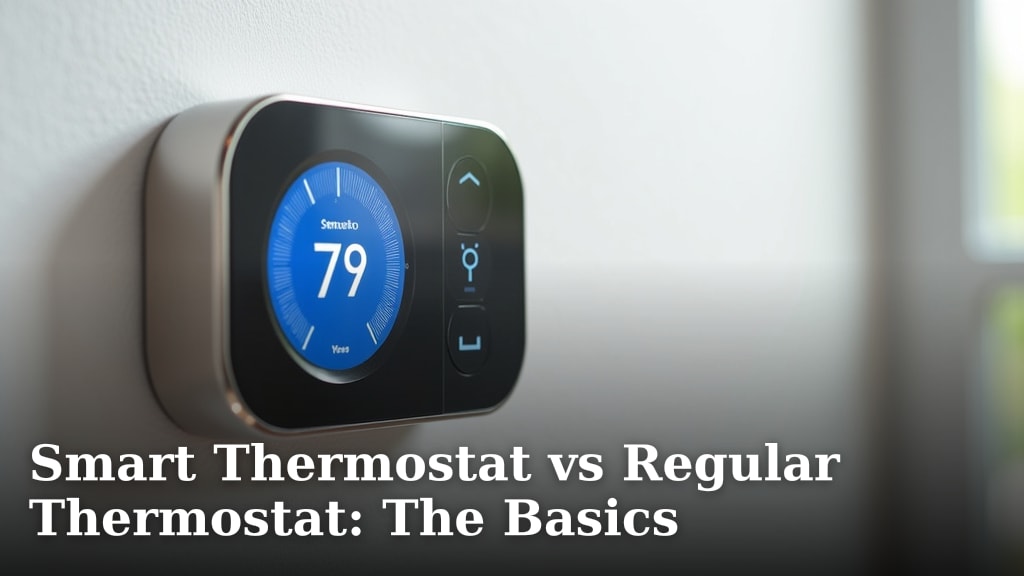
Choosing between a smart thermostat and a regular thermostat often comes down to how much control and convenience you want over your home’s temperature. Smart thermostats offer more features like remote access and learning your preferences, while regular thermostats provide basic temperature control. The main difference is in their capabilities and how they interact with you.
You might be wondering if a smart thermostat is worth the extra cost or if a traditional model still does the job. We found that smart models can help save energy and offer more flexibility, but basic thermostats are still reliable and easier to use for some people. It really depends on your budget and how “smart” you want your home to be.
- Smart thermostats learn your habits.
- Regular thermostats offer simple, manual control.
- Smart models can be controlled with your phone.
- Both types help manage your home’s heating and cooling.
- Consider your budget and tech comfort level.
Let’s dive into the core differences so you can decide which type of thermostat is the best fit for your home.
Understanding Thermostat Differences: Smart vs. Regular
You’re ready to dive deeper into what sets smart thermostats apart from their more traditional counterparts. Let’s break down the core functions and features of each.
What is a Regular Thermostat?
A regular thermostat, sometimes called a manual or conventional thermostat, is your home’s basic temperature controller. It works by sensing the room temperature and turning your heating or cooling system on or off to reach a set point. Think of it as a simple on-off switch for comfort.
How They Work
These devices are straightforward. You manually adjust a dial or press buttons to set your desired temperature. When the room gets too cold, the furnace kicks on. When it gets too warm, the air conditioning starts. There’s no fancy programming or remote access involved.
Types of Regular Thermostats
You’ll typically find two main types. Some are purely mechanical, using a bimetallic strip to sense temperature. Others are digital, showing the temperature on a small screen and allowing for button adjustments. Both offer reliable, direct control.
- Manual Control: You set the temperature directly.
- No Programming: It doesn’t learn or remember schedules.
- Wired or Battery-Powered: Many use simple wiring or batteries.
- Basic Display: Often just shows the current and set temperature.
- Cost-Effective: Generally the most affordable option.
What is a Smart Thermostat?
A smart thermostat is a much more advanced device. It connects to your home’s Wi-Fi and gives you a greater level of control and convenience. It’s like having a miniature climate control computer on your wall.
Beyond Basic Temperature Control
These devices do more than just turn your HVAC system on and off. They can be controlled from your smartphone, even when you’re away from home. This means you can adjust the temperature before you arrive, ensuring comfort from the moment you step inside.
Learning Your Habits
Many smart thermostats have a “learning” function. They observe your temperature preferences over time and start to build a schedule for you. For instance, if you always turn down the heat before bed, it will eventually learn to do that automatically. This can lead to energy savings without much effort on your part.
Integration with Smart Home Systems
A big benefit is their ability to integrate with other smart home devices. You might connect it to your smart speaker to adjust the temperature with voice commands. Or link it to your security system to optimize energy usage when you’re away. They are a key part of a connected home ecosystem.
Key Differences You Should Know
When you’re weighing your options, these are the fundamental distinctions that really matter. It’s about more than just a screen; it’s about how you interact with your home’s climate.
Connectivity and Control
This is arguably the biggest difference. Regular thermostats require you to be physically present to make adjustments. Smart thermostats, through their Wi-Fi connection, allow remote access from anywhere using an app on your phone or tablet. We found this feature to be a major convenience for busy households.
Energy Efficiency and Cost Savings
Smart thermostats often come with features designed to save energy. This includes occupancy sensors, which detect if anyone is home, and geofencing, which uses your phone’s location to know when you’re coming or going. Programs like these can lead to noticeable reductions in your energy bills (U.S. Department of Energy).
While smart thermostats have a higher upfront cost, many homeowners find that the energy savings eventually offset this expense. Regular thermostats offer no such automated savings, relying entirely on your manual adjustments.
Installation Complexity
Installing a regular thermostat is usually a straightforward process. Many are simple two-wire connections. Smart thermostats, however, often require a “C-wire” (common wire) for continuous power. If your existing wiring doesn’t have one, you might need an adapter or professional installation. It’s always a good idea to check your system’s compatibility before purchasing.
Comparing Features at a Glance
Sometimes seeing the features side-by-side helps clarify your decision. Here’s a simple comparison to help you understand the core differences.
| Feature | Regular Thermostat | Smart Thermostat |
|---|---|---|
| Remote Control (App) | No | Yes |
| Scheduling | Manual (basic programmable models exist) | Advanced, adaptive, or learning |
| Energy Usage Reports | No | Yes (often via app) |
| Voice Control | No | Yes (with smart speakers) |
| Learning Capabilities | No | Yes |
| Occupancy Sensors | No | Often included |
| Geofencing | No | Often included |
| Alerts/Notifications | No | Yes (e.g., filter change reminders) |
Is a Smart Thermostat Right for You?
Deciding between these two options really depends on your lifestyle and preferences. There’s no single “best” answer for everyone. You need to consider what truly matters for your home and your comfort.
Consider Your Tech Comfort Level
Are you comfortable using smartphone apps for various tasks? Do you enjoy integrating technology into your daily life? If so, a smart thermostat will likely feel intuitive and useful. If you prefer simplicity and fewer apps, a regular thermostat might be a better fit. We found that users who embrace technology tend to get the most out of smart devices.
Prioritizing Energy Savings
If reducing your energy bill is a top priority, a smart thermostat offers more tools to help you achieve that goal. Its ability to learn your schedule and adjust automatically can lead to significant savings over time. Many experts say that these features make them a worthwhile investment for energy-conscious homeowners (Energy Star).
Desired Level of Convenience
Do you often forget to adjust the thermostat before leaving home? Do you like the idea of warming up the house on your way back from work? The remote control and automation features of a smart thermostat provide unparalleled convenience. If you’re happy with manual adjustments, then a regular thermostat serves its purpose well.
Making Your Decision: A Quick Checklist
To help you solidify your choice, ask yourself these questions:
- Do I want to control my home’s temperature from anywhere?
- Is saving energy through automated features important to me?
- Am I comfortable using a smartphone app for thermostat settings?
- Does my budget allow for a slightly higher initial investment?
- Do I have (or can I easily add) a “C-wire” to my thermostat wiring?
- Do I want my thermostat to integrate with other smart home devices?
Answering these points will guide you toward the best option for your home. Remember, both types of thermostats aim to keep your home comfortable; they just go about it in very different ways.
Conclusion
Choosing between a smart and a regular thermostat comes down to your priorities. We’ve seen that smart thermostats offer unmatched convenience, potential energy savings, and integration with your smart home. They are a great fit if you value remote control and automated features. Regular thermostats, on the other hand, provide reliable, straightforward temperature management at a lower upfront cost. They are perfect if you prefer simplicity and manual control.
Consider your comfort with technology, your budget, and how much control you want over your home’s climate. By weighing these factors, you can confidently select the thermostat that will best serve your needs and keep your home comfortable year-round.
Frequently Asked Questions
Do smart thermostats really save you money on energy bills?
Many smart thermostats include features like learning capabilities, occupancy sensors, and geofencing. These can help reduce energy waste by adjusting temperatures when you’re away or asleep. We found that these features often lead to noticeable savings over time, especially when used consistently.
Is installing a smart thermostat difficult?
Installation can be a bit more involved than a regular thermostat. Smart models often require a “C-wire” for continuous power. If your current wiring lacks this, you might need an adapter or professional help. Always check your system’s compatibility before you buy.
Can I control a smart thermostat without Wi-Fi?
While many smart features rely on Wi-Fi for remote access and updates, most smart thermostats can still function as basic programmable thermostats without a Wi-Fi connection. You would just lose the remote control and advanced smart home integration.
Are regular programmable thermostats similar to smart thermostats?
Regular programmable thermostats allow you to set schedules for temperature changes throughout the day. This is a step up from basic manual thermostats. However, they lack the remote control, learning capabilities, and smart home integration that define a smart thermostat.
How long do thermostats typically last?
Both regular and smart thermostats are built to last many years. We found that many models can function effectively for 10 to 15 years or even longer. Lifespan often depends on the quality of the unit and consistent use.