What Is the Best Thermostat Setting for Summer?
The best thermostat setting for summer is 78°F (26°C) when you are home and active, with a higher setback when you are away or asleep. That range balances comfort and energy for most people, and you should adjust it by 2 to 3 degrees based on humidity, health, and routine.
On this page (11 sections)
- What thermostat setting is best for summer comfort?
- What is the best thermostat setting for summer at night?
- What setting should you use when you are away?
- How do humidity and fans change your summer setting?
- What setting works for babies, older adults, and pets?
- Should you use a schedule or hold one temperature all summer?
- How do you program a summer schedule without wasting energy?
- Which thermostat tools help you hold a summer setting?
- When does a plug-in thermostat controller fit a summer plan?
- What mistakes make summer thermostat settings cost more?
- How can you tune your summer setting over one week?
The best thermostat setting for summer is 78°F (26°C) for daytime comfort at home, then 4 to 7 degrees higher when you are away or asleep. That starting point fits most active adults, and you can tune it by 2 to 3 degrees for humidity, clothing, fans, and health needs.
Think of the thermostat as a comfort plan, not a rule. Your routine, home layout, and local weather change what feels right, so small adjustments over a week will teach you more than any single guide.
What thermostat setting is best for summer comfort?
Start at 78°F when you are home and active, and 82 to 85°F when you are away. Those ranges come from the U.S.
Department of Energy guidance for warm weather, and they give your cooling system room to rest.
Comfort is not only temperature. Humidity makes 78°F feel warmer, while a fan can make it feel cooler without changing the reading.
If the air feels damp, try 76 to 77°F before you choose a much lower setting.
Close curtains on sunny windows during the hottest hours. That step reduces heat gain and helps the room hold your chosen setting longer.
What is the best thermostat setting for summer at night?
Set nighttime cooling near 76 to 78°F, or raise it 3 to 4 degrees above your daytime setting. Sleep comfort varies, and a cooler room helps some people while a warmer room helps others.
Try a small change for three nights and note how you sleep. If you wake hot, lower the setting by 2 degrees.
If you wake cold or reach for a blanket, raise it by 2 degrees.
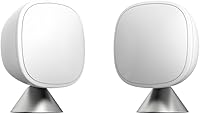
A bedroom sensor can help when the thermostat sits in a hallway. {{product B07NQVWRR3 | Two room sensors that share temperature readings so the bedroom can guide comfort at night.}}
The ecobee SmartSensor 2-Pack includes two sensors, stands, wall mounts, adhesive, and batteries. You can place one in the bedroom and one in a main living space, then prioritize the room you use most.
What setting should you use when you are away?
Use 82 to 85°F when the home is empty for a few hours, and consider a higher setpoint for longer trips. Your system will run less, and the home will still be warm rather than hot when you return.
Avoid huge setbacks that make the system work too hard later. A rise of 5 to 7 degrees is often enough, while a much deeper change can erase the savings during recovery.
If you have pets, plants, or heat-sensitive items, keep the away setting near the low end of the range. Check what each pet or plant needs instead of guessing from the thermostat alone.
How do humidity and fans change your summer setting?
Humidity and air movement can shift your ideal setting by several degrees. At high humidity, sweat cools more slowly, so the same temperature feels stickier.
Use a dehumidifier or your air conditioner’s humidity control when the indoor air feels damp. Keep the home near 40 to 60 percent relative humidity for comfort, and use a hygrometer if you want a reading.
Fans help you feel cooler at the set temperature, so you can often keep the thermostat a few degrees higher. They move air across your skin and work best when you are in the room.
What setting works for babies, older adults, and pets?
Choose a cooler, steadier setting for babies, older adults, and pets, and follow your doctor or vet for specific needs. Those groups may not signal heat stress as clearly, and their comfort needs can differ from yours.
Keep sleeping rooms for infants in a comfortable range and dress them in light layers. Avoid extra blankets in warm weather, and keep the room free of overheating from direct sun.
Older adults and people with heart, lung, or kidney conditions should ask a clinician about safe indoor temperatures. If someone feels dizzy, confused, or very ill in the heat, seek medical help.
Pets also need shade, water, and a cooler place to rest. A thermostat setting alone does not make a hot room safe for a pet left alone.
Should you use a schedule or hold one temperature all summer?
Use a schedule if your routine is predictable, and a hold if you work from home or need steady comfort. A schedule raises the setting before you leave and lowers it before you return.
Smart thermostats can learn routine patterns and adjust around occupancy. That can help when your day changes, but you should still review the schedule after a trip or a schedule change.
If you first need to get your thermostat working, our guide to how to set up a thermostat walks through the basic steps. Then you can set the summer schedule with more confidence.
How do you program a summer schedule without wasting energy?
Set three blocks: home, away, and sleep, with changes of 3 to 7 degrees. Program the cooling to start 30 to 60 minutes before you return, so the home is comfortable when you arrive.
Start with your daytime home setting at 78°F. Add an away block at 82 to 85°F and a sleep block near 76 to 78°F or a few degrees above daytime.
Review the schedule for holidays and school breaks. A vacation hold should protect pets and plants while avoiding a deep setback.
Brand-specific controls differ, so use how to program lux thermostat for Lux models and how to set trane thermostat for Trane models. For Honeywell Home models, how to use honeywell home thermostat covers the menu steps.
If a schedule acts oddly, how to reset lux thermostat can help you return to a known setup before you program again.
Which thermostat tools help you hold a summer setting?
A programmable or smart thermostat helps most when you want schedules, remote checks, and setbacks. It keeps the plan consistent even when you forget to adjust it.
The Sensi Smart Thermostat, model ST55, is a Wi-Fi thermostat with app, touch, and voice control. Sensi says it is ENERGY STAR certified and can help save about 23 percent on HVAC energy with scheduling and usage reports.
Its display is LED, its control is by button, and it fits a traditional thermostat space. Sensi says a common wire is not required in most applications, and the box includes batteries, mounting hardware, and wire stickers.
A room sensor helps when one hallway reading does not match the rooms you use. The ecobee sensors send readings from up to 60 feet away through walls and floors, and ecobee says the included CR2477 battery lasts up to 5 years.
That kind of sensor is useful for a bedroom, home office, or nursery. It does not replace a thermostat, but it can help the thermostat respond to the room that matters most.
When does a plug-in thermostat controller fit a summer plan?
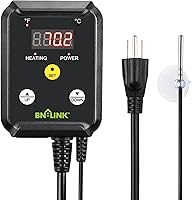
A plug-in controller fits heat mats and small heating devices, not central cooling for a home. The BN-LINK Reptile Thermostat Temperature Controller is a wired controller for heating devices such as heat mats, heat lamps, seed starting mats, incubators, and reptile terrariums.
It controls temperature from 40 to 108°F and is rated at 120VAC, 60Hz, 8.3A, and 1000W. The unit has a 3.94 ft power cord, a 4.92 ft temperature probe, a hanging tab, and LED power and heating lights.
Use it only with heating devices within its load limit. It does not include a heat mat, and it cannot cool a room or replace your home thermostat.
What mistakes make summer thermostat settings cost more?
Setting the thermostat far below 78°F for fast cooling is a common mistake. Your system cools at its own pace, and a very low setting can make it run longer than needed.
Another mistake is turning the fan to “on” all day without a reason. That can move air but may also mix humidity through the home, so test it for comfort and watch for damp air.
Sealing leaks and shading sunny windows often help more than dropping the setting. Weatherstripping, curtains, and attic insulation keep cooled air inside and hot air out.
Short cycling, unusual noises, or a home that will not reach the setting can signal a filter, airflow, or equipment problem. Change a clogged filter, keep vents open, and call a qualified HVAC technician if the problem continues.
How can you tune your summer setting over one week?
Change the setting by 2 degrees, live with it for two or three days, and keep notes on comfort. That simple test will show whether you need a cooler or warmer plan.
Rate sleep, afternoon comfort, and energy use at the end of each test. Keep humidity and fan use steady when you can, so you can judge the temperature change more fairly.
Pick the warmest setting that still lets you sleep, work, and relax well. That is your summer baseline, and you can lower it during a heat wave or raise it during a cooler spell.
For the final choice, use 78°F as your home baseline, 82 to 85°F when away, and 76 to 78°F at night, then adjust for the people and pets in your home. A schedule, room sensors, and shade can make that baseline feel better without forcing the system to run all day.
Frequently asked questions
What is best thermostat setting for summer?
Start at 78°F when you are home and active, then raise it 4 to 7 degrees when you are away or asleep if that feels comfortable. If the air feels sticky, use humidity as the guide and cool a little lower.
Change the setting in small steps and watch comfort for a few days.
Is 78 degrees too warm for summer?
For many healthy adults, 78°F is comfortable during the day, especially with fans and moderate humidity. Infants, older adults, pets, and people with health conditions may need a cooler room.
Your comfort, sleep, and safety matter more than any single number.
What setting saves the most money in summer?
A higher cooling setpoint with a setback when you are away saves the most, because your system runs less on hot afternoons. Use schedules, fans, and shade first, then let the thermostat rise a few degrees.
Avoid deep setbacks that force a long recovery later.
Should I use a schedule or hold one temperature?
A schedule works well if your routine is steady, because it raises the temperature before you leave and lowers it before you return. A hold works well if you work from home or need steady comfort.
Many smart thermostats let you combine both.