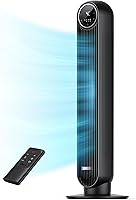
Tower Fan vs Floor Fan: Which Should You Choose? (November 2026)
Choose a tower fan for a slim, quiet room fan, or a floor fan for stronger directional airflow. Your space, noise needs and cooling pattern should decide the better fit.
On this page (9 sections)
- Tower fan vs floor fan: which takes less space?
- Which fan gives you better airflow direction?
- How do tower fans and floor fans compare for noise?
- Which controls are easier to use?
- Which products fit each side of the comparison?
- How should you choose between airflow and comfort?
- What should you check before setting up a fan?
- Are tower fans or floor fans better for a heater combination?
- Tower fan vs floor fan: which should you choose?
Choose a tower fan for a slim, quieter room setup, or choose a floor fan for stronger airflow aimed at a specific area. The tower fan vs floor fan decision depends on footprint, airflow direction, noise, controls and how you use the room.
Tower fans fit neatly beside beds, desks and sofas. Floor fans usually take more horizontal space, but their larger blades or industrial designs can move more air across a room.
We compared the listed dimensions, airflow information, controls, direction options and noise details. The right choice is the one that matches your room and the way you want air to move.

 Best for directional room circulation
Lasko WINDMACHINE High Velocity Pivoting Floor Fan
Tower fan vs floor fan: which takes less space?
A tower fan usually takes less floor width, while a floor fan often needs more horizontal clearance. Measure the fan's footprint and leave enough open space for air intake, outlet flow and safe movement around it.
The DREO Tower Fan for Bedroom measures 11.81 x 11.81 x 36.22 inches. The second DREO tower fan measures 8.03 x 8.03 x 36.26 inches, giving it the narrowest footprint among these products.
The Lasko WINDMACHINE measures 23.8 x 7.1 x 25.1 inches. The Amazon Basics industrial fan measures 9.45 x 23.43 x 23.82 inches, so both floor fans extend farther across the room than the tower options.
A narrow tower can fit beside furniture more easily, but its height still matters under shelves or near low windows. A floor fan may fit under some furniture because it is shorter, yet its depth or width can create a trip risk.
Use tape to mark each footprint before you choose. Open nearby doors and drawers, then check that the fan won't block a walkway or sit where curtains can touch it.
For a broader look at fan shapes and use cases, see our air circulator guide.
Which fan gives you better airflow direction?
Choose a tower fan for broad oscillation across people in a room, or choose a floor fan when you want to aim a stronger stream at one area. Direction matters as much as raw airflow when you are cooling a desk, bed or warm corner.
The DREO tower fans provide 90° oscillation. That spreads air across a wider part of the room instead of holding the breeze in one fixed direction.
The Lasko has a 360° pivoting head, so you can aim airflow upward, downward or toward a particular hot spot. The Amazon Basics model has a tilt head for similar vertical direction control.
A tower fan's tall air outlet can feel more evenly distributed around seated or standing people. A pivoting floor fan is more useful when you need to push air toward a wall, doorway or work area.
An air circulator can also help you think about the difference between personal cooling and whole-room mixing. Place either style so furniture does not stop the airflow before it reaches the area you want to cool.
How do tower fans and floor fans compare for noise?
The DREO tower fan with a 28 dB noise figure is the clearest choice when quiet operation is your main concern. A floor fan can still work well in a bedroom or office, but check the exact model's noise information and use a lower speed when possible.
The DREO model with the 28 dB figure also includes an 8-hour timer, 3 modes and 4 speed settings. Those controls suit nighttime use because you can choose a lower airflow level and schedule the fan to stop.
The other DREO tower fan has 8 speeds, 4 modes and a Sleep Mode. Its design includes a removable rear grille and impeller, which can make routine cleaning easier.
The Lasko floor fan is listed at 44 dB. It has 3 high-performance speeds, so it gives you a simpler control range than the tower fans.
The Amazon Basics fan does not include a noise figure in the information used here. Its 3 speeds and push-button controls suit shoppers who care more about high airflow and simple operation than quiet features.
Noise also depends on speed, placement and the sound of air moving through the room. Keep the fan on a stable, level surface and avoid placing it against a wall or object that can add vibration.
Which controls are easier to use?
Tower fans offer more remote and mode options here, while the floor fans keep control simpler. Pick the control style that matches how often you adjust airflow.
Both DREO tower fans include remote and touch controls. The first has 8 speeds and 4 modes: Normal, Natural, Sleep and Auto.
The second DREO tower fan includes a remote, touch control, 4 speeds and Normal, Sleep and Natural modes. Its 8-hour timer adds a useful scheduled option for bedtime or a work session.
The Lasko uses manual controls with 3 speeds. That setup is direct, but you need to reach the fan whenever you want to change the setting.
The Amazon Basics model uses push buttons and 3 power levels. It suits a garage, gym or work area where simple physical controls are easier to find than a remote.
If remote control is a deciding factor, compare more options in our guide to the best fan with remote control. For a smaller personal fan, see our tower fan vs desk fan comparison.
Which products fit each side of the comparison?
The best tower fan choice here depends on whether you value flexible settings or quiet scheduled airflow. The best floor fan choice depends on whether you want directional circulation or the highest listed airflow.
DREO Tower Fan for Bedroom: best for adjustable bedroom airflow
The DREO Tower Fan for Bedroom lists airflow speeds up to 28 ft/s and an airflow capacity of 1,158 CFM. Its 90° oscillation helps spread air around the room, while the remote and touch controls let you change the setting without standing up.
This is the more flexible tower option for a bedroom, office or living area where you may want gentle airflow at one time and stronger airflow later. The 8 speeds give you more steps between low and high than the 3-speed floor fans here.
Its 4 modes include Normal, Natural, Sleep and Auto. The removable rear grille and impeller can help with general cleaning, but follow the care instructions for safe access and unplug the fan before cleaning.
Lasko WINDMACHINE: best for directional room circulation
The Lasko WINDMACHINE has a 20-inch blade and lists 2,000 CFM of airflow. Its pivoting head lets you aim the breeze across a room, toward a warm spot or in another direction as your needs change.
The carry handle makes it easier to move between rooms. Its 3 speeds keep operation simple, while the 23.8-inch depth means you should plan placement before setting it near a walkway.
This model suits a garage, workshop or large room where directed airflow matters more than a slim shape. It is also the better fit when you want a portable fan that can be aimed vertically.
DREO Tower Fan for Bedroom: best for quiet nighttime use
This DREO tower fan measures 8.03 x 8.03 x 36.26 inches and has a 28 dB noise figure. Its 90° oscillation spreads air across a room, while the 8-hour timer supports a scheduled sleep routine.
The 26 ft/s velocity and 4 speed settings give you room to adjust airflow without using a larger floor fan. Its 3 modes are Normal, Sleep and Natural.
This model is a strong match for a bedroom, nursery or quiet office where a broad, upright fan is easier to place than a horizontal floor fan. Keep the narrow base on a stable floor and leave the intake clear.
Amazon Basics High Velocity Industrial Cooling: best for maximum listed airflow
The Amazon Basics fan lists 3,542 CFM of airflow, the highest figure among these products. It has a 20-inch size, 3 power levels and a tilt head that lets you direct air up or down.
Its metal housing and aluminum blades suit indoor spaces such as garages, gyms and commercial areas. The fan measures 9.45 x 23.43 x 23.82 inches, so its horizontal profile needs more planning than either tower fan.
This is the strongest fit when you want maximum listed airflow and simple push-button control. It is less suitable when you need a remote, a timer or a compact upright shape.
How should you choose between airflow and comfort?
Choose airflow capacity for large, warm spaces, but choose adjustable settings and oscillation for personal comfort. A higher airflow figure does not automatically make a fan better if you cannot place or control it well.
The Amazon Basics fan lists 3,542 CFM, and the Lasko lists 2,000 CFM. Those figures point toward stronger air movement for garages, workshops and large rooms.
The DREO tower fans focus more on control and room-friendly placement. One has 8 speeds and 4 modes, while the other adds a 28 dB noise figure and an 8-hour timer.
Do not compare the 1,158 CFM figure for the first DREO directly with the 24.99 cubic feet per second figure for the second DREO without converting the units. Use the same measurement unit when comparing airflow capacity.
If you are choosing between floor fan shapes, our floor fan vs pedestal fan guide explains how directional airflow and placement differ.
What should you check before setting up a fan?
Set the fan on a stable indoor surface, keep its intake and outlet clear, and check the full path from the outlet to the area you want to cool. A good location helps airflow and reduces the chance of a blocked walkway.
Measure the route into the room before bringing home a large floor fan. Check doorways, corners and furniture gaps, especially for the 23.8-inch-deep Lasko or 23.43-inch-wide Amazon Basics model.
Use the controls at the lowest useful speed first. Increase the setting only when the room or personal cooling area needs more airflow.
Unplug the fan before cleaning. Remove dust using the method allowed by the product instructions, and do not reach through a grille while the fan is connected to power.
Tower fans benefit from clear space around their tall air path. Floor fans need clear space around their larger blades, housing and pivoting or tilt mechanism.
Are tower fans or floor fans better for a heater combination?
Choose a fan-only model when your main goal is summer airflow, then compare combination appliances separately if you need heat. A fan's cooling airflow does not mean it provides heating.
If you are considering a ceiling-mounted option, read our guide on ceiling fan heater choices. It covers a different installation style from the freestanding tower and floor fans in this comparison.
For a combined tower appliance, see our best tower fan heater combo guide. For a floor-based option, compare our best floor fan heater guide.
These combinations can change the placement, controls and safety questions you need to review. Check the exact appliance instructions before using any heating mode.
Tower fan vs floor fan: which should you choose?
Pick a tower fan if you need a narrow footprint, oscillation, remote control or quieter nighttime airflow. Pick a floor fan if you need stronger directional circulation, a pivoting head or the highest listed airflow.
The DREO tower fan with 8 speeds is the flexible choice for bedrooms and living spaces. The DREO tower fan with a 28 dB noise figure and 8-hour timer is the better quiet-use choice.
Choose the Lasko when you want 2,000 CFM, a 360° pivoting head and a carry handle. Choose the Amazon Basics model when its 3,542 CFM, metal housing and tilt head match a large indoor work area.
Your final check should be simple: measure the space, decide whether you need directed or spread-out airflow, and choose the controls you will actually use.
Frequently asked questions
Is a tower fan better than a floor fan?
A tower fan is better for a slim footprint, room-friendly appearance and adjustable airflow, while a floor fan is better for stronger directional circulation. Compare the exact fan's airflow, controls, noise information and dimensions.
Your room layout and cooling goal matter more than the fan label alone.
Which is quieter, a tower fan or a floor fan?
The quietest choice depends on the exact model and speed. The DREO tower fan with a 28 dB noise figure is the clearest low-noise option here, while the Lasko floor fan is listed at 44 dB.
Higher speeds can change the sound you hear in daily use.
Do tower fans use less space than floor fans?
Tower fans usually use a narrow upright footprint, but compare the measurements before choosing. The DREO tower fans are about 8.03 or 11.81 inches square, while the listed floor fans extend about 23 inches across.
Leave room for airflow and safe access around any fan.
Are floor fans more powerful than tower fans?
The listed floor fans have higher airflow capacities than the listed tower fans. The Amazon Basics model is rated at 3,542 CFM and the Lasko at 2,000 CFM, while the DREO models list 1,158 CFM and 24.99 cubic feet per second.
Ratings use different units, so compare like for like.
Should you choose a tower fan for a bedroom?
Choose a tower fan for a bedroom when quiet operation, oscillation, remote control or a narrow footprint matters. The DREO model with a 28 dB noise figure and 8-hour timer is suited to nighttime use.
Keep the fan on a stable surface with its intake and outlet clear.