Tower Fan vs Desk Fan: Which Should You Choose? (November 2026)
Choose a tower fan for room-wide airflow and a desk fan for close-range cooling in a small area. Your available floor or desk space, preferred airflow direction and noise needs should decide the match.
On this page (8 sections)
- Tower fan vs desk fan: which fits your room?
- Which fan gives better room airflow?
- Is a tower fan or desk fan better for a bedroom?
- Which fan is easier to control?
- Which products match each use?
- Does a tower fan save more desk space?
- How should you clean and position either fan?
- Should you buy a tower fan or desk fan?
Choose a tower fan for room-wide airflow and a desk fan for close-range cooling. This tower fan vs desk fan comparison starts with placement, because where a fan can sit shapes how it cools the room.
A tower fan stands on the floor and sends air upward through a tall, narrow body. That shape allows the breeze to pass across more of a room and reach people seated at different spots.
A desk fan sits on a table, counter or bedside surface and usually has a tilt head. The tilt lets you aim air at your face, chair or work area, which can feel more direct than broad room circulation.
The core choice is simple to state and harder to make at home. Do you want air shared across the room, or air focused on one person in one seat for most of the day?
Floor space and surface space matter at the same time. A tower fan keeps a desk clear, but it needs a stable floor area beside a bed, sofa or desk and it still needs room around the base for the cord and controls.
A desk fan keeps the floor clear, but it uses part of a table that might already hold a laptop, lamp, notebook or drink. Wall mounting can change that balance, but only when the wall position and hardware suit the room.
Noise also depends on the exact model rather than the fan type alone. A quiet setting that suits sleep or calls in one model may feel different in another, so compare listed noise figures and speed options before you decide.
Controls shape daily use as well. Remote and touch controls suit a fan placed across the room, while a knob or rotary switch suits a fan that sits within easy reach of your seat.
Cleaning access deserves a thought before purchase too. A fan in a bedroom collects dust near bedding, and a fan near a kitchen can collect grease and airborne debris faster than one in a home office.
Airflow figures need care when you compare them. CFM describes listed air volume, while reach figures describe how far air is projected, and neither number tells the whole story without height, tilt and oscillation in view.
Your routine should break the tie. If several people share the room or you move between seats, broad circulation may serve you better through the day.
If one seat is home base, a smaller fan aimed at that spot may feel more useful and easier to adjust in seconds.
Measure the floor corner and the desk surface before you choose. The fan that fits the space you actually have will usually give better comfort than the one with stronger headline specs.

Tower fan vs desk fan: which fits your room?
A tower fan usually suits shared rooms, while a desk fan suits one seat or one work surface. Start by measuring the available floor or desktop space before comparing speed settings.
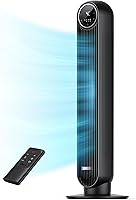
The DREO Tower Fan for Bedroom measures 11.81 x 11.81 x 36.22 inches. Its tall profile and 90° oscillation help spread airflow across more of a room than a fan aimed at one fixed spot.
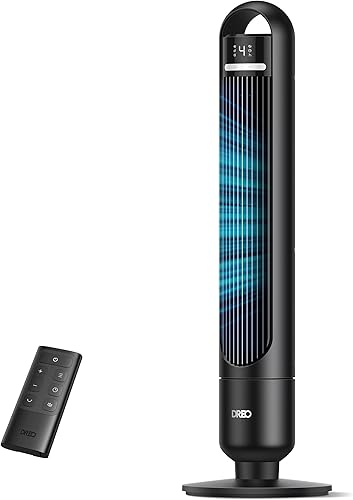
The second DREO Tower Fan for Bedroom measures 8.03 x 8.03 x 36.26 inches, giving it a narrower floor footprint. Its 90° oscillation also helps move air across a bedroom, office or living area.
The DREO Fan for Bedroom measures 10.79 x 10.08 x 14.21 inches. It is made for tabletop or wall-mount placement, so it keeps the floor open but uses a surface or wall location.
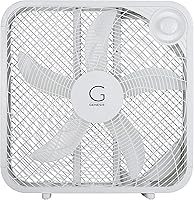
The Amazon Basics Air Circulator Fan measures 7.6 x 14.8 x 14.1 inches and weighs 4.2 pounds. Its tabletop mount and portable weight make it easy to move between a desk, bedside table or kitchen counter.
Before placing either fan, leave room around the intake and outlet areas. Keep cords away from walkways, and follow the manual's placement instructions for the exact model.
Which fan gives better room airflow?
Choose a tower fan when you want air to move across several parts of a room. Choose a desk fan when you want stronger control over one nearby cooling zone.
The first DREO tower fan lists an airflow capacity of 1158 CFM, airflow speeds up to 28 ft/s and projection up to 34 ft. Its 8 speeds and 4 modes let you move from a gentle breeze to stronger airflow.
The second DREO tower fan lists a 26 ft/s air speed and airflow reach up to 33 ft. It has 4 speed settings, 3 modes and a 90° oscillation range.
The DREO desk circulator lists 800 CFM and airflow up to 70 ft in its product description. Its 120° adjustable tilt gives you more direct control over where that air travels.
The Amazon Basics fan has 3 speed settings, 11-inch blades and a 90° variable tilt. It is a practical choice when you want to direct air upward, toward a chair or across a small room.
A reach figure and a CFM figure describe different parts of airflow. Use CFM to compare listed air volume, then consider height, oscillation and tilt when deciding how that air will reach you.
For more fan types and placement ideas, see our Fans: The Complete Buying Guide. It can help you compare air circulators, tower fans and other room-cooling options.
Is a tower fan or desk fan better for a bedroom?
A quiet tower fan is usually easier to place beside a bed without taking over a nightstand. A desk fan can work well when you need airflow aimed directly at the bed or a nearby chair.
The second DREO tower fan lists a 28 dB noise level, a Sleep mode and an 8-hour timer. Its 8.03 x 8.03 inch footprint takes floor space but leaves the bedside table available for other items.
The first DREO tower fan has Sleep mode, 8 speeds and 4 modes. Its remote and touch controls let you change airflow without standing up, and its 90° oscillation can spread air across the room.
The DREO desk fan lists a 25 dB noise level and a 120° adjustable tilt. It suits a sleeper who wants air aimed at one side of the bed, provided a stable tabletop or wall location is available.
The Amazon Basics fan lists a 30 dB noise level and uses a rotary switch. Its controls are simple, but it doesn't offer a timer in the supplied product details, so you may prefer a tower model for scheduled nighttime use.
If quiet sleeping is your priority, compare exact noise figures and control features. Our guide to Best Quiet Tower Fans for Bedrooms covers the tower-fan choice in more detail.
Which fan is easier to control?
A tower fan gives you more remote or mode-based control, while a desk fan keeps operation simple with a physical control.
The first DREO tower fan uses remote and touch control, with 8 speeds and Normal, Natural, Sleep and Auto modes. That range suits a room where airflow needs change during work, rest and sleep.
The second DREO tower fan also uses remote and touch control. It has 4 speed settings, Normal, Sleep and Natural modes, plus an 8-hour timer.
The DREO desk circulator uses a knob control with 3 built-in speeds. This is useful when you want to reach over and change the airflow without navigating modes or a remote.
The Amazon Basics fan uses a rotary switch with settings for off, low, medium and high. Its controls are easy to understand, but it offers less adjustment than either DREO tower fan.
Choose based on your routine. A remote and timer help when you want to adjust airflow from bed, while a knob or rotary switch works well at a desk where the fan is within reach.
Which products match each use?
The first DREO tower fan is the strongest match for broad airflow, while the second DREO tower fan is the better quiet-bedroom match. The DREO desk fan and Amazon Basics fan suit close-range cooling at a table or work area.
The DREO Tower Fan for Bedroom suits a larger bedroom, office or living room where you want a tall fan with stronger listed airflow. Its 11.81 x 11.81 inch base needs floor space, but the remote, touch controls and 90° oscillation make room coverage easier to adjust.
The removable rear grille and impeller support general cleaning. Keep the fan unplugged while cleaning, and follow the manual for the correct way to remove and replace parts.
The DREO Tower Fan for Bedroom is a good fit for a bedroom or office where a slim floor fan matters. Its 26 ft/s airflow speed, 4 speed settings and 3 modes give you basic adjustment, while the timer helps limit overnight run time.
Its remote and touch control suit a fan placed across the room. Measure the floor area beside the bed or desk first, since the tower is more than 36 inches tall.
The DREO Fan for Bedroom suits a desk, counter or wall where you want close-range airflow without a tall floor unit. Its tabletop and wall-mount design gives you 2 placement options, while the 3-speed knob keeps adjustments simple.
The product description says its airflow can reach up to 70 ft, but your actual comfort will depend on placement and room layout. Use the adjustable tilt to aim air toward your seat or bed rather than pointing it at an unused wall.
The Amazon Basics Air Circulator Fan suits buyers who want a lightweight table fan that can move between rooms. Its 70-watt design, 11-inch blades and 90° tilt provide straightforward airflow control for a bedroom, home office, living room or kitchen.
It uses tabletop placement and a standard North American 3-prong electrical plug. Keep the fan on a stable surface, and use the rear rotary switch to choose among its 3 speed settings.
Does a tower fan save more desk space?
Yes, a tower fan keeps your desk clear, but it takes floor space. A desk fan does the opposite.
A tower fan works beside a desk or bed, which can help when your work surface is already full. The first DREO tower fan has an 11.81-inch square base, while the second has an 8.03-inch square base.
A desk fan needs a surface about 10 inches deep or more, depending on the model and how you angle it. Wall mounting can free the desk in the case of the DREO desk circulator, but installation needs a suitable wall and the included mounting hardware.
The Amazon Basics fan is wider at 14.8 inches than it is deep at 7.6 inches. Check the table width before choosing it, especially if you also use a monitor, lamp or notebook.
For a different floor-fan comparison, read Tower Fan vs Pedestal Fan: Which Should You Choose?. If your main concern is broad floor-level airflow, see Tower Fan vs Floor Fan: Which Should You Choose?.
How should you clean and position either fan?
Unplug the fan before cleaning, keep its air path clear and place it where the airflow can reach the occupied area.
The first DREO tower fan has a removable rear grille and impeller, which can make routine cleaning more accessible. The other products have plastic construction, so use a gentle cleaning method that follows the exact manual.
Dust can reduce airflow through any fan. Check the grille and blades or impeller regularly, especially if the fan runs near bedding, cooking areas or open windows.
Don't place a fan where curtains, papers or clothing can block the intake. Keep it on a stable surface or floor area, and avoid wet locations because these products are intended for indoor use.
Use oscillation when several people need airflow. Turn oscillation off and use tilt when one person needs a more direct breeze.
If you are comparing other fan layouts, our Ceiling Fan vs Box Fan: Which Should You Choose? explains how room-mounted and portable airflow differ. A ceiling fan knob is a separate hardware question, covered in How to Choose a Replacement Ceiling Fan Knob.
Should you buy a tower fan or desk fan?
Pick a tower fan when you want room coverage, floor placement and remote control. Pick a desk fan when you want close-range cooling, adjustable tilt and a compact surface setup.
Choose the DREO Tower Fan for Bedroom with 1158 CFM if stronger listed airflow, 8 speeds and 4 modes matter most. Choose the narrower DREO Tower Fan for Bedroom if a 28 dB noise level, 90° oscillation and an 8-hour timer fit your bedroom routine.
Choose the DREO Fan for Bedroom when you want a quiet 25 dB desk circulator with 120° tilt and tabletop or wall mounting. Choose the Amazon Basics Air Circulator Fan when light weight, a rotary switch and simple 3-speed operation matter more than advanced controls.
For current tower options, you can also compare Best Tower Fan Deals and Best Tower Evaporative Coolers with Ice Packs. The right choice is the fan that fits your placement, airflow range and daily control habits.
Frequently asked questions
Is a tower fan better than a desk fan?
A tower fan is better for spreading airflow around a bedroom, office or living room, while a desk fan is better for cooling one person at close range. Choose a tower when floor placement and room coverage matter.
Choose a desk fan when you need direct airflow on a table or work surface.
Which is quieter, a tower fan or a desk fan?
The quietest option depends on the exact model. The DREO tower fan with 28 dB noise output is designed for quiet bedroom use, while the DREO desk air circulator lists 25 dB.
The Amazon Basics table fan lists 30 dB, so compare model specifications rather than fan type alone.
Does a tower fan save more space than a desk fan?
A tower fan saves desk space because it stands on the floor, but it still needs a clear floor footprint. A desk fan leaves the floor open but uses part of a table or counter.
Measure the space where the fan will sit, including room for controls and airflow.
Can a desk fan cool a whole room?
A desk fan can move air through a room, but its lower position and smaller size usually make it better for circulation and close-range comfort. The DREO desk circulator reaches up to 70 ft according to its product description, while its 120° tilt helps direct airflow.
Should you use a fan with an air conditioner?
Yes, a fan can help move cooled air around the room and make a thermostat setting feel more comfortable. It doesn't lower the air conditioner's set temperature by itself.
Point the fan toward occupied areas, and keep the air conditioner's vents and return airflow clear.