9 Best Smart Thermostats for Electric Baseboard Heaters (November 2026)
The best smart thermostats for electric baseboard heaters include the Mysa Smart Thermostat LITE for Electric Baseboard for broad baseboard compatibility, the meross Matter Smart Thermostat for Electric Baseboard for Matter smart homes, and the ecobee Smart Thermostat Premium for homes with central HVAC.
On this page (4 sections)
The Mysa Smart Thermostat LITE for Electric Baseboard is the clearest pick for a Wi-Fi thermostat for electric baseboard heat. It supports 120V and 240V line-voltage systems, while the meross Matter model is another option for compatible high-voltage electric heaters.
The key shopping check is system type. A thermostat designed for central HVAC may not be safe or compatible with an electric baseboard circuit, even if it has Wi-Fi, scheduling and voice controls.
If you want to compare more line-voltage options, see our guide to the best line voltage smart thermostat. The best line voltage WiFi thermostat 120V and best 240 volt WiFi line voltage thermostats guides narrow the choices by voltage.
Our picks at a glance
-
1
 Best for broad baseboard compatibility
Mysa Smart Thermostat LITE for Electric Baseboard
9.2/10 our score
See it on Amazon -
2
 Best for Matter smart homes
meross Matter Smart Thermostat for Electric Baseboard
8.8/10 our score
See it on Amazon -
3

- 4
 Check it
ecobee Smart Thermostat Enhanced
Best for occupancy-based HVAC control - 5
 Check it
Honeywell Home RTH9600WF Smart Color Thermostat ENERGY
Best for compatible forced-air systems - 6
 Check it
Honeywell Home RTH9585WF1004 Wi-Fi Smart Color Thermostat
Best for scheduled central heating - 7
 Best for compatible central HVACCheck it
- 8
 Best for familiar button controlsCheck it
- 9
 Best for Alexa-compatible HVACCheck it
Which smart thermostats work with electric baseboard heaters?
Mysa and meross are the two products here specifically described for line-voltage electric heating. The other models are included as compatibility contrasts or options for a separate central HVAC system, not as confirmed baseboard controls.
Mysa Smart Thermostat LITE for Electric Baseboard: Best for broad baseboard compatibility
- 120V or 240V line voltage
- Requires 4 wires, including neutral or a second live wire
- Wi-Fi app control and scheduling
- Works with Alexa, Google Home and Apple HomeKit
Mysa is specifically made for electric baseboard and other line-voltage heaters. Check its wiring requirements and compatibility checker before buying.
Pros
- Supports 120V and 240V systems
- Scheduling, remote access and voice control
- No subscription for listed smart features
Cons
- Does not work with 24V furnaces or central heat pumps
- Cannot use a two-wire switch loop
Mysa is the standout fit because it names electric baseboard heaters among the systems it supports. It works with 120V or 240V line voltage, and the brand describes support for some single-pole and double-pole thermostat replacements.
Wiring determines whether that voltage match is enough. Mysa requires 4 wires, including a neutral or second live wire, and it does not work with a two-wire switch loop, a 24V furnace or a central heat pump.
For everyday control, the thermostat connects to 2.4 GHz Wi-Fi and works with the free app without a hub or subscription. It also includes scheduling, remote control, geofencing, vacation mode and voice control with Apple HomeKit, Alexa or Google Home.
Choose Mysa when your heater and wiring match its requirements. Turn off power at the breaker before wiring work, and hire an electrician if local code requires it or you are not comfortable working with high voltage.
meross Matter Smart Thermostat for Electric Baseboard: Best for Matter smart homes
- 120–240 VAC electric heating
- Matter and Wi-Fi
- App energy monitoring
- Open-window detection
Meross supports high-line-voltage electric heating and works with several Matter-compatible smart home systems. It is not for 24V HVAC or electric underfloor heating.
Pros
- Works with Alexa, Apple Home, Google Home and SmartThings
- Tracks electricity use in the app
- Pauses heating when an open window is detected
Cons
- Not compatible with 24V HVAC systems
- Not compatible with electric underfloor heating
Meross is another purpose-built option for electric baseboard heat, with support for 120–240 VAC systems. Its compatibility details include baseboard, convector and fan-forced heaters.
Matter support lets it work with Alexa, Apple Home, Google Home, SmartThings and other compatible systems. The app also provides electricity-use monitoring, while open-window detection pauses heating when a window is detected.
There are limits to check. Meross says this thermostat is not for 24V HVAC systems or electric underfloor heating, and its sensor can be affected by nearby heat sources.
Pick meross if Matter compatibility and energy monitoring fit your setup. Confirm your heater type and mounting location, since a nearby heat source may affect its temperature reading.
ecobee Smart Thermostat Premium: Best for homes with central HVAC
- Wi-Fi app control
- Included SmartSensor
- Power Extender Kit for homes without a C-wire
- Compatibility checker for HVAC systems
This ecobee model is designed for compatible HVAC systems, not line-voltage baseboard circuits. Consider it for a separate central heating and cooling system.
Pros
- Included room sensor
- Built-in air quality monitor
- App and voice control
Cons
- Not identified as a line-voltage baseboard thermostat
- Check HVAC compatibility before buying
The ecobee Smart Thermostat Premium is better suited to a compatible central HVAC system than to electric baseboards. Its included SmartSensor helps detect which rooms are in use, and the thermostat has a built-in air quality monitor.
For homes without a C-wire, ecobee includes a Power Extender Kit for supported installations. The brand recommends using its compatibility checker before buying.
Consider it only for a separate compatible HVAC system. If you are comparing system types, our guide to what HVAC systems work with smart thermostats explains why voltage and equipment type matter.
ecobee Smart Thermostat Enhanced: Best for occupancy-based HVAC control
- Wi-Fi app control
- Built-in occupancy sensing
- Power Extender Kit included
- Works with Alexa, Google Assistant, Apple HomeKit and SmartThings
The Enhanced model adjusts temperature using occupancy and schedule features for compatible HVAC systems. It is not specified for line-voltage electric baseboard heating.
Pros
- Built-in occupancy sensing
- Remote app control
- Supports several smart home systems
Cons
- Not identified as a line-voltage baseboard thermostat
- Check HVAC compatibility before buying
The ecobee Smart Thermostat Enhanced uses occupancy sensing and schedule learning to adjust compatible HVAC systems. It supports app control and works with Alexa, Google Assistant, Apple HomeKit and SmartThings.
The included Power Extender Kit is intended for homes without a C-wire, and ecobee recommends checking system compatibility before installation. The details do not identify it as a line-voltage baseboard thermostat.
Choose this model for compatible central HVAC, not as a baseboard replacement. For a different heating setup, see our guides to the best smart thermostat for a mini split and the best smart thermostat for a heat pump.
Honeywell Home RTH9600WF Smart Color Thermostat ENERGY: Best for compatible forced-air systems
- Wi-Fi app control
- Customizable color touchscreen
- C-wire required
- Not compatible with 120–240V electric baseboard heat
This Honeywell thermostat is for specified HVAC systems and explicitly excludes electric baseboard heat. Keep it in consideration only if you have a compatible separate system.
Pros
- Customizable color screen
- Remote app and voice control
- Shows indoor and outdoor temperature and humidity information
Cons
- Does not work with electric baseboard heat
- Requires a C-wire
The Honeywell Home RTH9600WF is not compatible with 120–240V electric baseboard heat. It is listed for forced air, hot water, steam and heat pumps with electric backup, and it requires a C-wire.
Its customizable color touchscreen shows indoor and outdoor temperature and humidity information. Remote control is available through the app and compatible smart home partners.
Keep it on your list only if you have a compatible HVAC system. It is not a substitute for a line-voltage baseboard thermostat.
Honeywell Home RTH9585WF1004 Wi-Fi Smart Color Thermostat: Best for scheduled central heating
- Wi-Fi app control
- Customizable color touchscreen
- C-wire required
- Not compatible with 120–240V electric baseboard heat
This Honeywell model offers scheduling and remote control for listed HVAC types, but it does not control line-voltage baseboard heat.
Pros
- Flexible scheduling
- Customizable color touchscreen
- Wi-Fi app and voice control
Cons
- Does not work with electric baseboard heat
- Requires a C-wire
The Honeywell Home RTH9585WF1004 also does not work with 120–240V electric baseboard heat. Its listed system types include forced air, hot water, steam and some heat pumps, and it requires a C-wire.
For compatible systems, its flexible programming and customizable touchscreen can suit households that want scheduled temperature changes. The Wi-Fi app and voice control add remote adjustments.
This is an HVAC option, not a baseboard pick. Check the system type and C-wire requirement before you buy.
Google Nest Thermostat: Best for compatible central HVAC
- Wi-Fi and Google Home app control
- Can turn down when you leave
- Compatibility checker recommended
- C-wire or compatible power accessory may be needed
Nest offers app-based scheduling and remote control for compatible systems, but the information does not identify it as a line-voltage baseboard thermostat. Confirm compatibility before considering it.
Pros
- Remote control through Google Home
- Schedule and away features
- Supports compatible voice assistants
Cons
- Baseboard compatibility is not specified
- Some systems require a C-wire or compatible power accessory
Google Nest offers Wi-Fi control through the Google Home app, away adjustments and programmable scheduling. Its compatibility details do not confirm line-voltage baseboard support, so check the Nest Compatibility Checker before buying.
Nest is designed to work without a C-wire in many homes, but some systems need a C-wire or another compatible power accessory. The product information calls out several system types that may need one.
Consider Nest only after confirming your system is supported. Its smart features do not by themselves show that it can control a baseboard circuit.
Sensi Smart Thermostat: Best for familiar button controls
- Wi-Fi app control
- Flexible scheduling and usage reports
- C-wire not required in most applications
- Designed for HVAC equipment found in most homes
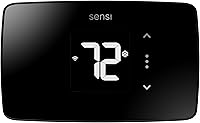
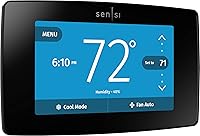
Sensi has a familiar button layout and remote app features for compatible HVAC equipment. Its information does not confirm support for line-voltage electric baseboards.
Pros
- Button controls resemble a traditional thermostat
- Flexible scheduling and usage reports
- Privacy protection stated by Sensi
Cons
- Baseboard compatibility is not specified
- Check system compatibility before buying
Sensi's button layout resembles a traditional thermostat, with app control, flexible scheduling and usage reports. It is described for HVAC equipment found in most homes, but line-voltage baseboard compatibility is not specified.
The brand says a C-wire is not required in most applications. That does not guarantee compatibility with your heater, so check the equipment type before choosing it.
Choose Sensi for a compatible HVAC system if familiar controls matter. It is not a confirmed line-voltage baseboard pick.
Amazon Smart Thermostat: Best for Alexa-compatible HVAC
- Alexa app control
- Automatic home, away and sleep settings
- C-wire required
- Baseboard compatibility not specified
Amazon's thermostat offers Alexa-based scheduling and remote adjustments for compatible systems. Confirm its system type before considering it for a baseboard circuit.
Pros
- Alexa can switch between preferred home, away and sleep temperatures
- Remote control through the Alexa app
- Installation guidance in the app
Cons
- Requires a C-wire
- Baseboard compatibility is not specified
Amazon Smart Thermostat works through Alexa and the Alexa app, with automatic home, away and sleep settings. It requires a C-wire, and its baseboard compatibility is not specified.
The Alexa app provides installation guidance, but you still need to match the thermostat to the heating system. Treat it as an option for a confirmed compatible system, not an assumed baseboard replacement.
How should you compare baseboard thermostat voltage and wiring?
Match the new thermostat to the heater's voltage and the wires at the wall before comparing app features. For baseboard heating, the main distinction is usually between line-voltage controls and thermostats intended for central HVAC.
Mysa supports 120V or 240V line voltage and requires 4 wires, including a neutral or second live wire. Meross supports high-line-voltage electric heating from 120–240 VAC, but its compatibility details exclude 24V HVAC and electric underfloor heating.
A thermostat that needs a C-wire for central HVAC does not become a baseboard thermostat because your wall has wires available. Read the model's system compatibility information and use the manufacturer's checker where provided.
Do not guess from wire color or thermostat appearance. Switch off power at the breaker before inspecting wiring, follow the installation instructions and call an electrician if the circuit or wiring is unclear.
What features matter in a Wi-Fi thermostat for electric baseboard heat?
First confirm voltage and heater compatibility, then compare scheduling, app access and smart home support. A feature is useful only if the thermostat can safely control your heating system.
Mysa offers daily scheduling, remote app control, geofencing, vacation mode and voice control, with no subscription required for those features. Meross adds Matter support, electricity-use monitoring and open-window detection.
Think about how you use each room. A schedule can lower heat while a room is empty, while remote control can help when your plans change; neither feature replaces correct thermostat sizing and wiring.
For homes with humidity needs, a baseboard thermostat may not be the right tool for every comfort issue. Our guides to how a smart thermostat controls humidity and the best thermostat with humidity control cover systems with humidity-related features.
Which thermostat should you choose for baseboard heat?
Choose Mysa if your electric baseboard system is 120V or 240V and its wiring meets the stated requirements. Choose meross if its high-voltage heater compatibility and Matter features match your home setup.
If you have central HVAC as well, compare the compatible thermostat options for that equipment separately. Verify the system type, voltage and wiring before buying, then use a qualified electrician when installation requires high-voltage work or you are uncertain.
Our top 3 picks at a glance
-
1
Best for broad baseboard compatibility
Mysa Smart Thermostat LITE for Electric Baseboard
9.2/10 our score
See it on Amazon -
2
Best for Matter smart homes
meross Matter Smart Thermostat for Electric Baseboard
8.8/10 our score
See it on Amazon -
3
Frequently asked questions
Can a smart thermostat work with electric baseboard heaters?
Yes, if it's designed for the heater's line voltage and wiring. Mysa supports 120V or 240V electric baseboard systems, and meross supports 120–240 VAC electric heating.
Many familiar smart thermostats are intended for HVAC systems instead.
Confirm the thermostat's voltage, heater type and wiring before you buy.
Is a 24V smart thermostat compatible with baseboard heat?
Usually not. Electric baseboards commonly use line voltage, while thermostats for central HVAC may be designed for a different system.
Mysa and meross state that they are not for 24V HVAC systems.
Check your heater and existing thermostat wiring, then match those details to the thermostat's compatibility guidance.
How do I check whether a Wi-Fi thermostat fits my baseboard heater?
Check the heater voltage, thermostat wiring and heater type against the smart thermostat's compatibility requirements. Mysa requires 4 wires, including a neutral or second live wire, and will not work with a two-wire switch loop.
Turn off power at the breaker before inspecting wiring, and use a qualified electrician if you're unsure.
Do smart thermostats for baseboard heaters need a C-wire?
Requirements vary by model. Mysa specifies 4 wires, including a neutral or second live wire, while its information says it won't work with a two-wire switch loop.
Don't assume a C-wire rule for a central HVAC thermostat applies to a line-voltage model.
Match the wiring at your wall to the thermostat's instructions.