Best 240 Volt WiFi Line Voltage Thermostats: Top 9 Picks (November 2026)
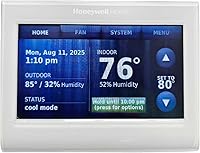
The best 240 volt WiFi line voltage thermostats include the Google Nest Thermostat for compatible low-voltage HVAC, the ecobee Smart Thermostat Essential for flexible 24 VAC systems, and the OJ Microline Electric Radiant Floor Heating Thermostat for dual-voltage floor heating.
On this page (3 sections)
The best 240 volt wifi thermostat for most electric baseboard systems is the Mysa Smart Thermostat LITE. That pick assumes the heater is a true line-voltage load and the circuit wiring supports the model.
OJ Microline and Schluter are better focused choices for electric radiant floor heating. They use floor sensing and limits that suit in-floor cables rather than baseboard heaters.
Google Nest and ecobee belong with compatible low-voltage HVAC systems. They control equipment through low-voltage circuits and do not switch a 240V heater directly.
A 240V thermostat controls line-voltage electricity directly. That makes heater type, total wattage and wiring more important than app features alone.
Line voltage means the thermostat handles the same power that feeds the heater. A small mismatch in load or wiring can matter more than a extra smart feature.
Start with our guide to What Is a Line Voltage Thermostat? The Basics if you need to identify the system.
That guide helps you tell a line-voltage circuit from a low-voltage control circuit. It also explains why the thermostat box and heater label deserve a close look.
For a broader comparison, see our guide to the best line voltage smart thermostat. It places these picks in a wider group of WiFi and non-WiFi models.
If your heater is rated at 120V, compare these picks with the best line voltage wifi thermostat 120v. The same checks for wattage and wiring still apply at the lower voltage.
Do not choose by brand or app first. Choose by the heater in the room, then check whether the thermostat was built for that load.
A floor-heating model can be excellent for tile or stone and still be wrong for a baseboard. A low-voltage smart thermostat can be simple to set up and still be unsafe or unworkable for line voltage.
Use this roundup to narrow the field by system type. Then confirm the exact load, pole setup and wires before you order.
Our picks at a glance
-
1

-
2
 Best for flexible 24 VAC systems
ecobee Smart Thermostat Essential
9.6/10 our score
See it on Amazon -
3
 Best for dual-voltage floor heating
OJ Microline Electric Radiant Floor Heating Thermostat
9.4/10 our score
See it on Amazon
- 4
 Check it
Mysa Smart Thermostat LITE for Electric Baseboard
Best for 240V electric baseboards - 5
 Check it
Schluter Ditra-Heat-E-WiFi Programmable Thermostat
Best for Ditra-Heat floor systems - 6
 Check it
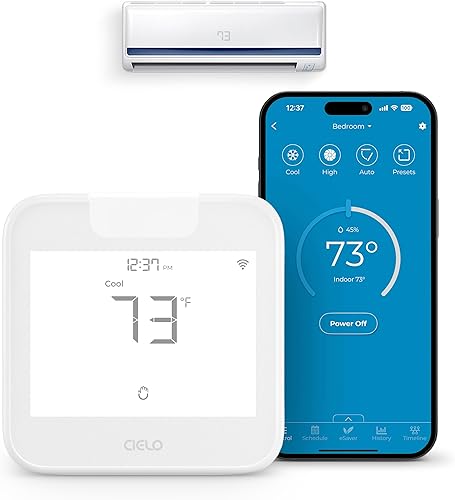
Cielo Breez Breez Max Smart WiFi Thermostat
Best for IR-controlled room AC - 7
 Check it
meross Matter Smart Thermostats for Home
Best for Matter-compatible low-voltage homes - 8
 Check it
Mysa Smart Thermostat for Electric in-Floor Heating
Best for 240V in-floor heating - 9
 Check it
INKTEM Wifi Temperature Controller
Best for controlled outlets and specialty rooms
The best 240 volt WiFi thermostat options by system
The best choice depends on what the thermostat will control. Mysa Smart Thermostat LITE is the leading baseboard pick, while OJ Microline, Schluter and Mysa's in-floor model are made for electric floor heating.
The rest of the group covers low-voltage HVAC, room air conditioners and outlet-based temperature control. Each one fits a narrower job, so the match matters more than a general ranking.
Read the product notes with your heater type in mind. A model that looks similar on a shelf may use a different voltage, sensor or wiring setup in daily use.
Google Nest Thermostat: Best for compatible low-voltage HVAC
- Programmable WiFi control
- Designed to work without a C wire in most homes
- Google Home app control
- ENERGY STAR certified
Google Nest is a strong smart thermostat when your home uses compatible HVAC equipment rather than 120V or 240V electric baseboard heat.
Pros
- Remote control through Google Home
- Programmable schedule
- HVAC monitoring alerts
Cons
- Not a 240V line-voltage thermostat
- Some systems need a C wire or power accessory
Google Nest Thermostat earns the highest score here because it combines programmable WiFi control, Google Home access and HVAC monitoring for compatible systems. It is designed to work without a C wire in most homes, although heating-only, cooling-only, zone-controlled and heat-pump systems may need a C wire or another compatible power accessory.
This is not a line-voltage thermostat for 240V electric baseboard heat. It belongs on the low-voltage side of your comparison, where the home has compatible HVAC equipment, WiFi and a phone or tablet with the Google Home app.
The Sand thermostat has a 3.31 in width and height, a 1.07 in depth, a wall-mount design and an LCD display. Google includes the thermostat, a documentation bundle, mounting screws and a steel plate.
Choose it when your search for a 240 volt wifi thermostat actually leads to a compatible central HVAC system. Skip it for a heater circuit that switches 240V directly.
ecobee Smart Thermostat Essential: Best for flexible 24 VAC systems
- WiFi color touchscreen
- Works with most 24 VAC HVAC equipment
- No C wire with Power Extender Kit
- Apple HomeKit, Google Assistant and Alexa support
ecobee Smart Thermostat Essential fits many conventional HVAC and heat pump systems, but it is not designed for 240V electric baseboard heaters.
Pros
- Broad 24 VAC compatibility
- Color touchscreen
- Flexible smart-home support
Cons
- Not for 120V or 240V baseboard heaters
- Some installations need a separately sold Power Extender Kit
ecobee Smart Thermostat Essential is another low-voltage option rather than a 240V line-voltage control. It works with most 24 VAC HVAC equipment, including listed conventional systems, heat pumps and boilers, and ecobee provides a compatibility checker for the system match.
That checker is worth using before you buy. It helps you confirm whether your furnace, heat pump or boiler fits the thermostat and wiring plan.
Its color touchscreen and app support suit homes that want direct adjustment from the wall or phone. A clear screen can make a schedule easier to review without opening an app.
Apple HomeKit, Google Assistant and Alexa support add control through common smart-home platforms. That can help if you already use voice control or routines in another room.
The thermostat has a 3.62 in width and height, a 0.91 in depth and a wall-mount design. The proportions suit a standard wall plate area and sit flat enough for everyday use.
ecobee includes the thermostat, backplate, screws, drywall plugs and wire labels. Those parts cover the basic mounting and wiring tasks for a compatible system.
Homes without a C wire may need the separately sold Power Extender Kit. Plan for that extra part early so the install does not stall at the wiring stage.
Pick ecobee for a 24 VAC system with smart scheduling and touchscreen control. Do not use it as a replacement for a 240V baseboard thermostat.
OJ Microline Electric Radiant Floor Heating Thermostat: Best for dual-voltage floor heating
- 120V and 240V support
- Class A GFCI
- Air and floor sensing
- Includes floor sensor
OJ Microline is made for electric radiant floor heating and combines 120V or 240V operation with floor sensing and GFCI protection.
Pros
- Dual-voltage floor-heating support
- Floor sensor included
- 7-day programming
Cons
- Focused on electric radiant floor systems
- 15-amp load limit
OJ Microline is the strongest floor-heating choice when you need both 120V and 240V support. Its UWG4-4999 model combines a Class A GFCI, WiFi access, air and floor sensing, and a floor sensor included with the thermostat.
Dual sensing gives you a choice in how the room is controlled. Floor sensing can protect the finish, while air sensing focuses on the temperature you feel in the room.
The 15-amp rating equals 1,800W at 120V or 3,600W at 240V. That makes the total heating load a key check before installation.
Add up the connected load for the floor area first. A system that looks close to the limit may need a different model or a split load.
The floor limit range is +41°F to +104°F, while the ambient temperature range is +32°F to +104°F. Those ranges help you set a safe floor ceiling for finishes that should not get too warm.
A 3.5 in responsive touch color screen handles local programming. It gives you a direct way to change settings at the wall when you do not want to use WiFi.
The 7-day program, vacation mode, child lock and open-window mode give you more control over a floor-heating schedule than a basic wall switch. Each one suits a different routine, from daily schedules to longer trips away.
Choose OJ Microline for electric radiant systems under tile, marble, carpet, concrete, laminate or wood. Its floor sensor and floor limits are especially useful where the finish needs temperature protection.
Mysa Smart Thermostat LITE for Electric Baseboard: Best for 240V electric baseboards
- 120V or 240V line-voltage support
- Up to 3,800W at 240V
- 7-day scheduling
- HomeKit, Alexa and Google support
Mysa Smart Thermostat LITE is the clearest match for many 240V electric baseboard installations, provided the wiring and load fit its requirements.
Pros
- Designed for 120V and 240V line voltage
- No subscription for core app features
- Geofencing and vacation mode
Cons
- Does not work with 24V furnaces or central heat pumps
- Will not work on a two-wire switch loop
Mysa Smart Thermostat LITE is the best direct match for many 240V electric baseboard installations. It supports electric baseboard, fan-forced, wall and convector heaters, plus radiant ceiling heat, with up to 3,800W at 240V or 1,900W at 120V.
The wiring check is essential. Mysa requires 4 wires, including a neutral or second live wire, and will not work with a two-wire switch loop, 24V furnaces or central heat pumps.
Local electrical codes may also affect the installation.
For daily use, the free Mysa app provides scheduling, remote control, geofencing, vacation mode and voice control through HomeKit, Alexa and Google Home. The thermostat joins a 2.4 GHz WiFi network and also has on-device buttons.
Choose Mysa when your heater is a compatible 120V or 240V line-voltage load and the circuit fits its power limit. Turn off the breaker before wiring, and hire an electrician if you are not comfortable working with high voltage.
Schluter Ditra-Heat-E-WiFi Programmable Thermostat: Best for Ditra-Heat floor systems
- 120V and 240V heating cable support
- Class A GFCI
- 3.5 in color screen
- Floor temperature sensor included
Schluter's thermostat is a focused choice for DITRA-HEAT electric floor-warming cables at 120V or 240V.
Pros
- Built for DITRA-HEAT systems
- WiFi monitoring and adjustment
- GFCI included
Cons
- Best fit is the Schluter floor-heating system
- Loads above 15 amps need an additional power module
Schluter Ditra-Heat-E-WiFi is made for DITRA-HEAT-E-HK heating cables, not for every 240V heater. It supports 120V and 240V cables, has a 15-amp maximum load and includes a floor temperature sensor.
That narrow focus can be a plus in a Schluter floor system. The controls, sensor and cable setup are designed to work together from the start.
The built-in Class A GFCI helps provide protection for the floor-heating circuit. It is meant to cut power when a ground fault is detected, which matters in wet or damp rooms.
A 3.5 in color screen handles local control, while WiFi allows monitoring and adjustment through the web or mobile app. Local control is useful during setup, and remote access helps when you are away from the room.
Two heating cables can connect up to the total 15-amp limit. Keep the combined load in mind, since the limit applies to the whole system rather than each cable alone.
Schluter identifies an additional DITRA-HEAT-E-RR power module for larger systems, which keeps one control point while supporting a higher heating load. That option suits larger floor areas that would exceed a single thermostat load.
Choose it when the floor system is part of the Schluter DITRA-HEAT setup. Installation requires an electrical box, power shutoff and connections completed according to local electrical and building codes.
Cielo Breez Breez Max Smart WiFi Thermostat: Best for IR-controlled room AC
- Controls mini-split, window and portable AC units
- 2.4 GHz WiFi
- Temperature and humidity sensors
- Weekly schedules
Cielo Breez Max is not a wired 240V thermostat. It adds smart control to compatible room air conditioners that use an IR remote.
Pros
- Works with many IR-controlled AC units
- Schedules can continue without internet
- Temperature and humidity sensors
Cons
- Requires line of sight to the AC
- Not for hardwired electric baseboard heaters
Cielo Breez Max solves a different problem from a wired 240 volt thermostat. It controls mini-split, window and portable air conditioners that use an IR remote, so it can make a compatible room AC smart without switching a baseboard circuit.
The controller connects to a 2.4 GHz WiFi network and should sit 6–12 ft from the air conditioner with a clear line of sight. Placement matters because the unit sends signals in the same way a remote control does.
Built-in temperature and humidity sensors can be calibrated in the app. Calibration can help the reading match the room more closely when the controller sits in a sunnier or cooler spot.
Weekly schedules, Home, Away and Sleep presets, geofencing and usage history support room-level comfort. Those tools help a single room run on a routine without changing settings at the AC each day.
Cielo also lists Alexa, Google Assistant, Siri Shortcuts, Samsung SmartThings, IFTTT and Home Assistant control. That range suits homes that already use one of those platforms for lighting or other devices.
Choose Cielo when the equipment is an IR-controlled room air conditioner. It is not a replacement for a 240V thermostat wired to electric baseboard or radiant heat.
meross Matter Smart Thermostats for Home: Best for Matter-compatible low-voltage homes
- Matter integration
- 24/7 scheduling
- App and voice control
- Works with many HVAC systems
meross is useful for compatible low-voltage HVAC systems and smart-home platforms, but its own compatibility notes exclude 240V electric baseboard heaters.
Pros
- Matter support
- Flexible scheduling
- Filter and system alerts
Cons
- Not for 240V electric baseboards
- Some wiring configurations need a C wire
meross Matter Smart Thermostat is a low-voltage HVAC thermostat with a clear exclusion for 110V, 120V and 240V electric baseboard heaters. It suits compatible heat pumps, air conditioners, furnaces, boilers, humidifiers and dehumidifiers instead.
Matter integration connects the thermostat with Apple Home, Amazon Alexa, Google Home, Home Assistant and Samsung SmartThings. That local platform support can reduce reliance on a single app for basic control.
The meross app adds 24/7 scheduling, remote control, energy-use management and alerts for filter life, system faults and long operation. Those alerts can prompt routine care before a small issue grows into a bigger repair.
The MTS300 has a 3.6 in width and height, a 0.9 in depth and a wall-mount design. The size fits a standard wall location and the shallow profile keeps it from protruding far into the room.
The thermostat is ivory, uses WiFi and includes one smart WiFi thermostat. Check whether your system needs a C wire for some configurations before you plan the install.
Choose meross when your equipment matches its low-voltage compatibility range and your home uses a Matter platform. For electric baseboards, compare a true line-voltage model instead.
Mysa Smart Thermostat for Electric in-Floor Heating: Best for 240V in-floor heating
- 120V to 240V electric in-floor support
- Built-in Class A GFCI
- Floor sensor included
- HomeKit, Alexa and Google support
Mysa's in-floor model suits electric high-voltage floor heating where app control, schedules and a floor sensor are useful.
Pros
- Built-in GFCI
- Floor sensor included
- Schedules and geofencing
Cons
- Does not work with hydronic or water-based systems
- Focused on electric in-floor heating
Mysa Smart Thermostat for Electric in-Floor Heating is designed for 120V to 240V electric floor systems. It includes a built-in Class A GFCI and floor sensor, but it does not work with hydronic or water-based heating.
The floor sensor helps the thermostat respond to the temperature under the finish. That can protect tile, stone or other surfaces while the room air stays comfortable.
The app provides schedules, geofencing, lockouts and energy reports. Schedules suit daily routines, and geofencing can ease the heat when you leave and restore it as you return.
HomeKit, Alexa and Google Home support add voice control, while the thermostat itself provides touch temperature control and adjustable brightness. A dimmer screen can be easier to live with in a bedroom or hallway at night.
The model is a wall-mounted unit with a 0.78 in depth, 3.03 in width and 4.56 in height. Its taller shape is easy to spot on the wall and read from a short distance.
The box includes the thermostat, welcome booklet, floor sensor, mounting screws, wire nuts and wiring instructions. Those parts cover the main items for a planned electric floor install.
Choose this model when your 240V load is electric in-floor heating and you want the floor sensor included. For baseboard heaters, the Mysa Smart Thermostat LITE is the closer fit.
INKTEM Wifi Temperature Controller: Best for controlled outlets and specialty rooms
- 120V and 230V input ranges
- Two independent output ports
- Heating and cooling cycles
- High and low temperature alarms
INKTEM is an outlet-based temperature controller for specialty uses such as greenhouses, brewing, refrigerators and cooling equipment.
Pros
- Heating and cooling control
- Compressor delay protection
- Remote app temperature changes
Cons
- Not a wall thermostat for baseboard wiring
- Different maximum output at 120V and 230V
INKTEM is an outlet controller for specialty temperature work, not a conventional wall thermostat. Its two independent output ports can run a heater and freezer, and its heating and cooling cycle can maintain a chosen temperature range.
That two-port design suits tasks where heat and cold need to switch in the same space. A single set range can keep the unit from overheating or cooling too far.
The controller accepts 120V at up to 1,200W or 230V at up to 2,300W. Check the connected load at your voltage before you plug in a heater or cooling device.
It also includes a 180-second compressor delay, high and low temperature alarms, a dual digital display and app-based remote temperature changes. The delay can help protect a compressor from short cycling, and the alarms can warn you before a batch or enclosure drifts out of range.
Those functions suit a greenhouse, brewing setup, reptile enclosure, wine cooler, kegerator or freezer more than a living-room baseboard circuit. The dual display shows current and set temperature at once, which can save repeated button presses.
The ABS shell contains the temperature-controlled outlet, and the unit measures 4 in long, 3.3 in wide and 7.4 in high. Its size and plug-in design make it a bench or shelf device rather than a hidden wall control.
Choose INKTEM when your equipment plugs into outlets and needs heating and cooling cycles. Do not treat it as a wall-mounted replacement for a line-voltage heater thermostat.
How to choose a 240 volt WiFi thermostat
Start by identifying the heater, not the app platform. A thermostat for electric baseboard heat needs line-voltage compatibility, while a thermostat for a furnace usually controls a low-voltage circuit.
Is your heater really a 240V line-voltage system?
Look at the heater label, breaker and existing thermostat instructions, but do not open wiring with power on. A 240V thermostat may control baseboard, wall, convector, fan-forced or electric radiant heat, depending on the model.
The label should name the heater type and rated voltage. Those details tell you whether you are dealing with line-voltage heat or a low-voltage HVAC circuit.
The total wattage matters because a 15-amp thermostat has a different practical limit at 120V and 240V. OJ Microline supports 3,600W at 240V, while Mysa LITE supports up to 3,800W at 240V.
Wattage is the quickest way to spot a mismatch. Add the heater load first, then compare it with the thermostat limit at your actual voltage.
If the system uses 24V control wiring, read What Is a Low Voltage Thermostat? Explained before choosing a line-voltage model.
That distinction can save you from buying a thermostat built for a different circuit.
Also check the pole setup and the number of wires in the box. Some line-voltage models need a neutral or second live wire, and a two-wire loop may not work at all.
Turn off the correct breaker and test the circuit before you touch any wire. Keep the thermostat instructions nearby so you can match each wire to the right terminal.
Use a qualified electrician when the box is crowded, the wiring is unclear or the code requirement is uncertain. Line-voltage work leaves less room for guessing, and a professional check can confirm the load and connections.
After the install, run the schedule for a few days and watch how the room responds. Adjust the set points slowly so you can tell whether the thermostat, the heater or the room layout needs the change.
Which 240V thermostat fits baseboard heaters?
Mysa Smart Thermostat LITE is the most direct match in this group for many electric baseboard installations. It supports 120V and 240V loads, but its 4-wire requirement and 3,800W maximum still need to match your circuit.
A thermostat designed for electric floor heating may not be the right choice for baseboards, even when both systems use 240V. Floor models often depend on a floor sensor, floor limits or a specific heating cable system.
For more baseboard-focused comparisons, see the guide to best smart thermostats for baseboard heaters.
Does WiFi work on every 240V thermostat?
No. WiFi features depend on the model, wiring, network and app.
Mysa LITE uses 2.4 GHz WiFi, while floor-heating models add remote monitoring and scheduling through their own systems.
A smart thermostat can still need local controls when WiFi is unavailable. Set schedules and confirm the unit can control the heater at the wall before relying on remote access.
What safety checks matter during installation?
Turn off the correct breaker and verify that the circuit is not live before touching wires. Follow the thermostat instructions and local electrical code, and use a qualified electrician when the circuit, box or wiring is unclear.
Do not assume a C wire, neutral or second live wire is present. The Mysa LITE requires 4 wires, while low-voltage thermostats can have different power and control requirements.
| Product | Best for | System type | Connectivity | Color | Our score |
|---|---|---|---|---|---|
| Google Nest Thermostat | compatible low-voltage HVAC | Compatible HVAC systems | WiFi | Sand | 9.7 |
| ecobee Smart Thermostat Essential | flexible 24 VAC systems | Most 24 VAC HVAC equipment | WiFi | 9.6 | |
| OJ Microline Electric Radiant Floor Heating Thermostat | dual-voltage floor heating | 9.4 | |||
| Mysa Smart Thermostat LITE for Electric Baseboard | 240V electric baseboards | 9.2 | |||
| Schluter Ditra-Heat-E-WiFi Programmable Thermostat | Ditra-Heat floor systems | 8.9 | |||
| Cielo Breez Breez Max Smart WiFi Thermostat | IR-controlled room AC | IR-remote mini-split, window or portable AC | 8.8 | ||
| meross Matter Smart Thermostats for Home | Matter-compatible low-voltage homes | Most compatible HVAC systems | 8.8 | ||
| Mysa Smart Thermostat for Electric in-Floor Heating | 240V in-floor heating | Electric in-floor heating | 8.7 | ||
| INKTEM Wifi Temperature Controller | controlled outlets and specialty rooms | 8.0 |
Which 240 volt wifi thermostat should you buy?
Choose the Mysa Smart Thermostat LITE if you have compatible 120V or 240V electric baseboard, wall, convector or fan-forced heat and the wiring supports it. It is the most direct fit in this group for those heaters.
Choose OJ Microline or Mysa for Electric in-Floor Heating when the load is electric radiant floor heat. Both use floor sensing, and the right choice depends on your floor system and load limit.
Pick Schluter Ditra-Heat-E-WiFi for a DITRA-HEAT cable system. Its controls and sensor are built around that specific floor-heating setup.
Choose Google Nest, ecobee or meross only when your equipment is compatible low-voltage HVAC. Those models control furnaces, heat pumps, boilers or air conditioners through low-voltage circuits.
For an IR-controlled room AC, Cielo is the better match, while INKTEM fits specialty outlet temperature control. Neither one replaces a wired line-voltage thermostat for baseboard heat.
Our score weighs specs, features and buyer feedback against what you're shopping for. The final choice still comes down to the heater, voltage, load and wires in your home.
Confirm voltage, heater type, total load and wiring before ordering a 240 volt wifi thermostat. If any of those checks fail, the trapped savings from a smart feature will not fix the mismatch.
Take a photo of the existing thermostat and wiring before you remove anything. That record can help an electrician confirm the setup and can make a return or exchange simpler if the model does not fit.
Set a simple schedule first, then add geofencing, voice control or platform routines after the basic heat works well. A thermostat that holds the room at the right temperature is more useful than one with controls you rarely use.
Keep the breaker off during the install and verify the circuit is dead before you touch a wire. When the wiring or code question is unclear, a qualified electrician is the safer path.
Our top 3 picks at a glance
-
1
-
2
Best for flexible 24 VAC systems
ecobee Smart Thermostat Essential
9.6/10 our score
See it on Amazon -
3
Best for dual-voltage floor heating
OJ Microline Electric Radiant Floor Heating Thermostat
9.4/10 our score
See it on Amazon
Frequently asked questions
What is the best 240 volt wifi thermostat for electric baseboard heat?
The Mysa Smart Thermostat LITE is the strongest match in this group for many 240V electric baseboard systems. It supports up to 3,800W at 240V, but you must confirm the heater load and wiring.
It needs 4 wires, including a neutral or second live wire, and does not work with a two-wire switch loop.
Can a Google Nest or ecobee thermostat control a 240V heater?
No. Google Nest and ecobee Smart Thermostat Essential are designed for compatible HVAC systems, including low-voltage equipment.
They are not 240V line-voltage thermostats for electric baseboard heaters.
Check your existing wiring and system type before choosing a smart thermostat.
What should I check before buying a 240 volt wifi thermostat?
Check the heater type, voltage, total wattage, pole configuration and wires at the thermostat box. A 240V thermostat for electric baseboard heat is different from a 24 VAC thermostat for a furnace.
Turn off power at the breaker before inspecting wiring, and use a qualified electrician when needed.
Are floor-heating thermostats compatible with all 240V heaters?
No. OJ Microline, Schluter and Mysa's in-floor model are designed for electric radiant floor systems, with floor sensors or floor-heating controls.
They are not automatically suitable for baseboard, wall or convector heaters.
Match the thermostat to the heating system named by the manufacturer.
Is a 240 volt thermostat the same as a 24 volt thermostat?
No. A 240V thermostat switches line-voltage electric heating loads, while a 24V thermostat controls compatible HVAC equipment through a low-voltage circuit.
The wiring, equipment and installation rules differ.
Do not substitute one type for the other without confirming system compatibility.