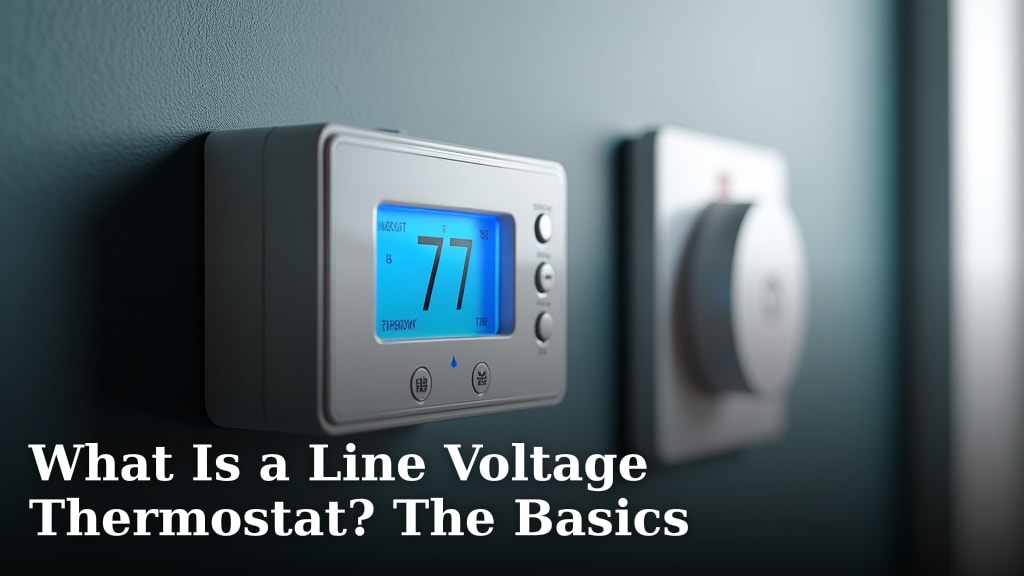
What Is a Line Voltage Thermostat? The Basics
A line voltage thermostat is a simple switch that turns your electric heating system on and off. It’s designed to work directly with high-voltage appliances like baseboard heaters or fan-forced heaters. You won’t need any special wiring or transformers for this type of thermostat.
Unlike low voltage thermostats that use a relay to signal your heating system, line voltage thermostats handle the full electrical current. This makes them a straightforward and reliable choice for many homes. They are often found in older homes but are still a common option today.
- A line voltage thermostat controls electric heaters directly.
- It uses your home’s standard 120V or 240V power.
- No separate control wires or transformers are needed.
- They are a good choice for simple electric heating systems.
Ready to understand more? Below, we’ll break down exactly how a line voltage thermostat works and what you need to know to choose the right one for your home.
“`htmlUnderstanding Your Home’s Electric Heating Control
So, what exactly is a line voltage thermostat, and why should you care? Think of it as the simple, direct on-off switch for your electric heating system. It’s designed to handle the full power that your heater needs to run. This means it works directly with your home’s standard electrical supply – typically 120 volts or 240 volts. You won’t need any extra equipment like a transformer or special low-voltage wiring.
We found that these thermostats are common in homes with electric baseboard heaters, cove heaters, or fan-forced wall heaters. They’re straightforward in design and function, making them a reliable choice for many homeowners looking for basic temperature control.
How a Line Voltage Thermostat Works
The operation of a line voltage thermostat is wonderfully uncomplicated. It’s essentially a robust switch. When the temperature in the room drops below your set point, the thermostat closes an electrical circuit. This allows the full line voltage to flow directly to your heating element, turning it on. As the room warms up to your desired temperature, the thermostat opens the circuit. This cuts off the power to the heater, and it turns off.
It’s a binary system: on or off, hot or cold. There’s no in-between. This direct connection means the thermostat itself must be rated to handle the same amount of electricity that your heater consumes. This is a key difference from low-voltage systems, which use a separate, low-power signal to tell a larger relay to turn on the heater.
The Simple Circuit
Imagine your home’s electrical wiring as a road. For a line voltage thermostat, the thermostat is like a traffic light right before the heater, which is a large factory. When the traffic light is green (closed circuit), power flows directly to the factory (heater) to make heat. When the light is red (open circuit), the power stops, and the factory stops producing heat.
The thermostat houses a sensing element and a mechanism to open and close the contacts that control the flow of electricity. Older models often used a bimetallic strip – two different metals bonded together. As the temperature changes, these metals expand or contract at different rates, causing the strip to bend. This bending action is what flips the switch.
Key Components and Function
At its core, a line voltage thermostat has:
- A Temperature Sensor: This detects the ambient room temperature.
- A Switching Mechanism: This is the part that physically makes or breaks the electrical connection.
- A Control Dial or Setting: This is where you set your desired temperature.
When the sensor indicates the temperature has fallen, it signals the switching mechanism to close. When the sensor detects the temperature has risen sufficiently, it signals the switch to open. It’s a feedback loop designed to maintain a set temperature range.
Line Voltage vs. Low Voltage Thermostats
It’s easy to get confused between line voltage and low voltage thermostats. The biggest difference lies in how they interact with your heating system and the voltage they handle.
Low voltage thermostats typically operate at 24 volts. They send a low-voltage signal to a relay or control board that then switches the main power to your heating system. This is common in central heating and cooling systems. They require a transformer to step down the house voltage and often use multiple wires to communicate different functions (like fan control).
Line voltage thermostats, on the other hand, handle the full 120V or 240V. They are wired directly in series with the heating element. This means the thermostat itself must be built to safely switch that higher current. You won’t find the complex wiring or control boards often associated with low-voltage systems.
Voltage and Wiring: The Main Distinctions
Let’s break it down:
| Feature | Line Voltage Thermostat | Low Voltage Thermostat |
|---|---|---|
| Operating Voltage | 120V or 240V (your home’s standard) | 24V (requires a transformer) |
| Wiring | Directly to the heater, typically 2 wires | Connects to control board/relay, uses multiple wires |
| Power Handling | Handles full heater current | Controls a separate relay/system that handles full current |
| Compatibility | Electric baseboard, cove, fan-forced heaters | Furnaces, boilers, central AC systems |
We found that for simple electric resistance heating, line voltage thermostats are the standard. Their direct connection simplifies installation and maintenance.
Where Are Line Voltage Thermostats Typically Found?
You’ll most commonly find line voltage thermostats installed with electric heating appliances that plug directly into or are hardwired to your home’s electrical circuits. These aren’t designed for central systems.
Common applications include:
- Electric Baseboard Heaters: These long heaters run along the base of your walls and are a very common place to find line voltage thermostats.
- Fan-Forced Wall Heaters: Often found in bathrooms or smaller rooms, these units have a fan to circulate heated air.
- Cove Heaters: These are mounted near the ceiling and provide radiant heat.
- Convection Heaters: Some plug-in or built-in convection heaters use line voltage thermostats.
Many older homes rely heavily on electric resistance heating, so line voltage thermostats are prevalent in those structures. However, they are still a popular and practical choice for new installations of these specific types of electric heaters.
Types of Line Voltage Thermostats
While they all perform the same basic function, line voltage thermostats come in a few variations. The type you choose can impact your comfort and energy usage.
Manual (Mechanical) Thermostats
These are the most basic and often the least expensive. They feature a simple dial and a bimetallic strip or similar mechanism to regulate temperature. They are straightforward to use but offer limited precision and no advanced features.
You set the temperature by turning a dial. They tend to have a wider temperature swing – meaning the room might get a few degrees warmer or cooler than your set point before the heater cycles on or off. This is because the mechanical components need a certain temperature difference to activate.
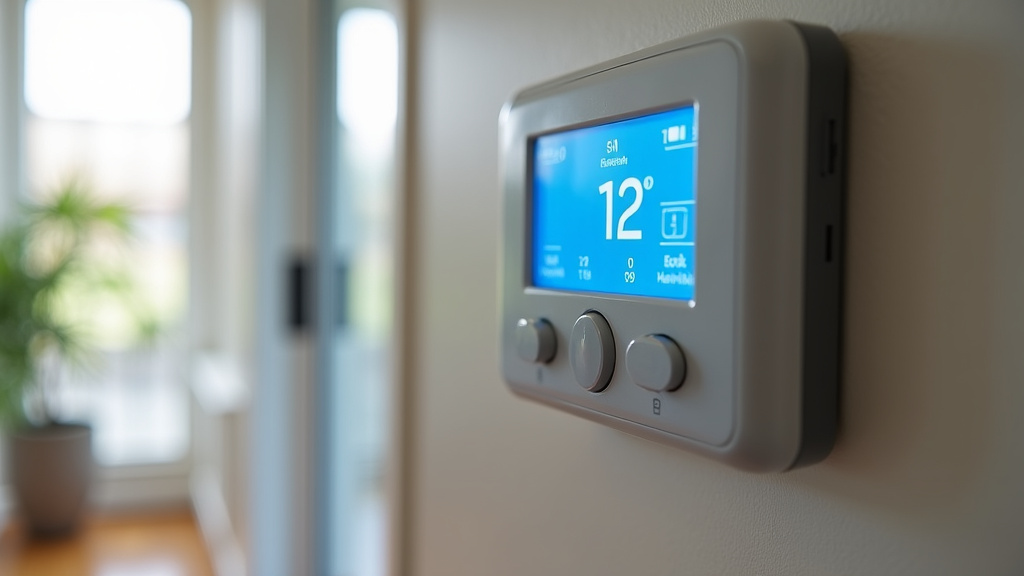
Electronic/Digital Thermostats
These models use electronic sensors and circuitry. They offer more precise temperature control and often have digital displays. This makes it easier to see the exact temperature and set your desired point accurately. They generally have a narrower temperature swing than mechanical thermostats.
Some electronic thermostats might offer basic programming capabilities, allowing you to set different temperatures for different times of the day, which can help save energy.
Programmable Thermostats
These are a step up, allowing you to schedule heating cycles throughout the day or week. You can set lower temperatures when you’re away or asleep and warmer temperatures when you’re home. Research from the U.S. Department of Energy suggests that programmable thermostats can help you save money on your energy bills by reducing heating usage when it’s not needed.
They usually have a more advanced display and more buttons for setting schedules. It’s a great option if you want to automate your heating and improve efficiency without sacrificing comfort.
Smart Thermostats
While less common in traditional line voltage applications, some newer smart thermostats are designed to work with high-voltage electric heating systems. These can often be controlled remotely via a smartphone app and may offer features like learning your habits, geofencing, and integration with smart home systems.
If you have electric baseboard heaters and want the convenience of app control, a smart line voltage thermostat could be an excellent upgrade. They bring modern technology to these sometimes older heating methods.
Choosing the Right Line Voltage Thermostat for Your Needs
When you’re ready to select a new line voltage thermostat, consider a few key factors to ensure you get the best fit for your home and your heating system.
Compatibility and Wattage Rating
This is the most critical step. You must match the thermostat to your heating appliance’s wattage and voltage. The thermostat will have a maximum wattage rating it can handle. Ensure your heater’s wattage does not exceed this rating. We found that using an underrated thermostat is a major safety hazard and can damage the thermostat or heater.
Check the specifications on your electric heater and the thermostat. They will clearly state the voltage (120V or 240V) and the maximum amperage or wattage they are designed for. Always err on the side of caution and choose a thermostat rated for a higher wattage than your heater uses.
Your Lifestyle and Comfort Goals
Think about how you use your space. If you just need a simple on/off control, a manual thermostat might suffice. However, if you want more consistent temperatures or better energy efficiency, an electronic or programmable model would be a better investment.
Are you home all day? Do you travel frequently? Do you want to wake up to a warm room? Answering these questions will guide you toward the features that matter most. A programmable thermostat, for example, can significantly improve comfort and savings for busy households.
Ease of Installation
Line voltage thermostats are generally designed for simpler installation than their low-voltage counterparts. They typically connect directly to the wires that power your heater. However, because you are working with your home’s main electrical voltage, it’s essential to prioritize safety.
If you are not comfortable working with electrical wiring, it is always best to hire a qualified electrician. They can ensure the thermostat is installed correctly and safely, which is paramount when dealing with 120V or 240V.
Quick Checklist for Your Line Voltage Thermostat
Here’s a simple guide to help you choose:
- Match Voltage: Ensure the thermostat matches your heater’s voltage (120V or 240V).
- Check Wattage/Amperage: Confirm the thermostat can handle your heater’s power output.
- Consider Type: Manual, electronic, programmable, or smart – which fits your needs?
- Programmability: Do you want to schedule temperatures for energy savings?
- Smart Features: Is remote control via an app important to you?
- Installation Comfort: Are you comfortable with DIY electrical work, or will you need an electrician?
By considering these points, you can confidently select a line voltage thermostat that will keep your home comfortably heated and operate efficiently.
“`Conclusion
You’ve learned that a line voltage thermostat is your direct connection to controlling electric heaters. It’s a simple yet effective tool designed for your home’s standard 120V or 240V power. Unlike complex low-voltage systems, these thermostats handle the full current, making them reliable for baseboard, fan-forced, and cove heaters. Choosing the right one means matching its wattage and voltage to your heater. Now that you understand the basics, you can confidently select a thermostat that will keep your space comfortably warm.
Frequently Asked Questions
Can I use a line voltage thermostat with any electric heater?
You should only use a line voltage thermostat with electric heaters specifically designed for them, like baseboard or fan-forced heaters. Always check your heater’s manual and the thermostat’s specifications to ensure they are compatible in terms of voltage and wattage.
Is it safe to install a line voltage thermostat myself?
Working with your home’s main electrical voltage (120V or 240V) requires caution. If you’re not experienced with electrical wiring, we strongly recommend hiring a qualified electrician to ensure safe and correct installation. Your safety is the top priority.
What’s the difference between a mechanical and digital line voltage thermostat?
Mechanical thermostats use physical components like bimetallic strips and offer simpler operation, often with wider temperature swings. Digital thermostats use electronic sensors for more precise temperature control and usually have a clearer display, making them easier to read and set.
Do line voltage thermostats help save energy?
Yes, especially programmable or smart models. By allowing you to set schedules or control temperatures remotely, they help prevent unnecessary heating when you’re away or asleep. This reduces energy waste and can lower your electricity bills.
How do I know if my home has line voltage heating?
Homes with electric baseboard heaters, cove heaters, or wall-mounted fan-forced heaters often use line voltage thermostats. If your heating system is electric resistance-based and not part of a central ducted system, it’s likely line voltage.