Window Fan vs Box Fan: Which Should You Choose? (November 2026)
Choose a window fan for air exchange and a box fan for portable airflow. Your window type, room layout and need for intake or exhaust control should decide the better fit.
On this page (10 sections)
- Window fan vs box fan: what is the main difference?
- Which fan is easier to move?
- Which fan works better for ventilation?
- What window fit should you check?
- Which fan gives you more control?
- Which products fit each side of the comparison?
- Which fan is better for a bedroom?
- How should you use either fan safely?
- How do you keep a fan clean?
- Window fan vs box fan: which should you choose?
Choose a window fan for air exchange and a box fan for portable airflow. The window fan vs box fan decision depends on whether you want to move air through an opening or circulate air inside the room.
A window fan is built for a specific opening. It mounts in a suitable window and can offer intake, exhaust or reversible airflow, so it can bring outdoor air in, push indoor air out, or do both at once.
That makes it useful in a bedroom or home office where stale air is the main issue.
A box fan is built for placement. It stands on the floor or another flat surface and blows air across the space where you sit or sleep.
You can move it between rooms as needed, turn it toward a doorway, or place it near a window for general airflow.
The trade-off is control versus flexibility. A window fan gives more direction control but stays tied to one opening.
A box fan moves easily but usually does not provide the same dedicated intake and exhaust modes.
Think about your room first. If the air feels warm, still or stale, and the window fits, a window fan may solve the problem at the source.
If you need a breeze now and might use the fan elsewhere later, a box fan is simpler.
Setup also matters. A window fan needs measuring, a secure fit and clear panels.
A box fan needs level space, a reachable outlet and a safe cord path. Choose the option you can place safely without crowding the room.
This comparison looks at ventilation, portability, controls, setup and everyday care. For a broader look at fan styles, see our air circulator guide.
Use the sections below to match each fan type to your window, floor space and daily routine. A small check now can prevent a poor fit later.
 Best for automatic window ventilation
Bionaire Window Fan with Reversible Airflow Blades

Window fan vs box fan: what is the main difference?
A window fan changes the room's air direction, while a box fan mainly moves air across the room. That difference matters more than the fan's shape or blade count.
A window fan works at the boundary between inside and outside. It can pull outdoor air into the room, exhaust indoor air to the outside, or run both sides at once in models with reversible airflow.
That control is the main reason to choose this style.
A box fan works inside the room. It creates a breeze from wherever it stands, so it can cool the area where you sit, help move air between rooms and sit near an opening.
It does not change the air direction in the same planned way.
Set a window fan to intake when you want outdoor air moving inside. This suits a pleasant evening when indoor air feels still and you want fresh air without opening the window wide.
Set it to exhaust when you want indoor heat or stale air moving outside. That can help after cooking, cleaning or a warm day, as long as outdoor conditions are suitable and the air outside is not smoky or unsafe.
A box fan creates a breeze from wherever it stands. Place it at the right height and angle, and it can make a desk, bed or reading chair feel cooler.
The effect is local, so moving the fan may work better than turning up the speed.
It can also help move air between rooms. A box fan near a doorway can encourage air to flow from a cooler space to a warmer one.
That is circulation, not true ventilation, and it works best when doors or openings give air a clear path.
A window fan is usually the better choice for planned air exchange. It suits a room with a suitable window, a need to remove heat or stale air, and a setup you will leave in place for daily use.
A box fan is often easier when you need one fan for several rooms. It suits renters, small spaces and anyone who wants to move cooling from a bedroom to a living area without reinstalling anything.
Neither choice is right for every home. Check window fit, floor space, cord reach and how you prefer to control speed before you decide.
Which fan is easier to move?
A box fan is easier to move because it is designed for free-standing use. A window fan stays tied to a suitable opening unless it includes legs or another standing setup.
The Amazon Basics 3-Speed Box Fan weighs 5.8 lb and has a carry handle. Its free-standing design and extra-large feet suit room-to-room use on a stable floor or table.
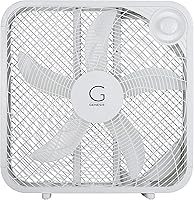
The Genesis 20 in Box Fan includes a carry handle and is described as a floor fan that can rest on a flat surface. Its 20 in fan head is suited to a larger personal airflow area, but you still need space for the fan.
The Genesis Twin Fan includes 2 removable legs, so it can stand on its own as well as fit a window. That gives it more placement options than a window-only design.
For another portable comparison, read Tower Fan vs Floor Fan, especially if vertical floor space matters more than a square fan shape.
Which fan works better for ventilation?
A reversible window fan works better for ventilation because it can direct air into or out of the room. A box fan is a better match when your main goal is circulation rather than controlled intake or exhaust.
The Bionaire Window Fan has reversible airflow blades, independent fan blade control and manual and automatic modes. It can draw in cool air, exhaust hot air or exchange airflow simultaneously.
Its programmable thermostat can maintain a selected comfort level by turning the fan on and off. The LED display and remote control also help when the fan is installed across the room.
The Genesis Twin Fan has 2 9 in fan heads, reversible airflow and a built-in thermostat with a 60–80°F range. Its LED indicator lights show the temperature setting, while the expandable side panels fit windows up to 37 in wide.
If you need a dedicated window setup, compare the best window fan on sale options after measuring the opening and checking the window style.
What window fit should you check?
Measure the window opening before choosing a window fan. A fan that cannot sit securely in the opening is not a safe substitute for a proper fit.
The Bionaire model fits double-hung, vertical slider and casement windows from 24 to 37 in wide. Its dimensions are 4 D x 24 W x 12.8 H in, and it includes built-in and additional extender panels.
The Genesis Twin Fan measures 4 D x 24 W x 12 H in. Its expandable side panels can extend up to 6.5 in on either side, with a stated fit up to 37 in wide.
Measure the clear opening, frame shape and the space around the window. Check how the window closes around the fan and whether the installation leaves the unit stable.
The ceiling fan vs box fan comparison can help if you are deciding between permanent overhead circulation and a fan you can store or move.
Which fan gives you more control?
A window fan offers more airflow-direction control, while a box fan keeps controls simple. Choose the control style that matches how often you change airflow and where the fan will sit.
The Bionaire has 3 speed settings, a programmable thermostat, an LED display and a remote. Its twin fans can have independent control, which helps when intake and exhaust need different settings.
The Genesis Twin Fan has 3 speeds, a thermostat and LED indicator lights. Its button controls are on the fan, so changing settings requires reaching the unit.
The Genesis 20 in Box Fan uses a knob and offers 3 speed settings. The Amazon Basics model also uses a knob, has 3 speeds and lists a 67-watt power rating.
A box fan's simpler controls can be useful in a bedroom or office where you want to set a speed and leave it running. A thermostat matters more when you want the fan to respond to a selected temperature.
Which products fit each side of the comparison?
Pick the Bionaire for the most complete window control, the Genesis 20 in for a portable floor fan, the Genesis Twin Fan for reversible window airflow, and the Amazon Basics model for lighter room-to-room use. Their strengths come from different setups.
The Bionaire Window Fan fits 24 to 37 in windows and has 3 speeds. Its remote and thermostat make it the strongest match here for someone who wants window ventilation without walking to the fan for every adjustment.
The Genesis 20 in Box Fan suits a room where the fan will sit on the floor, dresser or table. Its 20 in fan head and 3 speed settings focus on portable circulation rather than window air exchange.
The Genesis Twin Fan offers reversible airflow, expandable side panels and 2 removable legs. It is a flexible choice when you want window ventilation but may also use the fan standing on its own.
The Amazon Basics box fan weighs 5.8 lb and has extra-large feet for a free-standing setup. It suits buyers who want a basic portable fan for bedrooms, living areas, kitchens or home offices.
Which fan is better for a bedroom?
Choose a box fan for flexible bedroom placement, or a window fan when you want outdoor air moving through the room. The best choice depends on whether you need a breeze beside the bed or ventilation through the window.
A box fan can sit on a stable floor or table and move with you if the bedroom changes. Keep the intake and exhaust areas clear, and select a speed that feels comfortable without pointing airflow directly at loose objects.
A window fan can help exchange air when the window is suitable and outdoor conditions are comfortable. Use the thermostat or remote where available to reduce repeated trips across the room.
For a bedroom with limited floor space, measure the window before choosing a window-mounted model. For another room-by-room comparison, see Tower Fan vs Desk Fan.
How should you use either fan safely?
Place a box fan on a stable surface and secure a window fan in the opening before turning it on. Keep cords, blades and airflow paths clear during use.
Use the correct electrical outlet and follow the instructions for the exact model. The Bionaire uses a standard North American electrical outlet plug, while the Amazon Basics model uses a standard North American 2-prong connection.
Don't place a free-standing fan where it can tip, block a walkway or pull on its cord. The Amazon Basics model has extra-large feet, but the floor should still be level and clear.
For a window fan, confirm that the window and extender panels hold the fan securely. Don't use a window installation that leaves gaps, leaning weight or an obstructed opening.
Our box fan vs oscillating fan comparison explains when a fixed airflow pattern is more useful than moving side-to-side air.
How do you keep a fan clean?
Unplug the fan before cleaning and remove dust from the grille, blades and surrounding surfaces according to the manual. Regular dust removal helps keep airflow paths open.
Use a soft, dry or lightly damp cloth where the instructions allow it. Keep moisture away from the motor, controls and electrical connection.
Window fans may collect dust from both indoor and outdoor air. Check the grille and extender areas after use, especially when the fan has been running for ventilation.
For box fans, move the unit only after it is off and unplugged. Check the carry handle, feet and cord before placing it in another room.
If you want to add filtration around a box fan, start with our guide to the best box fan air filter. Make sure any filter setup does not block the fan or create an unstable arrangement.
Window fan vs box fan: which should you choose?
Choose a window fan if you need intake, exhaust or thermostat-based ventilation through a suitable window. Choose a box fan if you want portable airflow that can move between rooms.
The Bionaire is the strongest fit for automatic window control and remote operation. The Genesis Twin Fan suits reversible airflow with a thermostat and removable legs.
Choose the Genesis 20 in Box Fan for a larger portable fan head and the Amazon Basics model for lighter room-to-room movement. If neither fits your layout, consider whether a ceiling fan heater makes more sense for year-round overhead air movement.
The right window fan vs box fan choice is the one you can place securely, control easily and use for the airflow problem in front of you.
Frequently asked questions
Is a window fan better than a box fan?
A window fan is better when you want to bring in outdoor air, exhaust indoor air or exchange air through a window. A box fan is better when you want portable airflow inside the room.
Choose by ventilation needs first, then check window fit, controls and available floor space.
Can you use a box fan in a window?
You can place a box fan in or near a window only if the opening, support and fan placement are suitable. A dedicated window fan is designed for window mounting and may include expandable panels or reversible airflow.
Never block the fan or create an unstable setup.
Which is quieter, a window fan or box fan?
Neither fan type is automatically quieter. Noise depends on the exact motor, blade design, speed and room placement.
Compare the manufacturer's noise information when available, then use the lowest speed that provides enough airflow.
Keep either fan on a stable surface or secure window mount.
Do window fans bring in fresh air?
A window fan can bring in outdoor air when set to intake. Some models can also exhaust warm indoor air or run intake and exhaust at the same time.
Close nearby windows or doors as needed to guide the airflow, and avoid using outdoor air when conditions are smoky or unsafe.