Ceiling Fan vs Box Fan: Which Should You Choose? (November 2026)
Choose a ceiling fan for steady overhead airflow, or a box fan for portable cooling and lower setup effort. Your room layout, rental status and need to move the fan should guide the decision.
On this page (8 sections)
- Ceiling fan vs box fan: which is better for daily use?
- Which fan works better in a bedroom?
- Which option is better for renters?
- How do airflow direction and placement differ?
- Which fan uses less room space?
- Which products fit each side of the comparison?
- How should you care for either fan?
- Ceiling fan vs box fan: which should you choose?
Choose a ceiling fan for steady overhead airflow, or a box fan for portable cooling and simple setup. The decision depends on whether airflow should stay in one room or move with you.
A ceiling fan stays overhead and frees floor and table space. That helps in a bedroom, office, kitchen or living area where furniture already takes much of the room.
It also moves air from the same place each day without carrying or plugging it in again. A box fan rests on a flat surface and can move between rooms as needs change.
You can set a box fan near a bed, desk or sofa. That flexibility suits a small home, guest room or any space that needs extra airflow only part of the day.
Other needs also matter. A ceiling fan with a light combines airflow and lighting in one fixture.
A box fan can suit window placement when you want air to move from a lower position.
Setup differs too. A ceiling fan needs more planning and a suitable ceiling mounting point.
A box fan needs a stable surface, clear space around it and a nearby outlet.
Room layout matters as much as fan type. A fixed fan suits one room needing regular overhead airflow.
A portable fan suits changing locations, seasonal use and rooms with no room for a permanent fixture.
Placement shapes daily comfort. Overhead airflow can cover a wider seating or sleeping area from one central point.
A box fan can send airflow closer to where you sit or sleep if you keep its intake and exhaust areas clear.
Choose based on routine, not looks alone. If the fan will stay in one room all year, a ceiling fan may be the practical fit.
If you want cooling to follow you between rooms, a box fan may be easier to live with.

 Best for small rooms with built-in lighting
Amico 42 Inch Black Low Profile Ceiling
Ceiling fan vs box fan: which is better for daily use?
A ceiling fan suits one room that needs regular overhead airflow, while a box fan suits changing locations and short-term cooling. Think about where you spend time and whether airflow must follow you.
The Amico and Depuley are both 42 in flush-mount ceiling fans with lights and remote controls. The Genesis and Amazon Basics models are 20 in box fans designed for floor or free-standing placement.
A ceiling fan gives you a fixed airflow source. A box fan gives you more control over position, but it needs a clear surface and a nearby electrical outlet.
For a broader look at fan types, see our fans complete buying guide. It can help if neither a ceiling fan nor a standard box fan matches your room.
When should you choose a box fan?
Choose a box fan when portability, window placement or low setup effort matters most. It can sit on a floor, table or dresser, depending on the model and the available space.
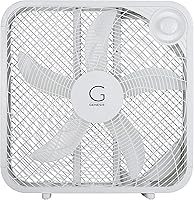
The Genesis has a 20 in blade length, 3 speed settings, a carry handle and a copper motor. Its floor-mount design makes it suitable when you want to place the fan around the home.
The Amazon Basics model is also a 20 in box fan. It weighs 5.8 pounds, has a carry handle, 5 blades and 3 speeds, so it fits a room-to-room cooling routine.
A box fan can also work near a window when you want to move air through the room. Keep it stable, leave the intake and exhaust areas clear and follow the fan's safety instructions.
When should you choose a ceiling fan?
Choose a ceiling fan when one room needs permanent airflow without using floor space. It works well in a bedroom, office, kitchen or living area where the fan can stay in place.
The Amico is a 42 in low-profile ceiling fan with 6 speed levels, remote control and an adjustable white LED light. Its fan and light can operate separately, and its flush-mount design is intended for smaller indoor spaces.
The Depuley is a 42 in flush-mount ceiling fan with 5 reversible blades, 6 speeds, remote control and a dimmable LED light. It is described for rooms from 129 to 215 square feet and covered outdoor areas.
A ceiling fan requires more planning before use. Check the ceiling junction box, mounting method and wall-switch limits before installation.
The Amico and Depuley should use a standard on/off wall switch rather than a dimmer, fan speed switch or smart switch.
Which fan works better in a bedroom?
A ceiling fan works well when you want quiet overhead airflow that stays out of the way, while a box fan works well when you want to place airflow close to the bed or move it later.
The Amico has 6 fan speeds, a remote and a sleep shutdown timer with 1, 2 or 4 hour settings. Its design is described as operating at up to 35 dB.
The Depuley has 6 fan speeds, a remote and a 2 to 4 hour timer. Its listed noise level is 30 dB, and its light supports adjustable brightness and color temperature.
A box fan can be useful when the bed position makes direct airflow easier from the floor or a nearby table. The Amazon Basics model has a free-standing design with extra-large feet, while the Genesis has a carry handle for repositioning.
Don't place either fan where bedding, curtains or furniture can block the airflow. Keep cords arranged so they don't cross walking paths.
Which option is better for renters?
A box fan is usually the simpler renter choice because it does not require ceiling installation. You can place it on a suitable flat surface, connect it to an outlet and store it when you move.
A ceiling fan can still work in a rental if the room has a suitable standard ceiling junction box and the owner allows the installation. The Amico is designed for flush mounting to a standard junction box, but its instructions and electrical limits still matter.
The Depuley also uses flush mounting and includes a remote control, light kit and cord. Its installation should be checked against the ceiling structure and the manufacturer's directions.
If you are deciding between portable fan styles, compare a box fan vs oscillating fan to see how fixed and moving airflow differ.
How do airflow direction and placement differ?
A ceiling fan sends airflow down from above, while a box fan sends airflow from the surface where you place it. Placement changes how the breeze reaches you and how the room's air moves.
A ceiling fan is useful when chairs, beds and desks are spread around one room. Its central position can keep airflow above furniture and leave the floor open.
A box fan gives you more placement choices. Put it near the area where you sit, or position it near a window when the goal is to exchange indoor and outdoor air.
Window position matters. Compare the airflow and ventilation needs in our window fan vs box fan guide before using a box fan near an opening.
Keep a box fan upright on a stable surface. Do not balance it on an unstable stack of books or place it where a small bump could make it fall.
Which fan uses less room space?
A ceiling fan uses less usable floor space, while a box fan needs a floor, table or dresser location. The ceiling option can be the cleaner choice for small rooms with limited walking space.
The Amico measures 42 in across and 9.3 in high as a ceiling fixture. Its low profile design helps it sit close to the ceiling rather than hanging well below it.
That shape can suit a small room where overhead clearance still matters.
The Depuley measures 42 in in diameter and 9.25 in high. It is also a flush mount design, so it keeps the fixture compact after installation.
For a small room, that can leave more visual and physical space below.
The Amazon Basics box fan measures 6.8 in deep, 20.86 in wide and 21.33 in high. It is a free-standing fan, so it still needs a clear spot on the floor or a suitable surface.
Its footprint is modest, but it is not space free.
The Genesis is a 20 in box fan with floor, table or dresser placement described for indoor use. A carry handle helps you move it, yet each new position needs a stable flat surface.
That can suit a bedroom or office with room to set it down safely.
Measure more than the fan itself. A box fan needs room around its intake and exhaust areas, while a ceiling fan needs safe overhead clearance and a mounting point.
Also check walking paths, bed placement and nearby furniture before you decide.
In a tight room, saved floor space often matters most. In a room with spare surface space, a box fan can be easy to place and move.
The better fit depends on which space is truly available in daily use.
Which products fit each side of the comparison?
The Genesis and Amazon Basics models fit portable box-fan use, while the Amico and Depuley models fit permanent ceiling airflow with lighting. The best match depends on whether flexibility or fixed room coverage matters more.
The Genesis is a strong match for moving a fan between rooms. Its 20 in size, 3 settings and carry handle give you a simple way to adjust airflow without ceiling work.
The Amico suits a bedroom, office or other small indoor space where you want overhead airflow and a built-in light. Its remote includes fan speed, light control and timer functions.
The Amazon Basics model fits readers who want a lighter portable fan. Its 5.8 pound weight, free-standing feet and 3 speed settings support easy movement between indoor spaces.
The Depuley fits a small room or covered outdoor area where remote-controlled airflow and adjustable lighting are useful. Its 42 in diameter is described for rooms from 129 to 215 square feet.
How should you care for either fan?
Keep both fan types clean, stable and unobstructed, and follow the exact manual for electrical and installation care. Routine care starts with removing dust from accessible surfaces and keeping airflow openings clear.
Unplug a box fan before cleaning it. Place it on a stable surface, keep the cord away from walkways and avoid using it where direct moisture can reach the electrical parts.
For a ceiling fan, turn off power before cleaning the blades or light area. Check that the mount remains secure and that the fan does not connect to a switch type the manufacturer excludes.
If you need another portable comparison, our box fan vs pedestal fan guide explains how height and placement change the airflow choice.
A ceiling fan with a light can combine 2 room functions in one fixture. Our guide to whether a ceiling fan is a light fixture covers the planning questions that come with that setup.
For rooms where humidity also affects comfort, compare a cool mist vs warm mist humidifier before adding moisture to the air.
Ceiling fan vs box fan: which should you choose?
Pick a ceiling fan if you want permanent overhead airflow, built-in lighting and open floor space. The Amico fits that role with 6 speeds, a remote and adjustable LED light, while the Depuley adds reversible blades and a dimmable LED light.
The Amico is a 42 in flush-mount ceiling fan for a small indoor room. Its remote adjusts fan speed, light settings and timer functions from your seat.
Its adjustable white LED light can suit different activities in the same room, from reading to winding down at night.
The Depuley is also a 42 in flush-mount ceiling fan for rooms from 129 to 215 square feet. Its 6 speeds and reversible blades give more choice over airflow direction through the year.
Its dimmable LED light and remote can suit a bedroom, study or covered outdoor area.
Both ceiling fans require a suitable ceiling junction box and flush-mount installation. They should use a standard on/off wall switch rather than a dimmer, fan speed switch or smart switch.
Check the ceiling structure and the manual before you commit to this option.
Pick a box fan if you want portability, simple placement and flexible window-level airflow. The Genesis offers a 20 in format with 3 settings, a carry handle and a copper motor.
Its floor-mount design suits indoor placement in a home office, bedroom or living area.
The Amazon Basics model is a lighter 20 in option with 5 blades and 3 speeds. It weighs 5.8 pounds and has a carry handle for room-to-room use.
Its free-standing design and extra-large feet help it sit stably during operation.
A box fan needs a stable flat surface and a nearby outlet each time you use it. Keep its intake and exhaust areas clear so air can move freely.
It can also be stored away when weather changes, which suits seasonal or occasional cooling.
Choose the fan that matches how often you move it, where you need airflow and how much installation work you can accept. If one room needs airflow every day, a ceiling fan may be the better fit.
If cooling needs to move with you, a box fan may be the simpler choice.
Frequently asked questions
Is a ceiling fan better than a box fan?
A ceiling fan is better for permanent overhead airflow and saves floor space, while a box fan is better for portability and simple setup. Choose the ceiling model when you want airflow from one fixed location.
Choose the box model when you want to move cooling between rooms or place the fan near a window.
Does a box fan cool a room better than a ceiling fan?
Neither fan is automatically better for every room. A box fan can move air from a floor, table or window-level position, while a ceiling fan spreads airflow from above.
The better choice depends on where you sit, whether you need ventilation and how much floor or ceiling space you have.
Which fan is easier to install, a ceiling fan or box fan?
A box fan is easier to install because it can rest on a suitable flat surface and plug into a standard outlet. A ceiling fan needs a suitable ceiling junction box and flush-mount installation.
If you rent or cannot alter the ceiling, a box fan usually creates fewer setup limits.
Are ceiling fans quieter than box fans?
The answer depends on the exact model and speed. The Amico is described as operating at up to 35 dB, while the Depuley is described as operating at 30 dB.
Box fan noise can vary with speed, placement and the surface beneath it, so compare the exact models rather than fan type alone.