
What Is the Purpose of a Thermostat? A Practical Guide
A thermostat is a device that controls your home’s temperature by automatically turning heating and cooling systems on and off. Its primary purpose is to maintain a comfortable living environment without constant manual adjustments. You set a desired temperature, and the thermostat does the work for you.
Most thermostats work by sensing the current room temperature and comparing it to your setting. We found that even basic models can improve energy efficiency by preventing systems from running unnecessarily. This helps lower your utility bills while keeping your home just right.
- Thermostats regulate home temperature by managing heating and cooling.
- They help save energy and reduce monthly costs.
- Options include manual, programmable, and smart models for different needs.
- Proper use leads to better comfort and efficiency.
- Understanding your thermostat is key to a cozy, cost-effective home.
Below, we break down exactly how thermostats function and what to consider when choosing one for your space.
How a Thermostat Works to Keep Your Home Comfortable
A thermostat is the brain behind your home’s heating and cooling. It measures room temperature, compares it to the level you set, and turns your HVAC system on or off as needed. Think of it like a gatekeeper that decides when your furnace or air conditioner should run. Without one, you’d be adjusting things manually all day long.
Most homes have some version of this device. Even the simplest ones do the job surprisingly well. The point is straightforward: keep your space at a temperature you like without wasting energy. That’s it. No fuss, no drama.
What Happens When You Set a Temperature
Here’s the basic flow. You walk up to your thermostat and pick a number—say, 72°F. The thermostat reads the current temperature in the room. If it’s colder than 72°F, it sends a signal to turn on the heat. Once the room warms up, the system shuts off. It’s a simple loop that repeats all day.
This cycle is what keeps your home from getting too hot or too cold. Your thermostat is constantly comparing and adjusting. It’s like having a quiet, never-tired friend watching the thermometer for you.
Sensors and How They Detect Temperature
Thermostats use built-in sensors to read the air around them. Most modern models use a thermistor—a small component whose electrical resistance changes with temperature. The thermostat reads that resistance and converts it into a number you see on the display.
Some smart thermostats use more advanced sensors, like infrared or humidity sensors. But the basic idea is the same. Read the air. Compare it to your setting. Act accordingly.
Placement matters a lot. If your thermostat sits near a window, a vent, or direct sunlight, it might read the wrong temperature. Many experts recommend placing it on an interior wall, away from drafts and heat sources. That simple move can make a big difference in accuracy (Energy Star).
Understanding the Different Types of Thermostats
Not all thermostats are built the same. You’ve got three main categories, and each one offers something different. Let’s walk through them so you can figure out what fits your needs.
Manual Thermostats
The old-school dial or slider. You set it, and it stays there. There’s no schedule, no automation, and no app. Just a simple device that turns your system on and off based on the temperature you pick.
These are cheap and easy to use. If you just want something that works without overthinking, a manual thermostat gets the job done. The downside? You have to change it yourself every time you want to adjust the temperature.
Programmable Thermostats
Here’s where things get more useful. A programmable thermostat lets you set a schedule. You can tell it to lower the heat when you leave for work and warm up again before you get home. That way, you’re not heating an empty house.
Research shows that a well-set programmable thermostat can save you about 10% a year on heating and cooling (U.S. Department of Energy). That’s real money back in your pocket.
Common Scheduling Options
Most programmable models offer weekly or daily schedules. Some let you set separate plans for weekdays and weekends. The most basic ones have four time slots per day. The more advanced ones give you 7-day flexibility. Choose what matches your routine.
Smart Thermostats
Smart thermostats take the programmable idea and add brains. They learn your habits, connect to Wi-Fi, and can be controlled from your phone. Some even adjust automatically based on weather forecasts or whether you’re home.
We found that smart thermostats often lead to even greater energy savings, especially for people with busy or unpredictable schedules. Many studies suggest that learning thermostats can cut energy use by 10% to 15% over a year (NCBI). That’s a solid return for a one-time upgrade.
These devices also work with voice assistants like Alexa or Google Home. Want to change the temperature without getting off the couch? You can. It’s convenient, and it helps you stay consistent with your settings.
Why Thermostats Matter for Saving Energy and Money
Let’s be honest. Heating and cooling are expensive. They make up nearly half of the average household’s energy bills (U.S. Energy Information Administration). A good thermostat helps you cut that cost by keeping your system from running when it doesn’t need to.
Without a thermostat, your furnace or AC would run nonstop. That wastes energy. That wastes money. A thermostat acts as the control panel, making sure you only use what you actually need.
The Real Impact on Your Utility Bills
You might not notice it day to day, but small adjustments add up. Setting your thermostat just 2°F lower in winter or 2°F higher in summer can save you up to 5% on your annual energy bill (Energy Star). That’s a simple change with real results.
Programmable and smart thermostats make this even easier. They automatically adjust for you. No more forgetting to turn down the heat before bed. No more coming home to an overheated house.
Here’s something we found worth noting: according to the CDC, maintaining proper indoor temperatures is important for health. Staying too cold can worsen conditions like asthma, while extreme heat can cause dehydration. Your thermostat helps keep your home in that safe, comfortable range.
How Thermostats Help the Environment
When you use less energy, you produce fewer carbon emissions. That’s a good thing for the planet. A well-managed thermostat means your HVAC system runs less, which means less fossil fuel burned. It’s a small action with a bigger ripple effect.
Many energy agencies encourage using thermostats wisely as part of a broader plan to reduce household energy use. Even tiny steps, like lowering your temperature at night, make a difference when millions of people do it together.
How to Choose the Right Thermostat for Your Home
Picking the right thermostat depends on a few things: your budget, your schedule, and how much control you want. Let’s break it down so you don’t overthink it.
A Quick Comparison Table
| Feature | Manual | Programmable | Smart |
|---|---|---|---|
| Price Range | $15 – $40 | $30 – $100 | $100 – $250+ |
| Scheduling | No | Yes | Yes, with learning |
| Remote Control | No | Some models | Yes, via app |
| Energy Savings | Minimal | Moderate | High |
| Installation | Very easy | Easy | Moderate |
| Best For | Small spaces, simple needs | Regular schedules | Busy families, tech lovers |
As you can see, smart thermostats offer the most features, but they cost more upfront. If you’re on a tight budget, a programmable model is a strong middle ground. And if you just need something basic, a manual thermostat still works perfectly fine.
What to Look For When Shopping
First, check compatibility. Not every thermostat works with every HVAC system. If you have a heat pump, make sure the thermostat supports it. Most manufacturers list this info on their packaging or websites.
Next, think about your habits. Do you leave the house at the same time every day? A programmable thermostat would be great. Do you travel often or have an unpredictable schedule? A smart thermostat might be better. It adapts to your routine and adjusts without you lifting a finger.
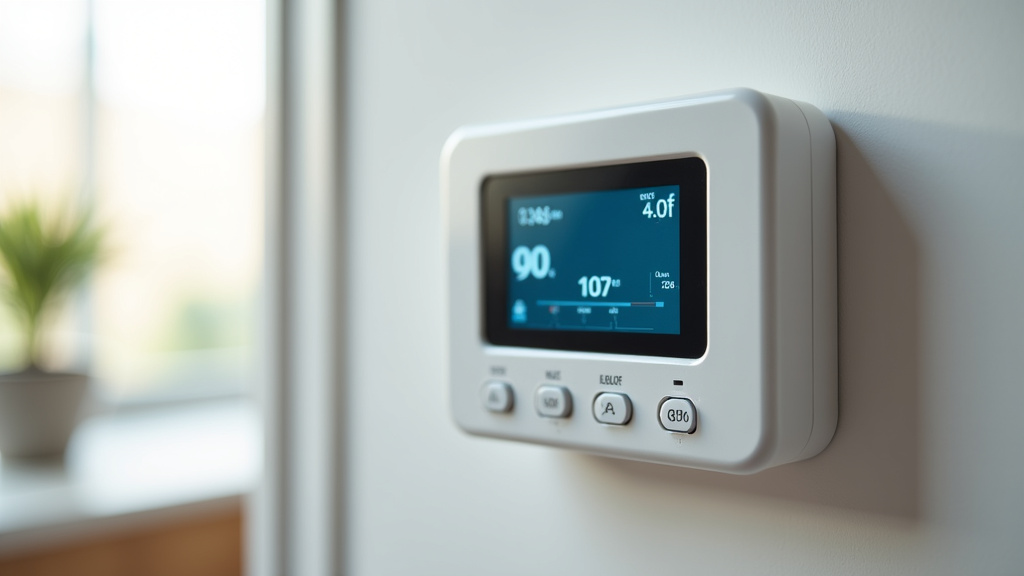
Finally, consider ease of use. Some thermostats have complicated menus. Others are simple and straightforward. We found that many shoppers prefer models with clear displays and easy-to-read buttons, especially if you’re not tech-savvy (Cleveland Clinic). Simplicity wins in the long run.
Using Your Thermostat the Smart Way
Getting a thermostat is one thing. Using it well is another. Even the best device won’t help if you set it wrong. Here are some practical tips to get the most out of yours.
Common Mistakes to Avoid
One of the biggest mistakes people make is setting the thermostat too high or too low. Cranking up the heat to 80°F won’t warm your house faster. It just makes the system run harder. Set it to a reasonable temperature and let it do its job.
Another common error is placing the thermostat in a bad spot. Near a kitchen stove, in direct sunlight, or next to a door—all of these throw off the reading. Remember, the thermostat can only control what it can sense.
A Simple Checklist for Better Comfort
Use this list to make sure you’re getting the most out of your thermostat:
- Set your thermostat to 68°F in winter and 78°F in summer for balanced comfort and savings.
- Check the batteries regularly so your thermostat doesn’t die unexpectedly.
- Keep it away from heat sources like ovens, windows, and vents.
- Use the schedule feature if your thermostat has one—set it and forget it.
- Upgrade when needed if your thermostat is older than 10 years.
- Clean it occasionally to remove dust that might interfere with sensors.
This checklist is simple, but it makes a real difference. Most of these take just a few minutes. And the payoff is a more comfortable home and lower bills.
Why Every Home Needs a Reliable Thermostat
At the end of the day, your thermostat is more than a gadget. It’s the tool that keeps your home feeling right. It saves you money. It keeps your family comfortable. It helps the planet, too.
Whether you go with a basic model or a smart one, the goal stays the same: control, comfort, and savings. We found that homes with well-managed
Conclusion
Your thermostat is the unsung hero of home comfort and energy efficiency. It works quietly to keep your space at a perfect temperature, saving you money and preventing wasted energy. Whether you choose a simple manual dial or a smart, learning device, the goal remains the same: to create a cozy, cost-effective environment for your family. A well-placed and properly used thermostat makes a noticeable difference in both your comfort and your monthly bills.
As a final step, take a moment to look at your current thermostat. Is it placed correctly on an interior wall? Could its age or features be costing you money? Upgrading or adjusting how you use it is one of the easiest home improvements you can make.
Frequently Asked Questions
Where is the best place to put a thermostat in my house?
The ideal location is on an interior wall in a central living area like a hallway or living room. It should be away from direct sunlight, vents, doors, and appliances that produce heat or cold. This ensures it reads the average temperature of your home accurately.
How long should a thermostat last before I need to replace it?
Most thermostats are built to last about 10 years. After this time, sensors can lose accuracy, and newer models offer better energy-saving features. If your heating or cooling seems erratic or your energy bills are creeping up, it might be time for an upgrade.
Will a smart thermostat really work with my old furnace?
It depends on your system’s voltage. Most smart thermostats are designed for low-voltage systems common in modern homes. If you have an older, high-voltage system (like electric baseboard heat), you may need a specific model. Always check compatibility on the manufacturer’s website before purchasing.
What temperature should I set my thermostat to save the most energy?
According to the U.S. Department of Energy, setting your thermostat to 68°F in winter when you’re awake and lower when you’re asleep or away is a great starting point. In summer, aim for 78°F when you’re home. Even a 1-2 degree adjustment can lead to noticeable savings over time.
Why does my thermostat screen sometimes go blank?
The most common cause is dead batteries, which many models use as a backup. Try replacing the AA or AAA batteries first. If that doesn’t work, it could be a wiring issue or a problem with your HVAC system’s power. Check your circuit breaker and furnace switch before calling a professional.