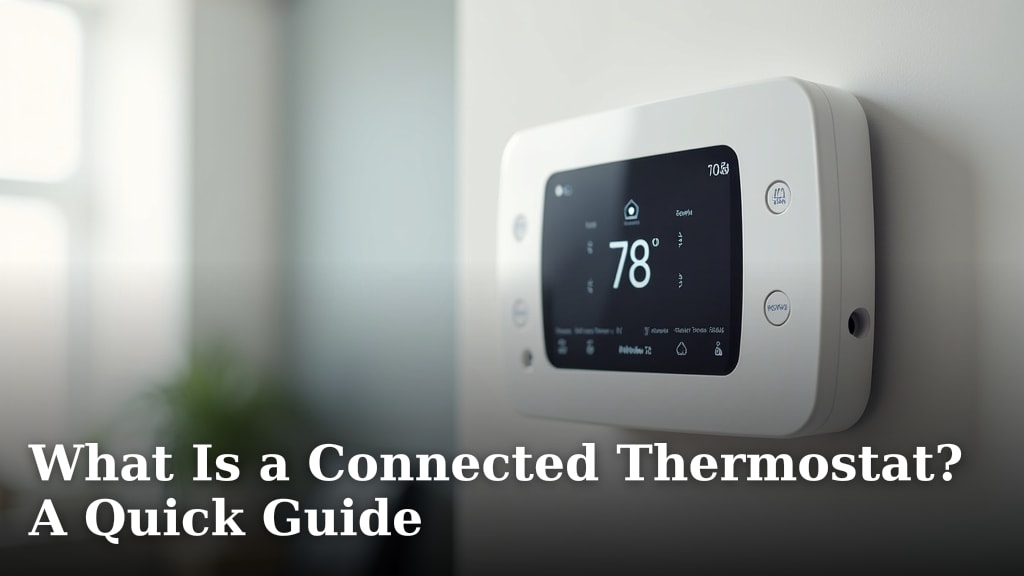
What Is a Connected Thermostat? A Quick Guide
A connected thermostat is a Wi-Fi-enabled device that lets you control your home’s heating and cooling from your phone. It replaces your old, manual thermostat with a smarter one that you can adjust from anywhere.
We found that these devices can help you save energy by learning your schedule and adjusting the temperature automatically. Many experts say they make managing your home’s climate more convenient and can potentially lower your utility bills.
- A connected thermostat is a smart, internet-linked device for controlling your home’s temperature.
- It lets you adjust settings from a smartphone app, even when you’re away from home.
- It can learn your preferences and create a schedule to save energy without extra effort.
- It often shows energy usage reports to help you understand your consumption.
- They are generally easy to install and work with most home heating and cooling systems.
Below, we’ll walk through exactly how this works, what the main benefits are, and what to look for when choosing one for your home.
How a Connected Thermostat Works
Think of a connected thermostat as the brain for your home’s heating and cooling. It replaces the simple dial on your wall with a smart device that connects to the internet. This connection is what gives you all the extra control and features. Once set up, you can use a smartphone app to change the temperature from your couch or across the country.
We found that the core function is still managing your HVAC system. However, it adds layers of intelligence and remote access. Most models install just like a standard thermostat, connecting to your existing system’s wires. The real magic happens in the software and the wireless link.
The Role of Your Wi-Fi Network
The “connected” part comes from your home’s **Wi-Fi**. Your thermostat joins your network, much like your phone or laptop. This link lets it talk to servers and apps. Without Wi-Fi, it would be a regular, programmable thermostat. With it, you gain a powerful set of tools.
Many experts say this connection is what transforms a simple tool into a helpful assistant. It opens the door for features that learn and adapt. Your phone becomes the remote control for your home’s comfort.
Learning Your Schedule
One of the biggest benefits is the **learning ability**. For the first week or two, you adjust the temperature as you normally would. The thermostat watches and learns. It notices when you wake up, leave for work, come home, and go to bed. Then, it starts creating a schedule for you.
Research and found that this automated scheduling is a key energy saver. The U.S. Department of Energy notes that turning your thermostat back 7°-10°F for 8 hours a day from its normal setting saves about 10% a year. A connected thermostat works to do this automatically. It can adjust the temperature when you’re out or asleep without you lifting a finger.
Remote Control From Your Phone
Imagine you’re stuck at work and it’s freezing at home. With a connected thermostat, you can open the app and turn the heat up before you arrive. Coming home on a hot day? Start the air conditioning from the grocery store parking lot. This **remote access** is the most visible benefit for daily life.
It also helps prevent wasting energy. You don’t have to leave the system running all day just in case you come home early. You can take control whenever you need to. This flexibility provides both comfort and peace of mind.
The Real-World Benefits You’ll Notice
Beyond the fancy tech, what does a smart thermostat actually do for you? The advantages are practical and show up in your daily routine and your wallet. Let’s break down the top benefits that real shoppers care about.
Meaningful Energy and Cost Savings
The main promise is a lower **utility bill**. By avoiding heating or cooling an empty house, you cut wasted energy. The U.S. Environmental Protection Agency (EPA) reports that ENERGY STAR certified smart thermostats save people an average of 8% on heating and cooling costs annually. That translates to real money back in your pocket over time.
We found that savings depend on your habits, home, and climate. However, the consistent message from energy experts is that these devices help reduce consumption. They provide the tools and data to make informed choices about your energy use.
Convenience and “Set It and Forget It”
Life is busy. A connected thermostat offers genuine **convenience**. Once it learns your routine, you don’t have to think about adjusting the temperature. It handles the daily ups and downs for you. This “set it and forget it” aspect saves you time and mental energy.
You can also control multiple thermostats in different rooms from one place. Managing a large house or a vacation property becomes simpler. The app gives you a clear view of what’s happening in every zone of your home.
Helpful Alerts and Maintenance Reminders
Many models act as a watchdog for your HVAC system. They can send **alerts** to your phone if something seems wrong. For example, if your home is much warmer than the set temperature, it might indicate an issue. The system can notify you, preventing a small problem from becoming a big, expensive one.
They also provide maintenance reminders. A gentle ping to change your air filter is a common one. Keeping up with simple maintenance helps your HVAC system run better and last longer.
Key Features to Look For
Not all connected thermostats are created equal. While most offer remote control and scheduling, some features stand out. When shopping, you’ll want to know what these terms actually mean for your life at home.
Geofencing for Automatic Adjustments
**Geofencing** is a smart feature that uses your phone’s location. You create a virtual boundary around your home. When your phone leaves this area, the thermostat knows you’re away and can switch to an energy-saving mode. As you approach home, it starts adjusting the temperature to get your house comfortable right as you walk in.
This takes automation a step further than a learned schedule. It’s ideal for households with unpredictable hours. Your home can react to your actual movements, not just a rigid timetable.
Energy Reports and Insights
Knowledge is power, especially with energy use. Many thermostats provide monthly **reports**. These show how much you ran your system, when, and even compare it to past months. Some can even break down usage by day.
We found these reports help you understand your habits. You might realize you use way more energy on weekends. This insight allows you to make small behavioral changes that add up to big savings.
Voice Control Compatibility
If you already use smart speakers, **voice control** is a seamless addition. You can say, “Hey Google, make the living room 72 degrees,” or “Alexa, lower the heat.” It’s a simple, hands-free way to make adjustments. It feels futuristic, but it’s also just really convenient when your hands are full.
Compatibility and Installation
A crucial question before buying is: “Will this work with my system?” The good news is that most connected thermostats are designed for common home setups. However, it’s always best to check a few key things first to avoid headaches.
Checking Your HVAC System
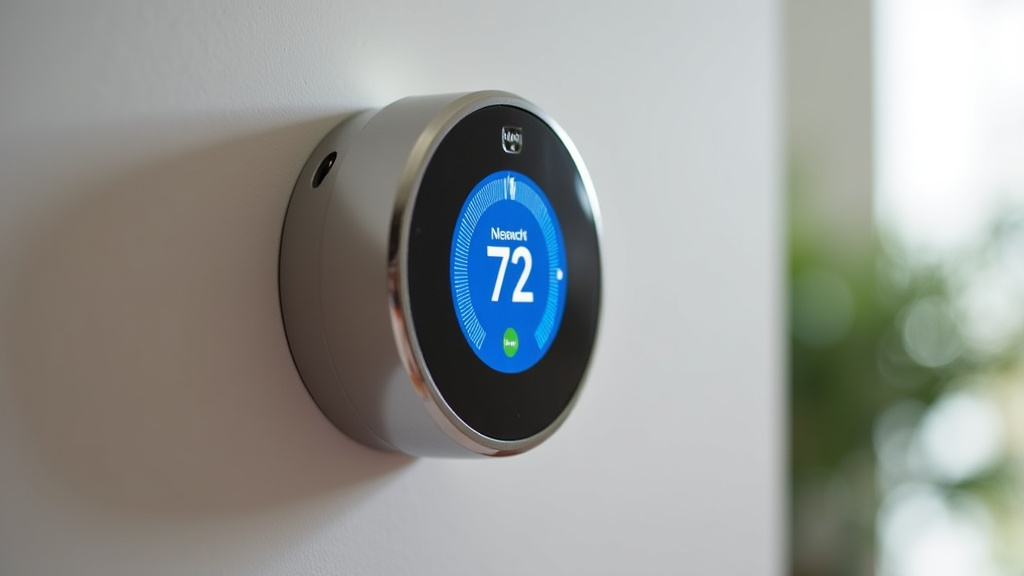
The most important factor is your existing **HVAC wiring**. You need a thermostat with a C-wire, or common wire. This wire provides constant power for the thermostat’s Wi-Fi and display. Older homes sometimes lack this wire.
We recommend checking your current thermostat. Look for a wire labeled “C”. If you don’t see one, don’t worry. Many manufacturers offer solutions. They may include a power adapter kit in the box. Professional installation can also solve this issue easily.
Professional vs. DIY Installation
Many people with a bit of comfort using tools can install a thermostat themselves. The process is often straightforward and well-guided by the manufacturer’s app. You’ll need to turn off power to your system and carefully label the existing wires.
However, **professional installation** is a smart choice if you’re unsure. It ensures the job is done right the first time. This protects both your new device and your heating and cooling system. Many local HVAC companies offer this service.
How to Choose the Right One
Walking into a store or browsing online, you’ll see several options. Narrowing it down doesn’t have to be overwhelming. Focus on these practical factors to match a thermostat to your home and life.
Simple vs. Feature-Packed Models
Start by asking what you really need. Do you want basic **remote control** and scheduling? Or are you excited by learning algorithms, room sensors, and detailed reports? A simple model might be perfect and more affordable. A feature-rich one offers more long-term flexibility.
We found that for most households, the mid-range models hit the sweet spot. They include the most useful features—like learning and remote access—without a premium price tag.
Consider the Ecosystem
If you use other smart home devices, check for compatibility. Do you have smart lights or speakers from a particular brand? Choosing a thermostat from the same **ecosystem** can make everything work together more smoothly. For example, a routine could turn off lights and adjust the thermostat when you leave home.
A Comparison: Connected vs. Regular Thermostats
To see the difference clearly, here is a straightforward comparison:
| Feature | Regular Programmable Thermostat | Connected (Smart) Thermostat |
|---|---|---|
| Control From Phone | No | Yes, from anywhere |
| Learns Your Schedule | No, you program it manually | Yes, automatically |
| Provides Energy Reports | Very basic or none | Detailed monthly insights |
| Geofencing | No | Often included |
| Upfront Cost | Lower | Higher |
| Potential Savings | Good, if programmed correctly | Better, due to automation and learning |
Checklist for Your New Thermostat
Use this quick checklist before you buy or install:
- Check for a C-wire in your current system to ensure compatibility.
- Measure your space. Ensure the new thermostat fits the wall space where your old one was.
- Decide on must-have features. Do you need learning, geofencing, or just remote control?
- Consider your voice assistant. Pick a model that works with Alexa, Google Assistant, or Siri.
- Read reviews on the app. The app is your main control center. Make sure it’s easy to use.
- Set a budget. Prices vary widely, so know what you’re comfortable spending.
Common Misconceptions
Let’s clear up a few things people sometimes get wrong. Knowing this helps you make a smarter decision.
“They’ll Save Me Money No Matter What”
This is the biggest myth. A thermostat is a tool. If you manually override the schedule every day by cranking the heat, it won’t save much. The **savings come from its automated, efficient features**. You have to let
Conclusion
You now know that a connected thermostat is more than a fancy dial. It’s a Wi-Fi hub for your home’s comfort, putting control in your phone and often learning your habits to save energy automatically. The real benefits are convenience, potential savings on your bills, and helpful system alerts. Before you buy, remember the key steps: check for that C-wire, decide if you want learning or basic control, and consider how it fits with your other smart devices. Our final advice is to use the checklist provided and read real user reviews of the app experience. Your perfect smart home upgrade could start with a simple, well-chosen thermostat.
Frequently Asked Questions
Do I need a smart speaker to use a connected thermostat?
No, you do not. The primary control is through the manufacturer’s smartphone app, which works on its own. Voice control through speakers like Alexa or Google Home is just an optional, convenient bonus feature you can choose to use or ignore.
Will a connected thermostat work if my Wi-Fi goes out?
Yes, it will still function as a regular thermostat. You can manually adjust the temperature directly on the device’s display. However, you will lose remote control, learning features, and energy reporting until your internet connection returns.
How much can I realistically save on my energy bill?
The EPA states that ENERGY STAR certified models save an average of 8% on heating and cooling costs. Your actual savings depend on your habits, home insulation, and climate. They work best when you let the automation run and avoid frequent manual overrides.
Is installation really a DIY project for most people?
For many, yes. If you’re comfortable turning off power and following step-by-step instructions in the app, it’s often a straightforward weekend project. If you have any doubt, especially regarding a C-wire or older system, professional installation is the safest choice.
What is the most important feature to look for?
The most critical factor is **compatibility with your HVAC system**, specifically checking for a C-wire. Beyond that, consider what you’ll actually use. For many, reliable remote control and scheduling are more valuable than complex learning algorithms you might not want.