Oil Filled Radiator vs Electric Fan Heater: Which Wins? (November 2026)
Pick an oil filled radiator for quiet, steady stored warmth and a fan heater for fast spot heat. In oil filled radiator vs electric heater terms, the radiator wins for overnight and work use, while the fan heater wins when you need a cold corner warm in minutes.
On this page (14 sections)
- Oil filled radiator vs electric heater: the quick verdict
- The two side by side
- How stored warmth works in an oil filled radiator
- How fast heat works in an electric fan heater
- Noise and sleep: which one can run all night?
- Air quality and allergies: fan versus no fan
- Safety: surface temperature, cut-offs and tip-over protection
- Running cost and energy use over a long session
- Room size and placement: where each heater fits best
- Controls, timers and daily ease of use
- Portability and moving the heater between rooms
- Which products we compared and who each suits
- Who should buy which
- The verdict on oil filled radiator vs electric heater
Pick an oil filled radiator for quiet, steady stored warmth and a fan heater for fast spot heat. In oil filled radiator vs electric heater terms, the radiator wins for overnight and work use, while the fan heater wins when you need a cold corner warm in minutes.
An oil filled radiator heats sealed oil inside metal fins, then gives off gentle radiant and convection heat with no fan. A fan heater blows air over a hot element, so it feels warm fast but can stir dust and make more noise.
Our score weighs specs, features and buyer feedback against what you're shopping for. We have compared the four radiators below on power, controls, safety features and portability for this oil filled radiator vs electric heater choice.
Oil filled radiator vs electric heater: the quick verdict
The radiator is the better default for a occupied room; the fan heater is the better fast fix. If you want heat while you sleep, read or work, choose the radiator and give it time to warm up.
If you step into a cold bathroom or a drafty entry and want heat now, choose a fan heater. That speed comes with moving air, more noise and a surface that can get hot to the touch.
Our space heater for home guide puts this trade-off in a wider buying context. It helps you match heater type to room use before you compare models.
The two side by side
A fan heater moves air for speed; an oil filled radiator stores heat in oil for steadiness. This table shows the practical difference behind the oil filled radiator vs electric heater debate.
| Point | Oil filled radiator | Electric fan heater |
|---|---|---|
| Heat source | Heated oil in sealed metal fins | Heated element with a fan |
| Speed | Slower at first, steady later | Fast, direct air flow |
| Noise | No fan, very quiet | Fan noise varies by speed |
| Air quality | No fan to stir dust | Fan can stir dust and pollen |
| Stored warmth | Holds heat after cycling off | Cools quickly when the fan stops |
| Surface | Low surface temperature by design | Element housing can feel hot |
| Typical power | Up to 1500 watts in this group | Often up to 1500 watts |
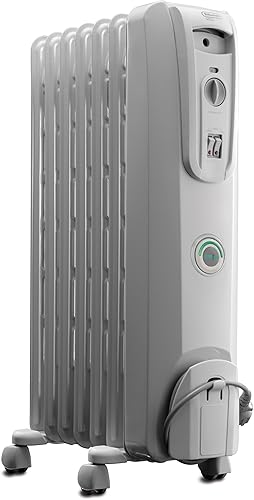
 Best for digital controls
De'Longhi DeLonghi Dragon Digital Oil Filled Radiator
How stored warmth works in an oil filled radiator
Stored warmth means the oil and metal keep giving off heat between power cycles. That is why a radiator feels gentle and even once the room is warm.
De'Longhi says its thermal slot design sends heat into the room while keeping a low surface temperature. The DREO model uses 7 fins and says heat spreads more evenly across its 250 sq.ft coverage area.
A fan heater has no stored warmth to speak of. Turn it off and the warm air stops at once, which suits short bursts but not long comfort.
If you want to understand the mechanism in plain terms, our what is oil filled radiator explainer covers the oil, the fins and the thermostat cycle.
How fast heat works in an electric fan heater
A fan heater is faster because it pushes heated air across the room. You feel warmth in minutes at a desk, a changing table or a bathroom mirror.
That speed has a cost. Moving air can dry skin, stir allergens and make a room feel drafty at high speed.
Noise also rises with fan speed, which matters at night.
Our convection heater vs fan heater comparison breaks down how moving air compares with still, rising warmth. It is a useful companion if you are torn between the two styles.
For a bathroom, speed often wins. You can read about that use case in our best space heater for bathroom guide, which focuses on short, targeted heating.
Noise and sleep: which one can run all night?
The oil filled radiator wins on noise because it has no fan to run. You hear a click as its thermostat cycles, and that is often the only sound.
A fan heater hums or whooshes, and the sound changes with each speed. Even a quiet fan can bother light sleepers or people on calls.
The De'Longhi EW7707CM is listed with 1500 watts of quiet heat for small to medium spaces. It has 3 heat settings and a thermostat, so you can run it low overnight.
The DREO model also lists mute and screen-off modes. Those help at night, but the core advantage for both is still the lack of a fan.
Air quality and allergies: fan versus no fan
With no fan, an oil filled radiator does not stir dust, pollen or pet dander into the air. De'Longhi makes this point for its models and calls the heat more allergy friendly for that reason.
A fan heater does the opposite by design. It pulls room air in and pushes it out, so settled dust can become airborne again.
For a bedroom or a nursery, that difference can matter more than a few minutes of speed. Gentle heat that moves less air often feels more comfortable for breathing.
De'Longhi also says its heat minimizes dry air. A fan heater can feel drying because it moves air across skin and bedding at speed.
Safety: surface temperature, cut-offs and tip-over protection
Oil filled radiators usually run with a lower surface temperature and no exposed element. That helps in homes with kids or pets, though no heater belongs under blankets or near curtains.
The models here list thermal cut-off, which turns the unit off if it overheats. The DREO model adds tilt protection, triple overheat protection and a burn-proof plug.
The De'Longhi Dragon models list a child lock. That helps prevent a small hand from changing the temperature or timer by accident.
A fan heater can have similar cut-offs and tip-over switches, so check each model. Never leave any electric heater running unattended for long periods, and keep it at least a few feet from fabric.
Running cost and energy use over a long session
Both types can draw 1500 watts at full power, so control features decide the bill. A heater that holds temperature and cycles off often uses less over hours than one left on high.
The De'Longhi EW7707CM lists a ComfortTemp feature that De'Longhi says can be up to 20% more efficient than running the same unit at max without it. That figure is a maker claim for that mode.
The Dragon models list ECO Plus, which De'Longhi says regulates power flow and temperature. The DREO model lists 600W, 900W and 1500W modes plus an eco mode for tailored power use.
A fan heater on high has little reason to cycle, so it may run at full draw for its whole session. Use a timer or a lower speed if you choose one for regular use.
Room size and placement: where each heater fits best
Use an oil filled radiator for a small to medium room you stay in for hours. The three De'Longhi models here list small to medium spaces at 1500 watts.
The DREO model lists 250 sq.ft coverage. That suits a bedroom, a home office or a living room corner rather than a whole house.
Place a radiator against an inside wall where air can rise freely. Keep the vents and fins clear, and avoid tucking it behind furniture that blocks convection.
A fan heater suits a spot you use for minutes. Aim it at your chair or the cold corner, and move it when you leave.
Our best oil filled radiator for large rooms guide helps if your room is bigger than average.
Controls, timers and daily ease of use
Digital controls and a timer make a radiator easier to run on a schedule. You set a temperature, and the unit cycles to hold it.
The De'Longhi Dragon models have a digital control panel with an LED display and a 24 hour timer. You can set heat to turn on before you wake or off after you leave.
The DREO model adds a remote control, a large LED display and touchscreen options. A remote is handy when the heater sits across the room from your chair.
The EW7707CM uses simpler controls with an adjustable thermostat and 3 heat settings. That simplicity suits a bedroom where you want fewer menus.
If you like the radiator style but want a smaller footprint, our best small oil filled radiator guide covers compact options for desks and shelves.
Portability and moving the heater between rooms
Weight matters more than it sounds when you move a heater each day. The DREO model weighs 17.6 pounds, which is the lightest in this group.
The De'Longhi EW7707CM weighs 23.2 pounds. The two Dragon models weigh 26.6 pounds each, so they are better placed in one room for the season.
All four models here have handles and wheels for room-to-room moves. Smart Snap wheels on the De'Longhi models need no installation, and the DREO model has large wheels and handles.
A fan heater is often lighter and smaller, which is a real advantage for a bathroom or a garage bench. If you carry your heater daily, weigh that point heavily.
Which products we compared and who each suits
We compared four oil filled radiators because the radiator side needs strong examples to judge against a fan heater. Each one below is a different take on stored, quiet heat.
The EW7707CM measures 6.5 x 15.5 x 27 inches and weighs 23.2 pounds. It has an anti-freeze setting that switches on below 41 degrees F, plus a thermal cut-off.
This model measures 16 x 10 x 26 inches and weighs 26.6 pounds. De'Longhi says it has 75% more radiant surface area than its RadiaS design.
It shares the Dragon design, the 24 hour timer and the anti-freeze setting. Its white finish suits a lighter room, while specs and controls match the black model.
It weighs 17.6 pounds and covers 250 sq.ft. It runs from 41 to 95 degrees F, with a 24 hour timer, child lock and tip-over protection.
For broader radiator picks, our best oil filled radiator guide lists more models and sizes. You can also see how the category fits together in our radiator heater vs space heater comparison.
Who should buy which
Buy an oil filled radiator if heat is for sleep, work or long reading sessions. Buy a fan heater if heat is for a short burst in a cold spot.
Choose the EW7707CM if you want simple controls and ComfortTemp in a bedroom. Choose a Dragon model if you want a timer and ECO Plus and do not mind the extra weight.
Choose the DREO model if you want a remote, lower weight and power level choices. All four suit small to medium rooms at 1500 watts, not whole-house heating.
In this oil filled radiator vs electric heater decision, your use pattern matters more than raw power. Both reach 1500 watts, but they deliver it in very different ways.
The verdict on oil filled radiator vs electric heater
Pick the oil filled radiator for quiet, stored warmth and the fan heater for fast, direct heat. That one rule settles most cases for a bedroom, office or living room.
If you sleep with the heater on, go radiator. If you need a bathroom warm before a shower, go fan heater.
If allergies or dust bother you, go radiator again.
Our top pick here is the De'Longhi EW7707CM for its ComfortTemp control and simple 3-setting design. The Dragon models and the DREO model are strong if you want a timer or a remote.
Revisit this oil filled radiator vs electric heater choice each season. Cold snaps, room use and your habits can change, and the right heater can change with them.
Frequently asked questions
Is an oil filled radiator better than an electric fan heater?
An oil filled radiator is better for quiet, steady heat over hours, while a fan heater is better when you need fast warmth in one spot. Choose the radiator for sleep, work and allergy concerns, and choose the fan heater for quick warm-up and portability.
Which heats a room faster, oil filled radiator or electric heater?
A fan heater heats faster because it blows warm air straight at a spot. An oil filled radiator heats oil and metal first, so you feel gentle warmth more slowly but it holds heat longer after it cycles off.
Are oil filled radiators safer than fan heaters?
Both can be safe when used correctly, but oil filled radiators have no exposed fan or heating coil and run with a low surface temperature. Look for thermal cut-off, tip-over protection and anti-freeze features, and keep any heater away from bedding and curtains.
Does an oil filled radiator use less electricity than a fan heater?
Both draw up to 1500 watts at full power, so the saving comes from how you run them. A radiator's thermostat and eco modes cycle power to hold temperature, which can use less over a long session than a fan heater left on high.