Space Heaters: The Complete Buying Guide
A good space heater for home use matches room size, heat type and controls to how you will use it. Pick radiant or oil filled heat for steady comfort, ceramic or fan forced heat for fast warmth, and a thermostat model when you want the heater to hold a set temperature.
On this page (13 sections)
- What types of space heaters for home use should you know?
- How do you size a space heater for home rooms?
- Which controls matter most on a space heater for home use?
- Where should you place a space heater for home safety?
- How do oil filled and radiant heaters work in a bedroom or office?
- When does a wall heater make more sense than a portable unit?
- How does a ceramic tower heater spread heat in a medium room?
- How do baseboard thermostats control fixed electric heat?
- What should you check before you buy an in home space heater?
- Which space heaters for home use suit small rooms and quiet spaces?
- How should you set up and care for a space heater for home use?
- How do you pick between the main space heater categories?
- What is the best final rule for buying a space heater for home use?
A good space heater for home use is one that fits the room, the task and the safety needs of your household. You heat one room at a time, you set a temperature you can hold, and you place the unit where air can move and nothing can fall on it.
We compared specs, features and buyer patterns across heater types. The right choice depends on whether you want fast warmth, quiet steady heat, a fixed wall unit or a portable tower you can move.
What types of space heaters for home use should you know?
The main types are radiant, oil filled, ceramic, fan forced, infrared, convection and baseboard heat. Each type spreads heat in a different way, and that change affects comfort, noise and room coverage.
Radiant and oil filled models warm a space with less fan noise. That matters in a bedroom or office where air movement can feel drafty.
Oil filled units hold heat after they cycle off, so the room can stay warm between heating periods.
Ceramic and fan forced models push warm air out with a fan. The heat feels faster, and oscillation or wide air flow can spread it across a medium room.
The trade off is fan sound and more air movement, which can stir dust.
Infrared models aim heat at people and objects rather than heating all the air at once. That can help in a room with high ceilings or a draft.
Convection models warm air as it rises naturally, with no fan, and they often suit quiet rooms.
Baseboard and wall heaters are fixed heat. They save floor space and can serve one room for the whole season.
They need planning for wiring, placement and thermostat control. Our best oil filled radiator guide covers one quiet category in depth.
How do you size a space heater for home rooms?
Size a space heater by room area, ceiling height, insulation and the temperature gap you need to close. A 1500 watt unit is common for small to medium rooms, but wattage alone does not tell the full story.
A small bedroom with a closed door can hold heat well. A large living room with high ceilings and outside walls loses heat faster.
If the room is much colder than the rest of the house, the heater must work harder and run longer.
Think of the heater as spot heat for one room. It is not built to heat a whole house through open vents or hallways.
Keep the door closed when you can, and let the heater focus on the space you use.
Coverage claims in product data give a starting point, not a promise. The De'Longhi oil filled model here is aimed at small to medium spaces.
The Cadet wall heater lists 200 square feet of coverage. The Lasko tower lists 150 square feet in its specs.
Use those numbers as a guide, then adjust for drafts and ceiling height.
Our best space heaters for indoor use roundup helps you compare indoor models by room need. You can also check best space heater for indoor use large room if your target room is wide open.
Which controls matter most on a space heater for home use?
A thermostat, heat settings, timer and safety shutoffs matter more than extra modes. You want control you can set and trust while you work, sleep or leave the room for a short time.
A built in thermostat holds a set temperature and cycles heat on and off. That saves energy and keeps the room steadier than a heater that runs only at full power.
Check the temperature range and see if the control is a dial, a button or a remote.
Heat settings let you match output to the room. A low setting may hold warmth once the room is warm.
A higher setting helps on the coldest days or when you first enter a chilly room. Simple controls are easier to use at night or with gloves during a cold snap.
A timer helps if you want heat for a set time, such as while you get ready in the morning. Oscillation helps a tower heater spread warm air across a room.
A remote helps when the heater sits across the room from a desk or bed.
For fixed heat, a built in thermostat is often a must. That is why our best electric space heater with thermostat list is worth a look before you buy a wall or baseboard unit.
A whole house thermostat works differently from a portable heater control. Our [What Is a Smart Home Thermostat?
Plainly Explained](/what-is-a-smart-home-thermostat/) guide explains that separate role, so you do not confuse the two systems.
Where should you place a space heater for home safety?
Place a space heater on a flat, hard surface with clear space on all sides and keep it away from fabric, paper and bedding. Safety starts before you turn the unit on.
Keep curtains, blankets, pillows and papers at least 3 feet away where the maker asks for that clearance. Do not place a heater under a desk where cords, feet or papers can block air flow.
Do not cover a heater to dry laundry or warm a pet bed.
Keep the area dry and use the heater indoors only unless the maker states outdoor use. Bathrooms need a model rated for that setting and installed correctly.
Our best space heater for bathroom guide covers that narrow use.
For homes with kids or pets, low surface temperature, rounded edges and safety shutoffs help. Still, a heater needs supervision in a room where small hands or paws can reach it.
Move the cord where it cannot be tripped or pulled.
If you compare a portable model with a wall model, placement rules change. A wall unit frees floor space, but it must be mounted level and wired to code.
A portable unit can move, but its cord is part of the safety picture.
How do oil filled and radiant heaters work in a bedroom or office?
Oil filled and radiant heaters give steady, quiet heat that suits bedrooms, offices and nurseries. They tend to warm the room with less fan noise and less dry air movement.
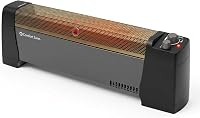
The De'Longhi EW7707CM is a 1500 watt electric space heater for indoor use with radiant heat and 3 heat settings. It measures 6.5 in deep by 15.5 in wide by 27 in high and weighs 23.2 lb.
That size makes it a floor unit you place in one room, not a small desktop heater.
Its controls include simple power and temperature adjustment. The ComfortTemp feature is designed to maintain optimal temperature and power levels.
The maker says that mode is up to 20 percent more efficient than using the same unit at max setting without ComfortTemp.
The thermal slot design is meant to move heat into the room while keeping a low surface temperature. The maker also notes gentle heat with no fan, so it does not stir up dust, pollen and dander in the same way a fan model can.
Safety features include a thermal cut off, fully enclosed heating elements and a rounded design. An anti freeze setting turns the heater on when the temperature dips below 41 degrees F.
The steel assembly and sealed oil reservoir are made for long term, low maintenance use.
This model suits a reader who wants quiet heat in a bedroom or office and does not mind a larger floor footprint. The trade off is warm up time.
Oil filled heat often feels slower at first than fan forced heat, but it can hold steady warmth with less noise.
When does a wall heater make more sense than a portable unit?
A wall heater makes sense when you want fixed heat, saved floor space and a thermostat built into the unit. It suits a bathroom, bedroom or office where a portable heater would sit in the way.
The Cadet Com-Pak is a 1500 watt, 120 volt fan forced heater with a built in single pole thermostat. It can set and hold a temperature from 40 to 85 degrees at the heater.
The complete unit ships with the heater assembly, a galvanized steel wall can, the front grille and the thermostat.
It measures 4 in deep by 9 in wide by 12 in high and weighs 7 lb. The compact size lets it recess into the wall.
It can mount horizontally or vertically, and because it is rated at 1500 watts it is also approved for ceiling installation.
The fan forced design pairs a fast heating coil with a quiet fan. That gives faster warmth than radiant heat in a medium room.
The maker lists coverage up to 200 square feet. A high temperature safety shutoff cuts power if the heater gets too hot.
This unit is hardwired into a 120 volt circuit. There is no cord, so the room looks cleaner and there is no cord to trip over.
The maker recommends an interior wall and a qualified electrician for the connection to local electrical code.
Choose this type when floor space is tight and you want heat in one set spot all season. Skip it if you rent, if you cannot alter the wall, or if you need to move heat from room to room.
Our best electric wall heaters guide covers more fixed options.
How does a ceramic tower heater spread heat in a medium room?
A ceramic tower heater uses fan forced heat and oscillation to spread warmth across a medium room. It suits a desk area, bedroom or living room where you want heat now and control from a seat.
The Lasko 751320 is a 23 inch ceramic tower space heater with remote control. It delivers 1500 watts of ceramic heat and covers up to 150 square feet in its specs.
It measures 8.3 in deep by 7.25 in wide by 22.5 in high and weighs 2.5 lb, so it is light to move with its carry handle.
The remote handles heat settings, oscillation and a timer. A 7 hour timer lets you set a run time and stop worrying about it.
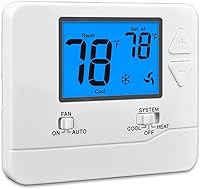
The heater has 2 heat settings, an electronic programmable thermostat and a temperature range from 60 to 85 degrees.
Lasko lists ETL certification, a self regulating ceramic element, overheat protection and a cool touch housing. Those features matter in a home with kids or pets, where the heater may sit near foot traffic.
This tower suits a reader who wants portable heat that moves from room to room. Oscillation helps it reach corners, but the fan creates air movement and sound.
If you need silent heat at night, an oil filled or radiant model may be a better fit.
For brand specific help, see our best lasko ceramic space heater picks and how to use vornado space heater if you already own a different fan style.
How do baseboard thermostats control fixed electric heat?
A baseboard thermostat controls one fixed heater from a dial at the heater itself. That setup gives steady convection heat without a fan, but the heater and thermostat must match.
The Cadet BTF1W is a single pole built in thermostat kit for Cadet electric baseboard heaters. It is made for Cadet F series electric baseboard heaters only.
The heater itself is sold separately, so check that match before you order.
The temperature range is 45 to 80 degrees Fahrenheit with a large twist dial. The white finish is made to blend with the baseboard heater.
It mounts to either end of the Cadet baseboard heater and removes the need for extra wiring.
This is a small part, measuring 1 in deep by 7 in wide by 7.6 in high. It is not a portable heater and it does not heat a room on its own.
Its job is to let a fixed baseboard heater hold a set temperature with simple manual control.
Baseboard heat can suit a bedroom or living room where you want quiet, fan free warmth along a wall. It takes planning for length, wiring and placement.
Our best baseboard heaters with thermostat guide helps you compare that path.
If you are weighing fixed heat against a heat pump or central system, read Space Heater vs Heat Pump: Which Should You Choose? before you commit to wiring.
What should you check before you buy an in home space heater?
Check wattage, outlet load, room size, controls and safety features before you buy any in home space heater. Those checks prevent most returns and safety problems.
Most 1500 watt heaters draw 12.5 amps. That is near the limit for a standard 15 amp circuit.
Plug the heater directly into a wall outlet. Do not use a power strip, and do not share the circuit with a microwave, hair dryer or other high draw appliance.
Check the plug and cord length. A short cord can force you to place the heater in a bad spot.
A long cord can become a trip hazard. Measure the route from the outlet to the spot where the heater will sit.
Check the control type. A dial is simple and clear.
Buttons and a remote give more options, but you need to keep the remote safe. A thermostat is worth choosing if you will run the heater for hours.
Check safety features that fit your home. Overheat protection, tip over shutoff, cool touch housing and low surface temperature help in busy homes.
No feature removes the need for clear space around the unit.
For a fast first shortlist, start with our best portable electric heaters and best space heater portable pages. For a winter space, also read best electric garage heater and best space heater outdoor so you do not use an indoor model outside.
Which space heaters for home use suit small rooms and quiet spaces?
Small rooms and quiet spaces suit compact towers, oil filled radiators and low noise fan models. The best fit depends on whether you need fast heat or steady heat and how much floor space you can give up.
A compact tower can sit in a corner and turn to spread heat across a desk area. That helps in a home office where you sit in one spot for hours.
Our best quiet space heater guide is a good next read if fan sound is your main concern.
A small room also benefits from a heater with a thermostat. Once the room reaches the set temperature, the unit can cycle instead of blasting heat.
That keeps the air steadier and can cut energy use.
If floor space is very tight, look at wall or baseboard heat. A wall unit sends heat from the wall and keeps the floor clear.
A baseboard unit runs along the floor line and can blend with the room. Both need a plan for wiring and thermostat control.
Our best the best small space heater page covers compact picks. For heat that looks like furniture, see best portable electric heater fireplace.
How should you set up and care for a space heater for home use?
Set up a space heater on a flat surface, plug it straight into a wall outlet, set the thermostat, and check clearances before you leave the room. Good setup makes the heater safer and more efficient.
Start with the room. Close the door if you can.
Remove papers, blankets and other items near the spot. Make sure the floor is level and the cord will not cross a walkway.
Keep the heater away from water and steam unless it is rated for that use.
Set the thermostat a few degrees above the room temperature at first. Let the heater run and watch how the room feels.
Lower the set point once the room is warm. That habit saves energy and stops the unit from overheating the space.
Clean the heater as the maker directs. Dust on a fan grille or ceramic element can reduce air flow.
Unplug the unit before you clean it. Let it cool fully before you move or store it.
At the end of the season, unplug it, let it cool, and store it in a dry place. Wrap the cord loosely and keep the remote with the unit.
Check the cord for damage before you use it again.
For camping or travel, use only a model rated for that setting. Our best portable electric heater for camping guide covers that use and its limits.
How do you pick between the main space heater categories?
Pick oil filled or radiant heat for quiet steady warmth, ceramic or fan forced heat for fast portable warmth, and wall or baseboard heat for fixed season long heat. That rule covers most home choices.
If you read in bed or work at a desk, choose a quiet model with a thermostat. Oil filled heat or a low noise radiant unit fits that need.
Keep the heater near your seat, not across a large room.
If you need heat in a chilly bathroom before a shower, choose a model rated for bathroom use or a fixed wall unit. A portable unit can help, but it must stay dry and clear of towels and steam.
If you move from room to room, choose a light tower with a handle and a remote. The Lasko tower here weighs 2.5 lb and moves with ease.
A heavier oil filled unit moves less often, so place it where you will keep it.
If you want heat without floor clutter, choose wall or baseboard heat. That choice needs wiring and a thermostat match.
It pays off when one room needs heat all winter.
For more brand and type comparisons, use our pelonis space heater reviews, best dreo space heater, best vornado space heater, best space heater amazon basics, best ceramic space heater, best infrared space heaters, best portable convection heater, best 1500 watt space heater and What Is a Gas Space Heater? pages as you narrow the list.
What is the best final rule for buying a space heater for home use?
Buy a space heater for home use that matches one room, one task and one safety plan. That simple rule keeps the choice clear.
Match the heater type to the room. Match the wattage and coverage to the space.
Match the controls to how you will use the unit at night, at a desk or in a bathroom.
We checked specs for the four models in this guide. The De'Longhi oil filled radiator suits quiet steady heat.
The Cadet wall heater suits fixed heat with a built in thermostat. The Lasko tower suits portable ceramic heat with a remote.
The Cadet thermostat kit suits Cadet F series baseboard heat only.
Use the links above to compare more types before you decide. Then check the outlet, the clearances and the thermostat range for the exact model you choose.
Frequently asked questions
What size space heater do I need for a room?
Start with room size, insulation and how cold the room gets. A 1500 watt heater suits many small to medium rooms for spot heat.
Larger or poorly insulated rooms may need longer run time.
Choose a model with a thermostat so it cycles instead of running at full power all day.
Is a space heater safe to leave on overnight?
Choose a heater with overheat protection, a tip over or safety shutoff where offered, and place it on a flat surface away from bedding and curtains. Keep it away from children and pets when you cannot watch it.
Follow the maker instructions for clearance and use.
What is the difference between radiant and forced air heat?
Radiant heat warms objects and people directly and often feels steady with less air movement. Forced air heat uses a fan to push warm air across the room and feels faster at first.
Your choice depends on whether you want slow steady warmth or quick spot heat.
Do space heaters use a lot of electricity?
Most portable electric space heaters in this guide are 1500 watts. That is high for one outlet, so plug the heater directly into a wall outlet and avoid power strips.
Use a thermostat and heat only the room you are in to control energy use.