Which Low Voltage Thermostat Works with a Gas Fireplace?
The right low voltage thermostat depends on the fireplace’s control voltage: millivolt fireplaces need a thermostat made for millivolt circuits, while 24-volt systems need a compatible 24-volt model. Check the fireplace manual or wiring label before buying.
On this page (6 sections)
- What kind of low voltage thermostat does a gas fireplace need?
- How can you identify your fireplace’s control voltage?
- Are line-voltage thermostats right for gas fireplaces?
- Can a Wi-Fi thermostat control a millivolt fireplace?
- What should you check before choosing a thermostat?
- Which low voltage thermostat should you choose for a gas fireplace?
A low voltage thermostat for a gas fireplace must match the fireplace’s control circuit. Many fireplaces use millivolt controls, while others use 24-volt controls; these systems are not interchangeable just because both use thermostat wires.
Check the fireplace manual, wiring diagram or control label for the required thermostat type. If the documents don’t identify it clearly, contact the manufacturer or a qualified technician before connecting anything.
What kind of low voltage thermostat does a gas fireplace need?
A gas fireplace needs a thermostat designed for its specific control voltage and switching method. A thermostat for a millivolt system may not work with a 24-volt system, and a 24-volt thermostat is not automatically suitable for a millivolt fireplace.
“Low voltage” is a broad description, not a compatibility guarantee. Use the fireplace’s manual or wiring label to identify its control system and follow the thermostat requirements stated there.
How does a millivolt thermostat differ from a 24-volt thermostat?
A millivolt fireplace system generates a small electrical signal to operate its controls. A 24-volt system uses a different control voltage, so a thermostat must be made to work with the fireplace’s particular circuit.
The thermostat’s description should explicitly support the system you have. If it only says “low voltage,” look for clearer compatibility details before buying.
For an overview of the term, read what a low voltage thermostat is. If your fireplace manual specifies millivolt controls, compare millivolt thermostats for gas fireplaces.
How can you identify your fireplace’s control voltage?
Start with the fireplace model number and its installation or owner’s manual. Look for the thermostat connection diagram, the specified control voltage and any instructions about thermostat type.
If the manual is unavailable, check the labels near the fireplace controls and wiring connections without touching or changing the wiring. Don’t infer voltage from the number of thermostat wires or from the fact that another thermostat appears to fit.
If you can’t confirm the system, ask the fireplace manufacturer or a qualified technician to identify it. That check is especially useful before buying a thermostat with extra power requirements, such as a smart model.
Are line-voltage thermostats right for gas fireplaces?
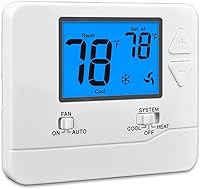
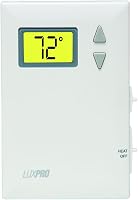
Line-voltage thermostats are made for higher-voltage electric heating applications, not as a general substitute for fireplace controls. The examples below are intended for electric baseboard heating, so their listed uses don’t establish compatibility with a gas fireplace.
For more on the distinction, see what a line voltage thermostat is. Don’t connect a thermostat to a fireplace based only on a product name or a shared wire count.
Can a Wi-Fi thermostat control a millivolt fireplace?
A Wi-Fi thermostat can control a millivolt fireplace only if its manufacturer supports that fireplace circuit and the thermostat can be powered as required. Some smart models need a power connection that a fireplace circuit may not provide.
Check the thermostat’s compatibility guidance for millivolt operation, switching requirements and power. Don’t assume that a thermostat marketed for “low voltage” or “gas heat” supports every fireplace.
See whether a Wi-Fi thermostat works with a millivolt gas fireplace for the specific compatibility questions to check. If you prefer a familiar thermostat brand, review Honeywell millivolt thermostat options, then verify the exact model against your fireplace manual.
What should you check before choosing a thermostat?
Confirm the fireplace control type first, then compare the thermostat’s requirements with the fireplace manual. A checklist can help keep the choice tied to the actual system:
- Identify whether the fireplace uses millivolt or 24-volt controls.
- Check which thermostat types the fireplace manufacturer approves.
- Confirm whether the thermostat needs a separate power source.
- Check the thermostat’s switching method and any wiring requirements.
- Follow the installation instructions for both the fireplace and thermostat.
If any requirement is unclear, pause and ask the fireplace manufacturer or a qualified technician. A thermostat that fits the wall or accepts the wires may still be electrically incompatible.
Which low voltage thermostat should you choose for a gas fireplace?
Choose a millivolt-compatible thermostat for a millivolt fireplace or a compatible 24-volt thermostat for a 24-volt fireplace, as specified by the manufacturer. For a related millivolt heating application, see millivolt thermostats for pellet stoves.
The fireplace manual and thermostat compatibility details should agree before installation.
If the system type is uncertain, identify it before shopping. For a confirmed millivolt system, start with our best millivolt thermostat for a gas fireplace guide and check each model’s requirements against your fireplace.
Frequently asked questions
Can I use a 24-volt thermostat on a millivolt gas fireplace?
Usually, no. A 24-volt thermostat is built for a different control circuit from a self-generating millivolt fireplace system.
Check the fireplace manual and thermostat requirements, and use a model approved for the fireplace’s control voltage.
How can I tell whether my gas fireplace is millivolt or 24 volt?
Check the fireplace manual, wiring diagram or control label for the system type and required thermostat. If those details are missing, ask the fireplace manufacturer or a qualified technician to identify the circuit before connecting a thermostat.
Can I use a smart thermostat with a gas fireplace?
Some smart thermostats can control certain millivolt fireplaces, but compatibility depends on the thermostat’s switching method, power needs and the fireplace circuit. Confirm that the specific thermostat supports your fireplace and follow both manuals.
Are line-voltage thermostats suitable for gas fireplaces?
Line-voltage thermostats are generally made to switch higher-voltage electric heating loads, such as baseboard heaters. A gas fireplace usually needs a thermostat matched to its low-voltage control circuit, so check the fireplace requirements before choosing.