How to Wire a Heat Pump Thermostat
To wire a heat pump thermostat, connect R to power, C to common, Y to compressor, G to fan, O or B to the reversing valve, and AUX to auxiliary heat. Match the wires at both ends, label each wire first, and confirm O versus B with your equipment manual.
On this page (11 sections)
- How do you wire heat pump thermostat terminals?
- What does each heat pump thermostat wire do?
- How to wire thermostat for heat pump step by step
- How do you connect the reversing valve wire correctly?
- How do you wire auxiliary and emergency heat?
- What if your heat pump thermostat has only four wires?
- How do you handle Rc, Rh, and the C wire?
- Which products help when you wire a heat pump thermostat?
- How do smart thermostats change heat pump wiring?
- How do you test the wiring before you finish?
- How to wire heat pump thermostat safely in closing
To wire a heat pump thermostat, connect R to power, C to common, Y tested to compressor, G to fan, O or B to the reversing valve, and AUX to auxiliary heat. You need to match each wire at the thermostat to the same terminal at the equipment, not just match colors.
This guide explains heat pump terminals, reversing valve connections, and auxiliary heating wiring. It also shows how to check your work before you restore power.
How do you wire heat pump thermostat terminals?
Use the terminal letters at the equipment as your target, not wire colors. Colors are a guide, but older installs and DIY work often break the usual pattern.
Start by turning off power at the breaker for the furnace or air handler and the outdoor unit. Then remove the old thermostat cover and photograph every wire and its terminal.
Label each wire with its terminal letter using tape. That label matters more than the insulation color if you need to move a wire later.
Our guide to How to Identify Thermostat Wires: Quick Fixes helps when colors do not match. Use it before you pull anything loose.
What does each heat pump thermostat wire do?
R supplies 24 volt power, C returns it as common, Y starts the compressor, and G starts the indoor fan. Heat mode uses the same compressor call in most heat pump systems, while the reversing valve decides the direction.
W is often used for auxiliary or electric heat. E can serve the same role on some thermostats, but some systems treat E and W differently.
O and B control the reversing valve. One of those terminals will connect to the valve wire, and the other terminal stays empty on most setups.
Keep that pattern in mind when you wire thermostat for heat pump controls. If your old thermostat only had a heat call and no valve wire, check the outdoor equipment before you buy a new control.
How to wire thermostat for heat pump step by step
Mount the new thermostat level, land each labeled wire on its matching terminal, and secure the cover. Work one wire at a time and tug gently to confirm the screw holds.
First, confirm the power is off with a non-contact tester at the air handler. Remove the old thermostat and keep the wall plate and screws if the new one uses the same footprint.
Next, compare the old terminal map with the new thermostat manual. Look for O/B selection, auxiliary heat settings, and compressor staging setup.
Then land the wires: R to R, C to C if present, Y to Y, G to G, O or B to the valve, and AUX or W to auxiliary heat. Wind bare copper strands clockwise under the screw.
Finally, set the system mode and test heating, then cooling. [What Is a Heat Pump Thermostat?
The Complete Guide](/what-is-a-heat-pump-thermostat/) can help if the controls confuse you.
How do you connect the reversing valve wire correctly?
Connect the reversing valve wire to O or B, based on your equipment manual. That single choice decides whether the outdoor unit heats or cools when the thermostat calls.
Many systems use O, which energizes the valve in cooling mode. Other systems use B, which energizes the valve in heating mode.
Both setups work, but they are not interchangeable.
If you pick the wrong one, the system may blow cold air in heating mode or warm air in cooling mode. The fan and compressor may still run, which makes the problem look like a charging issue.
Set the thermostat jumper or installer menu to match the equipment. Then run a full heating test and a full cooling test before you close the wall.
How do you wire auxiliary and emergency heat?
Auxiliary heat is backup heat for very cold weather, defrost needs, or when the heat pump cannot keep up. It usually runs through electric strips or a gas furnace, depending on your system.
Connect the auxiliary wire to AUX, W, or E, based on the thermostat manual and the equipment terminals. Do not guess between those labels if your system has both.
Set the outdoor lockout temperature if your thermostat offers one. Emergency heat usually bypasses the outdoor unit and runs only the backup heat.
A Cadet baseboard control is not a heat pump thermostat, but it shows how built-in controls differ from wall controls. The Cadet Single Pole Built-In Thermostat Kit is a 22 amp, 240/208/120 volt, single pole kit for Cadet F series electric baseboard heaters, with a 45 to 80 degree F range.
Use a wall thermostat for a heat pump, and a built-in kit only for a matching baseboard heater.
What if your heat pump thermostat has only four wires?
A four wire setup often lacks a C wire, so smart thermostats may lose power or cycle oddly. Basic heat pump controls can run on four wires, but many smart models need steady power.
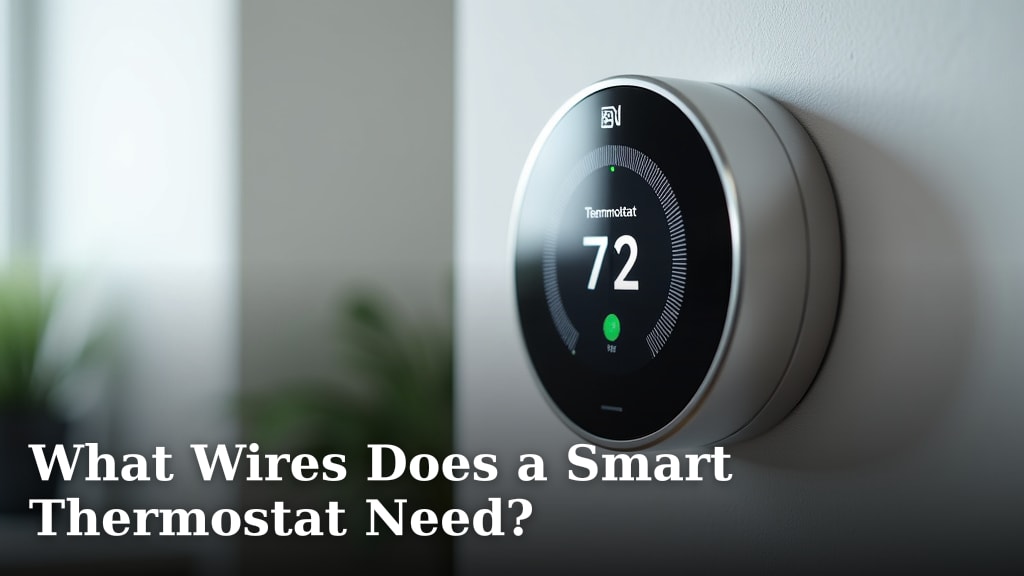
Check What Wires Does a Smart Thermostat Need? before you buy a smart model for an older cable. That post explains when a C wire is required and what to do when it is missing.
You may run a new cable, use a C wire adapter, or choose a thermostat designed for four wire systems. Never borrow a wire that carries a live load for another job.
Our guide to how to wire a 4 wire thermostat covers cases where four wires are enough. If the cable has an unused wire, you can often repurpose it as C and label both ends.
How do you handle Rc, Rh, and the C wire?
Rc and Rh both supply power, but they can come from different transformers. C completes the circuit and is the wire many smart thermostats use for power.
If your system has one transformer, Rc and Rh are often jumpered together. If it has two transformers, separate heating and cooling power can damage a control that expects a single source.
Check What Color Is the C Wire on a Thermostat? if you cannot find common in the cable. Color can help, but terminal labels at the equipment still win.
Our explainer on rc vs rh thermostat shows how to read those terminals. Test for 24 volts between R and C at the thermostat before you mount the new control.
Which products help when you wire a heat pump thermostat?
A wireless kit and cable clips can help in specific cases, but neither replaces correct wiring. Use each tool for the problem it actually solves.
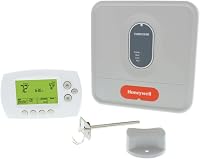
The Honeywell YTH6320R1001 is a white, programmable, RedLINK enabled wireless FocusPRO thermostat kit. It includes a wireless thermostat, an Equipment Interface Module, and a return air sensor, and it supports up to 3H/2C heat pump or up to 2H/2C conventional systems.
Honeywell says the Equipment Interface Module receives communication from the wireless devices, and the return air sensor helps maintain safe temperatures if power is lost at the wireless thermostat. It maintains 62 F for heating and 82 F for cooling in that fallback mode.
That kit suits a home where pulling cable to a new wall spot is hard. It does not suit a simple like-for-like swap where the existing cable already reaches the new location.
The STEREN Coaxial Cable Clips pack has 100 black, screw type clips for single cable use. The clips are polyethylene, have a compatible groove diameter of 0.27 inches, and measure 1 inch long by 0.76 inch wide.
Those clips help with desk or media cables, not with low voltage thermostat cable inside a wall. Use rated low voltage staples or clips for thermostat cable.
How do smart thermostats change heat pump wiring?
Smart thermostats add power needs and extra settings for staging, lockout, and dual fuel. The basic R, C, Y, G, and O/B pattern stays the same, but the setup menu matters more.
Read how to wire a smart thermostat before you move wires for a smart model. Power, Wi-Fi, and sensor settings can change how the system behaves in cold weather.
Confirm that your heat pump is single stage or multi stage. A 3H/2C system has more calls than a basic 1H/1C system, and the thermostat must match that count.
Set the auxiliary heat differential correctly. Too wide and the house feels cold, too narrow and electric strips run too often.
Dual fuel systems need an outdoor sensor and a specific switchover setting.
How do you test the wiring before you finish?
Test heating, cooling, fan, auxiliary heat, and emergency heat in that order. Each test tells you if one terminal group is wrong.
Start with heating. The fan should start, the compressor should run, and the air should warm after the outdoor unit switches direction.
Next, test cooling. The valve should switch, the compressor should run, and the air should cool.
If both run backward, check O versus B first.
Then test fan only. The indoor fan should run without the compressor.
That confirms the G wire and the fan relay path.
Finally, test auxiliary and emergency heat. Label the breaker panel for the air handler and outdoor unit when you finish.
How to wire heat pump thermostat safely in closing
Match wires by function, set O or B correctly, and test both modes before you call the job done. That simple rule prevents most heat pump wiring errors.
Keep your old thermostat photo until the system passes heating and cooling tests. If a wire slips or a color was wrong, the photo lets you fix it fast.
Call a licensed HVAC technician if you find burnt wires, a shorted transformer, or a reversing valve you cannot locate.
For a heat only furnace, use how to wire heat only thermostat instead. Heat pump wiring adds the valve and auxiliary calls that a heat only system does not use.
Frequently asked questions
How many wires does a heat pump thermostat need?
Most heat pump thermostats need at least 4 or 5 wires for heating, cooling, fan, and reversing valve control. A C wire is often needed for smart thermostats because it provides steady power.
Auxiliary heat, outdoor sensor, and second stage connections can add more wires.
What is the difference between O and B on a heat pump thermostat?
O and B both control the reversing valve, but they energize it in opposite ways. O is common on many systems and energizes the valve in cooling, while B is common on some other systems and energizes it in heating.
Your equipment manual tells you which one your system uses.
Can I wire a heat pump thermostat myself?
You can replace a thermostat with matching wires and the same terminal layout, but turn off power first and keep the old wiring photo for reference. Call a licensed HVAC technician if wires are unlabeled, damaged, or if the system uses electric heating, a dual fuel setup, or a reversing valve you cannot identify.
Why does my heat pump blow cold air in heating mode after wiring?
That often points to an O versus B mismatch at the reversing valve. The valve may be switching in the wrong direction, so the system runs in cooling when you ask for heat.
Set the thermostat to the setting your equipment manual specifies and test both heating and cooling.