Convection Heater vs Fan Heater: Which to Buy (November 2026)
Choose a convection heater for quiet, even warmth and a fan heater for fast, directed heat. In this convection heater vs fan heater comparison, the fanless COMFORT ZONE suits a bedroom, while the Lasko tower models suit large rooms where you want heat moved quickly.
On this page (10 sections)
- Quick verdict: convection heater vs fan heater
- Convection heater vs fan heater side by side
- Noise: which type is quieter?
- Speed: which heats faster?
- Heat distribution: even warmth or directed heat?
- Controls: manual dial, digital panel or remote?
- Size and placement: floor, wall or baseboard?
- Safety features compared
- Who should buy which?
- Final verdict on convection heater vs fan heater
Choose a convection heater for quiet, even warmth and a fan heater for fast, directed heat.
In this convection heater vs fan heater comparison, fanless convection suits bedrooms and offices, while tower fan heaters suit large rooms where you want heat pushed across the space.
All 4 picks use 1500W, so power alone will not decide the winner.
The real split is how each unit moves air, how much sound it makes and how you control it.
Our score weighs specs, features and buyer feedback against what you are shopping for.
We compared the specs and features for each model, and we did not test them.


Quick verdict: convection heater vs fan heater
Pick fanless convection if silence matters most, and pick a tower fan heater if you want fast heat and year-round fan use.
The COMFORT ZONE is the pure convection pick here.
The 2 Lasko towers are the pure fan picks.
The De'Longhi sits between the groups.
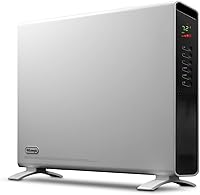
It is a convection panel heater, but its dual lateral fan system improves heat distribution.
That makes it a hybrid, not a fanless unit.
For a space heater for home used in one room, that hybrid is a useful middle path.
You get panel-style heat with more air movement than a fanless baseboard.
How the 4 picks split
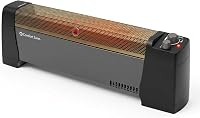
The COMFORT ZONE uses natural air circulation and has no fan speeds.
The De'Longhi uses a panel design with a dual lateral fan system.
Both Lasko towers use forced air with oscillation.
All 4 list safety features such as tip-over protection or overheat protection.
You still need to follow each manual for placement and clearance.
The choice comes down to noise, speed, coverage and controls.
Convection heater vs fan heater side by side
Fan heaters move heat with a fan, while fanless convection lets warm air rise on its own.
That one design choice drives noise, speed and how heat spreads.
A fan heater can push warm air toward a sofa, desk or bed.
A convection heater warms air near the unit, and that air rises and circulates.
| Point | Fanless convection | Fan heater towers | Hybrid panel |
|---|---|---|---|
| Example | COMFORT ZONE baseboard | Lasko 42 in and 38 in towers | De'Longhi panel |
| Power | 1500W | 1500W | 1500W |
| Air movement | Natural circulation | Fan plus oscillation | Dual lateral fan system |
| Sound | No fan sound | Fan sound, speed dependent | Fan system, speed dependent |
| Controls | Manual dial, 2 heat settings | Remote, timer, fan speeds | Digital controls, timer |
A 1500W rating does not tell you how fast you will feel warm, or how loud the unit will be at night.
Why the De'Longhi is different
De'Longhi calls this a convection panel heater, and it is freestanding or wall mounted.
It has a dual lateral fan system to move air more evenly through the room.
That design aims at faster, more even warmth than fanless convection.
It will not be as silent as a unit with no fan at all.
Noise: which type is quieter?
Fanless convection is the quietest option because it has no fan motor.
The COMFORT ZONE is the only pick here with no fan speeds at all.
If you sleep lightly, that matters.
A fan heater can hum, click when it oscillates or change pitch as the speed changes.
The Lasko 42 inch model lists 8 fan speeds and a noise level of 44 dB.
The Lasko 38 inch model lists 4 fan speeds and WhisperForce Technology for quieter airflow.
The De'Longhi lists 5 speeds and a dual lateral fan system.
Noise in a bedroom
For a bedroom, fanless convection is the safest bet for low sound.
A tower fan heater can still work if you use a low speed.
Place it across the room, not beside the pillow, and use the timer to turn it off after you fall asleep.
Our best portable convection heater guide covers more fanless and low-noise options.
Noise in a home office
Office noise matters during calls and deep work.
A fan on high can be distracting even if it is not loud outdoors.
The Lasko 38 inch model is aimed at this use with WhisperForce Technology.
The COMFORT ZONE has no fan sound, but its manual dial may be less convenient during a workday.
Speed: which heats faster?
Fan heaters usually feel faster because forced air carries heat to you.
Convection heat takes longer because warm air must rise and circulate naturally.
That difference shows up in the first 15 minutes.
A tower fan heater can warm a person sitting in front of it quickly.
A baseboard convection heater warms the room more gradually.
The De'Longhi panel aims to close that gap with its dual lateral fan system.
Speed in a large room
In a large living room, you may want heat pushed toward seating areas.
A tower fan heater with oscillation can cover that job better than a fanless baseboard.
The Lasko 42 inch model is 41.89 inches tall.
Its height and oscillation help it move air across large bedrooms or living rooms.
The Lasko 38 inch model is 38.65 inches tall and also oscillates.
Speed in a small room
In a small bedroom or office, fast heat can overshoot.
A fanless convection heater spreads warmth gently and suits a small space.
The COMFORT ZONE lists heating coverage of 150 sq. ft.
Room shape and drafts still change the result.
If you want to know are convection heaters energy efficient, start with room size and how long you run the unit.
Heat distribution: even warmth or directed heat?
Convection spreads heat around the room, while a fan heater can aim heat where you sit.
Neither is better for every room, and the choice depends on where you spend time.
A convection heater warms air near the unit, and that air rises toward the ceiling.
Over time the room warms more evenly, but corners can lag.
A fan heater with oscillation sends warm air in a wide arc.
You feel it sooner, but the air can cool again when the tower turns away.
Even warmth with convection
The COMFORT ZONE uses natural air circulation for even warmth.
Its low-profile baseboard design sits flush along walls and heats from a low place in the room.
That placement suits bedrooms and offices where you sit or sleep near a wall.
The De'Longhi panel also spreads heat, but its dual lateral fan system moves air more evenly.
Directed heat with a fan
Tower fan heaters are better when you want heat aimed at a sofa, chair or desk.
Oscillation lets the unit cover a wide area without you moving it.
Both Lasko towers have 3 heat settings.
You can use a lower heat setting with a higher fan speed, or a higher heat setting with a lower fan speed.
For a large open room, our best convection heater for large room guide explains when convection alone is enough and when you need more air movement.
Controls: manual dial, digital panel or remote?
Remotes and timers suit fan towers, while a manual dial suits a simple baseboard heater.
The right controls depend on how you use the room and whether you want to get up to change settings.
The COMFORT ZONE has a manual thermostat dial and 2 heat settings.
That is simple, but you must walk to the unit to change it.
The De'Longhi has digital controls, an adjustable thermostat, multiple heat settings and a delayed on/off 24-hour timer.
It also has an ECO PLUS function that adjusts heat and power settings.
Both Lasko towers have remote controls and an 8-hour timer.
The 42 inch model has 8 fan speeds, and the 38 inch model has 4 fan speeds.
Controls for sleep
A timer is useful if you fall asleep with the heater on.
The De'Longhi 24-hour timer is flexible for scheduled warmth.
The Lasko 8-hour timer is simple for sleep or evening use.
The COMFORT ZONE has no timer in its feature list.
Controls for work and TV
A remote matters when you are on a call, at a desk or on a sofa.
You can change heat, fan speed and oscillation without leaving your seat.
That is a practical edge for the Lasko towers.
The De'Longhi digital panel is easy to use, but you still need to reach the unit.
Size and placement: floor, wall or baseboard?
Placement changes how a heater fits your room and how heat spreads.
A wall panel saves floor space, a baseboard sits low along a wall and a tower takes floor space but moves around easily.
The De'Longhi is freestanding or easily wall mounted.
It includes a wall mount kit, and its feet are pre-assembled for floor use.
The COMFORT ZONE measures 29.3 inches wide, 9.7 inches high and 5.1 inches deep.
The Lasko 42 inch tower measures 41.89 inches tall.
The Lasko 38 inch tower measures 38.65 inches tall.
Both are freestanding floor units.
Wall mounted convection
A wall mounted panel can free floor space in a bedroom or office.
It also keeps the unit out of walkways.
Our best convection heaters wall mounted guide covers more panel options.
The De'Longhi also has a carrying handle and is described as lightweight and portable.
Baseboard placement
A baseboard heater suits a room where you want heat low and unobtrusive.
It can sit under a window or along a wall where a tower would block space.
The COMFORT ZONE has dent-resistant end panels and a stay-cool housing.
A best propane convection heater is a different category.
It uses propane rather than electricity, so it does not belong in this electric comparison.
Safety features compared
All 4 picks list tip-over or overheat protection, but you still need safe placement.
No safety feature replaces the clearances and electrical rules in each manual.
The De'Longhi has a thermal shutoff and an internal tip-over switch.
It also has cool touch integrated controls.
The COMFORT ZONE has a tip-over cutoff switch, an overheat protection sensor and a stay-cool housing.
Both Lasko towers have overheat protection, a tip-over switch, a cool-touch exterior and a child lock.
The 42 inch model is ETL certified.
Safe use in a bedroom
Keep any space heater away from bedding, curtains and clothing.
A tower should sit on a stable floor where it cannot be knocked over.
A baseboard should not be blocked by blankets, pillows or furniture.
Do not use a damaged cord or loose outlet.
If a safety feature trips, unplug the unit and check the manual before you use it again.
Who should buy which?
Buy fanless convection for quiet, buy a tower for fast and flexible heat, and buy the panel if you want a hybrid.
The best pick depends on your room, your sleep habits and how you sit in the space.
The COMFORT ZONE suits a bedroom, office or reading corner where quiet matters most.
Its manual dial and 2 heat settings keep control simple.
The De'Longhi suits a medium to large room where you want panel heat with more even distribution.
Its wall mount option, timer and ECO PLUS function add flexibility.
The Lasko 42 inch tower suits a large bedroom or living room with 8 fan speeds.
It also works as a fan in warm months.
The Lasko 38 inch tower suits a home office or bedroom where you want forced air with a quieter design.
Its WhisperForce Technology and 4 fan speeds help in shared spaces.
A simple decision rule
If you value silence above speed, choose the COMFORT ZONE.
If you value fast heat and a remote, choose a Lasko tower.
If you want panel heat with a fan system for more even distribution, choose the De'Longhi.
If you want one unit for heat in winter and fan use in summer, choose a Lasko tower.
Final verdict on convection heater vs fan heater
In this convection heater vs fan heater choice, fanless convection wins for quiet and tower fan heaters win for speed and flexibility.
The De'Longhi panel is the middle option for even heat distribution.
For a bedroom where you sleep, the COMFORT ZONE convection baseboard is the clearest pick.
It has no fan sound, a manual thermostat dial and a low-profile shape.
For a large living room, the Lasko 42 inch tower gives you 1500W of heat, oscillation, a remote and 8 fan speeds.
For a quieter office, the Lasko 38 inch tower gives you forced air with WhisperForce Technology.
If you want panel heat that moves air more evenly, the De'Longhi is the hybrid to consider.
It pairs a wall mount design with digital controls, a 24-hour timer and ECO PLUS.
Frequently asked questions
Is a convection heater quieter than a fan heater?
A fanless convection heater is usually quieter because it has no fan motor or moving blades. The COMFORT ZONE baseboard model uses natural air circulation, while Lasko tower models move air with a fan and list fan speeds and noise design in their features.
Does a fan heater heat a room faster?
A fan heater usually feels faster because forced air carries heat toward you and across the room. Convection heat rises naturally and spreads more gently, so it can take longer to warm a cold corner or a person sitting away from the unit.
Which is better for a bedroom?
Fanless convection is often better for a bedroom if you want no fan sound. A quiet tower fan heater can also work if you use a low fan speed and place it away from the bed, and its timer can shut it off after you fall asleep.
Can a convection heater heat a large room?
A 1500W convection panel can suit a medium to large room as supplemental heat, but room size, ceiling height, drafts and insulation change the result. For a large room, check our guide to the best convection heater for large room before you expect one unit to heat the whole space.