5 Best Low Voltage Thermostats for Baseboard Heating (November 2026)
The best low voltage thermostats for baseboard heaters include the Cadet Double Pole Line Voltage Thermostat for double pole safety, the Honeywell TH1110D2009 T1 Pro Low Voltage Thermostat for 24V low voltage systems, and the Stelpro Line Voltage Wall Thermostat for simple dial replacement.
On this page (9 sections)
- Best low voltage thermostats for baseboard heating and direct electric heat
- How these thermostats were compared
- Low voltage vs line voltage for baseboard heat
- Can a low voltage thermostat control hydronic baseboards?
- Is a line voltage thermostat safer for electric baseboards?
- How do I choose the right thermostat for my baseboard heater?
- What should I check before installing a baseboard thermostat?
- How do I keep a baseboard thermostat accurate?
- Verdict: which baseboard thermostat should you buy?
The best low voltage thermostat for baseboard heater setups depends on how your heat is wired, and that check comes before brand or features. If your system uses a 24V relay, the Honeywell T1 Pro fits.
If your electric baseboard is wired direct at line voltage, the Cadet T522-W is the safer match in this group.
Our score weighs specs, features and buyer feedback against what you're shopping for. We compared the picks on voltage type, watt and amp ratings, controls, programming and daily use, so you can match the thermostat to your wiring instead of guessing.
A low voltage thermostat for baseboard heater use is common with hydronic systems. Hot water baseboards often run through a boiler, zone valves or relays, and the wall control sends a low voltage signal instead of switching the heater circuit itself.
That is a different job from a direct electric baseboard that pulls 120, 208 or 240 volts.
Start with What Is a Low Voltage Thermostat? Explained if you need the basics on 24V controls.
Then check What Is a Line Voltage Thermostat? The Basics before you buy, because using the wrong type can leave you with a thermostat that will not connect to your system at all.
Our picks at a glance
-
1
 Best for double pole safety
Cadet Double Pole Line Voltage Thermostat
9.6/10 our score
See it on Amazon -
2
 Best for 24V low voltage systems
Honeywell TH1110D2009 T1 Pro Low Voltage Thermostat
9.3/10 our score
See it on Amazon -
3
 Best for simple dial replacement
Stelpro Line Voltage Wall Thermostat
9.1/10 our score
See it on Amazon
- 4
 Check it
Stelpro Line Voltage Thermostat
Best for one-click setback - 5
 Check it
LUX ELV4 Programmable Line Voltage Thermostat
Best for weekday and weekend schedules
Best low voltage thermostats for baseboard heating and direct electric heat
You will see a mix in this guide on purpose. Some baseboard systems are hydronic and use low voltage controls, while others are electric and need line voltage controls.
The right pick follows your wiring, not the product name.
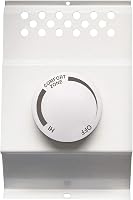
Cadet Double Pole Line Voltage Thermostat: Best for double pole safety
- Double pole, 4-wire design
- Handles up to 5,280 watts at 240 volts
- Rated for 22 amps
- Dial range 40 to 80 degrees Fahrenheit
- No batteries or programming
A mechanical double pole wall thermostat for electric baseboard, wall and convector heaters, with a positive off position and a tight 3 to 6 degree comfort range.
Pros
- Switches both legs of the circuit
- Simple twist-dial control
- Fits a standard wall electrical box
- No batteries needed
Cons
- Not a low voltage thermostat
- No programming or digital display
The Cadet T522-W suits owners replacing a worn wall control for electric baseboard, fan-forced wall or convector heaters. Its double pole, 4-wire design switches both legs of the circuit, which is a clear safety advantage for 240 volt circuits.
Cadet rates it for up to 5,280 watts at 240 volts or 2,640 watts at 120 volts, with a 22 amp rating. That range covers many bedroom and living room heater runs, but you still need to add up the watts on your circuit first.
The twist dial covers 40 to 80 degrees Fahrenheit with a 3 to 6 degree comfort range. You get a positive off position, no batteries and no programming to fail during a cold snap.
The trade-off is plain: this is not a low voltage thermostat and it has no schedule or digital readout. Choose it for simple, direct electric heat where reliability matters more than features.
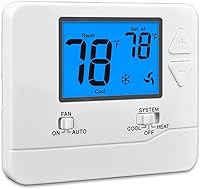
Honeywell TH1110D2009 T1 Pro Low Voltage Thermostat: Best for 24V low voltage systems
- 24VAC low voltage thermostat
- 1H/1C heat pump
- Digital display
- Push button control
- Uses 2 AA batteries
A wall mount low voltage thermostat for systems that use Y, G, C, W and R terminals, with heat-cool-off switching and auto-on fan switching.
Pros
- True 24V low voltage design
- Clear digital display
- Heat and cool system switching
- Low battery indicator
Cons
- Not for direct line voltage baseboard wiring
- No humidification or dehumidification control
The Honeywell TH1110D2009 T1 Pro suits hydronic baseboard systems and other heating layouts that already use 24VAC low voltage wiring. It is a 1H/1C heat pump thermostat with Y, G, C, W and R terminals, so it speaks the language of relays and control boards.
A digital display and push button controls make the set temperature easy to read and change. System switching covers heat, cool and off, while fan switching covers auto and on.
Honeywell lists 2 AA batteries required, with a low battery indicator. That matters in daily use because the display and controls need power even when the heating call is handled by the low voltage circuit.
The trade-off is strict: do not wire this directly to a line voltage electric baseboard. If your home has direct electric heat, look at the Cadet, Stelpro or LUX models below instead.
Stelpro Line Voltage Wall Thermostat: Best for simple dial replacement
- Single pole 22A design
- Mechanical dial control
- 50 to 90 degrees Fahrenheit range
- 4 degree set point swing
- 2-wire connection
A compact single pole wall thermostat for electric baseboards, wall fan heaters and commercial fan-forced heaters, with a dial marked Cooler, Comfort and Warmer.
Pros
- Simple 2-wire connection
- Compact molded plastic case
- Uses real numbers from 50 to 90 degrees
- Works for baseboard and wall heaters
Cons
- Single pole design
- Manual dial only
- No digital temperature readout
The Stelpro SWT1F suits a straightforward swap of an old mechanical wall thermostat. It works with electric baseboards, wall fan heaters and commercial fan-forced heaters on 240 volt heating systems.
Its mechanical dial uses real numbers from 50 to 90 degrees Fahrenheit, with Cooler, Comfort and Warmer markings. That helps when more than one person uses the room and you want a setting everyone can read.
Stelpro describes a 4 degree set point swing, which means the room can rise and fall within about 4 degrees of your chosen point. Expect that swing with a simple mechanical control, and set the dial a little lower if the room feels warm at the top of the cycle.
The trade-off is single pole operation and no digital display. The 2-wire connection keeps install simple, but the double pole Cadet above disconnects both legs when the heater cycles off.
Stelpro Line Voltage Thermostat: Best for one-click setback
- Rated to 2500W
- Eco mode one-click setback
- Holds within 1F in 1F increments
- Digital display
- Sealed casing
A non-programmable line voltage thermostat for electric baseboards and convectors, with thermistor sensing and a sealed casing with an S3 mounting plate.
Pros
- One-click eco setback
- Fine 1 degree control
- Two-wire install
- Sealed casing
Cons
- Not for fan heaters or forced-air units
- Lower watt rating than the Cadet
The Stelpro ST252NP suits electric baseboards and convectors where you want digital control without full programming. It is rated to 2500 watts, with maximum loads of 1250W at 120V, 2160W at 208V and 2500W at 240V.
Its eco mode drops the heat with one click when you are out, then returns to your setting with a single press. That is a simpler energy step than building a full schedule.
Thermistor sensing holds the room in 1 degree increments, and the digital display shows the setting in clear numbers. A sealed casing and S3 mounting plate round out a wall mount design that Stelpro backs with a 5-year warranty.
The trade-off is compatibility: this model is not for fan heaters or forced-air units, which need the matching FF model. Its watt rating is also lower than the Cadet, so check your heater total before you choose it.
LUX ELV4 Programmable Line Voltage Thermostat: Best for weekday and weekend schedules
- 5-2 day programmable
- 4 program periods per day
- LCD display
- Vacation hold and temporary override
- Front battery access
A programmable line voltage thermostat for electric baseboard, cable and ceiling heat, with separate weekday and weekend programs and a positive off switch.
Pros
- Four periods per day
- Separate weekday and weekend settings
- Vacation hold
- Temporary override
Cons
- Not for heaters with both a resistive element and a blower fan
- More complex to program than a dial
The LUX ELV4 suits electric baseboard, cable and ceiling heat where a schedule saves more than a simple dial. It offers a 5-2 day program with 4 periods per day, plus separate weekday and weekend settings.
You can set different temperatures for waking, working, evening and sleep periods, then use temporary override for a quick change. A vacation hold helps on longer trips, and the positive off switch shuts the heat down for summer.
The LCD display and on-screen programming make each period easier to check than a mechanical dial. Front battery access and a low-battery indicator help with upkeep, and LUX lists the unit as UL approved.
The trade-off is load type: LUX says this thermostat is not compatible with heating appliances that contain both an electric heating element and a blower fan. If your heater has a fan motor, confirm compatibility before you buy.
How these thermostats were compared
We checked voltage type first because that decides fit. A 24V low voltage thermostat controls a relay or boiler system, while a line voltage thermostat switches the heater circuit directly.
Mixing those types is the most common buying mistake in this category.
We then compared watt and amp ratings against real baseboard loads. Direct electric heaters are rated in watts, and the thermostat must handle the full circuit load at your voltage.
A model rated for 2500 watts at 240 volts will not suit a 4000 watt run, even if the style looks right.
We also weighed control style for daily use. A twist dial is fast for guests and simple rooms.
A digital display helps you hold a precise setting. A programmable model helps when your schedule is steady from week to week, but it adds steps for anyone who just wants warm now.
We looked at safety design next. Double pole models switch both legs of the circuit.
Sealed casings protect against dust in some rooms. Front battery access and low battery indicators affect long term upkeep.
Those details matter more than looks once the thermostat is on the wall.
Low voltage vs line voltage for baseboard heat
A low voltage thermostat is the correct answer when your baseboard system already has a relay, zone valve or boiler control that accepts 24V signals. Hydronic systems often fit that pattern because hot water, not electricity, carries the heat to the baseboard.
A line voltage thermostat is correct when electric baseboard heaters are wired straight to 120, 208 or 240 volt circuits. In that setup, the wall thermostat carries the full heater load, so watt and amp ratings are not optional details.
If you are unsure, find the boiler, relay or heater junction box and read the labels there. Hydronic baseboards connect to pipes and a boiler.
Electric baseboards connect to electrical wiring rated for the heater load. That physical layout tells you more than any product title.
For homes with both types in different rooms, you may need both kinds of controls. Use the low voltage model for the hydronic zone and a line voltage model for the electric room, then set each one to match its circuit.
Can a low voltage thermostat control hydronic baseboards?
Yes, and hydronic baseboards are where low voltage controls make the most sense. A boiler or relay does the heavy work, while the thermostat sends a small 24V signal to call for heat.
The Honeywell T1 Pro in this guide fits that pattern with 1H/1C control and standard R, W, Y, G and C terminals. It is wall mount, digital and push button controlled, which suits a hallway or living room where the boiler is in another part of the house.
Before you buy, match the thermostat terminals to your boiler or relay board. Some systems use only R and W for heat calls.
Others add zone valves, circulator pumps or cooling stages. The terminal list should line up with what your system actually has.
If your hydronic system uses a relay module, that module may convert the low voltage call into the switching the boiler or valves need. In that case, the thermostat stays low voltage and the relay handles the rest of the circuit.
Is a line voltage thermostat safer for electric baseboards?
A line voltage thermostat can be the safer choice for direct electric baseboards because it is built to switch the full circuit load. Ratings for watts and amps must match or exceed your heater total at the circuit voltage.
The Cadet T522-W shows why ratings matter in daily use. It handles up to 5,280 watts at 240 volts and is rated for 22 amps, with double pole switching on both legs.
That design fits larger electric heater runs where a lower rated model would be undersized.
The Stelpro ST252NP shows the other side of the same rule. Its 2500 watt rating at 240 volts suits smaller baseboard runs, but it will not cover a larger circuit.
Always add up the heater watts on the circuit before you pick a model.
For fan-forced electric heaters, check the load type as well as the watts. The LUX ELV4 warns against heaters that combine a resistive element with a blower fan, so a fan heater may need a different control even when the watt total looks fit.
How do I choose the right thermostat for my baseboard heater?
Use a short checklist in this order: wiring type, voltage, heater watts, control style, then features. Wiring type comes first because low voltage and line voltage models cannot swap roles.
Next, confirm voltage. Electric baseboards may run at 120, 208 or 240 volts, and the watt rating changes with voltage.
A thermostat rated for 2500 watts at 240 volts may allow only 1250 watts at 120 volts, as with the Stelpro ST252NP.
Then add up the heater load on the circuit. Include every baseboard heater on that thermostat, not just the one in the room where the control sits.
If the total is close to the rating, choose a model with more headroom.
Finally, pick the control style you will actually use. A dial suits a spare room or workshop.
A digital model suits a bedroom where you want a precise number. A programmable model suits a home with steady work and sleep hours.
Our best thermostat for electric heater guide covers more electric heater control types if your baseboards are part of a larger electric setup.
Best for hydronic or relay controlled baseboards
Pick a 24V low voltage thermostat such as the Honeywell T1 Pro. Confirm the terminals match your boiler, relay or zone control before you order, and plan on AA batteries for the display.
Best for direct electric baseboards
Pick a line voltage thermostat rated for your circuit watts and amps. The Cadet T522-W leads this group for double pole switching and a 22 amp rating, while the Stelpro models suit smaller or simpler circuits.
Best for schedules and setbacks
Pick a programmable line voltage model such as the LUX ELV4 for direct electric heat, or a low voltage programmable model for hydronic heat. Schedules help most when your routine repeats each week.
What should I check before installing a baseboard thermostat?
Turn off power at the breaker before you open any electrical box, and use a voltage tester to confirm the circuit is off. This step matters most with line voltage thermostats because they switch 120 to 240 volt circuits.
Check the existing wiring before you remove anything. Note how many wires are present, whether the box is single or double pole, and how the heaters are grouped by circuit.
That record helps you match the new thermostat to the old setup.
Match the thermostat to the box and wiring style. Some models use 2 wires, while double pole models use 4 wires.
A 2-wire swap will not fit a double pole circuit, and a 4-wire model needs the right box and connections.
Keep the thermostat away from direct sunlight, doors and heat sources. A control near a sunny window or a kitchen stove will read the room poorly, which can cause short cycles or a room that never feels right.
If the wiring does not match the thermostat terminals, stop and call a qualified electrician. Low voltage hydronic controls and line voltage electric controls use different wiring practices, and a forced fit can damage the equipment.
How do I keep a baseboard thermostat accurate?
Set the thermostat at a typical spot in the room, about chest height on an interior wall. That location gives a steadier reading than a wall near an exterior door or a baseboard heater itself.
Watch the swing after install. A mechanical dial may swing about 4 degrees, as with the Stelpro SWT1F, while a digital model may hold within 1 degree, as with the Stelpro ST252NP.
Adjust the setting based on how the room feels at the top and bottom of the cycle.
Clean around the wall control with a dry cloth and keep vents, curtains and furniture from blocking airflow near it. A covered or blocked thermostat will call for heat too long or shut off too early.
Replace batteries on schedule for digital and programmable models. A low battery indicator helps, but a weak battery during a cold week can leave the display or controls unreliable.
Verdict: which baseboard thermostat should you buy?
Pick the Honeywell TH1110D2009 T1 Pro if your baseboard heat is hydronic or relay controlled on 24V low voltage wiring. It is the only true low voltage pick in this group, with 1H/1C control and standard terminals.
Pick the Cadet T522-W if you have direct electric baseboards on a 120 to 240 volt circuit. Its double pole switching, 22 amp rating and capacity of 5,280 watts at 240 volts or 2,640 watts at 120 volts make it the strongest simple replacement here.
Pick the Stelpro ST252NP for a smaller electric baseboard run where you want digital control and a one-click eco setback. Pick the LUX ELV4 when a weekday and weekend schedule will save energy in a home with a steady routine.
Use this guide to match the thermostat to your wiring first, then compare watt ratings and control style. For Honeywell focused options, see Best Honeywell Baseboard Heater Thermostats.
For scheduled control, see Best Programmable Baseboard Heater Thermostats. If you are also comparing radiant heat, see Best Floor Heating Thermostats.
And if your system also cools the home, check Best Thermostats for Heating and Cooling.
Our top 3 picks at a glance
-
1
Best for double pole safety
Cadet Double Pole Line Voltage Thermostat
9.6/10 our score
See it on Amazon -
2
Best for 24V low voltage systems
Honeywell TH1110D2009 T1 Pro Low Voltage Thermostat
9.3/10 our score
See it on Amazon -
3
Best for simple dial replacement
Stelpro Line Voltage Wall Thermostat
9.1/10 our score
See it on Amazon
Frequently asked questions
Can I use a low voltage thermostat for an electric baseboard heater?
Only if the heater is wired through a compatible relay or control system that uses low voltage wiring. Direct electric baseboards at 120 to 240 volts normally need a line voltage thermostat rated for the circuit load.
What is the difference between low voltage and line voltage thermostats?
A low voltage thermostat sends 24VAC control signals to a relay or furnace, while a line voltage thermostat switches the full 120 to 240 volt heater circuit directly. The wiring, ratings and safety checks are different for each type.
How do I know if my baseboard heat is hydronic or electric?
Hydronic baseboards have water pipes and often a boiler with valves or zone controls, while electric baseboards have direct electrical wiring to each heater. The control system at the boiler or relay tells you which thermostat type fits.