9 Best Programmable Baseboard Heater Thermostats (November 2026)
The best programmable baseboard heater thermostats include the Cadet Double Pole Line Voltage Thermostat for high-load simple control, the Honeywell Home 5-2 Day Programmable Thermostat Electric for weekday and weekend schedules, and the Mysa Smart Thermostat LITE for Electric Baseboard for app and voice control.
On this page (14 sections)
- The best programmable baseboard heater thermostats compared
- 1. Cadet Double Pole Line Voltage Thermostat
- 2. Honeywell Home 5-2 Day Programmable Thermostat Electric
- 3. Mysa Smart Thermostat LITE for Electric Baseboard
- 4. Dr. Infrared Heater DR-001 Wall Thermostat
- 5. YeloDeer 110V-265V 4-Wire Manual Electric Baseboard Heater
- 6. meross Matter Smart Thermostat for Electric Baseboard
- 7. Cadet Single Pole Built-In Thermostat Kit
- 8. Stelpro Wall Heater Thermostat
- 9. Stelpro Wall Heater Thermostat
- How do you choose a programmable thermostat for baseboard heaters?
- Is a programmable baseboard thermostat worth it?
- What should you know before installing one?
- Which programmable baseboard heater thermostat should you buy?
The best programmable baseboard heater thermostat for most homes is the Honeywell Home 5-2 Day Programmable Thermostat Electric, because it separates weekday and weekend schedules and uses silent TRIAC switching. Choose Mysa or meross for smart control, or Cadet for a simple line-voltage dial.
A programmable thermostat for baseboard heaters can lower the setpoint while you're asleep or away, then raise it before your normal routine. For heater options with built-in controls, see baseboard heaters with thermostats.
The right choice depends on the heater's voltage, wattage, wiring and whether you want schedules on the thermostat, in an app or not at all.
If you're comparing electric heating controls more broadly, start with our guide to the best thermostat for electric heater. For a non-programmable alternative, see [What Is a Non Programmable Thermostat?
A Beginner’s Guide](/what-is-a-non-programmable-thermostat/).
Our picks at a glance
-
1
 Best for high-load simple control
Cadet Double Pole Line Voltage Thermostat
9.6/10 our score
See it on Amazon -
2
 Best for weekday and weekend schedules
Honeywell Home 5-2 Day Programmable Thermostat Electric
9.5/10 our score
See it on Amazon -
3
 Best for app and voice control
Mysa Smart Thermostat LITE for Electric Baseboard
9.2/10 our score
See it on Amazon
- 4
 Check it
Dr. Infrared Heater DR-001 Wall Thermostat
Best for broad voltage coverage - 5
 Check it
YeloDeer 110V-265V 4-Wire Manual Electric Baseboard Heater
Best for precise manual adjustment - 6
 Check it
meross Matter Smart Thermostat for Electric Baseboard
Best for Matter smart homes - 7
 Check it
Cadet Single Pole Built-In Thermostat Kit
Best for Cadet F Series heaters - 8
 Check it
Stelpro Wall Heater Thermostat
Best for 2,500-watt fan heaters - 9
 Check it
Stelpro Wall Heater Thermostat
Best for 4,000-watt fan heaters
The best programmable baseboard heater thermostats compared
Honeywell Home is the strongest scheduled choice for many compatible 240-volt systems, while Mysa and meross add remote control through an app. Cadet and Dr.
Infrared Heater suit buyers who prefer simple manual adjustment over programmed changes.
We compared voltage support, load ratings, scheduling, wiring, controls and heating-system compatibility across this group. That comparison matters because a thermostat can look right on settings alone yet fail to match the existing heater circuit.
Heater type comes first, since baseboards, convectors, radiant ceilings and fan-forced units do not all accept the same control. Voltage and load come next, because the rating must cover the connected heater without excess strain.
Wiring narrows the field further, with pole count and wire count ruling out otherwise appealing models. Only after those checks does schedule style become the deciding factor for many homes.
A 5-2 program suits a steady weekday routine with a different weekend pattern. A 7-day program suits homes where each day follows its own timing.
Smart control suits people who want to adjust heat from elsewhere or use voice commands. Manual control suits people who want the fewest steps between turning a dial and feeling the change.
Our score weighs specs, features and buyer feedback against what you're shopping for.
| Product | Best for | Control | Load | Heating systems | Our score |
|---|---|---|---|---|---|
| Cadet Double Pole Line Voltage Thermostat | high-load simple control | Mechanical dial | Up to 5,280 watts at 240 volts | Baseboard, fan-forced wall and convector heaters | 9.6 |
| Honeywell Home 5-2 Day Programmable Thermostat Electric | weekday and weekend schedules | Digital buttons | 3,500 watts at 240 volts | Baseboards, convectors, radiant ceilings and fan-forced heaters | 9.5 |
| Mysa Smart Thermostat LITE for Electric Baseboard | app and voice control | App, touch and voice | Up to 3,800 watts at 240 volts | Baseboard, fan-forced, wall, convector and radiant ceiling heat | 9.2 |
| Dr. Infrared Heater DR-001 Wall Thermostat | broad voltage coverage | Large knob | Up to 7,756 watts at 277 volts | 9.1 | |
| YeloDeer 110V-265V 4-Wire Manual Electric Baseboard Heater | precise manual adjustment | Manual dial | Up to 2,400 watts at 120 volts or 4,800 watts at 240 volts | Electric baseboards, convectors and fan-forced heaters | 8.9 |
| meross Matter Smart Thermostat for Electric Baseboard | Matter smart homes | App and voice | Baseboard, convector and fan-forced heaters | 8.8 | |
| Cadet Single Pole Built-In Thermostat Kit | Cadet F Series heaters | Twist dial | Cadet F Series electric baseboard heaters | 8.6 | |
| Stelpro Wall Heater Thermostat | 2,500-watt fan heaters | Touchpad | Up to 2,500 watts at 240 volts | Fan heaters and forced-air units | 8.2 |
| Stelpro Wall Heater Thermostat | 4,000-watt fan heaters | Digital push-button and touch control | Up to 4,000 watts at 240 volts | Fan heaters and forced-air units | 7.9 |
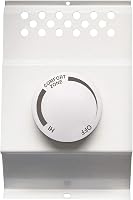
1. Cadet Double Pole Line Voltage Thermostat
Cadet Double Pole Line Voltage Thermostat: Best for high-load simple control
- 120, 208 and 240 volt compatibility
- Up to 5,280 watts at 240 volts
- 40 to 80 F dial range
- Double pole 4-wire design
This double pole thermostat suits line-voltage electric heating when you want a simple dial and no programming. It switches both circuit legs and supports several common electric heater types.
Pros
- High 22 amp rating
- Positive off position
- No batteries or programming required
Cons
- Not programmable
- Requires line-voltage wiring
The Cadet T522-W is the highest-scoring option here because it covers common 120, 208 and 240 volt electric heating circuits and handles up to 5,280 watts at 240 volts. Its double pole, 4-wire design switches both legs of the circuit when the heater turns off.
This is not a programmable thermostat, but it can be the better practical choice when you want dependable manual control. The dial covers 40 to 80 F, includes a positive off position and uses a 3 to 6 degree comfort range.
It works with electric baseboard, fan-forced wall and convector heaters. The 22 amp rating gives it more load capacity than several scheduled models here, but you still need to match the thermostat to the heater circuit.
The white wall-mounted design fits a standard wall electrical box. Color-coded wires are intended to simplify replacement, but line-voltage work can be hazardous, so follow local code and get qualified help when needed.
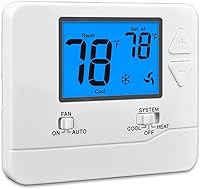
2. Honeywell Home 5-2 Day Programmable Thermostat Electric
Honeywell Home 5-2 Day Programmable Thermostat Electric: Best for weekday and weekend schedules
- 5-2 day programming
- 4 periods per day
- Silent TRIAC switching
- Up to 3,500 watts at 240 volts
Honeywell Home gives you separate weekday and weekend schedules with 4 periods each day. Its digital display and silent switching fit a planned electric heating routine.
Pros
- 5-2 scheduling
- Backlit display
- Temporary temperature override
Cons
- 240 volt line-voltage heat only
- Not for central heating or heat pumps
Honeywell Home is the best direct match for shoppers who specifically want a programmable thermostat for baseboard heaters.
Its 5-2 schedule provides separate weekday and weekend programs, with wake, leave, arrive and sleep periods for each day type. Each period can carry its own temperature, so the heater can ease back during absence and recover before return.
The thermostat is designed for 240 volt line-voltage heating and supports electric baseboards, convectors, radiant ceilings and fan-forced heaters.
Its maximum load is 3,500 watts at 240 volts, with a 14.6 amp resistive limit and a 2 amp minimum load. Those limits help decide fit for a single room circuit or a smaller multi-heater run.
Silent TRIAC switching avoids the clicking sound associated with some mechanical controls. Steadier switching can also reduce the noticeable temperature swings that make a room feel warm, then cool too quickly.
The backlit display helps with programming in a dim room. Instructions inside the front panel keep the main steps visible while you set each period.
A temporary bypass lets you change the temperature without replacing the saved schedule. That override matters after a guest arrives or a cold snap changes the plan.
This model is not for central heating, heat pumps, contactor or relay-driven systems, or resistive loads outside its stated range. Confirm those details before choosing it for an existing installation.
3. Mysa Smart Thermostat LITE for Electric Baseboard
Mysa Smart Thermostat LITE for Electric Baseboard: Best for app and voice control
- 120 or 240 volt line voltage
- 7-day scheduling
- 2.4 GHz Wi-Fi
- HomeKit, Alexa and Google support
Mysa Smart Thermostat LITE adds remote control, daily scheduling, geofencing and voice commands to compatible electric heating. Check the 4-wire requirement before ordering.
Pros
- Free app features
- Vacation and away modes
- No hub required
Cons
- Needs 4 wires
- Not for 24V furnaces or central heat pumps
Mysa is the best programmable thermostat for baseboard heaters when you want 7-day scheduling, app control and voice commands. It supports compatible 120V and 240V line-voltage electric baseboard, wall, fan-forced, convector and radiant ceiling heaters.
The free app includes scheduling, remote control, geofencing, away mode, vacation mode and a monthly runtime email. Scheduling uses a separate plan for each day, which suits households with different work, school or travel patterns.
Geofencing can ease the heat when you leave and restore it as you approach home. Away and vacation modes cover longer absences without leaving a normal schedule to run unchanged.
Mysa also works with Apple HomeKit, Amazon Alexa and Google Home, and it connects over 2.4 GHz Wi-Fi without a hub. The monthly runtime email can show which rooms ran longest, which may point to a room that needs a tighter schedule.
The key installation check is the wiring. Mysa needs 4 wires, including a neutral or a second live wire, and it will not work with a 2-wire switch loop, a 24V furnace or a central heat pump.
Its maximum load is 1,900 watts at 120V or 3,800 watts at 240V. Turn off the breaker before installation and use the compatibility checker or an electrician if the existing wires are unclear.
4. Dr. Infrared Heater DR-001 Wall Thermostat
Dr. Infrared Heater DR-001 Wall Thermostat: Best for broad voltage coverage
- 120 to 277 VAC support
- Single or double pole circuits
- 41 to 90 F control range
- 28 amp maximum
The DR-001 covers a wide voltage range and works with single or double pole circuits. Its large dial and positive off position favor straightforward manual control.
Pros
- Wide voltage range
- Large adjustment knob
- Positive off position
Cons
- Not programmable
- Uses manual dial control
The DR-001 is a strong choice for a broad-voltage electric heating installation that does not need programming. It supports single or double pole circuits from 120 to 277 VAC and has a 28 amp maximum.
That span covers many household and light commercial line-voltage layouts without forcing you to pick a model tied to one voltage. Its rated heating loads are 3,360 watts at 120V, 5,824 watts at 208V, 6,720 watts at 240V and 7,756 watts at 277V.
Higher wattage capacity does not mean you should exceed the heater rating, so the connected load still needs to stay within both limits. A large knob controls the temperature from 41 to 90 F, with both Celsius and Fahrenheit control dials included.
The wall-mount design sits flush against the wall, which keeps the profile tidy in a hallway, bedroom or workshop. The double terminals provide a positive off position.
That clear off point helps at the end of the season or when you want the heater shut down without guessing. Choose this model when voltage and load coverage matter more than scheduled temperature changes.
It is a manual control, so it cannot lower the heat automatically while you are away.
5. YeloDeer 110V-265V 4-Wire Manual Electric Baseboard Heater
YeloDeer 110V-265V 4-Wire Manual Electric Baseboard Heater: Best for precise manual adjustment
- 110V to 265V range
- Up to 20 amps
- 40 to 80 F control range
- Indicator lights
YeloDeer gives you continuous manual adjustment instead of fixed 5 F dial steps. It fits several electric heating systems within its 110V to 265V range.
Pros
- Continuous dial adjustment
- 40 to 80 F range
- Heating indicator lights
Cons
- Not programmable
- 20 amp maximum
YeloDeer suits buyers who want a manual thermostat with a broad 110V to 265V range and continuous dial movement.
It supports electric baseboards, convectors and fan-forced heaters within its stated voltage range.
That breadth can help when a replacement control needs to cover a circuit that is not neatly limited to 120V or 240V.
The control range is 40 to 80 F, which covers setback temperatures through typical room comfort.
The dial is not limited to 5 F increments.
Continuous movement lets you nudge the setting by a smaller amount instead of choosing between fixed marks.
The printed numbers act as reference marks, so you may need to watch the room response after a small change.
That style suits people who fine-tune by feel over a day or two rather than by exact setpoint.
Indicator lights show the connection point and whether heating is taking place.
A lit indicator gives a quick visual check from across the room.
That check can be useful when the heater is quiet and you are unsure whether a call for heat is active.
The maximum output is 2,400 watts at 120V or 4,800 watts at 240V, with a 20 amp maximum.
Its 4-wire line-voltage design is intended for single-pole electric heat.
This is not a programmable baseboard heater thermostat.
Pick it when simple manual adjustment and a readable heating indicator matter more than weekday, weekend or app schedules.
6. meross Matter Smart Thermostat for Electric Baseboard
meross Matter Smart Thermostat for Electric Baseboard: Best for Matter smart homes
- 120 to 240 VAC electric heat
- Matter and Wi-Fi
- 24/7 scheduling
- Energy monitoring and open-window detection
meross is a strong fit when your home already uses Matter or several voice platforms. Its app adds schedules, energy monitoring and automatic heating pauses when an open window is detected.
Pros
- Matter support
- Energy monitoring
- Multiple smart-home platforms
Cons
- Not for 24V HVAC
- Temperature sensing can be affected by nearby heat sources
meross is the best pick here for a Matter-based smart home.
It works with compatible 120V to 240V electric baseboard, convector and fan-forced heating systems, and it supports Alexa, Apple Home, Google Home and SmartThings.
Matter support matters most if you already use more than one platform and want one control point.
Voice commands and the app can then sit alongside the routines you already have in place.
The 24/7 visual schedule lets you set heating changes throughout the day.
A visual timeline makes gaps, overlaps and overnight setbacks easier to spot than a list of separate entries.
The meross app also provides real-time electricity monitoring and historical usage data.
That data can show whether a setback period is actually lowering runtime or whether a room is calling for heat longer than expected.
Open-window detection can pause heating when a window is detected as open.
That pause is most useful in a room where windows stay open for fresh air while the heater would otherwise keep running.
The main compatibility limit is important: this thermostat is not for 24V HVAC systems such as heat pumps or conventional air-conditioning systems.
It is also not for electric underfloor heating, despite the similar line-voltage label.
Temperature sensing can be affected by nearby heat sources because the sensor sits under the casing.
If the reading seems wrong, adjust the installation position or calibrate it in the app.
7. Cadet Single Pole Built-In Thermostat Kit
Cadet Single Pole Built-In Thermostat Kit: Best for Cadet F Series heaters
- Built-in mounting
- 45 to 80 F range
- Single pole 2-wire design
- 120, 208 and 240 volt support
This kit is made for Cadet F Series electric baseboard heaters and mounts at either end of the heater. It keeps the control compact by avoiding a separate wall thermostat.
Pros
- Built-in heater mounting
- Simple dial
- No extra wall wiring
Cons
- Cadet F Series only
- Not programmable
This Cadet kit is the right choice when you have a Cadet F Series electric baseboard heater and want the thermostat built into the heater.
It mounts at either end of the baseboard, so you do not need a separate wall control or extra thermostat wiring.
That layout suits a room where a wall thermostat would sit far from the heater or where the wall box is not in a useful spot.
It also suits a replacement where the existing heater already has a mounting point at one end.
The single pole, 2-wire control supports 120, 208 and 240 volts and has a 45 to 80 F range.
The lower end of that range suits setback use, while the upper end covers strong heating on cold days.
A large twist dial makes the setting easy to adjust by hand.
The dial position is the main feedback here, since there is no digital display to read from across the room.
The white finish is designed to match the baseboard heater and blend with the unit.
That match can keep a long baseboard run looking tidy instead of breaking it up with a separate wall control.
Compatibility is narrow compared with the wall-mounted options in this roundup.
Cadet made this kit for F Series electric baseboard heaters, so confirm the heater series before ordering.
It is not programmable.
Choose it when a compact built-in control is more useful than a weekday or weekend schedule.
8. Stelpro Wall Heater Thermostat
Stelpro Wall Heater Thermostat: Best for 2,500-watt fan heaters
- 2,500-watt rating
- Eco mode and heat boost
- 1 F setting increments
- Three-wire connection
The 2,500-watt Stelpro is for fan heaters and forced-air units, not electric baseboards or convectors. Eco mode and timed heat boost add useful control for those systems.
Pros
- Eco mode
- Timed heat boost
- Digital temperature control
Cons
- Not for baseboards or convectors
- Three-wire connection
The 2,500-watt Stelpro is for fan heaters and forced-air units, not electric baseboards or convectors.
Its three-wire connection supports up to 1,250 watts at 120V, 2,160 watts at 208V or 2,500 watts at 240V.
Those voltage-specific limits matter because a heater that fits at 240V may exceed the rating on a lower-voltage circuit.
Eco mode provides one-click setback when you are away.
That single step suits a short absence where you want less heat without rewriting a full schedule.
Timed heat boost raises output for faster warm-up.
Boost suits a cold room that needs to recover quickly after a setback period.
The touchpad uses 1 F setting increments.
Small steps make it easier to trim the setpoint without jumping past the level you wanted.
Thermistor sensing continuously analyzes room temperature.
Continuous sensing can hold the room closer to the setting than a control that checks less often.
This model belongs in a different part of the electric heating category than the programmable baseboard picks above.
Use it only when the connected heater is a compatible fan-forced unit.
If your heater is an electric baseboard, compare options in our guide to the best thermostat for electric baseboard heater instead.
9. Stelpro Wall Heater Thermostat
Stelpro Wall Heater Thermostat: Best for 4,000-watt fan heaters
- 4,000-watt rating
- Eco mode and heat boost
- 1 F setting increments
- Three-wire connection
This Stelpro model raises the load rating to 4,000 watts for compatible fan heaters and forced-air units. It is not a baseboard thermostat, so confirm the heater type first.
Pros
- Higher load than the 2,500-watt model
- Eco mode
- Heat boost
Cons
- Not for baseboards or convectors
- Three-wire connection
The 4,000-watt Stelpro is designed for higher-load fan heaters and forced-air units.
It is not for electric baseboards or convectors, despite its line-voltage design.
That distinction is the first check, because the heater type determines whether this control belongs in the room at all.
Its maximum loads are 2,000 watts at 120V, 3,475 watts at 208V and 4,000 watts at 240V.
The higher rating suits larger fan-forced units that would overload the 2,500-watt model on the same circuit.
Eco mode and heat boost provide setback and timed warm-up functions.
Eco mode suits an absence, while boost suits a fast recovery when you return to a cold space.
Digital control uses 1 F setting increments.
Fine steps help after the room reaches comfort, when a large jump can overshoot and waste heat.
The three-wire connection and forced-air compatibility make heater identification essential.
Check the heater nameplate and the existing wiring before treating this as a direct swap.
This model should not be substituted for a baseboard thermostat simply because the voltage appears to match.
For a low-voltage baseboard installation, see our guide to best low voltage thermostat for baseboard heater.
Low-voltage wiring and line-voltage wiring are different systems.
How do you choose a programmable thermostat for baseboard heaters?
Choose the thermostat by matching the heater type, circuit voltage, load and wiring before comparing schedules or smart features. A thermostat that fits a 240V baseboard circuit may still be wrong for a fan-forced heater, a 24V HVAC system or a different wire arrangement.
Check these points first:
- Heater type: Confirm whether you have an electric baseboard, convector, fan-forced wall heater or radiant ceiling system.
- Voltage: Common options here support 120V, 208V, 240V or wider ranges. The voltage must match the circuit.
- Maximum load: Compare the heater's wattage and amperage with the thermostat rating.
- Pole and wire arrangement: Double pole, single pole, 2-wire, 3-wire and 4-wire designs are not interchangeable by assumption.
- Schedule style: Choose 5-2 programming for different weekday and weekend routines, or 7-day scheduling when each day needs its own plan.
- Smart control: Mysa and meross add app and voice control, but both require compatibility checks before installation.
- Manual control: Cadet and Dr. Infrared Heater are better when you want a simple dial and no app.
Our best Honeywell thermostat for baseboard heater guide is useful if you prefer Honeywell Home controls. For a digital display without necessarily adding smart-home features, compare the best digital thermostat for baseboard heater.
Is a programmable baseboard thermostat worth it?
A programmable baseboard thermostat is most useful when your daily routine has predictable periods for sleep, work or time away. It can change the setpoint automatically, but the benefit depends on correct scheduling and a compatible electric heating circuit.
If the schedule matches real life, the room can cool during absence and recover before you return. If the schedule fights real life, you may override it often and lose the savings you expected.
Honeywell Home is the simplest scheduled choice in this group because it uses 5-2 programming and does not require an app. That suits a home where weekdays share one pattern and weekends share another.
Mysa gives you 7-day scheduling, geofencing and voice control, while meross adds Matter support and energy monitoring. Mysa suits a household where each day differs or where remote changes are a daily habit.
Meross suits a household that already uses several smart-home platforms and wants usage data alongside schedules. Energy monitoring can help you test whether a setback is working or whether one room keeps calling for heat.
Geofencing can help when departure and return times move around more than a fixed schedule allows. Voice control helps for quick changes, though it does not replace a sound schedule for overnight setback.
A manual thermostat can still be the better fit for a room with irregular use. Cadet and Dr.
Infrared Heater provide direct adjustment without requiring schedules, Wi-Fi or a phone.
Programmable control pays off most when the routine repeats, the circuit is compatible and the setback hours are long.
What should you know before installing one?
Turn off power at the breaker and confirm that the circuit is dead before touching line-voltage thermostat wiring. That step comes before you remove a cover or move a wire.
Follow the included instructions and local electrical code, and hire a qualified electrician if you cannot identify the voltage, wires or heater load. Line-voltage work leaves little room for guesswork, especially with older wiring or mixed wire colors.
Do not assume a 24V thermostat can replace a line-voltage control. Electric baseboard systems often use high voltage, and the wrong thermostat can create a serious safety problem or fail to control the heater correctly.
Check the heater label first, then match voltage, wattage, amperage and wire arrangement to the replacement control. Do not assume two controls with similar looks are interchangeable in a line-voltage circuit.
Keep the thermostat away from nearby heat sources and avoid covering its temperature-sensing area. A lamp, electronics or direct sun can make the sensor read a warmer room than the rest of the space.
That false reading can shorten heater runs and leave the room cooler than the setpoint suggests.
For smart models, check Wi-Fi and app requirements after the wiring and heater compatibility are confirmed. A control that matches the circuit still needs a usable network connection and a phone setup that the household will keep.
Test the schedule after installation, then watch the first few days for short cycling, overshoot or rooms that never reach the setpoint.
Which programmable baseboard heater thermostat should you buy?
Pick the Honeywell Home 5-2 Day Programmable Thermostat if you want reliable weekday and weekend schedules for compatible 240V electric heat.
That choice keeps scheduling on the thermostat itself, with no app needed for daily changes.
Pick Mysa for 7-day app, geofencing and voice control, or meross if Matter and energy monitoring fit your smart-home setup.
Mysa suits a home where each day needs its own plan and remote access matters.
Meross suits a home where Matter, usage data and platform choice matter more than a single-brand app.
Choose Cadet when you want high-load manual control, and choose the DR-001 when the installation needs broad 120V to 277V coverage.
Cadet suits a straightforward dial for a common line-voltage circuit.
The DR-001 suits a circuit where voltage range and load headroom are the main concerns.
YeloDeer suits a manual dial with finer adjustment and a clear heating indicator.
The Cadet built-in kit suits a Cadet F Series baseboard where the control should sit on the heater itself.
For fan-forced heaters, check the Stelpro models instead of using a baseboard thermostat.
The 2,500-watt and 4,000-watt Stelpro models split by load, so match the wattage to the fan unit before anything else.
The best programmable baseboard heater thermostat is the one that matches the heater circuit first and adds the control style you will actually use.
Our top 3 picks at a glance
-
1
Best for high-load simple control
Cadet Double Pole Line Voltage Thermostat
9.6/10 our score
See it on Amazon -
2
Best for weekday and weekend schedules
Honeywell Home 5-2 Day Programmable Thermostat Electric
9.5/10 our score
See it on Amazon -
3
Best for app and voice control
Mysa Smart Thermostat LITE for Electric Baseboard
9.2/10 our score
See it on Amazon
Frequently asked questions
What is the best programmable baseboard heater thermostat?
The Honeywell Home 5-2 Day Programmable Thermostat is the best fit for many homes because it offers separate weekday and weekend schedules, 4 periods per day and silent TRIAC switching. Choose Mysa or meross if you want app control, remote changes or smart-home voice commands.
Can any programmable thermostat control a baseboard heater?
No. Electric baseboard heaters usually need a line-voltage thermostat, while central HVAC systems commonly use 24-volt controls.
Check the heater voltage, wiring arrangement, load and thermostat compatibility before replacing the existing control.
Is a 5-2 thermostat good for baseboard heaters?
Yes, a 5-2 thermostat can work well when your weekday routine differs from your weekend routine. Honeywell Home provides 4 periods per day for both schedules and is designed for compatible 240-volt electric baseboards, convectors, radiant ceilings and fan-forced heaters.
Do smart thermostats work with electric baseboard heaters?
Some smart thermostats do. Mysa supports compatible 120V and 240V electric baseboard systems, while meross supports compatible 120V to 240V baseboard, convector and fan-forced systems.
Neither is intended for 24V HVAC, so check the wiring first.
What should I check before installing a baseboard thermostat?
Check the heater type, voltage, circuit load, number of wires and pole arrangement. Turn power off at the breaker before working, follow local electrical code and use a qualified electrician if the wiring or compatibility is unclear.