9 Best Honeywell Baseboard Heater Thermostats (November 2026)
The best Honeywell thermostats for baseboard heaters include the Cadet F Series Double Pole Built-In Baseboard for Cadet F Series heaters, the Cadet Double Pole Line Voltage Thermostat for broad line-voltage compatibility, and the Honeywell Home 5-2 Day Programmable Thermostat Electric for Honeywell scheduling.
On this page (6 sections)
- Which Honeywell thermostat works best for baseboard heaters?
- Best Honeywell and compatible baseboard heater thermostats
- How do you choose a Honeywell baseboard thermostat?
- Can a low-voltage thermostat control a baseboard heater?
- Honeywell baseboard thermostat setup and care
- Final choice for the best Honeywell thermostat for baseboard heater use
The best Honeywell thermostat for baseboard heater circuits is the Honeywell Home 5-2 Day Programmable Thermostat Electric. To compare heater options that include controls, see baseboard heaters with thermostats.
It is designed for compatible 240V electric baseboards, convectors and fan-forced heaters. Line voltage heat has different wiring and load duties from a conventional furnace control.
Cadet and Mysa offer strong alternatives. A built in Cadet suits a Cadet F Series heater, a Cadet wall control suits simple manual use, and Mysa suits app and voice control where four wires are present.
This list includes non-Honeywell controls because system compatibility matters more than brand. A thermostat made for 24V furnace wiring cannot replace a line-voltage control for a 120V or 240V baseboard heater.
Match voltage, pole arrangement, load and mounting style before choosing a display, schedule or smart feature. That match protects the circuit and helps the heater cycle as intended.
If you are comparing the wider category, start with our guide to the best thermostat for electric heater systems. For baseboard-specific choices, see the best thermostat for electric baseboard heater setups.
Confirm the heater type, then voltage and wattage, then the wires in the box. Only then decide whether manual, programmable or smart control fits daily life.
Our picks at a glance
-
1
 Best for Cadet F Series heaters
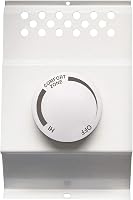
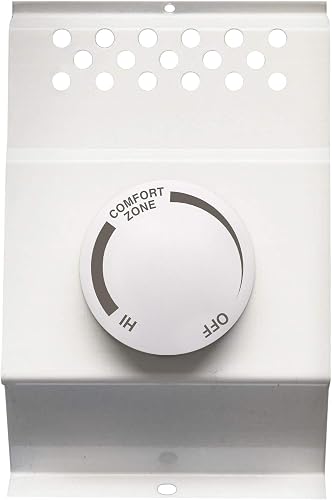
Cadet F Series Double Pole Built-In Baseboard
9.6/10 our score
See it on Amazon -
2
 Best for broad line-voltage compatibility
Cadet Double Pole Line Voltage Thermostat
9.6/10 our score
See it on Amazon -
3
 Best for Honeywell scheduling
Honeywell Home 5-2 Day Programmable Thermostat Electric
9.5/10 our score
See it on Amazon
- 4
 Check it
Riseem NonProgrammable Thermostat for Home
Best for conventional low-voltage heat - 5
 Check it
Mysa Smart Thermostat LITE for Electric Baseboard
Best for app and voice control - 6
 Check it
White-Rodgers 70 Series Classic
Best for simple low-voltage heat - 7
 Check it
Honeywell Home X2P Programmable Thermostat
Best for forced-air Honeywell systems - 8
 Check it
Cadet Single Pole Built-In Thermostat Kit
Best for single-pole Cadet control - 9
 Check it
Honeywell TH1100DV1000/U Pro 1000 Vertical Non-Programmable Thermostat
Best for compact Honeywell heat-only control
Which Honeywell thermostat works best for baseboard heaters?
The Honeywell Home 5-2 Day Programmable Thermostat Electric is the best Honeywell match in this group because it is made for 240V electric heat and supports 3,500W loads. It also handles electric baseboards, convectors, radiant ceilings and fan-forced heaters within its stated limits.
The Honeywell Home X2P is not compatible with electric baseboard heat, so its lower position reflects system fit rather than brand quality. A strong brand does not change the voltage a control is built to switch.
We compared voltage, load limits, wiring style, control type and scheduling. Those details decide whether a thermostat will work on a given circuit, even when two models look similar on a wall.
Our score weighs specs, features and buyer feedback against what you are shopping for. In this roundup, fit for electric baseboard heat carries the most weight.
A mechanical Cadet can be the right pick when simple dial control is the goal. A programmable Honeywell is better when weekday and weekend routines differ.
A smart Mysa is better when remote control and geofencing matter and the wiring allows it. The right answer depends on the circuit first and the features second.
That is why some familiar Honeywell names sit lower here. They serve forced air, hot water or heat pump systems well, but they are not substitutes for line voltage baseboard control.
| Product | Best for | Control | Circuit | Compatibility | Our score |
|---|---|---|---|---|---|
| Cadet F Series Double Pole Built-In Baseboard | Cadet F Series heaters | Mechanical twist dial | Double pole | Cadet F Series electric baseboard heaters only | 9.6 |
| Cadet Double Pole Line Voltage Thermostat | broad line-voltage compatibility | Mechanical twist dial | Double pole, 4-wire | Baseboard, fan-forced wall and convector heaters | 9.6 |
| Honeywell Home 5-2 Day Programmable Thermostat Electric | Honeywell scheduling | Digital buttons with backlit display | Electric baseboards, convectors, radiant ceilings and fan-forced heaters | 9.5 | |
| Riseem NonProgrammable Thermostat for Home | conventional low-voltage heat | Digital touchpad | Not compatible with 120 to 240V electric baseboard heat | 9.5 | |
| Mysa Smart Thermostat LITE for Electric Baseboard | app and voice control | App, touch and voice | Electric baseboard, wall, convector and fan-forced heaters | 9.2 | |
| White-Rodgers 70 Series Classic | simple low-voltage heat | Buttons | Not compatible with electric baseboard heat | 9.0 | |
| Honeywell Home X2P Programmable Thermostat | forced-air Honeywell systems | Touchpad | Not compatible with 120 to 240V electric baseboard heat | 8.7 | |
| Cadet Single Pole Built-In Thermostat Kit | single-pole Cadet control | Mechanical twist dial | Single pole, 2-wire low setting | Cadet F Series electric baseboard heaters only | 8.6 |
| Honeywell TH1100DV1000/U Pro 1000 Vertical Non-Programmable Thermostat | compact Honeywell heat-only control | Buttons | Confirm system voltage before use | 8.6 |
Best Honeywell and compatible baseboard heater thermostats
The products below are ordered by score, with the best fit for compatible electric baseboard circuits first. Read the compatibility line for every model before replacing an existing thermostat.
Cadet F Series Double Pole Built-In Baseboard: Best for Cadet F Series heaters
- 22 amp rating
- 120/208/240V
- 45 to 80°F dial range
- Built-in mounting
This built-in control mounts to either end of a Cadet F Series baseboard heater. Its large dial covers 45 to 80°F.
Pros
- Compact built-in design
- 22 amp rating
- No extra wiring for the built-in mounting arrangement
Cons
- Made for Cadet F Series heaters only
- No digital display or schedule
The Cadet F Series Double Pole Built-In Baseboard is the most compact choice for a compatible Cadet heater. It mounts to either end of the heater, replacing the detachable end plate and avoiding extra wiring.
Its large twist dial covers 45 to 80°F, giving direct manual control without batteries, schedules or a digital screen. The 45 degree low end suits mild weather or background warmth.
It is a 22 amp, 120/208/240V model, but compatibility is limited to Cadet F Series electric baseboard heaters. Confirm the heater family before ordering, since this is not a general wall thermostat for every baseboard brand.
The double-pole design switches both legs of the circuit. That differs from Cadet single-pole built-in kit and can matter for safety and a clean off cycle.
Make small turns and give the room time to respond. Baseboard heat builds gradually, so quick corrections can overshoot.
Keep the dial area clear and dust free so it stays easy to turn. Cleaning around the heater end matters more for a built in control.
Cadet Double Pole Line Voltage Thermostat: Best for broad line-voltage compatibility
- 120/208/240V
- 22 amp rating
- Up to 5,280W at 240V
- Positive off position
The T522-W is a wall-mounted choice for compatible electric heating circuits. It switches both circuit legs and uses a 40 to 80°F dial.
Pros
- Works with several line-voltage heater types
- Double-pole disconnect
- No batteries or programming
Cons
- No schedule
- Requires a standard wall electrical box
The Cadet Double Pole Line Voltage Thermostat is the broadest mechanical choice here for compatible electric heating circuits. It works with 120V, 208V and 240V electric baseboard, fan-forced wall and convector heaters.
Its 22 amp rating supports up to 5,280W at 240V or 2,640W at 120V. Those limits help when a room needs a larger heater than a smaller control can handle.
The 4-wire, double-pole design switches both circuit legs when the heater turns off, and the positive off position lets you shut the connected heater down. That clear off position is useful in warmer months or when a room will sit unused.
The dial runs from 40 to 80°F. The wider low end gives more room to set a mild temperature for a bedroom, office or workshop without running the heater hard.
Choose this model when you want a wall-mounted control with no batteries or programming, and make sure the heater load stays within the stated rating. It suits people who want to set a temperature and leave it alone.
Color coded wires and a standard wall box make replacement simpler for many users. Even so, line voltage work still deserves care, and an electrician is the safer call when the wiring is unclear.
The white, non-programmable face blends into most rooms and stays easy to explain to guests or tenants. There is no schedule to learn and no screen to wake, which is part of the appeal.
Honeywell Home 5-2 Day Programmable Thermostat Electric: Best for Honeywell scheduling
- 240V line voltage
- 3,500W maximum load
- 5-2 programming
- Silent TRIAC switching
This Honeywell Home thermostat adds weekday and weekend schedules to compatible 240V electric heat. It has 4 program periods per day and temporary temperature override.
Pros
- Made for electric baseboard heat
- Silent switching
- Backlit display
Cons
- 240V line-voltage heat only
- Not for central heating or loads above 14.6A
The Honeywell Home 5-2 Day Programmable Thermostat Electric is the best Honeywell option for compatible 240V baseboard heat. It controls electric baseboards, convectors, radiant ceilings and fan-forced heaters with a 2-wire non-polarized connection.
The digital display supports 4 program periods per day, with separate weekday and weekend schedules. Wake, leave, arrive and sleep periods let the room cool while you are out and warm before you return.
Temporary override lets you change the temperature without rewriting the schedule, while TRIAC switching provides silent operation. That quiet switching suits bedrooms and living spaces where a click or hum can be distracting.
Its maximum load is 3,500W at 240V, or 14.6A resistive. The minimum load is 2A resistive, so very small heaters may fall outside the intended range.
Do not use it for central heating, inductive loads, or resistive loads outside the stated limits. A system driven by a contactor or relay is not a match for this control.
The backlit display helps at night and the instructions inside the front panel help after a power interruption. Set the schedule once, then use override for guests, illness or a cold snap.
For more scheduling options, compare it with our guide to the best programmable baseboard heater thermostat. That guide is useful when a 5-2 pattern does not match your week.
Riseem NonProgrammable Thermostat for Home: Best for conventional low-voltage heat
- 1 heat/1 cool
- 44 to 90°F control range
- 2 AA battery backup
- Backlit LCD
This digital thermostat is for single-stage conventional heating and cooling, not electric baseboard circuits. Its incompatibility makes it a useful comparison point when identifying the wrong voltage system.
Pros
- Clear compatibility limits
- No C-wire required on most systems
- Backlit display
Cons
- Cannot control electric baseboard heat
- Not for multistage or heat-pump systems
The Riseem NonProgrammable Thermostat for Home belongs in this comparison as a clear example of a thermostat that should not control electric baseboard heat. It supports single-stage conventional systems up to 1 heat and 1 cool, including gas, oil or electric furnaces and heat-only boilers.
Its backlit display covers a 44 to 90°F control range, and the thermostat can use 24VAC power or 2 AA batteries. The wider range reflects conventional heating and cooling use, not line voltage baseboard duty.
The stated system limits exclude 120 to 240V electric baseboard heat, convectors, radiant ceilings and several heat-pump configurations. Multistage systems and dual fuel setups are also outside the intended use.
Choose it only when your system matches those conventional low-voltage requirements. A forced air furnace, a heat only boiler or a simple cooling setup can fit, depending on the exact wiring.
If your existing thermostat has line-voltage wiring, this is the wrong type. The number of wires and the voltage at the box will tell you more than the shape of the old control.
The large terminal blocks and sub-base aim to make installation straightforward. Still, check the instructions first, because the base accepts only a limited number of wires.
Swing settings can lengthen or shorten cycle time for comfort or savings. That feature suits conventional systems, but it does not convert a low voltage control into a baseboard control.
Mysa Smart Thermostat LITE for Electric Baseboard: Best for app and voice control
- 120V or 240V
- Wi-Fi scheduling
- HomeKit, Alexa and Google support
- Up to 3,800W at 240V
Mysa adds app, voice, geofencing and 7-day scheduling to compatible line-voltage electric heat. It needs 4 wires and works with 120V or 240V circuits.
Pros
- Remote control without a subscription
- 7-day scheduling
- Works with major voice platforms
Cons
- Needs 4 wires
- Not for 24V furnaces or central heat pumps
The Mysa Smart Thermostat LITE is the best connected alternative for compatible electric baseboard heat. It works with 120V or 240V line-voltage electric baseboard, wall, convector and fan-forced heaters, with up to 1,900W at 120V or 3,800W at 240V.
Mysa adds 7-day scheduling, remote app control, geofencing, vacation mode and voice control through HomeKit, Alexa and Google. Geofencing can ease the heat when you leave and restore it as you head home.
The app does not require a subscription, and the thermostat connects to 2.4 GHz Wi-Fi. That matters if you want smart features without a monthly fee layered on top.
Check the wires first. Mysa needs 4 wires, including a neutral or a second live wire, and it does not work with a 2-wire switch loop, 24V furnace or central heat pump.
The guided app install walks through each wire, and power should be off at the breaker before work starts. Local code can require an electrician, so treat high voltage wiring with respect.
A monthly runtime email shows which rooms ran longest. That report can help you tighten a schedule and spot a room that heats more than the others.
If you are considering infrared heating instead, our guide explains are infrared space heaters energy efficient questions before you change heating methods. A thermostat swap and a heater swap are different projects, so compare them on their own terms.
White-Rodgers 70 Series Classic: Best for simple low-voltage heat
- Digital backlit display
- 1°F precision
- Single-stage heat only
- 3 AAA batteries included
This non-programmable thermostat suits single-stage 24V or millivolt heat-only systems. It is not a match for electric baseboard circuits.
Pros
- Easy-to-read display
- Heat-only design
- Simple button control
Cons
- Not for electric baseboard heat
- No programming
The White-Rodgers 70 Series Classic is a simple digital thermostat for single-stage heat-only systems, not for electric baseboard heat. It works with 24V and millivolt systems and uses 3 included AAA batteries.
Its vertical profile has a 5 5/16 in height, 3 3/16 in width and 1 1/8 in depth. The slim shape fits a narrow wall spot where a wider control would crowd nearby trim or switches.
The backlit display and button control suit buyers who want a readable temperature display without programming. Precision of plus or minus 1 degree Fahrenheit keeps heat only systems steady for daily use.
Keep this model in mind only when your heating system is low voltage or millivolt. A digital screen does not make a thermostat compatible with line-voltage baseboard circuits.
Battery power makes it simple to place on a conventional system without a C-wire in many cases. Check the battery level now and then, since a weak set can leave the display dim or the control unresponsive.
The matte white finish and vertical profile keep it low key on the wall. It suits a hallway, bedroom or office where a plain heat only control is enough.
For baseboard heat, the safer path is a control rated for that circuit. Use this White-Rodgers model where the system voltage and wiring already match its design.
Honeywell Home X2P Programmable Thermostat: Best for forced-air Honeywell systems
- 5-2 scheduling
- Backlit display
- 2 AA battery power
- 1 heat/1 cool
The X2P adds Honeywell Home scheduling for compatible forced-air and hot-water systems. It should not be used on electric baseboard circuits.
Pros
- 5-2 scheduling
- No C-wire required
- Large backlit screen
Cons
- Not for electric baseboard heat
- No batteries included
The Honeywell Home X2P Programmable Thermostat is designed for single-stage forced air, hot water heat, single-stage heat pumps and 750mV systems. It is not compatible with 120 to 240V electric baseboard heat, so it should not replace a line-voltage baseboard control.
It offers 5-2 scheduling, a backlit display, custom display settings and a change filter reminder. Those features suit a conventional home system where routines change between weekdays and weekends.
The thermostat uses 2 AA batteries, which are not included, and does not require a C-wire. Battery power simplifies installation, but you will need to supply the batteries and replace them over time.
This is a useful choice for a compatible Honeywell Home conventional system, but not for the baseboard keyword in this guide. The UWP wall plate also makes future upgrades simpler on matching systems.
Check the wiring and voltage before choosing it. A forced air furnace and an electric baseboard heater may both provide heat, yet they ask very different things from a thermostat.
The large screen and clear font help with daily adjustments. A non-programmable option is also available if a schedule would add complexity rather than help.
Place it where it can sense the room well, away from drafts and direct sun. Good placement matters just as much as the right system match.
Cadet Single Pole Built-In Thermostat Kit: Best for single-pole Cadet control
- 22 amp rating
- 120/208/240V
- 45 to 80°F dial range
- Built-in mounting
This built-in kit is made for Cadet F Series electric baseboard heaters and mounts at either end. Its single-pole design differs from the double-pole Cadet pick.
Pros
- Built-in heater mounting
- Simple dial
- 22 amp rating
Cons
- Cadet F Series only
- Single-pole design
The Cadet Single Pole Built-In Thermostat Kit is made for Cadet F Series electric baseboard heaters. Like the double-pole built-in model, it mounts to either end of the heater and uses a large dial from 45 to 80°F.
Its single-pole, 2-wire low setting is the key difference. The title identifies it as a 22 amp thermostat for 120V, 208V and 240V systems, but the heater compatibility remains limited to Cadet F Series baseboards.
Choose this model when the heater and circuit call for single-pole control. Matching the pole arrangement to the existing setup keeps the replacement straightforward.
If you need both circuit legs disconnected when the heater is off, compare the double-pole Cadet options instead. That need is about circuit design, not personal preference alone.
The white finish is made to blend with the heater and keep the end of the baseboard looking neat. A compact built in dial also avoids a wall box and extra wiring in the room.
For daily use, turn the dial in small steps and give the room time to respond. Baseboard heat builds slowly, so a quick correction can overshoot if you keep turning.
Keep the area around the heater clear of curtains and furniture. Clear space helps the built in control sense the room and helps heat spread evenly.
Honeywell TH1100DV1000/U Pro 1000 Vertical Non-Programmable Thermostat: Best for compact Honeywell heat-only control
- Vertical profile
- LCD display
- 4 11/16 in high
- 2 7/8 in wide
This compact Honeywell vertical thermostat has an LCD display and button control. Confirm the heating system and voltage before considering it for any baseboard installation.
Pros
- Compact vertical shape
- LCD temperature display
- Simple non-programmable control
Cons
- Compatibility details need confirmation
- No scheduling
The Honeywell TH1100DV1000/U Pro 1000 is a compact vertical non-programmable thermostat with an LCD display and button control. It measures 4 11/16 in high, 2 7/8 in wide and 1 1/8 in deep, with a white finish.
The available information identifies 2 AAA batteries and a wall mount, but it does not guarantee a line-voltage baseboard rating. Confirm the system voltage and wiring before considering this Honeywell model for any baseboard installation.
It may suit a compact heat-only control where the system matches its requirements. A narrow vertical shape can fit a wall spot that a wider thermostat would not.
It should not be treated as a confirmed replacement for a 120V or 240V electric baseboard thermostat. Brand and display style do not prove line voltage compatibility.
Button control keeps the interface simple for everyday changes. There is no schedule to set, which suits a room that stays at a steady temperature.
Battery power means you should check the batteries on a regular schedule. A low battery warning is easier to handle when you notice it early.
Use the product instructions for the exact system checks before installation. If the voltage or wiring is unclear, a qualified technician can identify the right control type.
How do you choose a Honeywell baseboard thermostat?
Choose the Honeywell Home 5-2 Day model when you have compatible 240V electric heat and want weekday and weekend scheduling. Choose a Cadet mechanical control when simple manual operation matters more than programming.
Start with voltage. Electric baseboards commonly use line voltage, so a thermostat must be rated for the circuit rather than selected by display style or brand.
Next, compare heater load with the thermostat rating. The Honeywell Home model supports up to 3,500W at 240V, while the Cadet wall thermostat supports up to 5,280W at 240V or 2,640W at 120V.
Then check mounting and wiring. A built-in Cadet model is made for Cadet F Series heaters, while the Cadet T522-W is a wall-mounted control for compatible baseboards, fan-forced wall heaters and convectors.
Pole arrangement also matters. A double-pole control switches both legs of the circuit, while a single-pole control switches one leg.
Wiring count can rule a model in or out. Mysa needs four wires, the Honeywell Home 5-2 Day uses a 2-wire non-polarized connection, and the Cadet wall model uses a 4-wire design.
Program style is a lifestyle choice after technical checks. A dial suits set and forget use, a 5-2 schedule suits a regular week, and a 7-day smart schedule suits varied routines.
Keep the control away from drafts, direct sun, curtains and furniture. Dust the unit, check batteries where needed, and verify voltage, load and wires before buying.
Can a low-voltage thermostat control a baseboard heater?
A low-voltage thermostat should not control a line-voltage baseboard heater unless the system includes correct compatible control equipment. The Riseem, White-Rodgers and Honeywell X2P models here show why system type matters.
For a dedicated low-voltage setup, see our guide to the best low voltage thermostat for baseboard heater systems. It focuses on cases where the heater and control system use lower voltage wiring.
Do not assume a digital screen makes a thermostat suitable for baseboard heat. Many conventional controls use 24V or millivolt signals, while electric baseboards use 120V, 208V or 240V circuits.
Turn off power at the breaker, identify the circuit, and consult a qualified electrician if wiring or voltage is unclear. Line voltage can cause serious harm.
A low voltage label may refer to the control signal rather than the heater itself. Some systems use a relay or transformer arrangement, and that equipment changes what a thermostat can safely switch.
Check the heater nameplate and the old thermostat together. The nameplate shows heater voltage and wattage, while the old control shows pole style and wiring pattern.
If the old unit is a wall mounted line voltage control, a 24V furnace thermostat will not be a drop in replacement. If the old unit is low voltage on a conventional system, a line voltage model will not fit either.
Incompatible models are still useful comparison points. They show limits clearly, so you can avoid a purchase that cannot control the circuit.
Honeywell baseboard thermostat setup and care
Switch off the breaker before touching thermostat wiring, and follow the instructions for the exact model and heater. Line-voltage work can be dangerous, so use a qualified electrician when local code requires it or when you are not comfortable identifying the circuit.
Keep the thermostat clear of curtains, furniture and other objects that can affect the temperature near the control. A clean, unobstructed location helps the thermostat respond to the room rather than a nearby heat source.
For a mechanical dial, make small changes and allow the room time to respond. For a programmable or smart model, start with a schedule that lowers heat while the room is empty and raises it before you return.
If your home uses a dual-fuel system rather than electric baseboards, compare our guide to the best Honeywell dual fuel thermostat. Dual-fuel equipment needs different compatibility checks than a simple line-voltage baseboard circuit.
Final choice for the best Honeywell thermostat for baseboard heater use
The Honeywell Home 5-2 Day Programmable Thermostat Electric is the best Honeywell pick when your system matches its 240V, 3,500W and 14.6A limits. It adds weekday and weekend scheduling without app complexity.
Choose the Cadet T522-W for a higher-rated mechanical wall control, the Cadet built-in models for Cadet F Series heaters, or Mysa when 4-wire compatibility and smart features matter most.
Each pick solves a different problem. The Cadet wall model favors simple dial control, the built in Cadet models favor a neat heater end, and Mysa favors remote and voice control.
The Honeywell Home model favors a regular routine with quiet switching and a backlit display. Its temporary override helps when a day does not follow the plan.
Verify voltage, load and wiring before installation. Write down heater wattage, circuit voltage and the number of wires at the box, then match them to the model.
Turn power off at the breaker and follow the instructions for the exact unit. Use a qualified electrician when local code requires it or wiring is unclear.
Keep the control in open room air, away from curtains, furniture and drafts. Pick the control that matches the circuit first, then fits how you like to set the heat.
Our top 3 picks at a glance
-
1
Best for Cadet F Series heaters
Cadet F Series Double Pole Built-In Baseboard
9.6/10 our score
See it on Amazon -
2
Best for broad line-voltage compatibility
Cadet Double Pole Line Voltage Thermostat
9.6/10 our score
See it on Amazon -
3
Best for Honeywell scheduling
Honeywell Home 5-2 Day Programmable Thermostat Electric
9.5/10 our score
See it on Amazon
Frequently asked questions
What is the best Honeywell thermostat for baseboard heater systems?
The Honeywell Home 5-2 Day Programmable Thermostat Electric is the strongest Honeywell choice here for compatible 240V electric baseboard heat. It supports 3,500W, 14.6A resistive loads, weekday and weekend schedules, and silent TRIAC switching.
Check the circuit voltage and load before installation.
Can any Honeywell thermostat control an electric baseboard heater?
No. Electric baseboard heaters commonly use line voltage, while many Honeywell thermostats are made for 24V forced-air or heat-only systems.
The Honeywell Home 5-2 Day model is designed for compatible 240V electric heat.
The Honeywell Home X2P is specifically not compatible with 120 to 240V electric baseboard heat.
Is a programmable thermostat worth it for baseboard heat?
A programmable thermostat can help when your schedule changes during the day or week. The Honeywell Home 5-2 Day model provides separate weekday and weekend programs with 4 periods per day.
A mechanical dial may be better if you want simple manual control.
What should I check before buying a baseboard thermostat?
Check the heater voltage, circuit load, pole arrangement, wiring and thermostat mounting style. A 240V electric baseboard circuit needs a compatible line-voltage thermostat, not a standard 24V furnace control.
Turn off power at the breaker and use a qualified electrician when you are unsure.