Best 120 Volt WiFi Line Voltage Thermostats: Top 8 Picks (November 2026)
The best 120 volt WiFi line voltage thermostats include the MAXKOSKO WiFi Smart Radiant Underfloor Heating Thermostat for 120V electric floor heat, the ecobee Smart Thermostat Essential for 24VAC HVAC homes, and the OJ Microline Electric Radiant Floor Heating Thermostat for dual-voltage floor safety.
On this page (5 sections)
The best line voltage wifi thermostat 120v for most electric floor heating is the MAXKOSKO WiFi Smart Radiant Underfloor Heating Thermostat. It pairs touchscreen control with remote adjustments and a floor sensor that watches the heated surface.
People with electric floor heat need more than a room reading. A floor sensor helps the control react to the temperature underfoot, which is where the comfort comes from in a bathroom, kitchen or hallway.
Mysa is the better fit for 120V baseboard heaters. The heater type matters first, because a floor control and a baseboard control solve different wiring and load jobs.
This category needs a wiring check before a smart-home feature check. A 120V electric heater uses line voltage, while many popular smart thermostats are made for 24VAC HVAC equipment.
Voltage can look similar on a product page and still mean a different circuit in the wall. Check the heater label, the breaker and the old thermostat before you shortlist a model by its app or voice features.
If you're comparing nearby voltage options, see our guide to the best 240 volt wifi thermostat. For the basic difference between systems, read [What Is a Line Voltage Thermostat?
The Basics](/what-is-a-line-voltage-thermostat/).
Programmable schedules help in rooms that sit empty during the day. You can set warmer times for mornings and evenings, then lower heat when the house is quiet.
Setup also deserves care. Line voltage work means the breaker, wire count and load all need attention before the thermostat goes on the wall.
Read the product details for floor sensing, load limits and safety features. Those plain specs tell you more about daily use than a long list of smart-home logos.
Our picks at a glance
-
1
 Best for 120V electric floor heat
MAXKOSKO WiFi Smart Radiant Underfloor Heating Thermostat
9.7/10 our score
See it on Amazon -
2

-
3
 Best for dual-voltage floor safety
OJ Microline Electric Radiant Floor Heating Thermostat
9.4/10 our score
See it on Amazon
- 4
 Check it
Mysa Smart Thermostat LITE for Electric Baseboard
Best for 120V baseboard scheduling - 5
 Check it
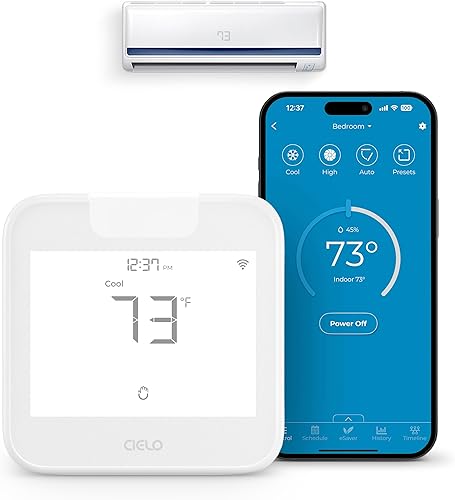
Cielo Breez Breez Max Smart WiFi Thermostat
Best for IR-controlled room AC - 6
 Check it
meross Matter Smart Thermostats for Home
Best for Matter 24VAC systems - 7
 Check it
Mysa Smart Thermostat for Electric in-Floor Heating
Best for in-floor GFCI protection - 8
 Check it
Nuheat nVent Signature AC0055 WiFi Programmable Floor
Best for touchscreen floor scheduling
How we chose the best line voltage wifi thermostat 120v picks
The best line voltage wifi thermostat 120v depends on the heater, voltage, load and wiring already in your wall. We compared each product's stated voltage support, heater type, control method, sensors and safety features.
We also looked at what each control leaves out. A model built for floor heat may not suit baseboard heat, and a 24VAC model will not switch a 120V circuit.
Our score weighs specs, features and buyer feedback against what you're shopping for. We also separated true line-voltage products from smart controls designed for 24VAC systems or IR-controlled room air conditioners.
Floor heating adds a layer that baseboard heat does not share. Floor sensing and floor limits can protect certain floors and keep the surface in the range you set.
A thermostat for electric floor heating may need floor sensing or floor limits. A baseboard thermostat needs a compatible line-voltage circuit and enough load capacity.
Load is a plain number with real meaning. It shows how much heater power the control can handle, and it should be checked against the circuit total.
Control method matters in daily use. Touchscreens suit quick changes at the wall, while an app helps when you are away or want a schedule to run without manual tweaks.
Voice control is a bonus, not a starting point. It works best after the wiring, voltage and heater type already match.
For another view of the category, compare these best smart line voltage thermostats. If your project involves electric baseboards, our guide to the best smart thermostat for baseboard heaters narrows the choices by heater type.
We kept the roundup focused on the system in the wall. That keeps the choice practical for homeowners who need a safe match first and smart features second.
| Product | Best for | Use | Sensor | Controls | Our score |
|---|---|---|---|---|---|
| MAXKOSKO WiFi Smart Radiant Underfloor Heating Thermostat | 120V electric floor heat | Underfloor heating | 15 ft floor sensor included | App, touch and voice | 9.7 |
| ecobee Smart Thermostat Essential | 24VAC HVAC homes | Most 24VAC HVAC systems | 9.6 | ||
| OJ Microline Electric Radiant Floor Heating Thermostat | dual-voltage floor safety | 9.4 | |||
| Mysa Smart Thermostat LITE for Electric Baseboard | 120V baseboard scheduling | Baseboard, wall, convector and fan-forced heaters | 9.2 | ||
| Cielo Breez Breez Max Smart WiFi Thermostat | IR-controlled room AC | IR remote-controlled room AC | App, touch and smart-home platforms | 8.8 | |
| meross Matter Smart Thermostats for Home | Matter 24VAC systems | Most compatible HVAC systems | 8.8 | ||
| Mysa Smart Thermostat for Electric in-Floor Heating | in-floor GFCI protection | Electric in-floor heating | 8.7 | ||
| Nuheat nVent Signature AC0055 WiFi Programmable Floor | touchscreen floor scheduling | Electric floor heating | 8.3 |
Best 120V WiFi thermostat picks for electric heating
MAXKOSKO leads this list because it combines remote control and a floor sensor for underfloor heating. The remaining picks solve different jobs, so match the product to your system before comparing scores.
Some models here handle floor heat, some handle baseboard heat, and a few are better known as 24VAC or room AC controls. That split is the point of this guide.
Use the heater type as your first filter. The right thermostat will match the voltage, load and wiring that are already in place.
MAXKOSKO WiFi Smart Radiant Underfloor Heating Thermostat: Best for 120V electric floor heat
- WiFi app, touch and voice control
- 15 ft floor sensor
- Programmable settings
- Works with Alexa and Google Assistant
The MAXKOSKO combines WiFi control, a touchscreen and a 15 ft floor sensor for electric underfloor heating. Its compatibility wording is broad, so confirm the heating circuit and wiring before installation.
Pros
- Remote app control
- 15 ft floor sensor
- Alexa and Google Assistant control
Cons
- Exact load rating is not stated
- Designed for floor heating rather than baseboard heaters
MAXKOSKO is the strongest match for a 120V electric floor heating project when you want phone control and a floor sensor. Its touchscreen LED display gives you local control, while the Smart Life app supports remote adjustments and programmable settings.
The included 15 ft floor sensor helps the thermostat monitor the heated floor. That extra length gives you room to place the sensor where it can read the floor surface properly.
The product is designed for underfloor heating systems, so confirm that your circuit and heating system match before wiring it. A floor model is not a general answer for every electric heater.
Voice control works with Amazon Alexa and Google Assistant. That makes it useful when you want to adjust floor heat without reaching for the wall control or phone.
Programmable settings cut down on daily manual changes. You can set comfort times for when you are home and lower settings when the room is empty.
Its white wall-mounted design measures 2.17 in deep, 3 in wide and 4.7 in high. The size is compact for a wall control, but the depth is worth checking against the box space.
Choose it for floor heating control rather than a baseboard circuit whose load rating you cannot confirm. The exact load rating is not stated, so that check stays important.
ecobee Smart Thermostat Essential: Best for 24VAC HVAC homes
- Energy Star certified
- WiFi app and color touchscreen
- Works with most 24VAC HVAC equipment
- Power Extender Kit option
ecobee Smart Thermostat Essential is a strong smart control for compatible 24VAC equipment, but it is not a 120V line voltage thermostat. Check compatibility before using it in an electric heating circuit.
Pros
- Clear 24VAC compatibility range
- App and touchscreen control
- Apple HomeKit, Alexa and Google Assistant
Cons
- Not for 120V electric baseboard heaters
- Compatibility must be checked
ecobee Smart Thermostat Essential is a capable smart thermostat for compatible 24VAC HVAC equipment, not for a 120V line-voltage heater. It works with most stated gas, oil, electric, dual-fuel, forced-air, heat-pump and boiler systems after compatibility checking.
The color touchscreen and ecobee app give you local and remote temperature control. That mix suits people who want to tap the wall unit at home and check the system from a phone when away.
It also supports Apple HomeKit, Google Assistant and Alexa, plus built-in scheduling and eco+ features. Schedules help the system follow a routine, while the app keeps usage in view.
Homes without a C wire may use the ecobee Power Extender Kit, which is sold separately. That wiring detail matters because a low-voltage installation is different from connecting a 120V electric heating circuit.
The battery powered design and wall mount fit a low-voltage replacement project. The stated dimensions are 0.91 in deep, 3.62 in wide and 3.62 in high.
Choose ecobee when your system is 24VAC and you want a broad smart-home platform. Do not use it as a substitute for a line-voltage thermostat.
OJ Microline Electric Radiant Floor Heating Thermostat: Best for dual-voltage floor safety
- 120V and 240V support
- Class A GFCI
- Air and floor sensing
- 15A load rating
OJ Microline fits electric radiant floor systems that need 120V or 240V support, floor limits and built-in Class A GFCI protection. Its 15A rating gives you a clear point for checking system load.
Pros
- Dual voltage
- Built-in GFCI
- Floor sensor included
Cons
- Floor heating focus
- Installation requires high-voltage wiring care
OJ Microline is a strong choice when an electric radiant floor system may run at either 120V or 240V. It supports a 15A load, rated at 1800W at 120V or 3600W at 240V.
That clear rating makes load checking easier. Add up the heater load in watts and compare it with the limit for your circuit voltage.
The built-in Class A GFCI adds a safety feature for the floor heating application. It is a useful detail in wet rooms and other floor heating areas where safety checks matter.
Dual sensing reads air and floor temperature, while floor limits help with laminate and wood floors. That can keep a floor surface from getting hotter than the setting allows.
Remote control works through Android or iOS devices, and the 7-day program supports changing schedules. A weekly pattern fits workdays, weekends and overnight setbacks without daily changes.
Its 3.5 in responsive color touchscreen gives the wall control a larger interface than a basic dial. The white wall-mounted unit measures 2 in deep, 3.5 in wide and 5 in high.
This thermostat includes the floor sensor. Check the heater's actual load and circuit voltage before installation, and keep the high-voltage wiring work in mind.
Mysa Smart Thermostat LITE for Electric Baseboard: Best for 120V baseboard scheduling
- 120V or 240V support
- Up to 1900W at 120V
- 2.4 GHz WiFi
- 7-day scheduling
Mysa Smart Thermostat LITE is the clearest match here for 120V electric baseboard and similar line-voltage heaters. It supports 120V or 240V loads, but the 4-wire requirement is a key pre-purchase check.
Pros
- Made for electric line-voltage heaters
- 120V and 240V support
- Free app with scheduling and remote control
Cons
- Does not work with a two-wire switch loop
- Not for 24V furnaces or central heat pumps
Mysa Smart Thermostat LITE is the clearest baseboard choice in this roundup. It works with 120V or 240V line-voltage heaters, including electric baseboard, fan-forced, wall and convector heaters, plus radiant ceiling heat.
At 120V, the stated limit is up to 1900W. That number should be compared with the total load on the circuit before you buy.
The thermostat needs 4 wires, including a neutral or a second live wire, and it will not work with a two-wire switch loop or 24V central HVAC. This is the check that decides whether the install can go ahead.
The free Mysa app supports 7-day schedules, remote control, geofencing, away and vacation modes. Those features help you lower heat while you are out and bring it back before you return.
You can also use Apple HomeKit, Alexa or Google Home, and the thermostat connects to 2.4 GHz WiFi. No hub is needed for the basic app control described for this model.
Choose Mysa when your heater type and wiring match. Turn off the breaker before working, and use an electrician if you are not comfortable with high-voltage wiring.
Cielo Breez Breez Max Smart WiFi Thermostat: Best for IR-controlled room AC
- Controls mini-split, window and portable AC units
- Built-in temperature and humidity sensors
- 2.4 GHz WiFi
- Weekly schedules
Cielo Breez Max adds smart control to compatible mini-split, window and portable air conditioners with IR remotes. It is not a wired 120V heating thermostat, so use it for room AC control instead.
Pros
- Broad IR device support
- Temperature and humidity sensors
- Schedules continue if internet is lost
Cons
- Requires line of sight to the AC
- Not a line-voltage heater thermostat
Cielo Breez Max belongs in this list as a special case for room air conditioning. It controls compatible mini-split, window and portable AC units with IR remote controls, rather than switching a 120V electric heater circuit.
That difference shapes the whole setup. The unit sits in the room and sends signals to the AC, instead of wiring into a heater circuit.
Place it 6–12 ft from the air conditioner with a clear line of sight. Furniture, curtains and wall corners can matter when the signal path is blocked.
Its built-in temperature and humidity sensors can be calibrated in the app, and weekly schedules continue even when internet connectivity is lost. That helps a routine keep running during a short network outage.
The app also offers geofencing, usage history and air filter notifications. Geofencing can start cooling as you head home, while usage history shows how the room has been running.
Smart-home control includes Alexa, Google Assistant, Siri Shortcuts, SmartThings, IFTTT and Home Assistant. Those links suit people who already use one of those platforms for routines.
Choose it when your heating or cooling equipment is an IR-controlled room AC. It is not the right replacement for a wired line-voltage thermostat.
meross Matter Smart Thermostats for Home: Best for Matter 24VAC systems
- Matter platform support
- 24/7 scheduling
- App and voice control
- Filter and system alerts
meross Matter Smart Thermostats for Home suits compatible low-voltage HVAC systems and Matter users. The product specifically excludes 120V electric baseboard heaters, so it should not be used as a line-voltage pick.
Pros
- Matter integration
- Flexible scheduling
- System and filter alerts
Cons
- Not for 120V electric baseboard heat
- C wire may be required
meross Matter Smart Thermostats for Home is another low-voltage comparison point, not a 120V heater pick. It is designed for compatible HVAC systems such as heat pumps, air conditioners, furnaces, boilers, humidifiers and dehumidifiers.
The product specifically excludes 110V, 120V and 240V electric baseboard heaters. That exclusion keeps it out of the line-voltage group, even though it is a WiFi thermostat.
Some wiring setups also require a C wire, so check compatibility before considering it for an HVAC replacement. A missing C wire can turn a simple swap into extra parts and extra work.
Matter integration connects it with Apple Home, Amazon Alexa, Google Home, Home Assistant and Samsung SmartThings. That local platform support can reduce reliance on one app for everyday control.
The meross app adds 24/7 scheduling, usage tracking and alerts for filter life or system problems. Schedules fit home, away and sleep periods, while alerts flag issues you may not notice at the wall.
The sleek glass panel comes in black or white. The ivory listing measures 0.9 in deep, 3.6 in wide and 3.6 in high.
Choose meross only when your equipment is compatible low-voltage HVAC. For electric baseboard heat, use a thermostat made for line voltage instead.
Mysa Smart Thermostat for Electric in-Floor Heating: Best for in-floor GFCI protection
- 120V to 240V electric in-floor support
- Built-in Class A GFCI
- Floor sensor included
- HomeKit, Alexa and Google control
This Mysa model is built for high or line voltage electric in-floor heating, with a built-in Class A GFCI and included floor sensor. It does not work with hydronic or water-based systems.
Pros
- 120V to 240V support
- Built-in Class A GFCI
- App and voice control
Cons
- Not for hydronic heating
- In-floor heating only
This Mysa model is designed for 120V to 240V electric in-floor heating and includes a built-in Class A GFCI. It also includes a floor sensor, mounting screws, wire nuts and wiring instructions.
The included hardware helps with a direct replacement when the wiring already suits the model. The floor sensor is a key part, because in-floor control reads the heated surface as well as the room.
The app provides schedules, geofencing, lockouts and energy reports. Schedules set daily patterns, geofencing responds to travel, and lockouts can stop casual changes.
HomeKit, Alexa and Google Home support add voice and smart-home control, while the wall unit provides touch temperature control. That gives you more than one way to make a quick change.
The key limitation is system type. This thermostat does not work with hydronic or water-based heating, so it belongs with electric cable or mat systems.
Choose it when you want a focused in-floor thermostat with GFCI protection and a floor sensor. Confirm the existing voltage and floor heating design before ordering.
Nuheat nVent Signature AC0055 WiFi Programmable Floor: Best for touchscreen floor scheduling
- 120V and 240V floor cable support
- Built-in Class A GFCI
- 3.5 in color touchscreen
- 7-day programming
Nuheat nVent Signature gives electric floor heating a 3.5 in touchscreen, WiFi app control and dual-voltage support. It is a focused floor thermostat rather than a general baseboard or central HVAC control.
Pros
- Dual-voltage floor cable support
- Built-in GFCI
- 7-day programming
Cons
- Floor heating focus
- Power source is not confirmed
Nuheat nVent Signature is a focused floor heating thermostat with 120V and 240V compatibility. Its built-in Class A GFCI and 7-day programming suit electric floor cable systems in rooms such as kitchens, bathrooms, bedrooms and hallways.
The 3.5 in color touchscreen gives you local control, while the mobile app and web browser support remote adjustments. That pairing helps when you want to change a schedule from the wall or check it from another room.
It also works with Alexa, Google Assistant, IFTTT and several home automation platforms. Voice control is handy for a quick change, while automation links can tie floor heat to a wider routine.
The glossy white unit measures 6 in deep, 4 in wide and 4 in high in the listed dimensions. Check the box and wall space before you plan the install.
Use it when a larger touchscreen matters and your project is electric floor heating. It is not a general baseboard or 24VAC HVAC thermostat, and the power source should be confirmed before installation.
How do 120V line-voltage thermostats differ from 24V models?
A 120V line-voltage thermostat switches power for electric heating, while a 24V thermostat controls compatible HVAC equipment through low-voltage wiring. The two types are not interchangeable.
Line voltage means the control is dealing with the heater circuit itself. Low voltage means the thermostat sends signals to equipment that does the switching elsewhere.
You can learn the basics in What Is a Low Voltage Thermostat? Explained.
That distinction helps explain why ecobee and meross can be smart thermostats but still be wrong for a 120V baseboard circuit. Smart features do not change the voltage class of the device.
Floor models add sensing at the surface. Baseboard models need load capacity for the heater circuit, and some need a neutral or second live wire.
Check the old thermostat wiring, breaker, heater label and total wattage. Do not rely on the word “smart” to determine electrical compatibility.
A compatibility checker can help with 24VAC systems. For line-voltage heat, the heater type and wire count come first.
If the numbers do not line up, stop and get the right model. The cost of a return is lower than the risk of forcing a mismatch.
What should you check before installing a 120V WiFi thermostat?
Check four things first: heater type, circuit voltage, total load and wire configuration. Floor heating models may also need a floor sensor, while baseboard models may require a neutral or second live wire.
Heater type narrows the field fast. Electric floor cable, electric baseboard heat and 24VAC HVAC each need a different kind of control.
Voltage and load should be read from labels, not guessed from the room. Add the heater wattage for the circuit and compare it with the thermostat limit.
Wire count can decide a purchase. Mysa Smart Thermostat LITE needs 4 wires, while some floor models use a sensor lead in addition to the power wiring.
A thermostat's app support does not remove the need for safe electrical work. Switch off the breaker, verify that power is off and follow the installation instructions for the exact model.
Keep the old thermostat photo before you undo any wires. It helps you match conductors and spot a setup that does not fit the replacement.
If you are replacing a heater as well as its control, compare the complete system with the best baseboard heaters with thermostat 120v. The thermostat must match the heater's circuit and load.
Use an electrician when local code requires it or your comfort with high-voltage wiring is low. That is a practical step, not an extra cost to skip.
Which 120V WiFi thermostat should you choose?
Pick MAXKOSKO for app-controlled underfloor heating with a 15 ft sensor. It suits a floor project where phone control and surface sensing matter most.
Pick OJ Microline or Nuheat when dual-voltage floor control and GFCI features matter. Both list 120V and 240V support for electric floor systems.
For electric baseboard, wall or convector heat, pick Mysa Smart Thermostat LITE only after confirming the 4-wire requirement and 120V load. That check protects you from a bad fit.
If your system is 24VAC, choose ecobee or meross instead, based on compatibility. They belong with low-voltage HVAC equipment, not a 120V heater circuit.
Our top 3 picks at a glance
-
1
Best for 120V electric floor heat
MAXKOSKO WiFi Smart Radiant Underfloor Heating Thermostat
9.7/10 our score
See it on Amazon -
2
-
3
Best for dual-voltage floor safety
OJ Microline Electric Radiant Floor Heating Thermostat
9.4/10 our score
See it on Amazon
Frequently asked questions
What is the best line voltage wifi thermostat 120v for baseboard heat?
Mysa Smart Thermostat LITE is the best fit in this group for 120V electric baseboard heat. It supports up to 1900W at 120V and requires 4 wires, including a neutral or second live wire.
Turn off the breaker and confirm the wiring before installation.
Hire an electrician when local code or the circuit layout requires it.
Can you use a 24V smart thermostat on 120V heat?
No. A 24V thermostat such as ecobee Smart Thermostat Essential or meross Matter Smart Thermostats for Home is designed for compatible low-voltage HVAC equipment, not a 120V heating circuit.
Using the wrong thermostat can create a dangerous wiring problem.
Match the thermostat to the heater voltage and circuit type.
Are 120V and 240V line voltage thermostats the same?
Some thermostats support both 120V and 240V systems, but that does not make every model interchangeable. OJ Microline, both Mysa floor and baseboard models, and Nuheat list dual-voltage support.
Check load limits, wire count, heater type and local electrical rules before choosing one.
What should you check before installing a 120V WiFi thermostat?
Check the heater type, circuit voltage, load, wire count and thermostat compatibility first. Mysa Smart Thermostat LITE requires 4 wires, while floor models may also use a floor sensor and floor temperature limits.
Switch off power at the breaker and use qualified electrical help when you are unsure.