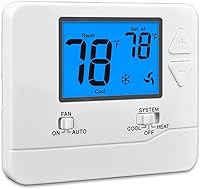
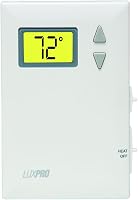
5 Best Line Voltage Heat Only Thermostats (November 2026)
The best line voltage heat only thermostats include the LUX PSD010B Non-Programmable 2-Wire Heat-Only Thermostat for fireplaces and radiant heat, the Honeywell Home Digital Non-Programmable Thermostat for Electric for electric baseboards, and the YeloDeer 240V Only 4-Wire Manual Electric Baseboard for manual dial control.
On this page (10 sections)
- The best line voltage heat only thermostats for each setup
- Line voltage heat only thermostat comparison: specs at a glance
- How we compared these heat-only line voltage picks
- Can a heat-only thermostat work with baseboards and convectors?
- How do I match voltage and load before I buy?
- 2-wire or 4-wire: which wiring should I choose?
- Digital, manual or mechanical: which control suits you?
- What accuracy and switching noise should I expect?
- Are programmable or brand-specific options worth it for heat only?
- Best line voltage thermostat heat only: our verdict
The best line voltage thermostat heat only for most homes is the LUX PSD010B, because it keeps control simple for heat-only loads and shows temperature on a large illuminated display. The Honeywell Home RLV3120A is a close second for baseboards, thanks to silent TRIAC switching and tight accuracy.
A heat-only line voltage thermostat switches the full heater voltage on and off. That makes load and voltage checks more important than app features.
Our score weighs specs, features and buyer feedback against what you're shopping for.
If you are new to this type of control, start with What Is a Line Voltage Thermostat? The Basics.
It explains why these controls differ from standard low-voltage thermostats. You can also compare [What Is a Heat Pump Thermostat?
The Complete Guide](/what-is-a-heat-pump-thermostat/) if you are unsure whether your system is heat-only at all.
Our picks at a glance
-
1
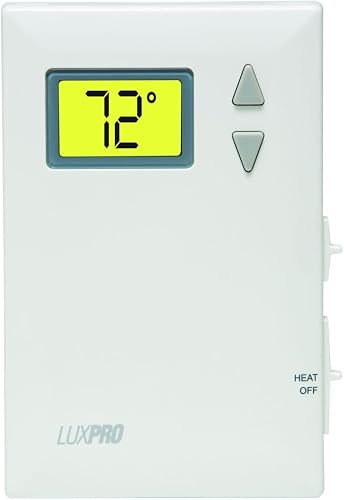 Best for fireplaces and radiant heat
LUX PSD010B Non-Programmable 2-Wire Heat-Only Thermostat
9.7/10 our score
See it on Amazon -
2
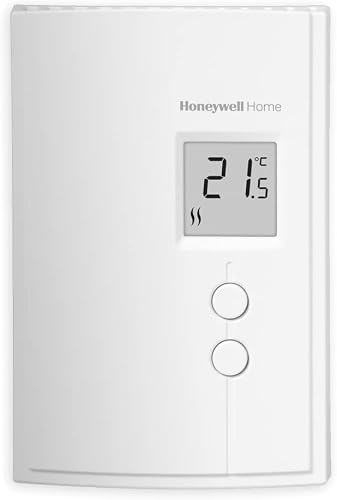 Best for electric baseboards
Honeywell Home Digital Non-Programmable Thermostat for Electric
9.4/10 our score
See it on Amazon -
3
 Best for manual dial control
YeloDeer 240V Only 4-Wire Manual Electric Baseboard
9.1/10 our score
See it on Amazon
- 4
 Check it
Honeywell TH1100DV1000 Pro-Digital 2-Wire Heat Only
Best for simple digital replacement - 5
 Check it
ROBERTSHAW 802 Line Voltage Thermostat with Double-Pole
Best for double-pole replacement
The best line voltage heat only thermostats for each setup
These five picks cover the main heat-only jobs: fireplaces and radiant heat, standard electric baseboards, high-load 240V circuits, simple digital replacements and double-pole retrofits. Match your heater type first, then check voltage and load.
LUX PSD010B Non-Programmable 2-Wire Heat-Only Thermostat: Best for fireplaces and radiant heat
- 2-wire heat-only design
- Large illuminated LCD display
- Battery powered
- Wall mount
- White plastic housing
A simple non-programmable control for heat-only systems such as fireplaces, stoves and in-floor radiant heating, with a large display that is easy to read.
Pros
- Large illuminated display
- Simple push-button control
- No fan switch required
Cons
- Battery powered only
- No programmable schedule
The LUX PSD010B suits a fireplace, stove or in-floor radiant system where you want set-and-forget heat control. It is a 2-wire heat-only design that does not require a fan switch, so simple circuits stay simple.
The large illuminated LCD display helps you read the room temperature without a flashlight. Push-button control keeps daily use plain, with no schedule to learn or program.
Battery-powered operation means the control does not depend on heater power for its display. It uses 2 AA batteries, and that battery dependence is the main limit, since you will need to replace them over time.
At 1.1 x 3.3 x 5 inches, it fits a standard wall-mount spot. The white plastic housing stays low-profile in most rooms.
Choose it over the Honeywell models if your load is a fireplace or radiant floor rather than a baseboard run. Skip it if you want silent electronic switching or a set schedule, since this model is non-programmable.
Honeywell Home Digital Non-Programmable Thermostat for Electric: Best for electric baseboards
- TRIAC silent switching
- Accuracy of plus or minus 0.27 F
- 2-wire non-polarized connection
- On-screen heating power indicator
- Maximum load 2,000W at 240V
A digital 2-wire control for electric baseboards and convectors with silent TRIAC switching and a heating power indicator for at-a-glance checks.
Pros
- Silent TRIAC switching
- Tight temperature accuracy
- Works down to small baseboard loads
Cons
- Cannot be used with fan-forced convectors
- Non-programmable
The Honeywell Home RLV3120A suits electric baseboards and convectors on 120V or 240V circuits. It uses TRIAC switching for 100% silent operation, with no clicking as the heater cycles.
Honeywell Home states accuracy of plus or minus 0.27 F with baseboards and convectors. That tight band can reduce the wide swings you get from a plain mechanical dial.
The on-screen heating power indicator shows power use at a glance. Push-button operation makes small adjustments quick, and the 2-wire non-polarized connection keeps installation straightforward.
Load limits matter here. Maximum load is 2,000W at 240V, and minimum load is 200W at 240V, so it can handle smaller baseboards.
It cannot be used with a fan-forced convector, so check your heater type before you order.
Mounting hardware is included. Choose this pick for quiet bedrooms and living rooms where click noise matters.
Skip it for fan-forced units or oversized loads above its rating.
YeloDeer 240V Only 4-Wire Manual Electric Baseboard: Best for manual dial control
- 240V only
- 4-wire manual control
- 40 F to 80 F range
- Large knob with smooth rotation
- Maximum 4800W at 240V
A manual non-programmable thermostat for 240V baseboard systems, with a large dial for continuous adjustment and indicator lights for heating status.
Pros
- Large easy-turn dial
- Continuous adjustment, not 5 F steps
- Handles up to 4800W at 240V
Cons
- 240V only
- Manual control with no digital readout
The YeloDeer suits a 240V baseboard circuit where a plain manual dial is enough. It is 240V only with 4-wire manual control, so voltage matching is non-negotiable.
The large knob rotates smoothly for continuous adjustment. It is not limited to 5 F steps, and the printed numbers are reference marks only, which gives you finer control than a stepped dial.
The control range runs from 40 F to 80 F. Indicator lights show connection status and whether heating is taking place, so you can confirm the circuit is active without guessing.
Maximum output is 20 amps and 4800W at 240V. That higher ceiling suits larger baseboard runs that exceed the Honeywell Home limit, but only on a true 240V feed.
The thin design sits flush against the wall. Choose it for high-load 240V manual control.
Skip it for 120V circuits, digital readouts or programmable schedules.
Honeywell TH1100DV1000 Pro-Digital 2-Wire Heat Only: Best for simple digital replacement
- Backlit display
- Shows ambient temperature at all times
- One-touch setpoint access
- Adjustable scale 40 F to 90 F
- Battery powered
A pro-digital 2-wire heat-only thermostat with a backlit display and one-touch setpoint access for straightforward wall control.
Pros
- Backlit display is easy to read
- Always shows measured temperature
- Simple one-touch adjustment
Cons
- Non-programmable
- Uses 2 AAA batteries
The Honeywell TH1100DV1000 suits a straightforward 2-wire heat-only replacement where you want a digital readout. It is a pro-digital nonprogrammable thermostat with a backlit display, so night-time checks are easy.
It displays ambient measured temperature at all times. One-touch access to the setpoint temperature speeds up small changes without menu digging.
The adjustable temperature scale runs from 40 F to 90 F. That range covers normal comfort settings, though it is wider on the high end than the YeloDeer range.
It is battery powered and uses 2 AAA batteries. Wall mounting keeps it in a fixed spot, and the matte white finish blends with most trim.
Choose it as a clean digital substitute for an old mechanical control. Skip it if you need programmable setbacks, Wi-Fi control or TRIS silent switching, since this model offers none of those.
ROBERTSHAW 802 Line Voltage Thermostat with Double-Pole: Best for double-pole replacement
- Double-pole single-throw switch
- Heat only
- Electrical rating 18-25 amp at 120/240/277 VAC
- Temperature range 50 F to 90 F
- J-box compatible
A line voltage heat-only thermostat with a double-pole switch for retrofit use, vertical mount display and bimetal sensing for electric heat systems.
Pros
- Double-pole switching
- Wide electrical rating
- J-box compatible for retrofit
Cons
- Narrower 50 F to 90 F range
- Accuracy of plus or minus 2 F
The Robertshaw 802 suits a retrofit where a double-pole switch is required. It is a line voltage thermostat with double-pole single-throw switching, heat only, model 802.
The electrical rating is 18-25 amp at 120/240/277 VAC, non-inductive. That range covers many electric heat circuits, including 277V feeds that other picks here do not list.
Temperature range is 50 F to 90 F, with accuracy of plus or minus 2 F. The vertical mount display shows the comfort level at a glance, and bimetal sensing supports thermal performance.
J-box compatibility helps it meet code and speeds installation. Positive-off action assures shutdown of the heating system when you turn it off.
Choose it when your existing box and wiring call for double-pole switching. Skip it if you want a digital display, tight accuracy or a wider low-end range, since this retrofit pick trades those for switching type and rating.
Line voltage heat only thermostat comparison: specs at a glance
The table below puts voltage, load, wiring and control type side by side. Use it to rule out mismatches before you compare comfort features.
| Product | Best for | Wiring | Power | Size | Our score |
|---|---|---|---|---|---|
| LUX PSD010B Non-Programmable 2-Wire Heat-Only Thermostat | fireplaces and radiant heat | 2-wire heat | Battery powered | 1.1 x 3.3 x 5 in | 9.7 |
| Honeywell Home Digital Non-Programmable Thermostat for Electric | electric baseboards | 9.4 | |||
| YeloDeer 240V Only 4-Wire Manual Electric Baseboard | manual dial control | 9.1 | |||
| Honeywell TH1100DV1000 Pro-Digital 2-Wire Heat Only | simple digital replacement | 2-wire heat only | Battery powered | 9.1 | |
| ROBERTSHAW 802 Line Voltage Thermostat with Double-Pole | double-pole replacement | 8.8 |
How we compared these heat-only line voltage picks
We compared voltage, load rating, wiring type, temperature range and accuracy first. Those specs decide whether a thermostat will work safely with your heater.
We then looked at daily control: display type, switching noise, manual versus digital adjustment and programming. A heat-only user often values a readable display more than smart features.
We also checked best-fit use. Fireplaces, radiant floors, baseboards and fan-forced units place different demands on a control, and we matched each pick to the job it fits best.
Our score weighs specs, features and buyer feedback against what you're shopping for. Load and voltage mismatches lower a score even when the control itself is well reviewed.
Can a heat-only thermostat work with baseboards and convectors?
Yes, a heat-only line voltage thermostat works with electric baseboards and convectors when voltage and load ratings match. The Honeywell Home RLV3120A is built for 120V and 240V line volt heating only, including baseboards and convectors.
Baseboards without fan assistance
Standard baseboards are the simplest fit. They draw a fixed resistive load, so you can add up wattage and compare it with the thermostat maximum.
The Honeywell Home RLV3120A lists a minimum load of 200W at 240V. That low floor helps it control smaller baseboards without short cycling.
Fan-forced convectors need a check
Honeywell Home states the RLV3120A cannot be used with a fan-forced convector. A fan adds motor load and wiring needs that a plain 2-wire heat-only control may not handle.
If your heater has a fan, confirm compatibility in writing before you buy. The wrong control can leave the fan uncontrolled or the heater unsafe.
Radiant ceilings and floors
Radiant systems can suit heat-only control, but zone size matters. Large radiant zones may cycle slowly, so a tight accuracy band helps more than a basic dial.
The best line voltage thermostat heat and cool picks use a different control logic. Make sure you actually need heat only before you rule those out.
How do I match voltage and load before I buy?
Voltage and load decide safety, so check both before you compare displays or badges. Write down your circuit voltage and total heater wattage first.
120V versus 240V circuits
A 120V circuit delivers half the wattage per amp of a 240V circuit at the same current. A thermostat rated for 240V only, like the YeloDeer, will not suit a 120V feed.
The Honeywell Home RLV3120A supports both 120V and 240V. Confirm your feed with a meter or an electrician if the breaker label is unclear.
Adding up heater wattage
Add the wattage printed on each heater in the zone. Compare that total with the thermostat maximum load, and leave headroom for continuous-duty heating.
The YeloDeer reaches 4800W at 240V, while the Honeywell Home stops at 2000W at 240V. A large baseboard run can exceed the smaller limit quickly.
Minimum load matters too
A thermostat with a high minimum load can short cycle a small heater. The Honeywell Home minimum of 200W at 240V suits smaller baseboards that some controls ignore.
Check the minimum as well as the maximum. Small bathroom heaters are a common trap here.
2-wire or 4-wire: which wiring should I choose?
Wiring type must match your existing box and heater feed. Picking the wrong wire count can make a good thermostat useless.
When 2-wire heat-only fits
A 2-wire thermostat sits in series with the heater and breaks one hot line. The LUX PSD010B, Honeywell Home RLV3120A and Honeywell TH1100DV1000 all use this simple approach.
This design suits single-pole feeds where the thermostat hot wire connects straight through to the heater. It also keeps the wall box simple.
When 4-wire is required
The YeloDeer uses 4-wire manual control for 240V baseboard systems. Four-wire layouts can support separate line and load connections on larger circuits.
Match the wire count to your existing cable before you order. If you are unsure, photograph the box and compare it with the thermostat wiring diagram.
Double-pole switching for retrofit
The Robertshaw 802 uses double-pole single-throw switching. That type breaks both hot lines, which some older 240V circuits require for safe shutdown.
If your old thermostat breaks two lines, a single-pole replacement may not meet code. The Robertshaw pick exists for that exact retrofit job.
Digital, manual or mechanical: which control suits you?
Control type changes daily comfort more than most buyers expect. Think about how you set temperature each day.
Digital non-programmable control
Digital models show the measured temperature and setpoint clearly. The Honeywell TH1100DV1000 shows ambient temperature at all times, with one-touch setpoint access.
The Honeywell Home RLV3120A adds a heating power indicator. That indicator confirms the heater is actually drawing power, not just set to heat.
Manual dial control
A manual dial, like the YeloDeer large knob, needs no batteries or menus. Continuous rotation lets you fine-tune by feel, and indicator lights confirm heating status.
Manual control suits rental units and cabins where schedules would go unused. It also avoids battery changes in cold rooms.
Mechanical and bimetal options
Mechanical controls use bimetal sensing with wider accuracy bands. The Robertshaw 802 lists accuracy of plus or minus 2 F, which is looser than electronic TRIAC control.
For more dial-style options, see Best Mechanical Line Voltage Thermostats. For schedule-driven users, our Best Programmable Line Voltage Thermostats guide covers that different job.
What accuracy and switching noise should I expect?
Accuracy and noise affect comfort in quiet rooms. Electronic switching usually beats a basic mechanical dial on both counts.
Accuracy bands in this group
Honeywell Home states plus or minus 0.27 F for the RLV3120A. Robertshaw states plus or minus 2 F for the 802.
That gap shows up as wider temperature swings.
A tighter band matters most in small rooms with fast-responding baseboards. Large radiant zones hide small swings more easily.
Silent TRIAC switching
TRIAC switching has no moving contacts, so it makes no click. The Honeywell Home RLV3120A uses this design for silent cycling.
Mechanical relays and bimetal switches can click as they open and close. In a bedroom, that click repeats all night, which is why silent switching earns its premium.
Heating power indicators
An indicator light or on-screen power readout removes guesswork. You can tell whether the heater is on without feeling the baseboard.
The YeloDeer uses indicator lights for connection and heating status. The Honeywell Home shows heating power on screen.
Both help you troubleshoot a cold room faster.
Are programmable or brand-specific options worth it for heat only?
Programmable models help if your schedule repeats weekly. Brand-specific lines help if you want matched styling or dealer support.
When a schedule actually helps
A cabin you heat on weekends benefits from scheduled setbacks. A home you occupy all day may not, since non-programmable control is simpler.
Our Best Programmable Line Voltage Thermostats guide covers models with weekly schedules. Heat-only programming still needs the same voltage and load checks.
Honeywell Home line voltage range
If you prefer one brand across rooms, our Best Honeywell Line Voltage Thermostats guide compares the wider Honeywell Home range. Two picks in this post come from that family.
Matching brands can simplify spares and mounting. It does not change the need to check load per circuit.
Mechanical dials for simple cabins
A mechanical dial has no battery and no menu. For a cabin that sits cold between visits, that simplicity is a real advantage.
See Best Mechanical Line Voltage Thermostats if you want dial-only control with a traditional feel. Heat-only mechanical models still need voltage and load matching.
Best line voltage thermostat heat only: our verdict
The LUX PSD010B is the best line voltage thermostat heat only for fireplaces, stoves and radiant heat, thanks to its 2-wire design and large illuminated display. Pick it when simplicity and readability matter most.
Pick the Honeywell Home RLV3120A for standard baseboards where silent TRIAC switching and tight plus or minus 0.27 F accuracy pay off. Pick the YeloDeer for 240V manual control up to 4800W.
Pick the Honeywell TH1100DV1000 for a plain digital replacement. Pick the Robertshaw 802 when double-pole switching is required.
Before you order, confirm voltage, total wattage and wire count. That one check prevents most returns in this category.
If your system also cools, step back and compare heat-and-cool models instead.
Our top 3 picks at a glance
-
1
Best for fireplaces and radiant heat
LUX PSD010B Non-Programmable 2-Wire Heat-Only Thermostat
9.7/10 our score
See it on Amazon -
2
Best for electric baseboards
Honeywell Home Digital Non-Programmable Thermostat for Electric
9.4/10 our score
See it on Amazon -
3
Best for manual dial control
YeloDeer 240V Only 4-Wire Manual Electric Baseboard
9.1/10 our score
See it on Amazon
Frequently asked questions
What is a line voltage thermostat heat only?
It is a thermostat that switches full line voltage power directly to an electric heater, with no cooling stage. It suits baseboards, convectors and some radiant systems where heat is the only job.
Can a heat-only thermostat control a fireplace?
Yes, if the fireplace or stove circuit matches the thermostat voltage and load rating. The LUX PSD010B is designed for heat-only systems such as fireplaces, stoves and in-floor radiant heating.
How do I match load to a line voltage thermostat?
Add up the heater wattage on the circuit and compare it with the thermostat maximum load. Leave headroom, and confirm voltage first, because a 120V circuit and a 240V circuit need different ratings.
Is a 2-wire thermostat better than a 4-wire model?
A 2-wire model suits simple single-pole feeds where the thermostat sits in series with the heater. A 4-wire model can suit systems that need separate connections, so match the existing wiring before you buy.