5 Best Single Stage Heat Only Thermostats (November 2026)
The best single stage heat only thermostats include the LUX PSD010B Non-Programmable 2-Wire Heat-Only Thermostat for fireplaces and radiant heat, the White-Rodgers Emerson M30 White Heat-Only Thermostat for a clean modern wall, and the Honeywell Home Digital Non-Programmable Thermostat for Electric for electric baseboards.
On this page (6 sections)
- The best single stage heat only thermostat picks in detail
- Best single stage heat only thermostat: our top 5
- How do these heat only thermostats compare?
- Which single stage heat only thermostat should you buy?
- What should you check before you install a single stage thermostat?
- Final verdict: which single stage heat only thermostat is the best buy?
The best single stage heat only thermostat for most homes is the LUX PSD010B, because it covers simple heat only systems with a clear illuminated display and battery power. You do not need a smart model if your heater has only one stage and no cooling.
A single stage thermostat heat only setup is easy to understand. One call for heat turns the system on, and one satisfied call turns it off.
There is no second stage to stage up added heat during very cold weather.
This guide compares five options by voltage, control type and daily use. We checked the specs for each model, then matched the controls to the heating systems they support.
Our score weighs specs, features and buyer feedback against what you are shopping for. The scores below show why one model suits a fireplace while another suits electric baseboards.
A heat only control also avoids unused cooling wires and settings. That can make wiring simpler, and it can make the control easier for a guest or family member to use without extra menus.
Our picks at a glance
-
1
 Best for fireplaces and radiant heat
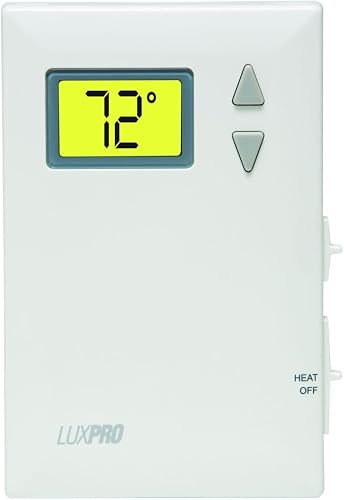
LUX PSD010B Non-Programmable 2-Wire Heat-Only Thermostat
9.7/10 our score
See it on Amazon -
2
 Best for a clean modern wall
White-Rodgers Emerson M30 White Heat-Only Thermostat
9.5/10 our score
See it on Amazon -
3
 Best for electric baseboards
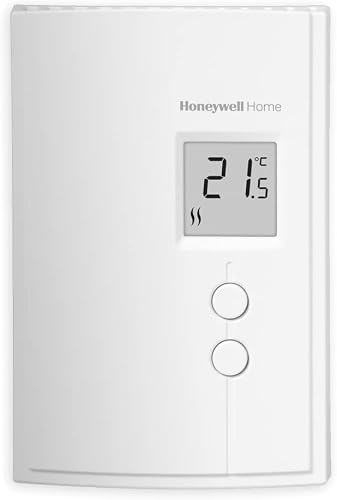
Honeywell Home Digital Non-Programmable Thermostat for Electric
9.4/10 our score
See it on Amazon
- 4
 Check it
White-Rodgers Mechanical Heat Only Thermostat
Best budget mechanical pick - 5
 Check it
Honeywell Home CT87K1004 The Round Heat Only
Best for classic dial control
The best single stage heat only thermostat picks in detail
These five picks cover the main ways people heat a home with one stage. Two are low voltage mechanical controls, one is a battery powered digital control, one is for line volt electric heat, and one is the classic round dial.
How single stage heat only control works
A single stage heat only thermostat does one job. It reads the room temperature, compares it with your setting, and starts heat when the room falls below that setting.
The heater then runs until the room reaches the setting. After that, the thermostat ends the call and the room slowly cools again.
That cycle repeats all day. A good anticipator or accurate sensor can keep the swing small, so the room does not feel hot and then cold.
Heat anticipators matter more than many buyers expect. They help the thermostat end a call a little early, so stored heat in the room or heater can finish the job without overshoot.
Best single stage heat only thermostat: our top 5
LUX PSD010B Non-Programmable 2-Wire Heat-Only Thermostat: Best for fireplaces and radiant heat
- 2-wire heat only design
- Large illuminated LCD display
- Battery powered operation
- Made for fireplaces, stoves and in-floor radiant heat
A simple non-programmable control for heat only setups that do not need a fan switch. The illuminated display makes temperature checks easy from across the room.
Pros
- Large illuminated display
- Battery powered
- No fan switch required
Cons
- Non-programmable only
- Not suited to line volt baseboards
The LUX PSD010B suits a fireplace, wood stove or in-floor radiant system where you want a clear reading and simple push button control. It needs only two wires and does not need a fan switch, which makes it a fit for simple heat only setups.
The large illuminated LCD display helps you read the room temperature at night. Battery power also means the control keeps working during a short outage, as long as the heater itself can run.
At 1.1 x 3.3 x 5 inches, the LUX is a tall wall unit. That shape suits a flat wall section, but check the space before you place it near a door swing or trim.
It weighs 6.4 ounces and uses two AA batteries, which are included. Push button control keeps the interface direct, and the white plastic case is easy to clean with a damp cloth.
Choose this LUX model if your heating system is truly heat only and you want a digital readout without programming. Skip it for electric baseboards, since the Honeywell Home model below is made for line volt heat.
White-Rodgers Emerson M30 White Heat-Only Thermostat: Best for a clean modern wall
- 24V standard mechanical snap action
- Sleek modern design
- Attractive wall plate
- LED display
A 24V mechanical heat only thermostat with a sleek modern look. It suits low voltage heating systems where you want a simple wall control without programming.
Pros
- Sleek modern design
- Easy to use
- Attractive wall plate
Cons
- Mechanical control only
- Check 24V low voltage compatibility
The White-Rodgers Emerson M30 suits a low voltage gas furnace or boiler where you want a clean modern look. It is a 24V standard mechanical snap action heat only thermostat with an attractive wall plate.
The sleek modern design helps it blend into newer walls and trim. An LED display shows the temperature, while hand control keeps the adjustments direct and easy to learn.
This model is a good fit if you like a simple control but do not want the round dial shape. It also suits rooms where a tall digital thermostat would look out of place.
It weighs 4.16 ounces and mounts on the wall in white plastic. The polished finish gives it a cleaner look than a plain utility thermostat, which can help in a main living area.
Check your system voltage before you buy. The M30 is for 24V low voltage heat, so it is not the right choice for 120V or 240V electric baseboards.
Compared with the LUX, it trades battery powered LCD readability for a low voltage mechanical feel.
Honeywell Home Digital Non-Programmable Thermostat for Electric: Best for electric baseboards
- Line volt 120V and 240V heat only
- TRIAC silent switching
- Accuracy of plus or minus 0.27 degrees F with baseboards
- On-screen heating power indicator
A digital non-programmable thermostat for electric baseboards and convectors. Silent TRIAC switching and tight control help keep rooms steady without clicking.
Pros
- Silent TRIAC switching
- Tight temperature control
- Fits small spaces
Cons
- Cannot be used with fan-forced convectors
- Non-programmable only
The Honeywell Home RLV3120A is the pick for electric baseboards and convectors. It is a digital non-programmable thermostat for line volt heating only at 120V and 240V.
TRIAC switching is the key feature here. Honeywell Home says it provides 100 percent silent switching with no clicking noise, and it helps avoid temperature swings.
The control is accurate to plus or minus 0.27 degrees F with baseboards and convectors. An on-screen heating power indicator also shows power use at a glance, which helps you see when the heater is running.
The maximum load is 2,000W at 240V, and the minimum load is 200W at 240V. It cannot be used with a fan-forced convector, so confirm your heater type before you order.
At 1.1 x 3.2 x 4.8 inches and 6.4 ounces, it has a slim, compact design for small spaces. Mounting hardware and solderless connectors are included, and the two-wire non-polarized connection is meant to keep installation fast.
White-Rodgers Mechanical Heat Only Thermostat: Best budget mechanical pick
- Single-stage heat only systems
- Rugged snap-action contacts
- Adjustable heat anticipator
- 50 to 90 degree F range
A mercury-free mechanical thermostat for low voltage single-stage heat. The bimetal thermometer and snap-action contacts suit simple systems and basic budgets.
Pros
- Mercury-free design
- Adjustable heat anticipator
- Simple mechanical operation
Cons
- Analog display only
- Optional wall plate is separate
The White-Rodgers 1C20-102 is a budget mechanical option for low voltage single-stage heat only systems. It uses rugged snap-action contacts and an adjustable heat anticipator.
The bimetal thermometer is simple and easy to read. The temperature range runs from 50 to 90 degrees F, which covers most home heating needs.
This model is mercury-free, which matters to many buyers replacing an older thermostat. It also includes thermostat, instructions and mounting hardware in the box.
An optional wall plate is available for purchase if you need to cover marks from an old unit. That extra step matters if your wall has stains or screw holes from a larger thermostat.
It weighs 3.2 ounces, which makes it light on the wall plate. The analog display has no backlight and no number to read at night, so it suits a utility room or garage better than a dark bedroom.
Honeywell Home CT87K1004 The Round Heat Only: Best for classic dial control
- Classic round styling
- Decorative cover ring hides wall marks
- Precise control of plus or minus 1 degree F
- Mercury free
The familiar round dial for heat only systems. A decorative cover ring hides old wall marks while the twist dial sets the target temperature.
Pros
- Familiar round dial
- Hides wall marks
- Mercury free
Cons
- Manual control only
- No digital readout
The Honeywell Home CT87K1004 is the classic round dial for heat only systems. Its familiar circular design fits homes where you want a simple twist control that everyone recognizes.
The decorative cover ring hides wall marks left by an old thermostat. That helps when you replace a larger unit and do not want to repaint the wall.
Honeywell Home states precise temperature control of plus or minus 1 degree F. You turn the dial to the desired temperature and the thermostat takes over from there.
The unit is mercury free and easy to install and use. At 2.88 x 3.62 x 3.62 inches, the round shape needs a clear round space on the wall.
It weighs 3.2 ounces and uses dial control with a ring controller. That manual dial has no digital readout, so you set by feel and by the dial markings rather than by a number on a screen.
Pick this model if you want the simplest manual control and a classic look. Skip it if you need a digital readout, a backlit display or programmable settings.
How do these heat only thermostats compare?
The fastest way to compare them is by voltage first, then by control style. A low voltage model will not work on line volt baseboards, and a line volt model will not work on a 24V furnace.
| Product | Best for | Display | Size | Power | Our score |
|---|---|---|---|---|---|
| LUX PSD010B Non-Programmable 2-Wire Heat-Only Thermostat | fireplaces and radiant heat | LCD | 1.1 x 3.3 x 5 in | 2 AA batteries included | 9.7 |
| White-Rodgers Emerson M30 White Heat-Only Thermostat | a clean modern wall | LED | 9.5 | ||
| Honeywell Home Digital Non-Programmable Thermostat for Electric | electric baseboards | 1.1 x 3.2 x 4.8 in | 9.4 | ||
| White-Rodgers Mechanical Heat Only Thermostat | budget mechanical pick | Analog | 9.1 | ||
| Honeywell Home CT87K1004 The Round Heat Only | classic dial control | Manual | 2.88 x 3.62 x 3.62 in | 8.9 |
All five models are heat only and single stage in purpose. The main split is power and control type, not heating stages.
The LUX is battery powered for simple two-wire heat. The White-Rodgers models are low voltage mechanical controls.
The Honeywell Home RLV3120A is line volt digital control for electric heat.
Size also changes how a control fits a wall. The LUX and Honeywell Home line volt model are tall rectangles, while the round Honeywell Home model needs a round footprint and the mechanical White-Rodgers models suit standard wall plates.
Display type is the next clear split. Two models give a digital number, two use mechanical or manual control, and one uses an analog thermometer.
That choice affects night reading and quick checks.
How we compared these picks
We checked the specs for voltage, display type, size and included parts. We also looked at what each brand says the model supports, such as fireplaces, stoves, radiant heat, baseboards and convectors.
We then grouped the models by the buyer who would use them best. A fireplace owner needs a different control than a baseboard owner, even if both systems use one stage.
We also checked weight, mounting type and power source, because those details affect installation and daily use. A battery powered unit can keep its display and control alive without system power, while a wired unit depends on the heating system.
Which single stage heat only thermostat should you buy?
The best choice depends on your heater type and your wiring. Start with the heater, not the thermostat shape.
If you have electric baseboards, the Honeywell Home line volt model is the clear fit. If you have a gas furnace or boiler, a 24V low voltage model is the usual choice.
If you heat with a fireplace, stove or in-floor radiant system, the LUX PSD010B covers those uses. If you want a classic dial, the Honeywell Home Round is hard to beat for simplicity.
Single stage heat only thermostat for gas furnaces and boilers
Choose a 24V low voltage model for most gas furnaces and boilers. The White-Rodgers M30 and the White-Rodgers 1C20-102 both fit this group.
The M30 gives you a modern look with an LED display. The 1C20-102 gives you a basic mechanical control at a budget price.
For a boiler, check wire count and whether the system uses a fan switch. Some boiler setups do not use a fan, so a heat only control without fan control can be a closer match.
Single stage heat only thermostat for electric baseboards
Choose a line volt model rated for 120V or 240V baseboards. The Honeywell Home RLV3120A is made for that job.
Check the load limits before you buy. This model supports up to 2,000W at 240V and down to 200W at 240V.
Silent switching matters in bedrooms and quiet living rooms. TRIAC switching avoids the click that many line volt thermostats make.
Also check the minimum load for small heaters. A slim baseboard in a small room may draw less power, and the control must be rated to handle that load cleanly.
Single stage heat only thermostat for fireplaces and radiant heat
Choose a control made for those systems. The LUX PSD010B is designed for fireplaces, stoves and in-floor radiant heating.
It does not need a fan switch. That detail matters because many fireplace and radiant setups do not use a furnace fan to move heat.
Radiant floors can respond slowly, so a steady set point matters more than fast swings. A simple non-programmable control avoids accidental schedule changes that could leave the floor cold in the morning.
Mechanical or digital: which control is better?
Mechanical controls are simple and easy to learn. You turn a dial or move a slider, and that is the whole interface.
Digital controls show a clear number and often have a backlight. The LUX and Honeywell Home models let you read the temperature without guessing at a dial position.
A mechanical model can be a good choice for a garage, cabin or spare room. A digital model can be better for a main living space where you check the temperature often.
Non-programmable or programmable: which is better for heat only?
A non-programmable control suits homes where the same temperature works day and night. It also suits rentals, cabins and spare rooms where schedules add complexity.
A programmable model can help if you want a lower setback at night or while at work. That choice adds menus and setup steps, so weigh the savings against the effort to set it correctly.
What should you check before you install a single stage thermostat?
Check the voltage, the wire count and the heater type before you order. Those three details decide which thermostat will work.
Turn off power at the breaker before you start. Label each wire as you remove it, then match the labels with the new thermostat instructions.
Check wall space before you open the box. A tall rectangle, a round dial and a standard wall plate model each need a different footprint, and trim can block a poor choice.
Test the system after mounting and before you close the wall. Run a call for heat, confirm the heater starts, then confirm it stops at the set temperature.
Should you replace a two stage thermostat with a single stage model?
No, not if your system truly needs two stages. A two stage system uses a second stage for extra heat on very cold days.
Read our What Is a Two Stage Thermostat? guide if you are not sure about your system. A single stage thermostat heat only model cannot call for that second stage.
What if you want a brand specific heat only thermostat?
Start with the brand you trust, then confirm the voltage and system type. Our best Honeywell heat only thermostat guide covers Honeywell Home options in more detail.
For a Honeywell single stage look, also check our best Honeywell single stage thermostat guide. It helps you compare Honeywell controls by system type.
Brand choice can also affect warranty and support. Check the manufacturer warranty term for the exact model you plan to buy, and keep the manual for wiring diagrams.
Do you want programming or a basic non-programmable control?
Many heat only systems do not need schedules. A non-programmable control can be simpler to set and easier for guests to use.
If you want schedules, read our best non programmable heat only thermostat guide. That guide explains when a basic control is enough.
For scheduled control, read our best programmable thermostat for heat only guide. It covers models that can change temperature on a timer.
How do you narrow the field to the best heat only thermostat?
Start with the widest guide, then narrow by brand and control type. Our best heat only thermostat guide gives the broader view for home heating.
That broader view helps you see if you need line volt, low voltage, mechanical or digital control. Then use this guide to pick the single stage model that fits your system.
Final verdict: which single stage heat only thermostat is the best buy?
Pick the LUX PSD010B if you want the best all-around single stage heat only thermostat for fireplaces, stoves or radiant heat. Its illuminated display and battery power make daily use simple.
Pick the Honeywell Home RLV3120A if you heat with electric baseboards or convectors. Its silent TRIAC switching and tight control are made for that job.
Pick the White-Rodgers M30 for a modern low voltage look, or the White-Rodgers 1C20-102 for a basic mechanical control. Pick the Honeywell Home Round if you want the classic dial and a cover ring that hides wall marks.
Which pick fits your room and budget?
Choose the LUX for a main room where you read the temperature often. Choose the round dial for a classic look and simple twist control.
Choose the budget mechanical model for a garage, workshop or spare room. Choose the line volt model for a bedroom where silent switching matters at night.
Before you order, confirm your voltage and heater type one more time. That check is the fastest way to avoid a return and get a thermostat that works on the first try.
Our top 3 picks at a glance
-
1
Best for fireplaces and radiant heat
LUX PSD010B Non-Programmable 2-Wire Heat-Only Thermostat
9.7/10 our score
See it on Amazon -
2
Best for a clean modern wall
White-Rodgers Emerson M30 White Heat-Only Thermostat
9.5/10 our score
See it on Amazon -
3
Best for electric baseboards
Honeywell Home Digital Non-Programmable Thermostat for Electric
9.4/10 our score
See it on Amazon
Frequently asked questions
What does single stage heat only mean?
It means the thermostat controls one heating stage and no cooling stage. The system calls for heat, the heater runs, and the thermostat turns it off at the set temperature.
That simple setup fits furnaces, baseboards and radiant systems that do not need multi-stage control.
Can a heat only thermostat work with a heat pump?
Usually no. A heat pump needs reversing valve and auxiliary heat control that a basic heat only model does not provide.
Read our What Is a Heat Pump Thermostat? guide before replacing a heat pump control.
What is the difference between low voltage and line volt?
Low voltage systems use about 24 volts and are common with gas furnaces and boilers. Line volt systems use 120 or 240 volts and are common with electric baseboards.
The thermostat must match your system voltage, so check the old unit and the heater nameplate first.
Do I need to turn off power before installing a thermostat?
Yes. Turn off power at the breaker before you remove the old thermostat or touch the wires.
That step protects you and the new control.
Label each wire as you remove it, then compare the labels with the new thermostat instructions.