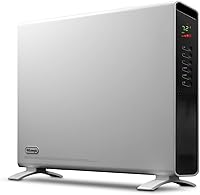
What Is an Infrared Space Heater?
An infrared space heater is an electric heater that sends radiant infrared energy that warms people, furniture, and surfaces directly, rather than heating the air first. It feels warm fast in a seated spot, but it does not raise the whole room evenly the way a central heating system does.
On this page (8 sections)
- How does infrared heating work?
- What is an infrared space heater compared with a regular space heater?
- Which infrared elements heat a room fastest?
- Where does an infrared space heater work best indoors?
- What are the limits of infrared heat?
- How do you choose the right infrared space heater?
- When does a propane radiant heater make more sense?
- How should you place and run an infrared space heater safely?
An infrared space heater is an electric heater that sends radiant infrared energy that warms people, furniture, and surfaces directly, rather than heating the air first. It feels warm fast in a seated spot, but it does not raise the whole room evenly the way a central heating system does.
That direct path is the core idea behind what is an infrared space heater. When you sit in its beam, you can feel heat even if the far wall still feels cool.
Step outside the beam, and the effect drops off fast.
How does infrared heating work?
Infrared heating works by sending electromagnetic energy from a heated element to objects in its path. The element gets hot, emits infrared waves, and those waves are absorbed by skin, clothing, and nearby surfaces.
This is different from a standard space heater that blows hot air. Air can blow past you, mix with cooler room air, and rise to the ceiling.
Infrared energy does not need that air movement to reach you.
The sun is a useful comparison. You can feel sun warmth on your face while the air stays cool.
Infrared heaters use a smaller, controlled version of that direct radiant effect for indoor spots.
Heat still spreads through a room over time. Warmed surfaces release heat back into the air, so the space may feel milder after the heater runs for a while.
The first effect, though, is direct and local.
What is an infrared space heater compared with a regular space heater?
A regular space heater usually heats air and moves it, while an infrared space heater aims radiant heat at a specific area. One warms the room air.
The other warms whoever sits in front of it.
Forced-air models, including many ceramic tower heaters, use a fan to push warm air around the room. That can suit a bed, couch, or office where you want broad comfort.
This space heater for home guide covers that wider category of portable heaters.
Infrared models often have a reflector or housing that directs energy forward. You point the heater at your chair, desk, or work bench, then sit within that zone.
The rest of the room may stay cooler.
That trade-off matters for energy use. Spot heat can let you turn down a whole-room thermostat and warm only the occupied area.
Our guide on are infrared space heaters energy efficient breaks down when that savings holds up and when it does not.
Which infrared elements heat a room fastest?
Most infrared space heaters use a quartz, halogen, carbon, or metal element that reaches heat quickly. Quartz and halogen elements can warm in seconds, while carbon elements often give a softer, less harsh glow.
The element type changes the feel of the heat. Some models produce a bright orange glow.
Others run darker and feel more like gentle radiant warmth on skin.
Speed is not the only factor. A fast element suits short bursts at a desk, truck, or garage bench.
A slower, steadier element may suit longer seated sessions where a sudden blast feels too strong.
Size and wattage still set the limit. A 1,500-watt infrared heater can warm a seated person well, but it will not replace a furnace in a large, cold room.
We compared best infrared space heaters to show how coverage and controls differ across models.
Where does an infrared space heater work best indoors?
An infrared space heater works best in a fixed seated spot, such as a desk, reading chair, or work table. That limited use is where its direct heat shines.
Home offices are a common fit. You point the heater at your legs or torso, keep the rest of the house cooler, and shut it off when you leave the room.
Our picks for best infrared space heaters for indoor use focus on that kind of daily seated use.
Bedrooms can suit infrared heat too, but placement matters. Aim it at the bed from a safe distance, and use a model with overheat and tip-over protection.
It should not blow directly on bedding or sit where it can be knocked over in sleep.
Garages, workshops, and hobby rooms also fit the pattern. You heat the bench area instead of the whole building, then turn the unit off when the task ends.
Outdoors, infrared heat helps only within its direct path and fades with wind and distance.
What are the limits of infrared heat?
The main limit is range and direction. Infrared heat drops off as distance grows, and any object between the heater and you can block it.
That means an infrared heater is poor at warming a whole sofa, a large living room, or a room with people spread out in different directions. People outside the beam may feel little heat at all.
It also does not solve cold air leaks or a chilly floor for everyone in the room. A forced-air heater can mix warm air across a wider area, while infrared heat stays focused.
Radiant heat can feel drying on skin or too intense at close range. Keep a safe distance, follow the manual for clearance, and avoid touching hot parts.
For a broader comparison, see radiator heater vs space heater and how each type spreads warmth.
How does infrared compare with oil and ceramic heat?
Oil-filled radiators warm slowly and then hold heat for a long time. They suit steady, whole-room comfort, but they do not give instant spot warmth.
They also take up more floor space.
Ceramic heaters heat a ceramic element and blow warm air with a fan. They warm a room faster than oil and spread heat more widely than infrared.
That makes them a strong pick for a bedroom or living room.
Infrared heat sits at the other end of that range. It is the most direct option, with the least room-wide spread.
Choose it for spot use, not as a general replacement for room heating.
How do you choose the right infrared space heater?
Choose by where you will sit, how far the heater sits from you, and how you want to control it. Those three factors matter more than a long feature list.
Wattage and coverage tell you the rough size of the job. A heater rated for a small area suits a desk or chair.
A bigger room needs more power, or a different type of heater altogether.
Controls matter for daily use. A thermostat helps the heater cycle to hold a set temperature, while modes and a timer help you limit run time.
If you want that kind of control, look at best infrared space heater with thermostat options and compare their settings.
Safety features are worth checking too. Tip-over shutoff, overheat protection, and a stable base help in homes with kids or pets.
A cool-touch housing also helps if the heater sits near a walkway.
Those two electric models show the forced-air side of the category. They heat room air and spread it, which suits a whole room better than a narrow infrared beam does.
When does a propane radiant heater make more sense?
A propane radiant heater makes sense when you have no power, need outdoor heat, or want heat you can carry between spaces. Its radiant tiles warm people and objects without electricity.
The Mr. Heater Portable Buddy Midnight Series gives 4,000 or 9,000 BTU of radiant heat and runs up to 5.4 hours on a 1 lb. propane tank.
With an optional hose and fuel filter, Mr. Heater says it can run up to 108 hours on a 20 lb. cylinder.
That portability comes with fuel rules. Indoor use is not approved in Canada or Massachusetts.
Propane heat also needs ventilation and close attention to the manual for tank, hose, and placement rules.
For grid-powered indoor rooms, an electric infrared or ceramic heater is usually simpler. For camping, outages, garages, and outdoor work, propane radiant heat fills a gap that electric models cannot.
How should you place and run an infrared space heater safely?
Place the heater on a flat, stable surface, pointed at your seated spot, with clear space around it. Keep curtains, paper, bedding, and furniture away from the front and sides.
Start with the heater farther away, then move it closer only if needed. Direct heat can feel strong at short range, so a few extra feet often give more comfortable warmth.
Use the timer when you can. A timer limits forgotten run time when you leave the room or fall asleep.
Turn the heater off when you leave, and do not dry clothes or other items on top of it.
Check the room plan before you buy. A space heater vs heat pump comparison helps if you are deciding between spot heat and a system that heats a whole space.
A space heater vs wall heater comparison helps if you want a fixed unit instead of a portable one.
For what is an infrared space heater in daily life, the rule stays simple. Point it at the person, keep it at a safe distance, and pair it with a thermostat or timer when you can.
That setup gives fast spot warmth without trying to heat every corner of the house.
Frequently asked questions
What is an infrared space heater in simple terms?
It is a heater whose element glows or heats to emit infrared energy, so nearby people and objects absorb that energy and feel warm. The air around you may stay cooler at first, which is why moving out of its path feels cooler right away.
Does an infrared heater heat a whole room?
It can warm a small to medium room for seated use, but it works best as spot heat for one or two people. For even warmth across a larger space, forced-air heaters and central heating usually do more of the work.
Are infrared space heaters safe?
They are safe when you follow basic heater rules: keep a clear space around the unit, place it on a stable surface, and do not leave it running unattended unless the maker allows that use. Choose a model with tip-over and overheat protection, and check the manual for clearance and supervision rules.
Is infrared heat better than ceramic heat?
Infrared heat is more direct and feels instant on skin, while ceramic forced-air heat spreads warmth through the room air more broadly. Many buyers prefer infrared for a desk or chair and ceramic for a bedroom or living area.