What Is an Air Circulator Fan?
An air circulator fan moves air around a room instead of only blowing at one person. Its directed airflow can help mix warm and cool air, support an HVAC system, and make a room feel more comfortable.
On this page (7 sections)
- How does an air circulator fan work?
- What is the difference between an air circulator and a regular fan?
- Where does an air circulator fan help most?
- Which fan types can circulate air?
- How should you position an air circulator fan?
- How do you clean and care for an air circulator fan?
- What is an air circulator fan best for?
An air circulator fan moves air around a room, rather than only blowing a stream at one person. By sending air across walls, ceilings, and open spaces, it can help mix warm and cool air and support more even comfort.
A circulator fan doesn't create cold air. It moves the air already in the room, so its value comes from airflow direction, speed, placement, and how well it works with your heating or cooling system.
How does an air circulator fan work?
An air circulator fan uses a motor and blades or an impeller to pull air in and push it forward. The directed stream travels across the room, changes direction after meeting a surface, and helps mix air in the surrounding space.
That pattern differs from simply aiming a fan at your face. A personal fan can make you feel cooler through moving air across your skin, while a circulator is often positioned to move air through a larger part of the room.
The room's layout affects the result. Walls, furniture, open doors, ceiling height, and the location of your HVAC supply and return vents all change how the air moves.
For a broader look at fan types, placement, and features, see our Fans: The Complete Buying Guide.
What is the difference between an air circulator and a regular fan?
An air circulator is built for directed room airflow, while a regular personal fan may focus more on short-range comfort. The terms overlap, so the practical difference is how the fan moves air and how you plan to use it.
A small table fan can serve both purposes. Aim it at yourself for personal cooling, or tilt it toward a wall or ceiling to help mix air around the room.
A tower fan can also circulate air across a broad area. Its tall shape, oscillation, and multiple speed settings may suit a bedroom or living space where you want airflow at different heights.
Read our air circulator vs fan comparison if you're choosing between direct personal airflow and wider room movement.
Where does an air circulator fan help most?
An air circulator fan helps most in rooms with uneven temperatures or weak-feeling airflow. It can move air between warmer and cooler areas and make heating or cooling feel more consistent.
Can an air circulator fan help with heating?
Yes, it can help mix warm air that collects near the ceiling with cooler air lower in the room. Aim the fan upward or across the room, depending on the layout, and keep it clear of curtains and furniture.
The fan does not produce heat. It only moves existing air, so use your heater or HVAC system according to its instructions.
A forced-air HVAC system already moves conditioned air through ductwork. Our guide to [What Is a Forced Air System?
Plainly Explained](/what-is-a-forced-air-system/) covers how that type of heating and cooling distributes air.
Can an air circulator fan help with air conditioning?
An air circulator can help spread cooled air beyond the area directly served by an air conditioner. Aim it toward the room's open space instead of blocking the air conditioner's outlet.
The fan won't replace air conditioning during hot weather. It may help the cooled air feel less concentrated in one area, especially in a room with warm corners or uneven airflow.
Does it help with humid air?
Moving air can change how humidity feels on your skin, but a fan does not remove moisture from the room. If the indoor air feels damp, use a properly sized dehumidifier or air conditioner.
For moisture control, see our guide to humidifier for dry air when the problem is dryness rather than excess humidity.
Which fan types can circulate air?
Several fan shapes can circulate air, including compact table fans, tabletop air circulators, and tower fans. The right style depends on the space available, the direction you need, and whether you want controls such as multiple speeds or oscillation.
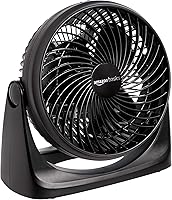
Is the AmazonBasics 3 Speed Air Circulator useful for small spaces?
The AmazonBasics 3 Speed Air Circulator suits readers who want a compact indoor fan for a table, floor, bedroom, living room, home office, or kitchen. It has three 7-inch plastic blades, a 90-degree variable tilt, and 3 speed settings controlled by a rear rotary switch.
It measures 6.3 x 11.1 x 10.9 inches and weighs 3 pounds. Its 35-watt power use, free-standing design, and cord make it practical when you want to move the fan between rooms.
The smaller size makes placement easier, but it may not suit someone who wants a tall fan or broader oscillating coverage. Aim it at a wall or upward surface when your goal is room mixing rather than direct personal airflow.
Is the DREO Tower Fan for Bedroom an air circulator?
The DREO Tower Fan for Bedroom is a tower fan that can circulate air through a room with 90-degree oscillation and airflow speeds reaching up to 28 ft/s. It has 8 speeds, 4 modes, remote and touch controls, and a Sleep Mode for quieter nighttime airflow.
It measures 11.81 x 11.81 x 36.22 inches and weighs 9 pounds. The 36.22-inch height gives it a different placement profile from a small tabletop fan, while the removable rear grille and impeller are designed to simplify cleaning.
Choose this style when you want a freestanding tower with several operating modes. Its height and 9-pound weight mean you should plan a stable floor location before setting it up.
Is the Honeywell TurboForce Air Circulator good for personal airflow?
The Honeywell TurboForce Air Circulator suits a desk, tabletop, small floor area, or wall-mounted position. Its aerodynamic turbo design, 3 speeds, and 90-degree pivoting head let you direct airflow toward a person or across a small to medium-sized room.
It measures 6.3 x 8.94 x 10.9 inches and weighs 2.6 pounds. The indoor fan has an 11-inch plastic blade, button controls, and a standard NEMA 1-15 or Type B plug.
This model makes sense when you want a small fan that can sit near a desk or mount on a wall. It may be less suitable if you need a tall tower, remote control, or 8 speed settings.
For more options in this style, see our guide to the best Honeywell air circulator.
How should you position an air circulator fan?
Position the fan so air has a clear path across the room. Keep the intake and outlet free from walls, curtains, boxes, and furniture that could interrupt the stream.
Use a slight upward tilt when warm air collects near the ceiling. Aim across the room when you want the airflow to travel farther, or toward a seating area when personal comfort matters most.
You can also place a circulator near an open doorway to move air between connected rooms. Close doors when you want to keep airflow in one room, and avoid placing the fan where people could trip over its cord.
Our guide to how to use an air circulator fan covers placement, direction, and everyday operating choices.
How do you clean and care for an air circulator fan?
Unplug the fan before cleaning it and follow its care instructions. Remove dust from accessible grilles and blades with a dry or lightly damp cloth, then let all parts dry before reconnecting power.
Don't spray liquid into the motor housing or controls. Keep the fan on a stable surface, check the cord for damage, and stop using it if the plug, cord, grille, or housing becomes unsafe.
A dusty grille can restrict airflow and make the fan seem weaker. If your fan becomes louder, inspect it for loose parts, blocked grilles, or dust before assuming the motor has failed.
If you're troubleshooting noise, our guide to why a floor fan is loud explains common causes and checks.
What is an air circulator fan best for?
An air circulator fan is best for moving air through a room, mixing uneven temperatures, and supporting personal comfort without changing the room's actual temperature. Its performance depends as much on placement as on the fan itself.
Choose the AmazonBasics model if you want a compact 7-inch fan with tilt and 3 speeds. Choose the DREO tower if you want 90-degree oscillation, 8 speeds, and 4 modes.
Choose the Honeywell TurboForce if a lightweight tabletop or wall-mount design fits your space.
Measure the available area, check the airflow path, and decide whether you need direct personal airflow or wider room circulation. Then use the fan with your heating or cooling system, not as a replacement for temperature control.
Frequently asked questions
What is an air circulator fan used for?
An air circulator fan is used to move air around a room, not just blow directly at one person. Its airflow can help mix warm and cool air, reduce stagnant-feeling pockets, and support heating or cooling from an HVAC system.
It can also provide personal airflow when aimed toward a desk or seating area.
Is an air circulator fan the same as a regular fan?
Both move air, but an air circulator is designed around directed airflow that travels across a room and returns through the surrounding air. A regular personal fan is often aimed at one person for immediate comfort.
The difference depends on the fan's shape, airflow pattern, speed, and how you position it.
Can an air circulator fan cool a room?
An air circulator fan doesn't lower the room's air temperature by itself. It moves air across your skin and mixes warmer and cooler areas, which can make the room feel more comfortable.
Used with an air conditioner, it may help distribute cooled air more evenly.
Where should you place an air circulator fan?
Place an air circulator fan where its airflow can travel across the room, such as near a wall, doorway, or open area. Aim it upward when you want to mix air between the floor and ceiling, or toward a seating area when you need personal airflow.
Keep the intake and outlet clear.