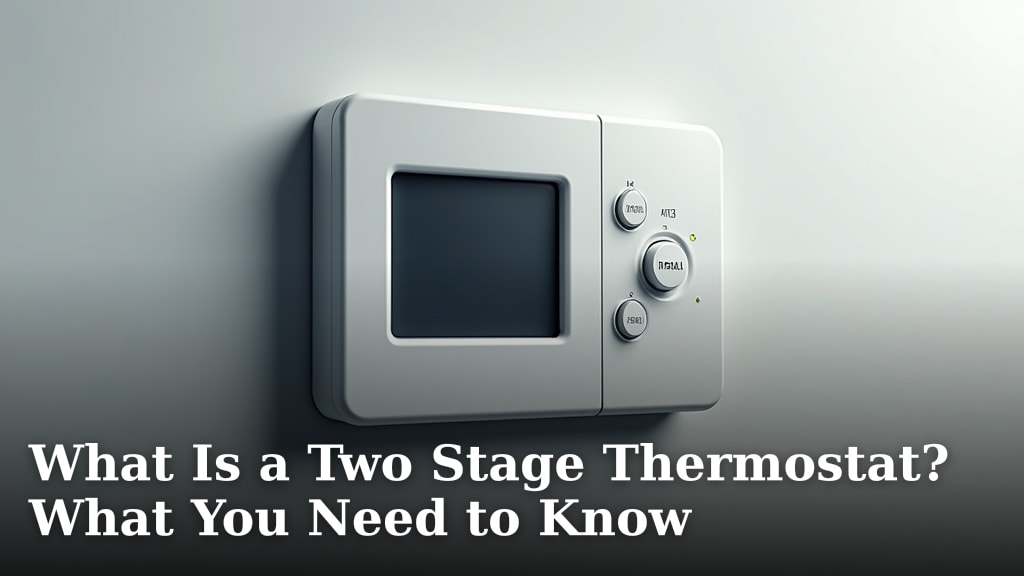
What Is a Two Stage Thermostat? What You Need to Know
A two-stage thermostat is a smart device that controls your heating and cooling system in two stages. It helps maintain a more consistent temperature and can save you money on energy bills. Think of it like a dimmer switch for your comfort.
Unlike single-stage thermostats, which are either fully on or fully off, two-stage thermostats have a low and high setting for heating or cooling. This allows for more precise temperature control and better humidity management. Many homeowners find this upgrade improves their overall home comfort.
- A two-stage thermostat uses two levels of heating or cooling.
- It provides steady temperatures without big swings.
- This can lead to energy savings and better humidity control.
- It’s a smart upgrade for improved home comfort.
If you’re curious about making your home more comfortable and energy-efficient, let’s dive into exactly what a two-stage thermostat is and what you need to know.
Understanding Your Two-Stage Thermostat
A two-stage thermostat is a smart home device for heating and cooling. It offers more precise control than older models. You might be wondering how it works. It’s designed to keep your home’s temperature very steady. This means fewer noticeable swings between hot and cold.
Think of it like a car engine. A single-stage thermostat is like flooring the gas pedal. Your system either runs at full blast or it’s off. A two-stage thermostat is more like a gas pedal with a few gentle presses. It has a lower setting and a higher setting. This lets it adjust to your home’s needs more carefully.
How a Two-Stage System Operates
Your HVAC system’s furnace or air conditioner has two “stages.” The first stage is a lower, less intense setting. It handles normal heating or cooling needs. The second stage is a higher, more powerful setting. This stage kicks in when the temperature is far from your desired setting. It works harder to reach your target temperature faster.
Your two-stage thermostat tells the system which stage to use. It communicates with your furnace or air conditioner. It monitors the indoor temperature. When the temperature is slightly off, it uses the first stage. If the temperature is very different, it might use the second stage. This careful management is key to its benefits.
Stage One: The Gentle Approach
The first stage is your system’s everyday workhorse. It uses about 60-70% of its total heating or cooling capacity. This is usually enough to keep your home comfortable most of the time. It runs for longer periods. This gentle approach helps maintain a consistent indoor temperature. It avoids the jarring temperature shifts you might feel with other systems.
Stage Two: The Power Boost
The second stage is for more demanding situations. This might be on a very cold winter morning or a hot summer afternoon. It uses the system’s full capacity. It works quickly to change the temperature. This stage is less common. It only turns on when the first stage can’t keep up. This means it runs for shorter, less frequent periods.
Benefits of a Two-Stage Thermostat
Upgrading to a two-stage thermostat can offer several advantages. Many homeowners report a noticeable improvement in comfort. You might also see a difference in your energy bills. Let’s break down why this upgrade is often recommended.
Enhanced Comfort and Temperature Stability
One of the biggest pluses is steady temperatures. Single-stage systems can cause your home to feel like a wave. It gets warm, then cool, then warm again. A two-stage system avoids these extremes. It keeps the temperature within a much narrower range. This consistent comfort means you’re less likely to feel drafts or hot spots.
Improved Humidity Control
This is a benefit many people don’t consider. In the summer, your air conditioner doesn’t just cool the air; it also dehumidifies it. Single-stage systems often run in short bursts. This isn’t always enough time for them to effectively remove moisture from the air. A two-stage system’s longer, gentler first stage runs for longer periods. This allows for better moisture removal. Your home can feel less sticky and more comfortable, even at slightly higher temperatures.
Potential Energy Savings
While it might seem counterintuitive, running your system less intensely can save energy. The first stage uses less power than the second stage. Since the first stage handles most of your climate control, you’re using less energy overall. Running longer, gentler cycles is often more efficient than short, powerful bursts. Research suggests that two-stage systems can be more energy-efficient. This can lead to lower utility bills over time.
Quieter Operation
When your system runs on its first stage, it’s quieter. The fan and compressor don’t have to work as hard. This means less noise inside your home. The second stage will be louder, but it runs less often. For many, the overall reduction in noise is a welcome change.
Comparing Thermostat Types
To truly appreciate a two-stage thermostat, it helps to see how it stacks up against others. We’ve already touched on single-stage systems. There’s also a newer type: the multi-stage thermostat.
| Feature | Single-Stage Thermostat | Two-Stage Thermostat | Multi-Stage Thermostat |
|---|---|---|---|
| Heating/Cooling Levels | One (Full On/Off) | Two (Low and High) | Three or More (Low, Medium, High, etc.) |
| Temperature Control | Basic, wider swings | Moderate, more stable | Most precise, very stable |
| Humidity Control (Summer) | Less effective | Improved | Best |
| Energy Efficiency | Least efficient | More efficient than single-stage | Most efficient |
| Typical Cost | Lowest | Moderate | Highest |
| Comfort Level | Average | Good to Excellent | Excellent |
Single-Stage vs. Two-Stage
As the table shows, a two-stage thermostat is a clear step up from a single-stage one. The difference is the ability to run at a lower capacity. This is the key to its improved performance. If your current thermostat is single-stage, you’re likely experiencing bigger temperature changes. You might also notice your air conditioner running for short, powerful bursts.
Two-Stage vs. Multi-Stage
Multi-stage thermostats go even further. They can have three, four, or even five stages. This allows for incredibly fine-tuned control. Some advanced systems can even learn your home’s heating and cooling patterns. However, multi-stage systems are also more expensive. They require compatible HVAC equipment. For many homes, a two-stage thermostat offers the best balance of performance and cost.
Is a Two-Stage Thermostat Right for Your Home?
Deciding if this upgrade is for you involves a few considerations. Think about your home, your climate, and your budget.
Signs You Might Need an Upgrade
Are you constantly adjusting the thermostat? Does your home feel drafty or too warm in spots? Do you experience high humidity in the summer? These are common signs that your current system might not be performing optimally. An older or single-stage thermostat could be the culprit. Many experts suggest that homes in climates with distinct hot and cold seasons benefit most from two-stage systems.
What to Check Before You Buy
It’s important to know if your furnace or air conditioner is designed for a two-stage system. Not all HVAC units are. Your system needs to have the capability to run at different capacities. Installing a two-stage thermostat on an incompatible system won’t give you the benefits. We found that consulting with an HVAC professional is the best first step. They can check your equipment and recommend the right type of thermostat.
Here’s a quick checklist to help you decide:
- Is your current thermostat single-stage?
- Do you experience uneven temperatures in your home?
- Is humidity a problem during warmer months?
- Are you looking for potential energy savings?
- Is your HVAC system compatible with a two-stage thermostat?
- Are you ready for a more comfortable home environment?
Conclusion
You’ve learned that a two-stage thermostat offers a smarter way to manage your home’s comfort. By using two levels of heating and cooling, it provides more steady temperatures and better humidity control than older single-stage models. This often translates into noticeable improvements in how your home feels and can lead to energy savings over time. If you’re experiencing uneven temperatures or want to enhance your home’s efficiency, understanding your current system’s compatibility is your next best step. Consult with an HVAC professional to see if a two-stage thermostat is the right upgrade for your needs.
Frequently Asked Questions
How can I tell if my current thermostat is single-stage or two-stage?
You can often tell by looking at the wiring or checking the thermostat’s settings. Single-stage thermostats usually have fewer wires connected. Many models also clearly label their settings as “Heat 1” and “Cool 1.” If you’re unsure, an HVAC technician can quickly identify your thermostat type.
Will a two-stage thermostat work with any furnace or air conditioner?
No, your HVAC system must be designed for two-stage operation to get the full benefits. A two-stage thermostat needs compatible equipment to control the two stages of heating or cooling. Installing one on an incompatible system won’t provide the intended comfort or efficiency.
Are two-stage thermostats difficult to program or use?
Most modern two-stage thermostats are designed to be user-friendly. Many offer simple programming options or even smart features that learn your schedule. While they have more advanced capabilities than single-stage models, they are generally not difficult for homeowners to operate for daily comfort control.
How much more expensive are two-stage thermostats compared to single-stage ones?
Two-stage thermostats typically cost more upfront than basic single-stage models. The exact price can vary based on brand and features, but expect them to be in the moderate price range. The potential for energy savings over time can help offset this initial cost.
Can a two-stage thermostat really help with energy bills?
Yes, research and found that they can help save energy. By running at a lower, more efficient first stage for longer periods, the system uses less power. This means less frequent cycling on of the higher, more energy-intensive second stage. This more consistent and gentle operation is generally more efficient.