How to Choose a Millivolt Thermostat for a Pellet Stove
Choose a millivolt thermostat for a pellet stove only if the stove’s manual confirms that its thermostat terminals accept a millivolt control. Check the wiring diagram, required contacts and any voltage or power limits before matching a thermostat.
On this page (9 sections)
- What does a millivolt thermostat for a pellet stove need to match?
- What should you check in the stove manual?
- Can a gas fireplace thermostat work with a pellet stove?
- How do you choose between millivolt and low-voltage controls?
- Which thermostat features matter for a pellet stove?
- Which products fit nearby heating jobs?
- What mistakes can make a thermostat incompatible?
- How should you verify compatibility before buying?
- What is the safest decision rule for a pellet stove thermostat?
A millivolt thermostat for a pellet stove is suitable only when the stove’s manual confirms that its thermostat input accepts a millivolt control. Pellet stoves don’t all use the same control circuit, so match the thermostat to the exact stove model and wiring diagram before buying or connecting one.
Start with the stove’s installation or owner’s manual. Find the section on an external thermostat, room thermostat, or thermostat terminals, then check which control type and contact arrangement the manufacturer allows.
If the manual doesn’t clearly identify the thermostat input, contact the stove maker or a qualified technician. A thermostat that works with a gas fireplace may still be wrong for a pellet stove.
What does a millivolt thermostat for a pellet stove need to match?
A thermostat must match the stove’s control circuit and specified switching behavior. The word “millivolt” alone doesn’t confirm that the thermostat will work with your stove.
Check these details in the stove manual and thermostat instructions:
- Whether an external thermostat is supported
- The type of control input, such as millivolt, low voltage or another specified circuit
- Whether the thermostat input expects a simple contact to open and close
- The terminal labels and any required jumper changes
- Whether a thermostat must be set to heat-only operation
- Any minimum or maximum electrical limits
The wiring diagram matters because terminals that look similar can serve different purposes. Don’t connect a thermostat based on wire color or a guess about what a terminal label means.
A millivolt thermostat generally refers to a thermostat used with a low-power control circuit. For a short explanation of the term and its limits, see [What Is a Millivolt Thermostat?
In Brief](/what-is-a-millivolt-thermostat/).
How can you confirm a pellet stove thermostat is millivolt compatible?
Look for an explicit statement in the manual for your exact stove model. Search the manual for “thermostat,” “millivolt,” “external control,” and “room control,” then compare the instructions with the thermostat’s own wiring diagram.
A general product description or a thermostat’s compatibility with another appliance isn’t enough. If the stove maker specifies a particular thermostat type or accessory, follow that guidance.
If you’re comparing millivolt options for a different heating appliance, our best millivolt thermostat for gas fireplace guide covers that use case. For help understanding the separate 24-volt question, read which low voltage thermostat works with a gas fireplace.
What should you check in the stove manual?
The manual should identify whether the stove supports an external thermostat and how its terminals work. Use the instructions for your stove’s model and revision, since control boards and wiring can differ across models.
Before choosing a thermostat, confirm:
| Manual detail | What to find |
|---|---|
| Supported control | Whether an external thermostat is allowed |
| Circuit type | The specified voltage or control type |
| Terminal function | The exact thermostat terminals and their purpose |
| Contact behavior | Whether the input calls for heat when contacts open or close |
| Jumper instructions | Whether a factory jumper must be removed, moved or left in place |
| Operating behavior | What the stove does when the thermostat calls for heat or stops |
A thermostat may be compatible electrically but still interact poorly with the stove’s operating cycle. Some models may need to complete a shutdown or cooldown sequence after the call for heat ends.
Don’t bypass a safety control or change a wiring configuration that the manual doesn’t describe. If the instructions are incomplete or unclear, ask the manufacturer before proceeding.
Can a gas fireplace thermostat work with a pellet stove?
A thermostat used for a gas fireplace isn’t automatically suitable for a pellet stove. Compatibility depends on the pellet stove’s own control input, not on the thermostat’s compatibility with another appliance.
Gas fireplaces and pellet stoves can use different control systems and operating sequences. A thermostat intended for one appliance may not provide the contact behavior or control method that another appliance needs.
When comparing thermostats, check for both the correct circuit type and the right operating instructions. Our guide to the best Honeywell millivolt thermostat can help you understand options for millivolt applications, while the stove manual remains the authority on pellet stove compatibility.
If the manual says the stove uses a low-voltage thermostat, don’t substitute a millivolt model just because the wires or terminals seem similar. Use the specified low-voltage control and follow the wiring diagram.
How do you choose between millivolt and low-voltage controls?
Choose by the control type named in the stove manual, not by a general preference for one thermostat style. Millivolt and low-voltage systems have different electrical requirements.
A thermostat’s screen, schedule or smart features don’t establish compatibility. The stove must support the thermostat’s control method, and the thermostat must work within the stove’s limits.
If the manual calls for a low-voltage control, look for the required terminal arrangement and operating mode. Our three-wire thermostat guide explains why wire count alone doesn’t tell you which thermostat to buy.
If the manual calls for a millivolt thermostat, compare models using the same checks: supported contact behavior, heat-only mode if required, and any specified electrical limits. Read best millivolt thermostat heat only options for examples in that thermostat category.
Which thermostat features matter for a pellet stove?
Compatibility and predictable operation matter more than extra features. Start with the stove’s approved control type, then decide whether a simple manual thermostat or a programmable one fits the way you use the stove.
Consider these questions:
- Does the stove maker approve programmable thermostat operation?
- Does the thermostat offer the specific heat-only mode the stove requires?
- Will its schedule cause more starts and stops than the manual recommends?
- Can you place it where it senses room temperature without being affected by stove heat, drafts or direct sunlight?
- Are the thermostat’s wiring instructions clear for the supported circuit?
A manual thermostat has fewer settings to manage. A programmable model may be useful if the stove maker supports scheduled calls for heat, but schedules don’t make an incompatible control safe.
Thermostat placement can affect room comfort and cycling. Follow the stove maker’s placement instructions, and don’t put the thermostat where the stove’s radiant heat will make it read warmer than the rest of the room.
Which products fit nearby heating jobs?
These products are for electric baseboard heat, so they aren’t pellet stove thermostat recommendations. Their stated compatibility helps show why identifying the heating system matters before choosing a control.
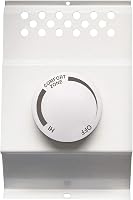
The Cadet F Series Double Pole Built-In Baseboard is made for Cadet F Series electric baseboard heaters. Its built-in design mounts at either end of a compatible heater.
The Cadet Single Pole Built-In Thermostat Kit is also designed for Cadet F Series electric baseboard heaters. Check the heater model and thermostat instructions before choosing it for that use.
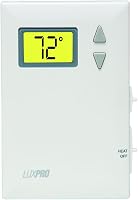
The LUX ELV4 is a line-voltage thermostat described for electric baseboard, cable and ceiling heat. Its instructions say it isn’t compatible with heating appliances that contain both a resistive electric heating element and an inductive blower fan.
These examples are useful only when you’re shopping for the heating systems they’re made for. None should be treated as a pellet stove recommendation unless the stove manufacturer explicitly approves that thermostat and connection.
What mistakes can make a thermostat incompatible?
The most common mistake is choosing by a broad label like “millivolt” without checking the stove’s model-specific instructions. A second is assuming that matching wire colors or terminal shapes proves the circuit is correct.
Avoid these shortcuts:
- Don’t assume a gas fireplace thermostat will work with a pellet stove.
- Don’t treat a line-voltage thermostat as interchangeable with a millivolt or low-voltage control.
- Don’t remove or keep a jumper without following the stove’s instructions.
- Don’t add a power source unless the stove and thermostat manuals specify it.
- Don’t assume Wi-Fi, programmable or smart features override electrical compatibility.
- Don’t alter wiring while the stove is powered.
A wrong control can lead to a stove that doesn’t respond as expected. Stop if the terminal labels, manual directions or control behavior don’t match, and have the manufacturer or a qualified technician confirm the setup.
How should you verify compatibility before buying?
Use a short pre-purchase check with the stove model number, manual and thermostat wiring diagram. This can prevent buying a thermostat that can’t control the stove.
- Write down the stove’s exact make and model.
- Find its manual from the manufacturer.
- Confirm that external thermostat control is supported.
- Identify the specified circuit type and terminal behavior.
- Check any jumper, heat-only or power requirements.
- Compare those requirements with the thermostat instructions.
- Ask the manufacturer or a qualified technician about any mismatch.
Don’t rely on a general compatibility chart unless it names your stove model and the exact thermostat. If your stove is still under warranty, follow the manufacturer’s installation requirements.
What is the safest decision rule for a pellet stove thermostat?
Choose a millivolt thermostat only when the manual for your exact pellet stove model confirms millivolt compatibility and the thermostat matches its wiring and operating requirements. If the manual specifies low voltage or another control, use that type instead.
When the control type or wiring is unclear, pause and get confirmation from the stove maker or a qualified technician. For a different millivolt heating application, compare the best millivolt thermostat for a gas fireplace options separately.
Frequently asked questions
Can I use a millivolt thermostat on a pellet stove?
Only if the pellet stove’s manufacturer says its thermostat input supports a millivolt control and the thermostat’s contact type matches the wiring diagram. Pellet stoves can use different control circuits, so confirm the model’s manual before connecting anything.
If the manual is unclear, ask the stove maker or a qualified technician.
Are millivolt and 24-volt thermostats interchangeable?
No. A millivolt thermostat and a 24-volt thermostat are designed for different control circuits, and their terminals or power requirements may not match.
Use the voltage and wiring information in the appliance manual to identify the required thermostat.
Don’t assume a thermostat is compatible because its wires fit the terminals.
Can a line-voltage thermostat control a pellet stove?
A line-voltage thermostat is intended for a different kind of electrical load than a low-voltage or millivolt control input. Do not connect one to a pellet stove unless the stove maker explicitly approves that exact arrangement.
Check the wiring diagram and thermostat instructions, or ask a qualified technician to confirm compatibility.
What should I check before wiring a pellet stove thermostat?
Read the stove manual for the thermostat terminal function, supported control type, wiring diagram and any limits. Confirm whether the thermostat uses the right contact arrangement and whether the stove needs a jumper removed or retained.
Turn off power as the manual directs, and have a qualified technician handle wiring you can’t verify.
Will a programmable thermostat work with a pellet stove?
It can work only when the stove manufacturer allows a thermostat with the needed control behavior and contact type. Check how the stove responds when the thermostat calls for heat and when it stops calling.
A programmable schedule may cause frequent starts or stops, so follow the stove maker’s guidance.