What Is a Low Profile Ceiling Fan?
A low profile ceiling fan mounts close to the ceiling with little or no downrod, so it suits rooms where a standard fan would hang too low. Check the fan's installed height, room size, and required clearance before choosing one.
On this page (9 sections)
- How does a low profile ceiling fan mount?
- Is a low profile ceiling fan suitable for a low ceiling?
- What size low profile ceiling fan should you choose?
- Do low profile ceiling fans need a downrod?
- What is the difference between a low profile and semi-flush fan?
- Are low profile ceiling fans good for bedrooms?
- What controls do low profile ceiling fans use?
- How do low profile ceiling fans differ from air circulators?
- Which low profile ceiling fan should you choose?
A low profile ceiling fan mounts close to the ceiling with little or no downrod, so it can work in rooms where a standard ceiling fan would hang too low. The right choice depends on installed height, blade clearance, room size, and mounting instructions.
This style is also called a flush mount or hugger ceiling fan. The names overlap, but the exact mounting type and finished height vary by model.
How does a low profile ceiling fan mount?
A low profile ceiling fan uses a compact ceiling mount to reduce the distance between the ceiling and the fan body. A flush mount sits directly against the ceiling, while a semi-flush design may leave a small gap between the housing and the ceiling.
The goal is to keep the blades and light closer to the ceiling than a fan using a long downrod. This can help preserve headroom in bedrooms, offices, kitchens, and other rooms with limited vertical space.
Before installation, measure from the ceiling to the lowest point of the fan. Include the light kit if the fan has one.
Also check the mounting instructions and make sure the ceiling electrical box is suitable for a ceiling fan.
Is a low profile ceiling fan suitable for a low ceiling?
A low profile fan is often suitable for a low ceiling when its finished height leaves safe headroom. A compact design alone does not guarantee that it will fit your room.
Measure from the finished floor to the ceiling, then compare that measurement with the fan's height after installation. Check for obstructions such as beams, cabinets, doors, shelves, and sloped-ceiling transitions.
Blade clearance matters as much as the fan's total height. The blades need enough open space to rotate without striking nearby objects or sitting too close to a wall.
For more shopping context, our guide to best low profile ceiling fans compares compact fan designs for rooms where hanging height matters.
What does flush mount mean?
Flush mount means the fan attaches directly to the ceiling without a traditional downrod. This keeps the motor housing closer to the ceiling and can make the fan a better fit for rooms where a standard fan would reduce headroom.
Flush mounting does not mean that every fan has the same height. A light kit, motor housing, blade angle, or semi-flush bracket can change the lowest installed point.
What size low profile ceiling fan should you choose?
Choose the fan diameter by matching it to the room, not only to the ceiling height. A smaller room may suit a compact fan, while a larger room may need a wider blade span for more even air movement.
A 42 in fan measures about 42 in across the full fan diameter. That measurement is not the length of one blade.
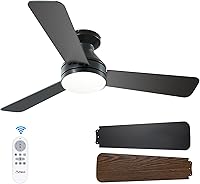
The Amico 42 Inch Black Low Profile Ceiling Fans with Lights and Remote measures 42 in across and 9.3 in high. It has a flush mount, 6 fan speeds, a reversible DC motor, and a light with adjustable white color temperature from 3000K to 6000K.
This Amico model suits someone who wants a low profile fan with a light, remote control, and 6 speed settings. Its light is dimmable from 10% to 100%, and the fan and light can be operated separately.
The black fan blades have a walnut-colored reverse side, so you can choose the side that better matches the room. Amico describes the running volume as low as 35 dB and says the fan can be used outdoors in covered areas that are not directly exposed to rain.
If you need help choosing fan size, compare the room dimensions with the fan diameter before ordering. A 42 in fan may look more balanced in a smaller bedroom or office than in a large open room.
Do low profile ceiling fans need a downrod?
Most low profile ceiling fans are designed to mount without a long downrod. That is the feature that keeps the fan closer to the ceiling and preserves headroom.
The mounting hardware still needs to attach securely to a suitable ceiling junction box. Follow the instructions for the exact fan, and turn off power at the circuit before working on the wiring.
The Depuley Modern Ceiling Fan with Light has a 42 in diameter and a 9.25 in height. It uses a flush mount, 5 blades, 6 power levels, and a remote control.
Depuley suits a small bedroom, kitchen, office, dining area, or covered outdoor space. Its light supports 3000K, 4500K, and 6000K color temperatures with stepless brightness from 10% to 100%.
The fan has forward and reverse rotation, a 2–4 hour timer, and a quiet DC motor. Depuley identifies the materials as plastic and polypropylene, so this may suit shoppers who prefer a lightweight fan design.
Don't connect a DC motor fan to a wall dimmer, fan speed control, or smart switch unless the instructions specifically allow it. This model is designed to use its remote with a standard on/off wall switch.
What is the difference between a low profile and semi-flush fan?
A low profile fan is a general category for a fan designed to reduce hanging height. A semi-flush fan may leave a small space between the ceiling and the housing, even though it remains more compact than a downrod fan.
The ZMISHIBO Low Profile 19.7'' Ceiling Fans with Lights and Remote, Black measures 19.7 in wide and 5.7 in high. It has a semi-flush installation type, 7 blades, 6 speeds, and indoor use.
ZMISHIBO suits bedrooms, home offices, kids' rooms, kitchens, and living rooms. Its light adjusts from 10% to 100% brightness, offers 3000K to 6000K color temperatures, and has a light memory function.
It also has a reversible DC motor, a 2-hour timer, and remote control. The product information describes app and Bluetooth control, but the listed controller type is remote control, so check the current instructions before planning a smart-home setup.
The 19.7 in diameter is much smaller than the 42 in options above. That makes it easier to fit into a tight room, but it also changes how broadly the fan can move air.
Are low profile ceiling fans good for bedrooms?
Low profile ceiling fans can work well in bedrooms when the installed height, sound level, light controls, and room size suit the space. A remote and timer can be useful when you want to adjust the fan without getting out of bed.
For a bedroom-specific comparison, see the best low profile ceiling fan for bedroom guide. If you want a light for reading or general room use, compare best low profile ceiling fans with lights before choosing a model.
The Amico and Depuley models are both 42 in fans with lights and remote controls. The ZMISHIBO model is much smaller and has a semi-flush installation type, which may better suit a compact room.
Look at the claimed noise level with care. A quiet rating describes a product claim, not a guarantee for every room, ceiling, or installation.
Loose hardware, an uneven ceiling, or incorrect assembly can affect noise.
What controls do low profile ceiling fans use?
Low profile fans may use a wall switch, pull chain, remote, app, or a combination of controls. The control method affects daily use, especially if the fan has separate light and speed settings.
The Amico and Depuley fans use remote controls for their listed operations. The ZMISHIBO model includes a remote and describes app and Bluetooth control.
Store the remote where you can reach it, and follow the instructions for pairing or memory settings. If you need a replacement, our guide to the best universal remote for ceiling fan can help you compare options.
A remote-controlled fan does not automatically work with every wall dimmer, fan speed switch, or smart switch. Confirm compatibility before changing the wall control.
How do low profile ceiling fans differ from air circulators?
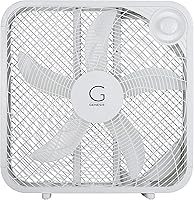
A ceiling fan moves air from a fixed point above the room, while an air circulator is usually a separate fan that can sit on a floor, table, or other surface. A ceiling fan is useful when you want overhead airflow without using floor space.
Our Fans: The Complete Buying Guide explains the main fan types and the features that affect everyday use. You can also compare an air circulator vs fan when deciding whether overhead airflow or portable placement fits your room better.
A ceiling fan does not lower the actual room temperature. It moves air across your skin, which can make the room feel more comfortable while the fan is running.
Which low profile ceiling fan should you choose?
Choose the Amico if you want a 42 in flush-mount fan with a light, remote, 6 speeds, and reversible airflow. Choose Depuley if its 129–215 sq. ft. room guidance and 5-blade design fit your space.
Choose ZMISHIBO if you need a much smaller indoor fan with a 19.7 in diameter, semi-flush installation, light controls, and 7 blades. In every case, measure the ceiling, check the finished height, and confirm that the junction box and wiring suit the installation.
For remote-focused shopping, see the best low profile ceiling fan with remote. The best low profile ceiling fan is the one that fits the room's clearance, gives the airflow you need, and uses controls you can operate safely.
Frequently asked questions
What is a low profile ceiling fan?
A low profile ceiling fan is designed to sit close to the ceiling instead of hanging from a long downrod. This compact mounting style can help in rooms with low ceilings, but you still need to check the fan's installed height, blade clearance, electrical box, and any local installation requirements.
Is a flush mount ceiling fan the same as a low profile fan?
The terms often describe similar ceiling fan designs, but they can refer to different mounting details. A flush mount fan sits directly against the ceiling, while a low profile fan is a broader term for a fan designed to minimize hanging height.
Check the exact mounting type and installed dimensions.
How much ceiling clearance does a low profile fan need?
The required clearance depends on the fan design, ceiling height, blade position, and local safety guidance. Measure from the finished floor to the lowest part of the installed fan, then check the manufacturer's instructions.
Keep blades away from walls, doors, cabinets, and other obstructions.
Are low profile ceiling fans good for bedrooms?
They can suit bedrooms with low or standard-height ceilings because the compact mount leaves more headroom. Choose a size that matches the room, and consider controls, light settings, noise claims, and the fan's indoor-use rating before installation.