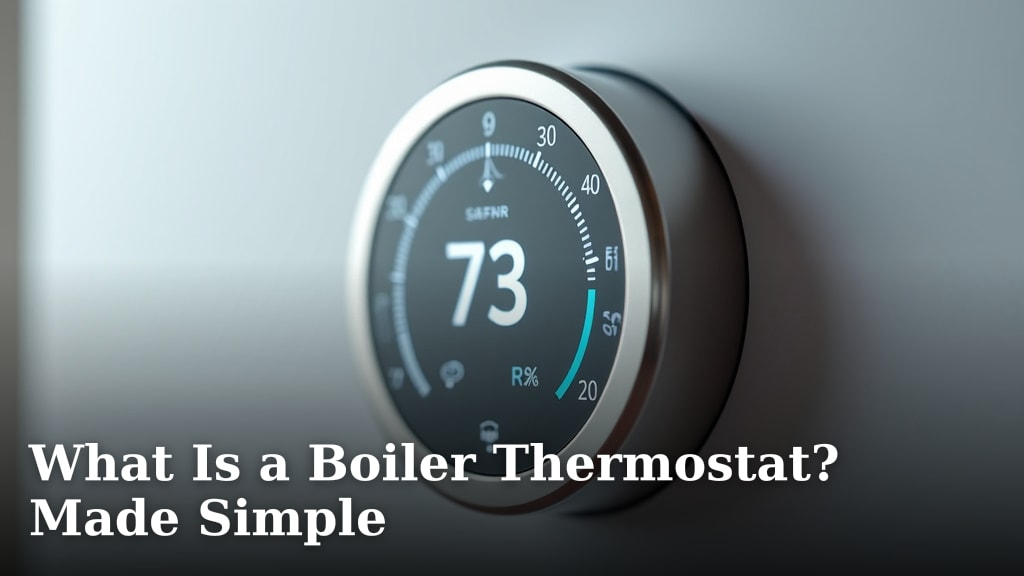
What Is a Boiler Thermostat? Made Simple
A boiler thermostat is your home’s temperature brain. It tells your boiler when to turn on and off. This keeps your home at your desired warmth. It’s like a smart conductor for your heating system.
Think of it as the control center for your cozy space. It works with your boiler to manage the water temperature. This ensures you get heat and hot water when you need it. Many modern ones also help you save energy and money.
TL;DR:
- A boiler thermostat controls your heating.
- It tells your boiler when to heat water.
- It helps maintain a comfortable temperature.
- It can also help save energy.
Ready to understand how this little device keeps you toasty? Let’s break down exactly what a boiler thermostat is and how it works.
Understanding Your Boiler’s Temperature Control System
Your boiler thermostat is the mastermind behind your home’s heating. It’s the device you interact with to set your desired warmth. This simple-looking gadget plays a vital role in keeping you comfortable. It also helps manage your energy bills.
Think of it as the thermostat’s command center. It doesn’t heat your home directly. Instead, it communicates with your boiler. It tells the boiler when to fire up and when to take a break. This constant communication ensures your water gets heated to the right temperature.
How Does a Boiler Thermostat Work?
At its core, a boiler thermostat senses the current room temperature. It compares this to the temperature you’ve set. If the room is colder than your setting, it signals the boiler. This signal tells the boiler to start heating water for your radiators or underfloor heating.
Once the room reaches your desired temperature, the thermostat signals the boiler again. This time, it tells the boiler to shut off. This cycle repeats throughout the day. It maintains your set temperature without constant boiler operation.
The Simple Thermistor or Bimetallic Strip
Older, simpler thermostats often used a bimetallic strip. This is made of two different metals that expand at different rates when heated. As the room warms up, the strip bends. This bending action can open an electrical circuit, turning off the boiler.
Modern thermostats frequently use a thermistor. This is a type of resistor. Its electrical resistance changes with temperature. A small electronic circuit measures this resistance. It then decides whether to send a signal to the boiler.
Communicating with the Boiler
The thermostat uses low-voltage electrical wires. These connect it to your boiler’s control system. When the temperature drops below your set point, the thermostat closes a circuit. This completes a path for electricity. The boiler interprets this as a “call for heat.”
When the desired temperature is reached, the thermostat opens the circuit. This breaks the electrical path. The boiler stops producing heat. This is a very basic yet effective system.
Types of Boiler Thermostats
You’ll find different types of thermostats available. They range from very basic to quite advanced. Understanding these types can help you choose the best one for your needs and budget.
Mechanical (Manual) Thermostats
These are the most traditional types. You’ll recognize them by a dial or slider. You physically turn the dial to your desired temperature. They are simple to use and generally very reliable. You won’t find fancy features here. They just do the job of turning heating on and off.
Programmable Thermostats
Programmable thermostats offer more control. You can set different temperature schedules for different times of the day or week. For instance, you can have it warmer when you’re home and cooler when you’re asleep or out. This can lead to energy savings.
Many programmable models allow you to set multiple periods per day. You might have a “wake-up” period, an “away” period, and a “sleep” period. This makes heating your home more efficient and convenient.
Smart Thermostats
Smart thermostats are the most advanced option. They connect to your home Wi-Fi. This allows you to control them remotely using a smartphone app. You can adjust the temperature from anywhere. You can even get energy usage reports.
Some smart thermostats learn your habits. They can automatically adjust schedules based on when you’re typically home or away. Many integrate with voice assistants like Alexa or Google Assistant. This makes temperature control incredibly A learning thermostat automatically adjusts schedules based on your habits, offering advanced control.easy and hands-free.
Why Is Your Boiler Thermostat Important?
Your boiler thermostat is more than just a dial. It’s the gatekeeper of your home’s comfort and energy usage. Without it, your boiler would likely run constantly or not at all. It brings essential control to your heating system.
Comfort and Convenience
The primary function is to keep your home at a comfortable temperature. You set it and forget it. It works tirelessly in the background. This means you don’t have to think about manually turning your heating on or off. Your home stays at the perfect warmth.
Energy Savings
This is where many people see a real benefit. An efficiently working thermostat prevents your boiler from overheating your home. It only runs when necessary. This reduces wasted energy. Many experts suggest that programmable thermostats can save you between 10% and 20% on your heating bills (Energy Saving Trust).
Smart thermostats can offer even greater savings. By learning your patterns and allowing remote control, they minimize unnecessary heating. This helps you avoid heating an empty house. It ensures you’re only using energy when you genuinely need it.
Boiler Health and Longevity
While not its primary job, a thermostat that cycles correctly can also be good for your boiler. It prevents the boiler from being constantly overworked. This consistent cycling helps maintain optimal operating conditions for the boiler’s components. This can contribute to a longer lifespan for your heating system.
Common Thermostat Problems and Solutions
Even the best thermostats can sometimes act up. Understanding common issues can help you troubleshoot. It might save you a costly service call.
Thermostat Not Responding
First, check the batteries if your thermostat uses them. Low batteries are a very common culprit. If it’s a wired thermostat, ensure it’s receiving power. Check your boiler’s manual for power supply details.
Heating Won’t Turn On or Off
If the heating isn’t turning on when it should, the thermostat might not be sensing the cold correctly. Or, the signal isn’t reaching the boiler. If it’s not turning off, it might be stuck in the “on” position. It’s worth checking your settings first. Ensure the desired temperature is set correctly and the mode is set to “heat.”
Sometimes, dust or debris can interfere with the thermostat’s internal mechanisms. Gently cleaning the thermostat, following the manufacturer’s instructions, can sometimes resolve issues. For more complex electrical problems, a qualified heating engineer is usually needed.
Choosing the Right Boiler Thermostat for Your Home
Selecting a thermostat depends on your lifestyle and budget. Do you want the most advanced features, or something simple and reliable?
Consider these points:
- Ease of Use: How comfortable are you with technology?
- Features: Do you need scheduling, remote access, or learning capabilities?
- Budget: Basic thermostats are inexpensive, while smart models can be a larger investment.
- Compatibility: Ensure the thermostat is compatible with your specific boiler model.
Many sources suggest that upgrading from an old mechanical thermostat to a programmable or smart one can lead to significant energy savings over time. It’s an investment that often pays for itself.
Conclusion
Your boiler thermostat is the command center for your home’s warmth and efficiency. We’ve seen how it senses room temperature, communicates with your boiler, and maintains your desired comfort level. From simple dials to smart learning devices, each type offers unique benefits for managing your heating and saving money. Understanding your thermostat is the first step to a more comfortable and energy-efficient home. Now, take a moment to look at your current thermostat. Is it meeting your needs? Consider an upgrade if you’re looking for better control and potential savings.
Frequently Asked Questions
How often should I replace my boiler thermostat?
Most boiler thermostats can last for many years, often 10 to 15 years or more, if properly maintained. However, if you notice your heating is unreliable or your energy bills are unusually high, it might be time for an upgrade, especially if your current thermostat is an older mechanical model.
Can a faulty thermostat cause my boiler to break down?
While a faulty thermostat itself doesn’t typically cause a boiler to “break down” in a mechanical sense, it can certainly prevent your boiler from working correctly. It might lead to it running constantly, not turning on when needed, or short-cycling, all of which can put unnecessary strain on the system over time.
Is it worth upgrading to a smart thermostat if I already have a programmable one?
If you have a programmable thermostat, you’re already saving energy by setting schedules. A smart thermostat can offer even more savings through features like remote control, learning your habits, and providing detailed energy usage reports. It offers a higher level of convenience and potential for optimization.
What does it mean if my thermostat is showing an error code?
An error code on your thermostat usually indicates a specific problem that the device has detected. These can range from communication issues with the boiler to internal faults. You should consult your thermostat’s user manual to understand what the specific code means and what steps, if any, you can take to resolve it.
Can I install a new boiler thermostat myself?
While some basic thermostat replacements might seem straightforward, it’s generally recommended to have a qualified heating engineer install a new boiler thermostat. This is because it involves working with electrical wiring connected to your boiler, and incorrect installation could lead to system malfunctions or safety hazards.