Oil Filled Radiators for Greenhouses: How to Choose One
An oil filled radiator heater for greenhouse use can protect tender plants on cold nights, but only when it matches your space and setup. Check indoor rating, moisture suitability, frost protection and heating capacity before you commit. Size it for your coldest nights, place it with clearance, and keep cords and controls dry.
On this page (11 sections)
- Can an oil filled radiator heater for greenhouse use stop frost damage?
- What does an oil filled radiator do that a fan heater does not?
- How do you size an oil filled radiator heater for greenhouse use?
- What moisture and electrical checks matter before greenhouse use?
- How does frost protection work on an oil filled radiator?
- Where should you place the heater in a greenhouse?
- What controls should you look for in a greenhouse heater?
- How do oil filled radiators compare with wall heaters for greenhouses?
- What are the safety limits for electric heat in a greenhouse?
- How should you set up and care for the heater through winter?
- Which greenhouse heater should you buy?
An oil filled radiator heater for greenhouse use works best as frost protection, not as a full climate system. It can hold a small enclosed space above freezing on cold nights when sized correctly.
Greenhouses lose heat fast through glass, plastic and gaps. A heater that feels strong in a bedroom can struggle in a structure that starts near outdoor temperature.
Match watts, thermostat range and placement to the plants you plan to protect.
Our space heater for home guide covers room basics that also apply here. Read it first if you are new to electric heat, then use this guide for greenhouse checks.
Can an oil filled radiator heater for greenhouse use stop frost damage?
Yes, an oil filled radiator can help stop frost damage in a small, enclosed greenhouse. It works best when the goal is to keep plant level air a few degrees above freezing.
An oil filled radiator gives steady radiant heat without a fan. That matters because a fan can blow cool air across leaves and stir dust around seedlings.
Steady heat also gives you time to react on a cold night.
It will not make a large, leaky greenhouse tropical in winter. Glass and single layer plastic shed heat, and cold air leaks around doors and vents.
Think of the heater as insurance for tender plants, not as a way to grow summer crops in January.
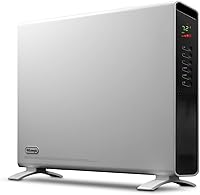
The De'Longhi model below has an anti-freeze setting that turns on when temperature dips below 41 degrees F. That feature fits frost protection because you can set it and check less often.
You still need a thermometer at plant level. The heater thermostat measures air near the unit, not the coldest leaf in a corner.
Place one thermometer low among plants and one near the heater for the first few cold nights.
Rule: Buy for frost protection first, not for warm daytime growing, unless your greenhouse is small and well enclosed.
What does an oil filled radiator do that a fan heater does not?
An oil filled radiator gives slow, steady radiant heat with no fan, while a fan heater pushes warm air fast and directly. That difference shapes how each type fits a greenhouse.
Oil filled radiators heat oil inside sealed fins that warm up and release heat to nearby objects and air. The surface stays relatively low in temperature for an electric heater, and there is no fan to blow leaves or dust.
Fan heaters heat air with a coil and a fan. They warm a space fast, which helps when you open a greenhouse door on a cold morning, but they can give uneven heat, noise and more movement of dry or dusty air.
If you compare types, our ceramic space heater vs infrared guide explains how heating method changes comfort. Read also oil filled radiator vs electric heater if you are torn between steady heat and fast heat.
De'Longhi says its oil filled radiator delivers gentle heat with no fan to stir up dust, pollen and dander. That matters for allergy prone gardeners as well as for young plants.
Rule: Choose oil filled heat when you want steady warmth, and choose fan heat only when you need fast recovery after the door has been open.
How do you size an oil filled radiator heater for greenhouse use?
Size the heater for your coldest expected night, your greenhouse volume and your insulation. Watts alone do not tell the whole story.
A 1500 watt heater is a common size for small to medium spaces. De'Longhi rates its 1500 watt model for small to medium spaces, and Cadet rates its 1500 watt wall heater for 200 square feet.
Those ratings assume indoor room conditions, not a cold greenhouse shell.
Measure length, width and height, then estimate volume. A small hobby greenhouse of 6 by 8 feet with a low roof holds far less air than a 10 by 12 foot structure with a tall peak.
More air and more glass surface need more heat.
Insulation changes the math. Bubble plastic, a second layer of plastic, or thermal mass from water barrels will hold heat better than single layer plastic.
Drafts around doors and vents act like open windows.
How to estimate heat for your greenhouse size
Start with square footage, then adjust for height, insulation and exposure. A greenhouse against a house wall loses less heat than one standing alone in wind.
A site in a cold hollow gets colder air than a raised site.
Use this as a starting check, not a promise. If your lowest outdoor temperature drops well below freezing, you need more margin.
Tender plants need a higher margin than hardy plants.
Place a thermometer at plant level before you buy. Run the heater on a mild cold night and watch how fast temperature falls after the heater cycles off.
That tells you more than any chart.
Rule: Add margin for your coldest night, and improve insulation before you add a second heater.
What moisture and electrical checks matter before greenhouse use?
Check the indoor rating, outlet protection and cord routing before you use any electric heater in a greenhouse. Moisture and electricity need a clear plan.
Greenhouses get condensation, misting from watering and high humidity in warm weather. Water can drip from roofs and walls, and soil moisture raises humidity at floor level.
Keep the heater dry, raised where needed, and away from direct drips.
The De'Longhi EW7707CM is listed for indoor use. Cadet lists its Com-Pak wall heater for indoor use as well.
That rating does not automatically approve outdoor or damp greenhouse use. Check the maker instructions for approved locations before you plug either model into a greenhouse.
Use an outlet protected by a ground fault circuit interrupter where required by local code. Keep connections off the floor, route cords where they will not be stepped on or soaked, and never run a cord under a rug or through standing water.
Ventilation matters too. A closed greenhouse can overheat in sun, even in winter.
Crack a vent on sunny days, and use a thermometer that shows high temperatures as well as low ones.
Rule: Do not assume indoor rating means greenhouse ready. Verify location approval, outlet protection and dry cord routing first.
How does frost protection work on an oil filled radiator?
Frost protection works by keeping air near plants above 32 degrees F, not by heating the whole structure to room temperature. An anti-freeze setting helps by turning heat on automatically when temperature falls.
De'Longhi states that its anti-freeze setting switches on when temperature dips below 41 degrees F. That is a useful guard for tender plants, because many greenhouse plants suffer when air sits at or below freezing for hours.
Set the thermostat a few degrees above freezing, then verify with your own thermometer. Thermostats can read a couple of degrees off, and cold spots form in corners and near glass.
Your plant level reading is the one that counts.
Placement shapes frost protection as much as the setting. Put the heater where cold air collects, but keep it clear of leaves, pots and mulch.
Radiant heat warms nearby objects, so close plants can warm faster than distant ones.
Pair the heater with simple thermal mass if you can. Water containers, stone pavers and soil absorb heat during the day and release it at night.
They smooth out the drops between heater cycles.
Rule: Set anti-freeze protection above freezing, then confirm plant level temperature with a separate thermometer.
Where should you place the heater in a greenhouse?
Place the heater low, central and clear of plants and water. Low placement lets warm air rise through the growing space.
Oil filled radiators release heat from the fins, and warm air rises. A low central spot gives that warm air a path up past benches and pots.
A heater tucked in a far corner can leave the opposite corner cold.
Keep a safe clearance around the unit. De'Longhi notes a low surface temperature and a thermal cut-off that turns the heater off if it overheats.
Those safety features help, but they do not replace clearance from foliage, paper labels, pots and water hose.
The De'Longhi unit measures 6.5 inches deep by 15.5 inches wide by 27 inches high and weighs 23.2 pounds. That size needs a flat, stable spot where it will not tip.
Its integrated handle and snap wheels help you move it during setup, but leave the unit in place while it runs.
Avoid placing it under a drip line from the roof. Condensation forms on cold nights and can drip in a steady spot.
Move the heater if you see wet floor or wet cord areas after the first night.
Rule: Keep the heater low and central with clearance on all sides, and move it if condensation drips near it.
What controls should you look for in a greenhouse heater?
Look for a thermostat, clear heat settings and an anti-freeze mode. Those controls let you hold a narrow temperature band without constant checks.
A greenhouse heater does not need home comfort controls. It needs a reliable low setting that keeps plants above freezing, plus higher settings for recovery.
Simple controls reduce mistakes when you are checking at night in cold weather.
De'Longhi gives this model simple controls for power level and temperature, plus three heat settings. It also has a ComfortTemp feature that De'Longhi says can be up to 20 percent more efficient than using the same unit at max setting without ComfortTemp.
Use that mode when you want steady holding rather than full heat.
A fixed wall heater can free floor space in a tight greenhouse. Cadet says its Com-Pak recesses into the wall and can mount horizontally or vertically.
It is hardwired, so it needs a qualified electrician and planning before winter.
A separate thermostat kit can help control some baseboard heaters. Cadet's single pole kit fits Cadet F series baseboard heaters only, so it is not a universal greenhouse control.
Check compatibility before you buy any thermostat kit.
Rule: Pick controls you can set once and trust at night, with a clear low setting for frost protection.
How do oil filled radiators compare with wall heaters for greenhouses?
Oil filled radiators suit portable, no install frost protection, while a wall heater suits a fixed spot with wiring. Your greenhouse layout decides which fits better.
A portable radiator moves as your needs change. You can shift it between benches, store it in summer, or move it to a garage on the coldest night.
No installation is required with the De'Longhi model, and it uses a standard plug.
A wall heater saves floor space and stays in place. Cadet's Com-Pak includes the fan forced assembly, wall can, front grille and built in thermostat in one box.
It wires into a standard 120 volt circuit for a clean look with no cord.
Fan forced heat has trade-offs in a greenhouse. The Cadet unit uses a quiet fan to push even heat and warm a medium room fast.
That air movement can help mix warm and cool zones, but it can also dry leaves and move dust.
Our best 120 volt electric wall heater with thermostat guide covers fixed heaters in more detail. Read it if you plan to hardwire heat into a garden room or greenhouse.
A baseboard setup is permanent and quiet, but it only fits compatible Cadet baseboard heaters. That limits where you can use this kit, so treat it as part of a fixed system, not as an add on for a portable radiator.
Rule: Choose portable oil filled heat for flexibility, and choose a fixed wall or baseboard system only when the spot and wiring are planned.
What are the safety limits for electric heat in a greenhouse?
Respect clearance, circuit limits and heat limits for any electric heater in a greenhouse. Safety features help, but they do not replace good setup.
De'Longhi lists a thermal cut-off, fully enclosed heating elements and a gently rounded design. Cadet lists a high temperature safety shutoff on its wall heater.
Those features reduce risk when something goes wrong, such as blocked airflow or a covered unit.
Never cover a heater with cloth, pots or plant material. Never set it where a hose, watering can or drip line can wet it.
Keep children and pets from knocking it over, especially when you move it between rooms.
Watch circuit load. A 1500 watt heater draws 12.5 amps, which is close to the limit for many household circuits.
Do not share a circuit with other large loads, and check that plugs and outlets feel cool, not hot, after an hour of use.
Fire safety also means keeping the heater away from plastic sheeting. Greenhouse plastic can sit close to walls and roofs.
Leave space between the heater and any plastic, wood frame or stored supplies.
Rule: Keep clearance, keep cords dry and keep the circuit load in check, even when the heater has safety shutoffs.
How should you set up and care for the heater through winter?
Set up the heater before the first cold night, then check temperature, clearance and cords each week. Simple care keeps frost protection reliable.
Place the heater on a flat surface, plug it into a protected outlet, and set the thermostat to your frost protection level. Run it for one full night with a thermometer at plant level, and adjust the setting based on the coldest reading.
De'Longhi describes its oil reservoir as permanently sealed, so you do not refill oil. The steel assembly has a corrosive resistant finish, but you still need to keep the exterior clean and dry.
Move the unit only with its handle and wheels, and let it cool before you shift it. Oil filled radiators hold heat after you turn them off, so wait until the fins feel safe to touch.
In spring, unplug the heater, wipe it with a dry cloth, and store it where it will stay dry. Check the cord for cracks or kinks before you use it again next fall.
For outdoor garden rooms or three season porches, also check our best space heater outdoor guide. It covers heaters built for open air, which is a different job from enclosed greenhouse frost protection.
Rule: Test the setup on a mild cold night first, so you know the heater holds temperature before a hard freeze arrives.
Which greenhouse heater should you buy?
Buy the De'Longhi oil filled radiator if you want portable, fan free frost protection for a small to medium greenhouse. It has the anti-freeze setting and simple controls that fit this job.
Choose a fixed wall heater instead if you have a permanent spot, floor space is tight, and you plan to hire an electrician. The Cadet Com-Pak gives you a built in thermostat from 40 to 85 degrees and a clean in wall look.
Choose a baseboard thermostat kit only as part of a Cadet F series baseboard system. It is not a stand alone heater and it will not control a portable oil filled radiator.
If your greenhouse is large, drafty or open to outdoor air, an oil filled radiator may not be enough. In that case, compare options in our best greenhouse space heater with thermostat roundup before you buy.
Also check our best portable electric heater for outdoor use guide if you need heat for an open garden area rather than an enclosed structure. For a plain language explainer on how these heaters work, read what is oil filled radiator.
Final rule: Match the heater to your coldest night, your insulation and your moisture control. When those three line up, an oil filled radiator is a steady, low fuss way to protect greenhouse plants from frost.
Frequently asked questions
Can an oil filled radiator heater for greenhouse use protect plants from frost?
It can help protect plants from frost when the heater is sized for the greenhouse and the space is enclosed enough to hold heat. Use a model with a thermostat and anti-freeze setting, place it away from foliage, and check overnight temperatures with a thermometer.
It will not keep every plant safe in extreme cold.
Is an oil filled radiator safe in a humid greenhouse?
Safety depends on the model rating, outlet protection and placement, not on the oil alone. Keep the heater and cord away from water, use a protected outlet suitable for damp locations, and follow the maker instructions.
If the model is rated for indoor use only, treat greenhouse use as a condition to verify first.
What size oil filled radiator does a small greenhouse need?
Start with the greenhouse size, insulation and your lowest expected outdoor temperature. A 1500 watt heater suits small to medium spaces, but a large or drafty greenhouse may need more heat or better insulation.
Use a thermometer at plant level and adjust placement before a hard freeze.