How to Use an Air Circulator Fan
Point the fan across the room or toward a wall, not straight at your face, to help mix air throughout the space. Use a low or medium speed first, then adjust the angle and speed for comfort.
On this page (9 sections)
- What does an air circulator fan do?
- Where should you place an air circulator fan?
- What speed and direction should you use?
- How can you circulate air between rooms?
- Should you point the fan up or down?
- How do you use an air circulator fan with heat?
- How do you use an air circulator fan at night?
- How do you clean and maintain an air circulator fan?
- Which air circulator setup should you choose?
To use an air circulator fan well, aim airflow across the room or toward a wall instead of pointing it straight at your face. This helps mix warm and cool air, reduces stagnant pockets, and can make heating or cooling feel more even.
Start with the fan on low or medium speed. Watch how air moves through the room, then adjust the tilt, height, or direction before increasing the speed.
What does an air circulator fan do?
An air circulator fan moves air around a room so that temperature differences are less noticeable. Unlike a fan used only for direct cooling, it can send air across a larger path and encourage room-wide movement.
The best setup depends on the room shape, furniture, doors, windows, and the location of your heating or cooling equipment. Our guide to what is air circulator fan explains how this type differs from a basic personal fan.
A fan does not lower the actual room temperature by itself. It moves air over your skin and helps distribute air that has already been heated or cooled.
Where should you place an air circulator fan?
Place the fan where it has a clear path across the room. A floor or tabletop position often works well when the fan can send air past furniture without being blocked.
For whole-room circulation, try these placements:
- Aim across the longest open part of the room.
- Point toward a wall when you want airflow to bounce back through the space.
- Place the fan near a doorway when you want to move air between two open areas.
- Keep the front and rear grilles clear.
- Avoid placing it directly behind a sofa, curtain, or large cabinet.
If the room feels warmer near the ceiling, tilt the fan upward. If the floor feels cold while the upper room is warm, aim the fan so it helps mix the two levels.
How should you aim a fan for air conditioning?
Aim the fan across the room from the air conditioner so cooled air spreads beyond the immediate area. Keep the fan from blocking the air conditioner's outlet, return grille, or a nearby walkway.
For a portable air conditioner, avoid placing the fan where it pushes warm exhaust air back toward the room. The goal is to move cooled air into the room, not to create a short loop near the appliance.
A forced-air heating or cooling system can also benefit from circulation between rooms. See [What Is a Forced Air System?
Plainly Explained](/what-is-a-forced-air-system/) if you want to understand how ducted air moves through a home.
What speed and direction should you use?
Use low or medium speed for steady circulation, then increase the setting only when the room needs faster mixing. A high setting can help after a room has become uneven, but it may add more sound and moving air than you need.
Change one setting at a time. Adjust the direction first, wait for the room to respond, and then change the speed if needed.
A direct breeze is useful when you want personal cooling. For broader circulation, aim the fan across the room or at a wall so air continues moving after it leaves the fan.
Can a small air circulator work in a bedroom or office?
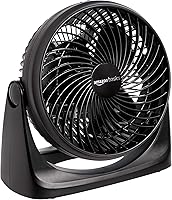
A small air circulator can suit a bedroom, desk, or home office when you need focused airflow and easy repositioning. The AmazonBasics 3 Speed Air Circulator is 7 inches, weighs 3 pounds, has a 90-degree variable tilt, and offers 3 speed settings.
Its 6.3 x 11.1 x 10.9 in dimensions make it a compact choice for a table or floor. The 35 W, 120 V design and back-mounted control knob fit readers who want simple manual adjustment.
Use this fan when portability and a small footprint matter most. Its compact size may be less suitable when you need a taller airflow path or broad oscillation across a large room.
How can you circulate air between rooms?
To move air between rooms, place the fan near the opening and aim it toward the destination room. Keep the doorway clear, and avoid creating a setup that blocks normal walking paths.
If the rooms have different temperatures, start with a low speed. Give the air time to mix before deciding that you need a stronger setting.
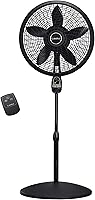
For a hallway or bedroom, a tower design can provide a taller airflow path. The DREO Tower Fan for Bedroom measures 11.81 x 11.81 x 36.22 in, weighs 9 pounds, and provides 8 speeds with 4 modes: Normal, Natural, Sleep, and Auto.
It has 90-degree oscillation, touch and remote controls, and airflow speeds reaching up to 28 ft/s. Its 1158 CFM air flow capacity and 36.22 in height suit readers who want a standing fan for broader room coverage.
Choose this style when floor-standing height and multiple controls matter. Its larger 9-pound body takes more floor space than a compact tabletop circulator.
Should you point the fan up or down?
Point the fan upward when warm air collects near the ceiling and the lower part of the room feels cooler. Point it across the room or slightly downward when you want airflow at seated or sleeping height.
A pivoting head makes these changes easier. The Honeywell TurboForce Air Circulator, Small Tabletop Fan, Quiet Personal Fan for Home or Office, 3 Speeds, 90 Degree Pivoting Head, Black, HT900 has 3 speeds and a 90-degree pivoting head.
It measures 6.3 x 8.94 x 10.9 in and weighs 2.6 pounds. The tabletop or wall-mount design suits small to medium-sized rooms, desks, or a wall position where floor space is limited.
Choose it when you want a small fan that can sit on a desk or mount on a wall. Its 185 CFM air flow capacity is more focused than the DREO tower's listed 1158 CFM capacity.
How do you use an air circulator fan with heat?
Place the fan where it can move warm air away from the heater and into the room. Keep the fan at a safe distance from heat sources, and never block a heater's required clearance or airflow path.
For a forced-air system, aim the fan so it helps move heated air from the warmer area toward a cooler one. Do not place it where it blocks a supply vent or return grille.
Use low or medium speed first. A gradual airflow pattern is often easier to control than immediately using the highest setting.
How do you use an air circulator fan at night?
For nighttime use, aim the fan across the room instead of directly at your face. Use the lowest speed that creates enough movement, and keep the fan stable on a clear surface.
The DREO includes a Sleep Mode and remote control, which may suit a bedroom setup where you want to change settings without getting up. The AmazonBasics and Honeywell models use simpler controls for readers who prefer manual adjustment.
If your floor fan becomes distracting, see Why Is My Floor Fan So Loud? for placement and noise checks. A clear path around the fan can also reduce rattling from nearby objects.
How do you clean and maintain an air circulator fan?
Unplug the fan before cleaning it. Remove dust from the grille and accessible surfaces with a dry or lightly damp cloth, then let all cleaned parts dry before reconnecting power.
Follow the fan's care instructions for grille removal. The DREO has a removable rear grille and impeller for cleaning, while the AmazonBasics and Honeywell models have plastic construction and should be kept free of dust around their airflow openings.
Do not spray liquid into the motor or controls. Check the cord, plug, grille, and base regularly, and stop using the fan if any part becomes damaged.
Which air circulator setup should you choose?
Pick a compact tabletop circulator when you need easy movement, a small footprint, and a directable breeze. Pick a tower fan when you want more height, oscillation, and several speed or mode choices.
For a small room, desk, or wall position, the Honeywell offers a focused 90-degree pivoting head. For a simple portable option, the AmazonBasics combines 3 speeds with a 90-degree tilt.
Use the air circulator vs fan comparison if you are still deciding which design matches your room. For more buying guidance, see the air circulator guide and best air circulator fan picks.
If you prefer a tall fan for a bedroom or open living area, review the best tower fan on sale guide. The right choice is the one whose airflow path, controls, size, and placement fit the room you need to balance.
Frequently asked questions
How should you position an air circulator fan?
Position the fan so airflow travels across the room or toward a wall, then bounces back through the space. Raise or tilt it when you need air to move between floor and ceiling levels.
Keep the intake and outlet clear, and adjust the angle until air reaches the areas that feel still.
Should an air circulator fan point at you?
It can point at you for direct cooling, but that is not always the best setting for whole-room circulation. Aim it across the room or toward a wall when you want to mix air.
Use a low or medium speed first, then change the direction based on comfort.
Can you use an air circulator fan with air conditioning?
Yes, an air circulator fan can help move cooled air away from the air conditioner and mix it through the room. Place it where it can push air across the space without blocking a vent, return grille, doorway, or the air conditioner's own airflow path.
What speed should you use on an air circulator fan?
Start with low or medium speed for steady circulation and less noise. Use a higher setting when the room needs faster mixing, then lower it after the temperature feels more even.
The right speed depends on room size, fan position, and whether you want direct cooling.