Ceramic vs Infrared Space Heaters: Which Should You Choose? (November 2026)
Pick ceramic for fast whole-room air heating and infrared for direct warmth on people and objects. In this ceramic space heater vs infrared comparison, room size, drafts and where you sit matter most.
On this page (14 sections)
- Ceramic vs infrared: how the heat feels
- The two side by side on power and coverage
- How fast each type warms a room
- Which suits a bedroom, office or living room
- Size, weight and where you place it
- Noise and air movement differences
- Thermostat control and timers
- Safety features on each type
- Running cost and energy use
- Indoor, outdoor and garage use
- Which ceramic heater should you buy
- Which infrared heater should you buy
- Who should buy which in this comparison
- Final verdict on ceramic vs infrared
Choose ceramic to heat the air in a small closed room and infrared to warm people directly in a large or drafty space. This ceramic space heater vs infrared guide compares coverage, noise, controls and safety so you can match the heater to the room.
For another heating-style comparison, see radiator vs space heater.
Our score weighs specs, features and buyer feedback against what you are shopping for. Ceramic models here heat air with a fan, while infrared models send radiant heat toward people and objects.
You can learn basics first in our guide on what is a ceramic space heater.
 Best for large rooms
DR. INFRARED HEATER Dr Infrared Heater DR-968 Portable
Ceramic vs infrared: how the heat feels
Ceramic heats air you breathe, while infrared heats surfaces and people in its path. That one difference drives every other choice in ceramic space heater vs infrared.
A ceramic element warms up and a fan pushes warm air out. You feel the room itself get warmer, including corners away from the heater.
An infrared element sends energy that passes through air and warms what it hits. You can feel warm right away in the path, even if the far wall still feels cool.
That makes infrared good for a couch, a workbench or an outdoor seat. It makes ceramic better when you want a bedroom or office to feel evenly warm.
If you want a broader look at radiant designs, our space heater vs radiant heater guide explains the same trade-off in more depth.
The two side by side on power and coverage
All four heaters here top out at 1500 watts, so coverage and direction decide the winner. Wattage alone will not tell you which one fits your room.
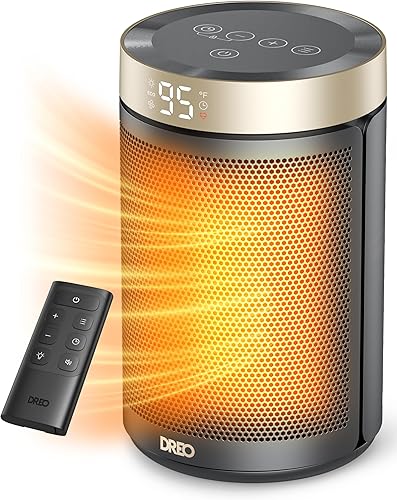
The DREO ceramic tower covers 200 sq ft and heats with a PTC ceramic element and forced air. The Lasko ceramic tower covers 150 and uses forced air with wide oscillation.
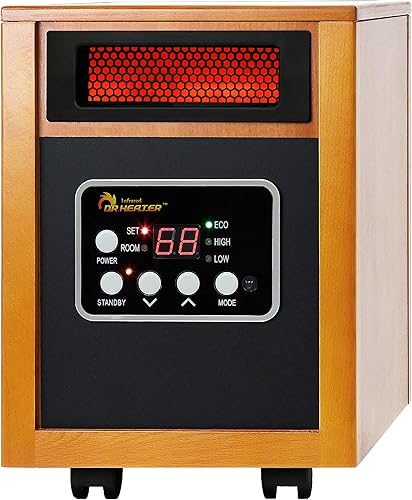
The DR-968 infrared cabinet covers 576 sq ft with a radiant element. The DR-298 infrared model covers 400 with radiant heat and three power choices.
Coverage numbers use different test setups, so treat them as rough guides. A ceramic heater for a large room needs more output or a different placement than a small bedroom tower.
| Model | Type | Power | Coverage | Thermostat |
|---|---|---|---|---|
| DREO Space Heater | Ceramic forced air | 1500W | 200 sq ft | 41-95F |
| DR-968 Portable | Infrared radiant | 1500W | 576 sq ft | 50-85F |
| Lasko 23 in Tower | Ceramic forced air | 1500W | 150 | 60-85F |
| DR-298 Portable | Infrared radiant | 1500W | 400 | 50-90F |
How fast each type warms a room
Infrared feels warm on skin fastest, while ceramic raises room air temperature more evenly. Your sense of speed depends on where you sit.
DREO says its Hyperamics 1500W PTC system sends heat within seconds, with a heat funnel for farther reach. That fits ceramic design, since a fan moves warm air out right away.
Lasko says its 1500W ceramic heat covers medium rooms with wide oscillation. Oscillation helps because it spreads warm air instead of blowing it in one line.
Infrared models work in reverse. The DR-298 uses a carbon element and a reflective mirror to send heat at people and objects.
You feel it as soon as you step into the path.
In a drafty room, that direct feel can beat ceramic. In a closed small room, ceramic usually wins because the whole air volume warms up.
Which suits a bedroom, office or living room
Pick ceramic for a closed bedroom or office and infrared for a living room seating zone. Room use matters as much as room size.
A bedroom needs quiet, safe heat that runs for hours. The DREO tower is 34 dB, has a 12-hour timer and includes tilt detection and overheat protection.
That mix suits night use better than a louder blower.
An office needs heat at a desk, not at the ceiling. Ceramic oscillation from the Lasko tower can sweep across a medium room while you work.
Its remote lets you change settings without leaving your chair.
A living room often has a couch in one spot and cold corners elsewhere. Infrared can target the couch while the rest of the room stays cooler.
Our space heater for home guide helps you match heater type to room use before you choose a model.
Size, weight and where you place it
Ceramic towers are light and easy to move, while infrared cabinets are heavier and more fixed. Placement choices differ a lot.
The DREO tower is 6.02 x 6.02 x 10 inches and 3 pounds. You can carry it with one hand and set it on a floor near a desk.
The Lasko tower is 8.3 x 7.25 x 22.5 inches and 2.5 pounds. Its carry handle and tower shape make it easy to move between rooms.
The DR-968 cabinet is 13 x 11 x 16 inches and 19 pounds. It has caster wheels, but its size and weight make it a more settled piece of furniture.
The DR-298 is 25 x 11.5 x 39 inches and 10.7 pounds, with a weighted base and wheels. It can also mount on a wall or ceiling, which saves floor space.
If you buy the DREO model, our guide on how to use dreo space heater walks through its modes and controls.
Noise and air movement differences
Ceramic fan heaters move more air and can feel drafty, while infrared heaters usually move less air. Noise follows the fan design.
The DREO tower uses a brushless DC motor and a winglet fan to cut turbulence down to 34 dB. DREO says that keeps it quiet enough for a bedroom.
The DR-968 uses a high pressure low noise blower at 39 dB. That is still quiet for a cabinet, but it is louder than the DREO tower.
Lasko calls its ceramic heat quiet and pairs it with oscillation. The moving air helps spread heat, but it can also stir dust and dry the air more than a radiant unit.
Infrared heat does not need a strong fan to push warm air. That means less draft on blankets and papers, and less dust blowing around a sleeping area.
Thermostat control and timers
Ceramic models here offer tighter small-room control, while infrared models offer longer timers for spot heat. Read the ranges before you choose.
The DREO tower sets from 41 to 95F in 1F steps. That wide range and fine step help you hold a steady temperature and save energy.
The Lasko tower sets from 60 to 85F and has two heat settings. Its 7-hour timer is handy for an office, but it is shorter than the 12-hour timers on the other models.
The DR-968 sets from 50 to 85F and has a 12-hour automatic shut-off timer. That suits a large room where you want heat for a long evening.
The DR-298 sets from 50 to 90F and lets you pick 900W, 1200W or 1500W. Its programmable timer runs up to 12 hours.
If precise control matters most, our best ceramic space heater with thermostat page compares thermostat ranges across ceramic models.
Safety features on each type
Both types here include tip-over and overheat protection, but the details differ. Safety features are not interchangeable.
The DREO tower has a tilt-detection sensor, V0 flame retardant materials, overheat protection and a safety plug. DREO says it is ETL certified.
The Lasko tower has a self-regulating ceramic element, overheat protection and a cool-touch housing. It is ETL listed.
The DR-968 has tip-over protection and overheat protection. It also has a lifetime filter and caster wheels for stable placement.
The DR-298 has automatic tip-over protection and over-temperature protection. It will not run without the baseplate installed, and it is ETL certified.
Keep any heater on a flat surface, away from bedding and curtains. Never leave a space heater running unattended for long periods, and plug it straight into a wall outlet.
Running cost and energy use
Both types top out at 1500 watts, so runtime matters more than the label on the box. A heater only costs energy while it runs.
At 1500W, each of these models draws about 12.5 amps. That is the same peak draw across ceramic and infrared here.
Infrared can save energy in daily use if you only need warmth at a seat. You can run it at a lower power level and feel warm while the rest of the room stays cool.
Ceramic can waste energy if you heat a whole room for one person. A thermostat helps, because the heater cycles instead of running nonstop.
The DR-298 offers 900W and 1200W steps, which gives you a lower-cost option for mild days. The DREO ECO mode aims for the same goal in a ceramic design.
Indoor, outdoor and garage use
Infrared wins for patios and garages, while ceramic wins for heated indoor rooms. That split is clear in these four models.
The DR-298 is built for indoor and outdoor use. It has a rust-resistant aluminum housing and can stand on wheels or mount on a wall or ceiling.
That makes it a fit for a patio, garage or workshop where wind would blow ceramic warm air away. Radiant heat still reaches people even when air moves.
The ceramic towers here are for indoor use. The DREO tower and Lasko tower are both listed as indoor heaters.
The DR-968 is also for indoor use. Its cabinet design suits a large indoor room, not an exposed patio.
If you compare radiant options more broadly, our oil filled radiator vs electric heater guide shows how other radiant styles differ from these two.
Which ceramic heater should you buy
Buy the DREO for a small room with precise control and the Lasko for simple oscillation on a budget. Both are ceramic, but they serve different buyers.
The DREO Space Heater is best for a bedroom or office up to 200 sq ft. Its 41-95F thermostat, 34 dB noise level, remote, 12-hour timer and five modes give you fine control.
Its PTC ceramic element heats fast, and its tilt detection adds safety for a room with kids or pets. The trade-off is a smaller coverage area than the infrared cabinet.
The Lasko 23 in Ceramic Tower is best for simple value in a medium room. It covers 150, weighs 2.5 pounds and has a remote for heat, oscillation and timer.
Its self-regulating ceramic element and overheat protection help in homes with kids and pets. The trade-off is a 7-hour timer and less precise temperature control than the DREO.
Our best ceramic space heater page ranks more ceramic models if you want more choices.
Which infrared heater should you buy
Buy the DR-968 for a large indoor room and the DR-298 for outdoor or garage spot heat. Both send radiant heat, but their builds differ.
The DR-968 is best for a large room up to 576 sq ft. Its dual system pairs an infrared quartz tube with PTC heat for 60% more heat than others.
It has a 50-85F thermostat, a 12-hour timer, a remote and a lifetime filter. The trade-off is 19 pounds and a 39 dB blower.
The DR-298 is best for a patio, garage or workshop. Its carbon infrared element and reflective mirror send direct heat, and you can choose 900W, 1200W or 1500W.
It mounts on a wall or ceiling or rolls on wheels. The trade-off is that warmth fades when you step out of its path.
For a large indoor room, our best ceramic space heater for large room page shows when a bigger ceramic model may work better.
Who should buy which in this comparison
Buy ceramic if you want to warm a whole small room, and infrared if you want warmth where you sit. That rule settles most ceramic space heater vs infrared choices.
Choose the DREO Space Heater if you sleep or work in a room up to 200 sq ft and want quiet, precise heat. Its thermostat and ECO mode help you hold a set temperature.
Choose the Lasko tower if you want a light, simple ceramic heater for a medium room. Oscillation and a remote make it easy to use from a couch or bed.
Choose the DR-968 if you need heat in a large room up to 576 sq ft and you sit in one main zone. Its radiant heat plus PTC warmth fits a living room or den.
Choose the DR-298 if you need heat on a patio, in a garage or at a workbench. Its outdoor build and mounting options set it apart.
Skip infrared if you need every corner of a closed room warm. Skip ceramic if your room is large, drafty or exposed to wind.
Final verdict on ceramic vs infrared
Pick ceramic for closed small rooms and infrared for large or drafty spot heating. In a ceramic vs infrared space heater choice, your room and your seat matter more than brand names.
The DREO ceramic tower leads for bedrooms and offices with its 34 dB noise level and 41-95F control. The DR-968 leads for large indoor rooms with 576 sq ft coverage and dual radiant heat.
The Lasko tower leads for simple value with oscillation and a light 2.5 lb build. The DR-298 leads for outdoor use with carbon infrared heat and wall or ceiling mounting.
Start with room size, then decide if you want warm air or direct warmth. That order will point you to the right type every time.
Frequently asked questions
Is a ceramic or infrared space heater better?
A ceramic heater is better for warming the air in a closed small room, while an infrared heater is better for direct warmth on people in a drafty or large space. Choose ceramic for whole-room heat and infrared for targeted comfort where you sit or stand.
Does infrared heat a room faster than ceramic?
Infrared feels warm on skin faster because it heats people and objects directly, while ceramic heats air first and then the room. In a large or drafty space that direct feel can seem faster, but ceramic usually raises the air temperature of a small closed room more evenly.
Can an infrared heater replace central heat?
An infrared heater is best as spot heat for one seating area, not as a full replacement for central heat in a whole home. Its warmth fades outside the direct path, so use it to raise comfort in one zone while your main system handles the rest of the house.
Which heater is quieter, ceramic or infrared?
It depends on the fan, not the element alone. The DREO ceramic tower runs at 34 dB, while the DR-968 infrared cabinet has a 39 dB blower, so the ceramic tower is quieter for a bedroom or office where fan noise matters.


