Can You Put a Box Fan on a Stand?
You can put a box fan on a stand only if the fan is designed to attach to it or can sit securely on a wide, level surface. Check fit, stability, airflow, and the fan's instructions before raising it.
On this page (7 sections)
- Can you put a box fan on a stand?
- What should you check before raising a box fan?
- How can you tell if a fan setup is stable?
- What can go wrong when you put a box fan on a stand?
- Which box fans suit stable surface placement?
- Can a box fan stand near a filter or other fan?
- How do you place a box fan safely?
You can put a box fan with a stand only when the fan is designed to attach to that stand, or rests securely on a broad, level platform. Check the fit and stability before raising it, then keep the grille clear and the cord out of walkways.
Many box fans are designed to stand on the floor or another flat surface. A separate stand can raise airflow, but an improvised mount can slide, wobble, block airflow, or let the fan fall.
Can you put a box fan on a stand?
Yes, if the fan and stand are compatible and the fan is held securely. Read both sets of instructions before assembly; if neither describes the setup, don't assume the fan can be mounted.
A box fan often has a flat, square frame and a base intended to sit on a surface. A pedestal stand made for a different fan shape may not support that frame or keep its weight balanced.
If you're comparing fan styles, our fans buying guide explains how box fans differ from air circulators and other designs. The right type depends on how you want to move air through the room.
What should you check before raising a box fan?
Check the base, platform, and fan instructions before turning the fan on. The setup should remain steady when the fan is running and should not rely on a cord or loose object to hold it in place.
Look for a support surface that is:
- Level and firm, without rocking or flexing.
- Wide enough for the fan's full base or feet.
- Non-slip, with no loose pad that could shift.
- Away from edges and places where people might bump it.
Don't raise the fan on a stack of boxes, a narrow stool, or an unstable chair. Keep it out of reach of children and pets, and leave enough space around the intake and outlet for air to move freely.
A box fan can also sit on a sturdy table or dresser if its base rests fully on the surface. A model that lists floor or flat-surface placement doesn't automatically fit a raised stand.
Does a box fan need a special stand?
Use a stand only when its instructions identify the fan or frame it supports. A stand that looks wide enough may still lack a secure way to hold the fan in place.
Don't drill into the fan housing or use zip ties, bungee cords, or improvised brackets as a substitute for a proper mount. These can loosen, cover openings, or make the fan harder to remove safely.
If you want a raised fan but can't confirm stand compatibility, choose a fan designed for that mounting style. Otherwise, place the box fan on the floor or a stable, low surface.
How can you tell if a fan setup is stable?
A stable fan sits flat, doesn't rock, and stays put when switched on. Check it before use and again after moving it or changing the surface.
With the fan unplugged, set it in the intended position and gently check for rocking. Make sure each foot or support point touches the surface, and leave room so the fan cannot be knocked toward an edge.
Once plugged in, start at the lowest speed while you remain nearby. Stop and unplug it if the fan shifts, rattles against the support, or makes the stand wobble.
The Amazon Basics 3-Speed Box Fan has a free-standing design and extra-large feet intended to help with stability during operation.
That design doesn't confirm compatibility with a separate pedestal stand. Keep the fan on its own base unless the stand instructions specifically allow the combination.
What can go wrong when you put a box fan on a stand?
A poorly supported fan can fall, vibrate, or have its airflow blocked. The risk increases when the support is narrow, uneven, loose, or easy to bump.
Watch for these warning signs:
- One or more feet hang over the edge.
- The fan leans or rocks when you touch the surface.
- The stand shifts at any speed.
- A strap, bracket, or surface covers a grille opening.
- The power cord pulls the fan or crosses a walkway.
Turn the fan off and unplug it before adjusting its position. Don't try to catch or steady a running fan if it begins to fall.
A fan doesn't need to be raised to circulate air. Placement near a window or an open path may help, depending on the room layout; compare window fan vs AC if you're weighing ventilation against cooling.
Which box fans suit stable surface placement?
A fan with a self-supporting base is the simplest choice when you don't have a compatible stand. Check the model's shape and instructions, then set it on a surface that supports the whole base.
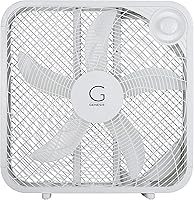
The Genesis 20" Box Fan is described for flat-surface placement, including a floor, dresser, or table. Its carry handle can help when moving it between locations, but it isn't a mounting point.
The black Genesis 20" Box Fan is also described for flat surfaces such as a floor, dresser, or table. Set it down with the base fully supported and use the same stability checks before running it.
For a larger box-fan comparison, see our best 20 inch box fan guide. If your fan will run in a garage, check the best box fan for garage options and consider how dust and stored items affect airflow.
Can a box fan stand near a filter or other fan?
Keep the box fan's intake and outlet open, especially when adding a filter or another fan nearby. A stand should not push the fan against a wall, curtain, or other object that blocks air.
A filter can add resistance and may not fit every fan safely. Read our guide to using a box fan HEPA filter before attaching one, and don't cover the motor or electrical parts.
A second fan may provide a different kind of airflow. For remote operation, see whether a box fan with remote control better fits your setup than raising a fan that isn't designed for a stand.
How do you place a box fan safely?
Use the fan's own base on a stable surface unless a compatible stand is confirmed. Keep the fan low, level, clear of edges, and away from cords or objects that could tip it.
If you choose a stand, verify that it supports the fan's size and attachment points, then test for movement at low speed. Choose a lower surface if the stand wobbles or the fit is uncertain.
A box fan with a stand makes sense only when the support is made for that fan and keeps it steady. Otherwise, set the fan on the floor or a sturdy table and keep airflow clear.
Frequently asked questions
Can you put a box fan on a stand?
Yes, if the fan is made to attach to that stand or rests securely on a wide, level platform. Check the fan and stand instructions, confirm the base cannot slide or tip, and keep the fan's air intake and outlet clear.
Don't improvise a mount that blocks the grille or risks a fall.
Is it safe to put a box fan on a table?
A box fan can sit on a table if the surface is level, sturdy, and large enough to support its entire base. Keep it away from edges, cords, and places where it could be bumped.
Check for wobble at the chosen speed and move it to the floor if it shifts.
Can I use a pedestal fan stand with a box fan?
Only if the stand's maker says it fits the box fan and the connection holds it securely. A pedestal designed for a round fan may not support a square fan's frame or weight.
Don't attach the fan with improvised straps, loose hardware, or anything that could obstruct its grille.
How high should a box fan stand be?
There isn't one safe height for every fan and stand. Follow the stand's instructions and keep the fan low enough that the base remains stable, the fan cannot be bumped easily, and the cord reaches without tension.
A low, broad support is usually easier to keep steady than a tall, narrow one.