Can You Use a HEPA Filter with a Box Fan?
Yes, you can use a HEPA filter with a box fan if the filter fits tightly against the intake side and the fan can move air through its resistance. Check the fit, airflow, and electrical safety before running the setup.
On this page (10 sections)
- How does a HEPA filter work with a box fan?
- Which side of the box fan should hold the filter?
- What should you check before attaching a HEPA filter?
- How much airflow will a HEPA filter reduce?
- Which box fans can work with a filter setup?
- How do you attach a HEPA filter safely?
- When should you replace the filter?
- Can a filtered box fan cool a room?
- What are the main trade-offs?
- Is a box fan with a HEPA filter worth using?
Yes, you can use a HEPA filter with a box fan when the filter fits the intake side, stays secure, and leaves enough airflow for the fan to run safely. The filter should cover the intake area with few gaps, and the fan should sit on a stable, clear surface.
This setup can help move air through a filter, but it isn't automatically equal to a purpose-built air purifier. Filter resistance, fit, airflow direction, and safe attachment matter more than simply placing a filter near the fan.
How does a HEPA filter work with a box fan?
A box fan pulls room air through its intake and pushes it out the other side. A HEPA filter adds a fine filter layer to that intake path, so some airborne particles can be captured as air passes through.
The trade-off is air resistance. A dense filter can reduce the amount of air the fan moves, especially when it becomes loaded with dust.
The EPA's air cleaner and air filter guidance explains why filter performance depends on both filtration and airflow.
A filter that is too restrictive may make the fan louder, reduce its output, or place extra demand on the motor. That does not mean every HEPA filter is unsuitable, but it does mean you should watch how the fan behaves after installation.
Which side of the box fan should hold the filter?
Put the filter on the intake side, where the fan pulls air in. Look for the airflow arrow printed on the filter and point it toward the fan.
Hold a tissue near both sides of the running fan before attaching anything if you are unsure which side is the intake. The side pulling the tissue toward the grille is the intake side.
The filter should sit flat against that side. Large gaps let air flow around the filter instead of through it, which reduces the value of the setup.
A secure frame, removable tape, or another suitable attachment method can help close gaps without blocking the fan.
Don't cover the exhaust side. Keep the rear grille, motor area, controls, and electrical cord clear.
What should you check before attaching a HEPA filter?
Check the filter's height, width, thickness, and airflow direction against the fan's intake area. A filter can be close to the right size and still leave open edges or interfere with the grille.
Measure the fan before buying a filter. Some box fans are described by blade size, while their full housing has different dimensions.
If you are comparing fan designs, our guide to the best 20 inch box fan can help you focus on the fan's frame, controls, and placement.
A free-standing fan also needs a stable surface after the filter is attached. If you need to raise the fan, read can you put a box fan on a stand before improvising a support.
Can every HEPA filter fit every box fan?
No. Fit is a physical measurement, not a name match.
A filter needs to cover the intake area while leaving the fan stable and the controls accessible.
A filter that is too small can leave bypass gaps. One that is too large may overhang the fan, pull the fan backward, or make the assembly easier to knock over.
A thick filter may also need more support than a thin one. If the filter flexes, bows, or pulls away from the housing while the fan runs, turn the fan off and correct the attachment.
How much airflow will a HEPA filter reduce?
A HEPA filter can reduce airflow because air must pass through a dense filter surface. The amount depends on the filter's construction, condition, size, and how well it matches the fan.
A larger filter spreads the air path over more surface area. A smaller filter may restrict the fan more because the same air has less filter area to pass through.
Run the fan on its lowest setting first. Listen for unusual rattling, watch for movement, and check whether the motor area becomes unusually hot.
If the fan struggles, smells hot, or vibrates, stop using the setup.
The best filters for box fans guide can help you compare filter fit and practical setup choices. A filter intended for a different airflow system may not be a good match simply because it carries the HEPA name.
Which box fans can work with a filter setup?
A box fan with a broad, flat intake area is usually easier to pair with a filter than a fan with a curved or obstructed housing. The fan still needs a stable base and enough open space around both sides.
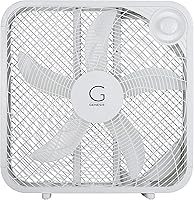
The Genesis 20 in Box Fan has a 20-inch blade, 3 speed settings, a carry handle, and a floor-mount design. Its white housing and flat-surface placement suit readers who want a basic fan that can be positioned near a filter setup.
The fan has a copper motor and plastic blades. Place it on a firm, level surface, keep the filter attachment even, and leave the controls and cord accessible.
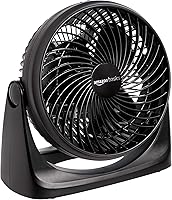
The Amazon Basics 3-Speed Box Fan for Bedroom has 5 plastic blades, 3 speeds, a carry handle, a free-standing design, and a weight of 5.8 pounds. Its 20.86 in width and 21.33 in height give you specific measurements to compare with a filter before ordering.
Its extra-large feet are intended to support stability during operation. Check that the added filter does not shift the fan's balance or block the intake.
The Genesis 20 in Box Fan in black has a 20-inch blade, 3 settings, a carry handle, and a free-standing design. Its 20 in width and 20 in height make those measurements useful when checking a filter's coverage.
This model has plastic blades and a copper material designation. Keep the filter flat against the intake and inspect the attachment regularly instead of assuming the fan can support any filter.
How do you attach a HEPA filter safely?
Attach the filter so it is secure but removable. The filter should not wobble, sag into the blades, or press against the motor housing.
Use an attachment method that does not block the grille or cover the fan's controls. Avoid placing loose fabric, plastic sheets, or other materials over the motor or exhaust side.
Before running the fan, check these points:
- The filter arrow points toward the intake.
- The filter covers the intake without major gaps.
- The fan sits level on a stable surface.
- The filter cannot touch the blades.
- The cord and plug remain clear and dry.
- The exhaust side has open space.
Start at the lowest speed and stay nearby for the first few minutes. Stop the fan if it becomes unusually hot, makes a new grinding or rattling sound, smells like hot plastic, or shifts on the surface.
When should you replace the filter?
Replace the filter when it becomes visibly loaded with dust, airflow drops, or the filter reaches the replacement interval shown for that filter. A dirty filter can add more resistance than a clean one.
Don't wash or reuse a HEPA filter unless its instructions specifically allow it. Moisture or rough cleaning can damage the filter media.
Inspect the filter edges each time you clean the fan. A gap, bent frame, or loose attachment can allow air to bypass the filter.
Clean the fan according to its instructions, with the fan unplugged first. Keep dust from entering the motor area, and never spray liquid into the housing.
Can a filtered box fan cool a room?
A filtered box fan can move air through a room, but the filter may reduce airflow compared with using the fan alone. It is better suited to air circulation with filtration than to fast cooling.
For cooling, place the fan where it can move air through the room without blocking a doorway or window. Our guide to how to use an oscillating fan for cooling covers airflow placement for comfort.
A box fan is different from an air circulator. If you want to compare airflow patterns, read what is an air circulator fan and our broader guide to fans and air circulators.
If the fan will be used in a garage, dust and debris may load the filter faster. Compare the space and use case with the best box fan for a garage guide before setting up filtration there.
What are the main trade-offs?
A box fan and HEPA filter can be a flexible option when you already have a suitable fan and can create a tight, stable fit. The main benefits are simple room air movement, a replaceable filter, and the ability to choose among fan speeds.
The main drawbacks are reduced airflow, possible noise, filter replacement, and the need to inspect the attachment. A homemade setup may also lack the enclosure and controls found on a dedicated air purifier.
Choose the Genesis white model if you want a 20-inch, 3-speed floor fan with a carry handle. Choose the Amazon Basics model if its measured dimensions and 5.8-pound weight make it easier to move between rooms.
Choose the Genesis black model if its 20 in by 20 in size and free-standing design fit your planned filter area.
Before buying, measure the intake and filter, confirm the airflow direction, and plan how you'll secure the edges. For replacement parts on a compatible fan, see the best Lasko box fan replacement parts, but don't assume a part fits a different model without checking its measurements.
Is a box fan with a HEPA filter worth using?
A box fan with a HEPA filter can be useful when the filter fits tightly and the fan runs normally at a suitable speed. It is not a universal match, and a filter that restricts airflow or shifts during use should be removed.
Start with measurements, attach the filter on the intake side, and monitor the fan during its first run. If you cannot create a secure fit or the fan shows signs of strain, use a purpose-built air purifier instead.
Frequently asked questions
Can you put a HEPA filter directly on a box fan?
Yes, but the filter must cover the intake side without large gaps, and the fan must be able to move air through the filter. Use a secure, removable attachment method, keep the exhaust side clear, and stop if the fan overheats, vibrates, or shows other signs of strain.
Does a HEPA filter make a box fan work harder?
Yes, a HEPA filter adds resistance to the air path. A dirty, dense, or poorly sized filter can reduce airflow further, so choose a filter that fits the fan and replace it when it becomes loaded with dust.
Which side of a box fan gets the filter?
Put the filter on the air intake side, with its airflow arrow pointing toward the fan. Confirm the fan's intake direction first, then seal major gaps around the filter so air does not bypass the filter.
Is a box fan with a HEPA filter the same as a HEPA air purifier?
No. A box fan and filter can move filtered air through a room, but the setup may not have the enclosure, controls, noise design, or safety features of a purpose-built HEPA air purifier.
Use it only when the fan, filter, and attachment are suitable.