9 Best Smart Thermostats for Home Assistant (November 2026)
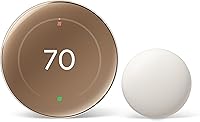
The best smart thermostats for Home Assistant include the Google Nest Thermostat for Google Home households, the ecobee Smart Thermostat Essential for broad HVAC compatibility, and the Honeywell TH6320ZW2003 T6 Pro Series Z-Wave Stat for Z-Wave networks.
On this page (6 sections)
- The best smart thermostat for Home Assistant by setup
- How to choose a Home Assistant thermostat by integration
- Check wiring before you choose a smart thermostat
- Which thermostat has the clearest local-control path?
- Final choice for the best smart thermostat for Home Assistant
- The right smart thermostat for Home Assistant is the one that supports both your automation setup and the equipment behind the wall.
The best smart thermostat for Home Assistant is the meross Matter Smart Thermostat for Home because it names Home Assistant and local Matter integration.
That clear statement matters more than a long list of other platform names.
Choose the Honeywell T6 Pro if your smart home is already built around Z-Wave.
Choose ecobee if broad HVAC compatibility matters more than a stated Home Assistant connection.
Home Assistant buyers should check three things before ordering any model.
First, check the integration method and whether control is local or cloud based.
Second, check the HVAC wiring behind your old thermostat, including any C wire.
Third, check whether the thermostat supports your exact heating equipment.
A smart thermostat can have strong Alexa or Google support without offering the local control you want.
Home Assistant support is not automatic just because a thermostat uses Wi-Fi and an app.
Some models name SmartThings, Vera, Apple HomeKit, Alexa or Google Assistant, but not Home Assistant.
That difference can decide whether your planned automations work in daily use.
This guide is written for people who want both comfort and a practical automation setup.
Renters, families, and busy households may value simple scheduling more than deep device control.
Tinkerers may value Matter or Z-Wave because those routes can keep more control inside the home.
Wiring also separates specialist models from general choices.
A thermostat made for a 24 V furnace will not suit electric baseboard heat.
Check voltage, terminals and system type before you remove the old unit.
For a plain explanation of the category, read What Is a Smart Home Thermostat? Plainly Explained.
That guide explains what a smart thermostat does in ordinary terms.
If you want to understand automations before choosing hardware, see What Is Thermostat Automation? What It Means.
It helps you decide whether you need schedules, presence rules or simple remote control.
Use those checks first, then compare the models below by wiring and integration.
The right pick should fit your equipment, your hub and your daily routine.
Our picks at a glance
-
1

-
2
 Best for broad HVAC compatibility
ecobee Smart Thermostat Essential
9.6/10 our score
See it on Amazon -
3
 Best for Z-Wave networks
Honeywell TH6320ZW2003 T6 Pro Series Z-Wave Stat
9.5/10 our score
See it on Amazon
- 4
 Best for simple DIY setupCheck it
- 5
 Check it
Mysa Smart Thermostat LITE for Electric Baseboard
Best for electric baseboard heat - 6
 Check it
ecobee Smart Thermostat Enhanced
Best for room-by-room comfort - 7
 Best for Alexa routinesCheck it
- 8
 Check it
meross Matter Smart Thermostats for Home
Best for local Home Assistant control - 9
 Check it
Riseem WiFi Thermostats for Home Smart Thermostat
Best for basic single-stage systems
The best smart thermostat for Home Assistant by setup
The meross MTS300 is the best direct match for Home Assistant, while the other models fit different wiring, HVAC and smart-home needs.
Our score weighs specs, features and buyer feedback against what you're shopping for. Home Assistant support receives extra weight here, but compatibility and wiring still matter because an advanced integration cannot fix an incompatible HVAC system.
| Product | Best for | Connection | Size | Power note | Our score |
|---|---|---|---|---|---|
| Google Nest Thermostat | Google Home households | Wi-Fi | 1.07 in D x 3.31 in W x 3.31 in H | 2 AAA batteries included; C wire needed for some systems | 9.7 |
| ecobee Smart Thermostat Essential | broad HVAC compatibility | Wi-Fi | 9.6 | ||
| Honeywell TH6320ZW2003 T6 Pro Series Z-Wave Stat | Z-Wave networks | Z-Wave | 1.06 in D x 4.09 in W x 4.09 in H | 9.5 | |
| Sensi Smart Thermostat | simple DIY setup | 1 in D x 5.88 in W x 3.75 in H | 9.3 | ||
| Mysa Smart Thermostat LITE for Electric Baseboard | electric baseboard heat | 9.2 | |||
| ecobee Smart Thermostat Enhanced | room-by-room comfort | Wi-Fi | 9.1 | ||
| Amazon Smart Thermostat | Alexa routines | Smart-home control through Alexa | 9.0 | ||
| meross Matter Smart Thermostats for Home | local Home Assistant control | Wi-Fi and Matter | 8.8 | ||
| Riseem WiFi Thermostats for Home Smart Thermostat | basic single-stage systems | 2.4 GHz Wi-Fi only | 0.98 in D x 4.72 in W x 3.86 in H | 8.8 |
Google Nest Thermostat: Best for Google Home households
- Wi-Fi connectivity
- Works with Google Home and Matter-certified voice assistants
- Away temperature adjustment
- Designed to work without a C wire in most homes
Google's thermostat combines Wi-Fi control, scheduling and HVAC alerts with Google Home and Matter-certified voice assistant support. Check system compatibility before buying.
Pros
- Google Home integration
- Away adjustment
- Works without a C wire in most homes
Cons
- Some systems need a C wire or compatible power accessory
- Home Assistant support is not stated here
Google Nest Thermostat is best for a home already using Google Home and compatible Matter-certified voice assistants.
It uses Wi-Fi and supports schedules in the Google Home app on Android or iPhone.
It turns itself down when you leave, so you do not waste energy heating or cooling an empty home.
That away behavior suits commuters and families with changing daily routines.
Remote control works through a phone, laptop or tablet when internet and Wi-Fi are working.
Family members can change the temperature from anywhere with that connection.
Savings Finder looks for more ways to save and suggests tweaks to your schedule in the app.
You can also check with your energy provider about rebates and other ways to save.
The thermostat is designed to work without a C wire in most homes.
Google identifies heating-only, cooling-only, zone-controlled and heat-pump systems as cases that may need a C wire or another compatible power accessory.
Check compatibility before installation, especially for those system types.
HVAC monitoring can send alerts about possible issues and maintenance reminders.
Those alerts are helpful information, not a professional diagnosis of your HVAC system.
Voice control requires a compatible smart device and working internet and Wi-Fi.
Choose Nest when Google Home is central to your setup.
Home Assistant support is not established by the product information here, so confirm the exact integration you plan to use.
ecobee Smart Thermostat Essential: Best for broad HVAC compatibility
- Works with 85% of systems
- Apple HomeKit, Google Assistant and Alexa support
- Color touchscreen
- Power Extender Kit sold separately for homes without a C wire
The ecobee Smart Thermostat Essential suits buyers who need broad 24 VAC system support and common smart-home platforms. Home Assistant integration is not stated in the product data.
Pros
- Broad HVAC support
- Apple HomeKit support
- No C wire option with separate PEK
Cons
- SmartSensor 2 pack is sold separately
- Home Assistant support is not stated here
ecobee Smart Thermostat Essential is a strong choice when your HVAC system needs broad 24 VAC support.
It is described as working with 85% of systems, including conventional equipment, heat pumps and boilers.
You should still use ecobee's compatibility checker before buying.
The color touchscreen makes local changes simple to tap and read at the wall.
The ecobee app gives remote adjustment options when you are away from home.
Automatic scheduling changes temperatures when you're away and optimizes comfort when you are home.
That suits people who want a set schedule rather than constant manual changes.
Built-in humidity detection and time-of-use features support energy planning.
Time-of-use planning can preheat or precool your home when energy is less expensive.
Homes without a C wire can use ecobee's Power Extender Kit, which is sold separately.
A SmartSensor 2 pack is also sold separately for room-focused temperature and movement readings.
Free software upgrades are described as keeping the thermostat current over time.
This is a good platform-friendly pick for Apple HomeKit, Google Assistant or Alexa.
Direct Home Assistant support is not stated in the product data, so it ranks below the Matter model for this search.
Honeywell TH6320ZW2003 T6 Pro Series Z-Wave Stat: Best for Z-Wave networks
- Z-Wave connectivity
- SmartThings and Vera controller support
- Learns heating and cooling cycles
- 3 AA batteries included
This Honeywell T6 Pro is the clearest fit for a Z-Wave-based Home Assistant installation, but its supplied compatibility information names SmartThings and Vera rather than Home Assistant directly.
Pros
- Z-Wave connection
- Learns heating and cooling cycles
- Cover plate included
Cons
- Home Assistant support is not stated directly
- System compatibility details need checking
Honeywell TH6320ZW2003 T6 Pro Series Z-Wave Stat is the best fit for a Z-Wave network.
Its listed controllers include SmartThings and Vera.
Z-Wave can be relevant when you want a local smart-home radio rather than a Wi-Fi-only thermostat.
That route may suit a home that already has a Z-Wave hub and other Z-Wave devices.
The thermostat learns your heating and cooling cycle as you use it.
It also lets you set minimum cool and maximum heat temperatures.
Those limits can help prevent extreme settings during seasonal changes.
It uses 3 AA batteries and includes a cover plate, mounting hardware and an installation guide.
The cover plate can help tidy the wall area left by an older thermostat.
Battery power gives you a practical care task to remember over time.
The product information does not name Home Assistant directly.
If you plan to connect it to Home Assistant through Z-Wave, confirm that the exact model and your Z-Wave setup are supported before buying.
Choose this model when Z-Wave is already part of your home automation plan.
For more options in this category, see our guide to the best Z Wave thermostat.
Sensi Smart Thermostat: Best for simple DIY setup
- Wi-Fi connectivity
- Built-in level
- HomeKit, Alexa, Google Assistant, SmartThings and Vera support
- C wire not required in most applications
Sensi focuses on familiar thermostat controls, guided installation and flexible wiring. It names several smart-home platforms, but Home Assistant support is not stated in the product data.
Pros
- Built-in level
- Traditional button layout
- C wire not required in most applications
Cons
- Home Assistant support is not stated here
- Large face compared with some picks
Sensi Smart Thermostat suits buyers who want a familiar button layout and guided DIY setup.
Its built-in level can help you mount the unit straight on the wall.
Step-by-step app instructions can make the wall replacement less intimidating.
The traditional shape fits the same space as many older thermostats.
That can reduce patching and painting after you remove the old unit.
The ST55 uses Wi-Fi and supports app, touch and voice control.
It names Alexa, Apple HomeKit, Google Assistant, SmartThings and Vera as controller options.
Its C wire is not required in most applications.
That flexible wiring note can help in homes where wiring is simple.
Sensi also includes usage reports, equipment alerts and filter-replacement reminders.
Those reminders support basic care without adding complex menus.
The brand highlights privacy protection and says it does not sell personal information to third parties.
That stance may matter to buyers who are cautious about smart-home data.
This is a practical general-purpose thermostat for everyday use.
Home Assistant support is not stated directly in the product data.
Pick it when straightforward controls and broad named platform support matter more than a confirmed local integration.
Mysa Smart Thermostat LITE for Electric Baseboard: Best for electric baseboard heat
- 120V or 240V line voltage
- HomeKit, Alexa and Google support
- 2.4 GHz Wi-Fi
- Up to 1,900W at 120V or 3,800W at 240V
Mysa Smart Thermostat LITE is the specialist choice for electric baseboard, wall, convector and radiant ceiling heat. It is not for 24V furnaces or central heat pumps.
Pros
- Handles 120V and 240V systems
- No subscription
- HomeKit, Alexa and Google support
Cons
- Not compatible with 24V furnaces
- High-voltage wiring may need an electrician
Mysa Smart Thermostat LITE is the specialist choice for electric baseboard and other line-voltage heating.
It supports 120V or 240V systems, including electric baseboard, fan-forced, wall and convector heaters.
It also supports radiant ceiling heat.
The unit supports up to 1,900W at 120V or 3,800W at 240V.
It needs 4 wires, including a neutral or second live wire.
It does not work with 24V furnaces or central heat pumps.
It also will not work on a two-wire switch loop.
That narrow focus is important because line-voltage wiring is different from low-voltage HVAC wiring.
Mysa provides scheduling, remote control, geofencing, vacation mode and voice control without a subscription.
It joins 2.4 GHz Wi-Fi and works with HomeKit, Alexa and Google Home.
Geofencing can ease heat when you leave and bring it back as you head home.
A monthly runtime report email can show which rooms ran longest.
Do not choose this for a standard low-voltage furnace just because it is a smart thermostat.
Turn off power at the breaker, check the wires and use an electrician when local code or the installation requires one.
ecobee Smart Thermostat Enhanced: Best for room-by-room comfort
- Compatible with 90% of HVAC systems
- Built-in occupancy sensing
- Alexa, Google Assistant, HomeKit and SmartThings support
- Power Extender Kit included
The ecobee Enhanced adds occupancy sensing and optional SmartSensors for room-focused comfort. It works with major named platforms, while direct Home Assistant support is not stated here.
Pros
- Broad HVAC compatibility
- Power Extender Kit included
- Occupancy sensing
Cons
- SmartSensors sold separately
- Home Assistant support is not stated directly
ecobee Smart Thermostat Enhanced is best for homes where occupancy-based comfort matters.
Its built-in occupancy sensing can adjust heating or cooling when people are home, away or asleep.
That can suit households with irregular work hours or frequent short trips.
Optional SmartSensors can help prioritize rooms where people spend time.
SmartSensors are sold separately, so budget for them if room focus matters.
The thermostat is described as compatible with 90% of HVAC systems.
It includes a Power Extender Kit for systems without a C wire.
The box also includes a trim plate, backplate, wire labels, screws, plugs and a quick-start guide.
Those parts can help with clean mounting and clearer wiring during setup.
You can control it through the ecobee app, including from a smartphone, tablet or Apple Watch.
It also supports Alexa, Google Assistant, Apple HomeKit and SmartThings.
The app lets you check temperature, set a vacation and review energy use.
The product data does not name Home Assistant directly.
Choose it if you value occupancy features and broad HVAC coverage, then confirm the integration route you want before ordering.
Amazon Smart Thermostat: Best for Alexa routines
- Alexa control
- Works with Ring
- C wire required
- Automatic home, away and sleep temperatures
Amazon's thermostat makes the most sense for an Alexa-centered home that already has the required C wire. The supplied product data does not state Home Assistant or local-control support.
Pros
- Alexa routines
- Remote control through the Alexa app
- Uses Honeywell Home thermostat technology
Cons
- C wire required
- Home Assistant support is not stated here
Amazon Smart Thermostat is the Alexa-first option in this group.
Alexa can switch between home, away and sleep temperatures automatically.
You can change the setting remotely through the Alexa app or by voice.
That suits homes where Alexa routines already handle lights, locks or plugs.
The thermostat requires a C wire, so inspect the wiring before you plan the installation.
A missing C wire can stop a simple DIY swap before it starts.
Select Echo devices or an Amazon Smart Air Quality Monitor can help create comfort zones.
Those add-on devices can adjust heating and cooling based on temperature readings or presence detection.
Amazon also says the thermostat uses Honeywell Home thermostat technology.
Amazon says it will email details about rebates that may be available from energy providers in your area after purchase.
The supplied product information does not name Home Assistant, Matter or local control.
That gap matters if Home Assistant is your main hub.
Choose this model when Alexa and Ring already organize your smart home.
If Home Assistant is the main controller, the meross Matter model gives you a clearer stated integration path.
meross Matter Smart Thermostats for Home: Best for local Home Assistant control
- Matter integration with Home Assistant
- Local control through Matter-certified platforms
- Works with 95% of HVAC systems
- C wire required for some configurations
The meross MTS300 is the strongest direct match for Home Assistant because its product information names Home Assistant and local Matter integration. Confirm wiring and HVAC compatibility before ordering.
Pros
- Names Home Assistant support
- Local Matter integration
- Supports schedules and alerts
Cons
- Not for 110V, 120V or 240V baseboard heat
- C wire required for some wiring configurations
meross Matter Smart Thermostats for Home is the best match for this roundup because it explicitly supports Home Assistant through local Matter integration.
It also names Apple Home, Amazon Alexa, Google Home and Samsung SmartThings as Matter-certified platforms.
Local integration can reduce reliance on a cloud app for basic control.
The MTS300 is described as suitable for 95% of HVAC systems.
That range includes heat pumps, air conditioners, furnaces, boilers, humidifiers and dehumidifiers.
It is not for 110V, 120V or 240V electric baseboard heaters.
It is also not for millivolt thermostats or two-wire systems.
Those exclusions show why system type must come before brand choice.
Some wiring configurations require a C wire.
The thermostat offers flexible schedules for home, away and asleep periods.
App control lets you monitor and control the thermostat from anywhere.
Smart alerts cover filter life, system malfunctions and long-term operation.
Choose meross when local Matter control is the main requirement.
Confirm the exact wiring, system type and Matter setup before installation.
Pay extra care if your HVAC system includes a reversing valve or accessory equipment.
Riseem WiFi Thermostats for Home Smart Thermostat: Best for basic single-stage systems
- Single-stage 1 heat/1 cool support
- 2.4 GHz Wi-Fi
- 7-day scheduling
- C wire required
Riseem is a narrow fit for conventional single-stage heating and cooling with a C wire. It does not support heat pumps, multi-stage systems or line-voltage heaters.
Pros
- Clear single-stage focus
- 7-day scheduling
- Backlit LCD
Cons
- No 5 GHz Wi-Fi
- No direct Home Assistant support stated
Riseem WiFi Thermostats for Home is designed for conventional single-stage systems with 1 heat and 1 cool.
It requires a 24V C wire and supports RH, RC, W, Y, G and C terminals.
This thermostat does not support heat pumps or multi-stage systems.
It also does not support heat-only systems, cool-only systems or line-voltage heaters.
PTAC units, mini splits and RV air conditioners are also incompatible.
It works only with 2.4 GHz Wi-Fi, not 5 GHz.
That detail matters in homes with dual-band routers and separated networks.
The 7-day schedule lets you set different temperature periods for your routine.
That can suit weekday and weekend patterns without daily manual changes.
A backlit LCD helps with operation in dark rooms, basements and hallways.
The app provides remote adjustment and real-time system monitoring.
Accurate control is described as within 2F to keep temperatures steady.
Riseem is a narrow choice, but that can be useful when your system matches exactly.
It does not state Home Assistant support, so choose it for compatible basic HVAC control rather than advanced local automation.
How to choose a Home Assistant thermostat by integration
The best smart thermostat for Home Assistant depends first on how it connects.
Matter gives the meross MTS300 a clearly stated local path.
The Honeywell T6 Pro uses Z-Wave and names SmartThings and Vera.
Those are different routes, and they fit different hub setups.
Wi-Fi alone does not tell you whether a thermostat will work with Home Assistant.
Google Nest, ecobee, Sensi and Amazon all offer other smart-home controls.
Their product information here does not confirm the same Home Assistant integration for each one.
That is why platform names in a listing deserve close reading.
A mention of Alexa, Google Assistant or Apple HomeKit is not the same as Home Assistant support.
Local control also differs from app control.
Local Matter integration can let a hub on your network send commands without relying on a cloud service.
Z-Wave can also support a local setup when your hub and device match.
Cloud-based control may still work for some homes, but it is a different trade-off.
It can depend on internet access, account access and the vendor app.
For Home Assistant automations, that difference can affect reliability and privacy.
Check the exact model name, not just the brand family.
Some brands sell several thermostats with different protocols and features.
The meross MTS300 is the clearest pick here because Home Assistant is named directly.
Honeywell is worth checking when Z-Wave is already part of your plan.
For Alexa-focused homes, compare this guide with the best alexa compatible smart thermostat.
If Apple HomeKit is part of your plan, our nest thermostat homekit guide covers an important compatibility question.
Use integration first, then wiring, then features.
Check wiring before you choose a smart thermostat
Wiring is just as important as the app or protocol.
Amazon requires a C wire.
Riseem requires a C wire and 24V power.
meross requires a C wire for some configurations.
Mysa needs 4 wires for line-voltage heating.
Google Nest is designed to work without a C wire in most homes.
Google still flags heating-only, cooling-only, zone-controlled and heat-pump systems as possible exceptions.
ecobee offers a Power Extender Kit for some installations.
That kit is included with the Enhanced model and sold separately with the Essential model in the product data.
Sensi says a C wire is not required in most applications.
Those phrases sound similar, but they do not mean the same thing for every home.
Check your system with the maker compatibility checker before you order.
Photograph the old thermostat wiring before you remove any wires.
Label each wire as you disconnect it.
Turn off power at the breaker before you start work.
Do not assume that a thermostat made for a furnace also works with electric baseboard heat.
Mysa is the line-voltage specialist here.
meross specifically excludes 110V, 120V and 240V electric baseboard heaters.
Riseem also excludes line-voltage systems and heat pumps.
High-voltage wiring may need an electrician where local code requires it.
Use our guide to What HVAC Systems Work with Smart Thermostats? before removing your old thermostat.
Get professional help when the wiring or local code calls for it.
Which thermostat has the clearest local-control path?
The meross MTS300 has the clearest local-control path because its product information specifically names local Matter integration with Home Assistant.
That direct statement is the main reason it leads this guide.
Local control can mean your hub can adjust heat, cool or auto modes and target temperature without a cloud relay.
The meross data also says you can view temperature and humidity through Apple Home.
It notes that fan control is not available through Apple Home, because the fan works automatically.
Those limits are familiar trade-offs with many local integrations.
The Honeywell model is the next option to investigate if you already use Z-Wave.
Its listed controllers include SmartThings and Vera, not Home Assistant directly.
That does not rule out a Z-Wave route, but it does require confirmation.
The other picks may still fit a broader smart-home plan.
Their information names different platforms or does not state Home Assistant support.
Google Nest names Google Home and Matter-certified voice assistants.
ecobee names Alexa, Google Assistant, Apple HomeKit and SmartThings on the Enhanced model.
Sensi names Alexa, Apple HomeKit, Google Assistant, SmartThings and Vera.
Amazon names Alexa and Ring(), with no stated Home Assistant or Matter support in the data.
Riseem lists app control only in the product data.
Confirm the exact integration before you build automations around a device.
Test schedules, away modes and voice commands after setup.
Keep the vendor app as a backup during the first weeks.
For comparison with two common choices, read amazon smart thermostat vs nest thermostat and amazon smart thermostat vs ecobee.
Final choice for the best smart thermostat for Home Assistant
Pick the meross Matter Smart Thermostat for Home if stated local Home Assistant control is your priority.
Pick the Honeywell T6 Pro if you want to investigate a Z-Wave route.
Pick ecobee if HVAC coverage and occupancy features matter most.
Pick Mysa if you have electric baseboard heat.
Pick Nest if Google Home already runs your smart home.
Pick Sensi if familiar buttons and guided DIY setup matter more.
Pick Amazon if Alexa routines are the center of your home.
Pick Riseem only when your system is a conventional single-stage setup with a C wire.
Before you order, match the thermostat to your system voltage.
Match the terminals and C-wire situation as well.
Match the preferred integration, whether that is Matter, Z-Wave, Alexa, Google Home or Apple HomeKit.
Check the exact model number against the compatibility checker.
Photograph the wiring and turn off power at the breaker before installation.
That simple check can prevent returns and unsafe swaps.
The right smart thermostat for Home Assistant is the one that supports both your automation setup and the equipment behind the wall.
Our top 3 picks at a glance
-
1
-
2
Best for broad HVAC compatibility
ecobee Smart Thermostat Essential
9.6/10 our score
See it on Amazon -
3
Best for Z-Wave networks
Honeywell TH6320ZW2003 T6 Pro Series Z-Wave Stat
9.5/10 our score
See it on Amazon
Frequently asked questions
What is the best smart thermostat for Home Assistant?
The meross Matter Smart Thermostat for Home is the clearest match because its product information names Home Assistant and local Matter integration. Confirm that your HVAC system is supported and check the C-wire requirement before buying.
The Honeywell T6 Pro is another option for a Z-Wave-based setup, but direct Home Assistant support is not stated in the data.
Can any smart thermostat work with Home Assistant?
No. Home Assistant support depends on the thermostat, its integration method and your HVAC wiring.
Matter and Z-Wave can offer useful paths, but a thermostat that only names Alexa, Google Assistant or a phone app may not have direct Home Assistant support.
Check the exact model and integration before ordering.
Does a smart thermostat need a C wire?
Some smart thermostats need a C wire, while others can work without one in many homes or use a power accessory. Amazon Smart Thermostat requires a C wire, meross requires one for some configurations, and ecobee offers a Power Extender Kit for certain installations.
Always verify your HVAC wiring first.
Can Home Assistant control a thermostat locally?
Local control depends on the thermostat and integration. The meross MTS300 specifically describes local Matter integration with Home Assistant.
A cloud-based app connection may still work for some devices, but the product data here does not guarantee local control for every other pick.
Check the integration method before you plan automations.