8 Best Millivolt Heat Only Thermostats (November 2026)
The best millivolt heat only thermostat include the LUX PSD010B Non-Programmable 2-Wire Heat-Only Thermostat for simple 2-wire heat-only systems, the White-Rodgers Emerson M30 White Heat-Only Thermostat for a clean mechanical look, and the LUX PSD010BF Non-Programmable Vertical Heat-Only with Fan for heat-only systems with a fan.
On this page (9 sections)
- Best millivolt thermostat heat only picks by setup
- How to compare millivolt heat only thermostats side by side
- What makes a thermostat millivolt compatible?
- How do I choose a millivolt thermostat for a gas fireplace?
- Can a Wi-Fi thermostat work with a millivolt system?
- What is the difference between 2-wire, 3-wire and 4-wire controls?
- Which control style fits your daily use?
- How should I set up and care for a heat only thermostat?
- Verdict: which best millivolt thermostat heat only should you buy?
The best millivolt thermostat heat only for most homes is the LUX PSD010B, because it matches 2-wire heat-only circuits for fireplaces, stoves and in-floor radiant heat without a fan switch. It is battery powered, non-programmable and has a large illuminated display.
Not every heat only thermostat fits a millivolt circuit. Some picks in this group are 24V low voltage controls or a 240V baseboard control, so wiring and voltage checks matter more than brand preference.
Start with your heating device manual, then match the control to that circuit.
If you are new to the term, read What Is a Millivolt Thermostat? In Brief first.
It explains why these controls work without conventional thermostat power. Then use this guide to compare the actual models.
Our score weighs specs, features and buyer feedback against what you are shopping for. A high score here means the control fits a millivolt heat only search, not that it replaces every thermostat type.
Our picks at a glance
-
1
 Best for simple 2-wire heat-only systems
LUX PSD010B Non-Programmable 2-Wire Heat-Only Thermostat
9.7/10 our score
See it on Amazon -
2
 Best for a clean mechanical look
White-Rodgers Emerson M30 White Heat-Only Thermostat
9.5/10 our score
See it on Amazon -
3
 Best for heat-only systems with a fan
LUX PSD010BF Non-Programmable Vertical Heat-Only with Fan
9.3/10 our score
See it on Amazon
- 4
 Check it
Honeywell T87K1007 Heat Only Thermostat
Best for classic dial replacement - 5
 Check it
YeloDeer 240V Only 4-Wire Manual Electric Baseboard
Best for 240V electric baseboard heat - 6
 Check it
White-Rodgers Mechanical Heat Only Thermostat
Best for rugged mechanical control - 7
 Check it
Honeywell TH1100DV1000 Pro-Digital 2-Wire Heat Only
Best for a readable digital display - 8
 Check it
TPI Corporation RK130EAA Low Voltage Thermostat
Best for explicit millivolt dial control
Best millivolt thermostat heat only picks by setup
The best millivolt heat only thermostat depends on your circuit, your fan and your preferred control style. A 2-wire battery model suits a simple fireplace.
A fan model suits a blower. A dial suits a buyer who wants no menus.
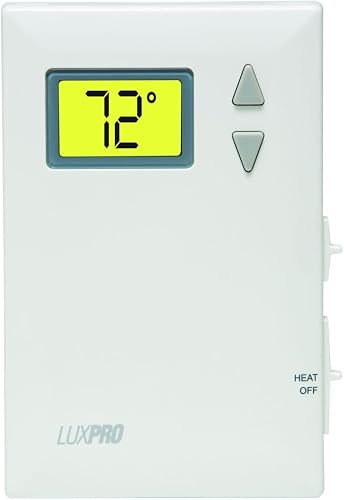
LUX PSD010B Non-Programmable 2-Wire Heat-Only Thermostat: Best for simple 2-wire heat-only systems
- 2-wire heat-only design
- Battery powered operation
- Large illuminated display
- Wall mount, white plastic, 1.1 x 3.3 x 5 in
A simple non-programmable wall control for fireplaces, stoves and in-floor radiant heat with no fan switch.
Pros
- Simple 2-wire heat-only setup
- Large illuminated display
- Battery powered for simple placement
Cons
- No fan switch
- Non-programmable control
The LUX PSD010B suits a homeowner with a fireplace, stove or in-floor radiant system that needs plain heat control. Its 2-wire heat-only design keeps the job simple, and LUX says it does not require a fan switch.
That makes it a clean fit for a millivolt circuit with no blower to manage.
Daily use is direct. The large illuminated LCD display is easy to read, and battery powered operation means the wall control does not depend on conventional thermostat power for its display.
LUX describes the install as quick and straightforward, with clear instructions.
The trade-off is scope. It is non-programmable, so it will not follow a schedule.
It also has no fan switch, which is fine for a fireplace but wrong for a system that needs blower control. For a plain heat only job, that simplicity is the point.
White-Rodgers Emerson M30 White Heat-Only Thermostat: Best for a clean mechanical look
- 24V standard mechanical snap action
- Heat only thermostat
- LED display
- Wall mount, white plastic
A sleek mechanical heat-only thermostat with an attractive wall plate for buyers who prefer a dial over menus.
Pros
- Mechanical snap-action control
- Sleek modern design
- Attractive wall plate
Cons
- 24V rating in data needs checking against your circuit
- Hand control rather than push-button digital control
The White-Rodgers Emerson M30 suits a buyer who wants a mechanical heat-only control with a modern look. Its data describes a 24V standard mechanical snap action thermostat, so check that rating against your circuit before treating it as a millivolt pick.
That check is the most important step with this model.
In daily use, the hand control and LED display keep things simple. White-Rodgers describes the product as easy to use and highly durable, with an attractive wall plate.
The sleek design suits a wall where an older dial left marks.
The trade-off is electrical fit. A millivolt searcher should not assume 24V means compatible.
If your device manual calls for millivolt or 2-wire heat only, the LUX or Honeywell 2-wire models are safer starting points. Choose the M30 only when the 24V rating matches your setup.
LUX PSD010BF Non-Programmable Vertical Heat-Only with Fan: Best for heat-only systems with a fan
- Vertical heat-only with fan switch
- Battery powered
- Large LED illuminated display
- Slim white design
The fan-switch version of the LUX heat-only line for systems where a blower fan needs separate control.
Pros
- Fan switch included
- Large LED display
- Battery powered, slim vertical design
Cons
- Non-programmable
- Fan switch is only useful if your system has a fan
The LUX PSD010BF suits a heat-only system that also needs fan control. It is the vertical version of the LUX heat-only line, with a fan switch for convenient control and heating with blower fan listed as a feature.
If your stove or radiant setup has a blower, that switch is the reason to pick this over the PSD010B.
Daily use centers on the large LED illuminated display. The slim white design suits a narrow wall space, and battery powered operation keeps placement flexible.
LUX describes digital accuracy for precise temperature control, which helps when you want a clear setpoint rather than a guessed dial position.
The trade-off is that the fan switch adds a control you may not need. For a plain fireplace with no fan, the PSD010B is simpler.
It is also non-programmable, so choose it for direct control, not scheduling.
Honeywell T87K1007 Heat Only Thermostat: Best for classic dial replacement
- Heat only, 24 volt, 3 wire in data
- 40F to 90F range
- No batteries required
- Mechanical knob control
A classic-styled Honeywell heat-only dial for a straightforward replacement in a compatible low voltage setup.
Pros
- Classic dial control
- No batteries required
- 40F to 90F range
Cons
- 3-wire 24 volt rating in data needs checking
- No digital temperature display in data
The Honeywell T87K1007 suits a buyer replacing a classic heat-only dial. Honeywell describes classic styling, mercury free construction and a 40F to 90F temperature range.
The mechanical knob control gives a familiar turn-to-set feel with no menus to learn.
Daily use is low effort. The data says no batteries required and lists 24 volt, 3 wire construction.
That wiring detail matters, because a 3-wire 24 volt setup is not the same as a 2-wire millivolt circuit. Confirm your existing wiring before ordering this as a millivolt replacement.
The trade-off is feedback. A dial gives no digital ambient readout in the data.
If you want to see the measured temperature at all times, the Honeywell TH1100DV1000 is a better fit. Choose the T87K1007 for a simple, classic replacement in a matching system.
YeloDeer 240V Only 4-Wire Manual Electric Baseboard: Best for 240V electric baseboard heat
- 240V only, 4-wire manual control
- 40F to 80F range
- Max 4800W at 240V in data
- Large dial with indicator light
A manual 240V baseboard thermostat for line-voltage electric heat, not a millivolt fireplace circuit.
Pros
- Large easy dial
- Continuous adjustment, not 5F steps
- Indicator light shows heating
Cons
- 240V only, not millivolt
- For electric baseboard and fan-forced heaters in data
The YeloDeer thermostat suits electric baseboard heat, not a millivolt fireplace. Its title states 240V only, 4-wire manual control, and the data lists a 40F to 80F range with max 4800W at 240V.
That is line-voltage electric heat, a different job from a millivolt gas or wood heating circuit.
Daily use is manual and direct. A large knob allows continuous temperature adjustment, and YeloDeer says the printed numbers are reference marks rather than 5F steps.
Indicator lights show whether heating is taking place. The white design is made to sit flush against the wall near a baseboard heater.
The trade-off is compatibility. Do not use this on a millivolt system.
It belongs in this guide as a warning example: heat only describes the function, but voltage and wiring decide whether a control fits. For baseboard heat, it is a strong manual option.
For millivolt, skip it.
White-Rodgers Mechanical Heat Only Thermostat: Best for rugged mechanical control
- Single-stage heat only
- Rugged snap-action contacts
- Adjustable heat anticipator
- 50F to 90F, mercury-free
A mercury-free mechanical thermostat with snap-action contacts and an adjustable heat anticipator.
Pros
- Rugged snap-action contacts
- Adjustable heat anticipator
- Includes thermostat, instructions and mounting hardware in data
Cons
- Analog control with no digital readout
- 50F low end is higher than some rivals
The White-Rodgers 1C20-102 suits a buyer who trusts mechanical controls. It is built for single-stage heat only systems with rugged snap-action contacts, an adjustable heat anticipator and a bimetal thermometer.
That construction suits a simple heating circuit where a digital display is not needed.
Daily use is analog. You set the temperature by hand and read an analog display.
The range is 50F to 90F, and the thermostat is mercury-free. The data lists thermostat, instructions and mounting hardware, plus a wall plate option to cover marks left by an old thermostat.
The trade-off is precision and range. The 50F low end is higher than the 40F low end on several rivals, so it may not suit a room you want to keep very cool.
It also has no digital readout. Choose it for rugged mechanical control in a matching low voltage heat-only system.
Honeywell TH1100DV1000 Pro-Digital 2-Wire Heat Only: Best for a readable digital display
- Pro-digital 2-wire heat only
- Backlit display
- 40F to 90F heat range
- Battery powered
A non-programmable digital heat-only control that always shows ambient temperature and the setpoint.
Pros
- Backlit, easy-to-read display
- Shows ambient temperature at all times
- One-touch setpoint access in data
Cons
- Non-programmable
- Battery powered, so batteries need changing
The Honeywell TH1100DV1000 suits a buyer who wants a digital heat-only control with a clear display. It is a pro-digital 2-wire heat only model with a backlit display and a 40F to 90F heat range.
That 2-wire design makes it one of the clearest fits for a millivolt heat only search in this group.
Daily use is easy to follow. Honeywell says the display shows ambient temperature at all times, with one-touch access to the setpoint.
The backlit display helps in a dim room, and battery power keeps the control independent of conventional thermostat power. It uses 2 AAA batteries in the data.
The trade-off is programmability. This is a non-programmable model, so it will not run a schedule.
It also needs battery changes over time. Choose it if a readable digital display matters more than a dial or a fan switch.
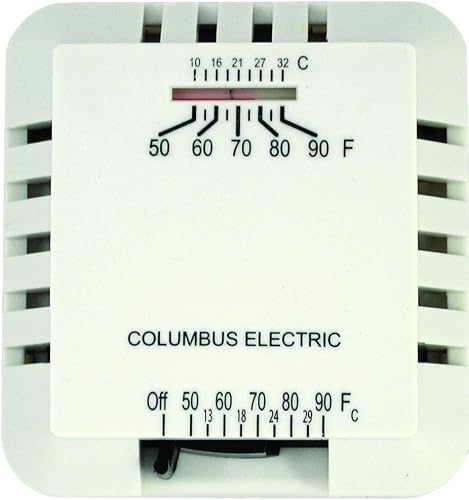
TPI Corporation RK130EAA Low Voltage Thermostat: Best for explicit millivolt dial control
- Low voltage, heat only, millivolt in title
- 35F to 75F in title
- No mercury
- Manual dial, Fahrenheit and Celsius
A manual low voltage millivolt heat-only dial with a narrower, lower temperature range for simple heating circuits.
Pros
- Explicit millivolt heat-only title
- No mercury
- Fahrenheit and Celsius markings
Cons
- Manual dial with no digital display
- 35F to 75F range in title is narrower than 40F to 90F rivals
The TPI RK130EAA suits a buyer who wants an explicit millivolt label and a simple dial. Its title states low voltage, heat only, millivolt with a 35F to 75F range and no mercury.
That wording makes it easy to spot for a millivolt search, even though the score is lower than the digital 2-wire models.
Daily use is manual. A mechanical knob sets the temperature, and the display type is manual in the data.
Fahrenheit and Celsius markings help if you prefer the other scale. The white wall-mount design suits a utility or industrial-style heating space, which fits TPI's focus in the data.
The trade-off is range and feedback. The 35F to 75F range in the title tops out lower than 90F rivals, so it may not suit a room that needs strong heat.
It also gives no digital ambient readout. Choose it for a simple millivolt dial, not for display features.
How to compare millivolt heat only thermostats side by side
| Product | Best for | System type | Power | Display | Our score |
|---|---|---|---|---|---|
| LUX PSD010B Non-Programmable 2-Wire Heat-Only Thermostat | simple 2-wire heat-only systems | 2-wire heat only | Battery powered | LCD, illuminated | 9.7 |
| White-Rodgers Emerson M30 White Heat-Only Thermostat | a clean mechanical look | 9.5 | |||
| LUX PSD010BF Non-Programmable Vertical Heat-Only with Fan | heat-only systems with a fan | Heat only with fan | Battery powered | LED, illuminated | 9.3 |
| Honeywell T87K1007 Heat Only Thermostat | classic dial replacement | Heat only | 9.2 | ||
| YeloDeer 240V Only 4-Wire Manual Electric Baseboard | 240V electric baseboard heat | 9.1 | |||
| White-Rodgers Mechanical Heat Only Thermostat | rugged mechanical control | Single-stage heat only | 9.1 | ||
| Honeywell TH1100DV1000 Pro-Digital 2-Wire Heat Only | a readable digital display | 2-wire heat only | Digital, backlit | 9.1 | |
| TPI Corporation RK130EAA Low Voltage Thermostat | explicit millivolt dial control | Low voltage millivolt heat only | 8.2 |
We compared wiring first, then voltage, then controls. A thermostat can be heat only and still be wrong for your circuit, as the 240V YeloDeer shows.
Wiring and voltage decide fit before style or display size.
We checked power next. Battery powered LUX and Honeywell models suit simple placement.
The Honeywell T87K1007 data says no batteries required. Mechanical dials may need no battery for the control itself.
Your heating device can still need its own power.
We compared temperature range and feedback. Ranges run from 35F to 75F on the TPI title to 40F to 90F on Honeywell models.
Digital models show ambient temperature. Dial models rely on feel and markings.
Pick the feedback style you will actually use.
We checked fan control last. Only the LUX PSD010BF in this group lists a fan switch.
A fan switch matters only if your system has a blower. For a fireplace with no fan, it adds nothing.
What makes a thermostat millivolt compatible?
A millivolt compatible thermostat matches a millivolt heating circuit in wiring and voltage. The circuit, not the word heat only, decides fit.
Always check your heating device manual before you buy.
2-wire heat only models
The LUX PSD010B and Honeywell TH1100DV1000 are 2-wire heat only models in the data. That simple wiring suits fireplaces, stoves and radiant systems with no fan switch.
It also fits buyers who want direct control with no schedule.
Low voltage millivolt dials
The TPI RK130EAA states low voltage and millivolt in its title. That explicit wording helps a millivolt searcher.
Its manual dial and narrower range make it a simpler, lower-cost style choice in function, even without a price comparison.
Models that need a voltage check
The White-Rodgers M30 lists 24V. The Honeywell T87K1007 lists 24 volt, 3 wire.
The YeloDeer is 240V only. None of those should be assumed to fit a millivolt circuit.
If your manual does not match, choose a 2-wire or explicit millivolt model instead.
How do I choose a millivolt thermostat for a gas fireplace?
Choose by circuit first, then by fan, then by display. A gas fireplace often needs the simplest control that matches its millivolt circuit.
Our best millivolt thermostat for gas fireplace guide goes deeper on fireplace-specific fit.
Start with the fireplace manual
Find the thermostat type your fireplace maker allows. Some fireplaces use a millivolt wall switch or a 2-wire thermostat.
Others use a different control. The manual wins over a product title.
Pick 2-wire for plain heat
The LUX PSD010B and Honeywell TH1100DV1000 fit a plain 2-wire heat-only job. The LUX has a large illuminated display.
The Honeywell shows ambient temperature at all times. Pick the display style you prefer.
Add a fan model only if you have a blower
If your fireplace has a blower fan, the LUX PSD010BF gives you a fan switch. If it has no fan, the PSD010B is simpler.
An unused fan switch adds no comfort.
Can a Wi-Fi thermostat work with a millivolt system?
A Wi-Fi thermostat can work only if the maker confirms millivolt compatibility for your exact heating device. The thermostat still needs the right wiring and voltage.
A wireless feature does not fix a mismatched circuit.
Our guide to a wifi millivolt thermostat for gas fireplace explains the checks. Read it before you assume a smart control will replace a 2-wire wall control.
Look for explicit millivolt wording
Search for millivolt, 2-wire or heat only wording tied to your device type. A general smart thermostat claim is not enough.
The heating device maker and the thermostat maker both matter.
Keep a simple backup plan
If your fireplace needs a basic wall control, a non-programmable 2-wire model is the safer first buy. You can add smart control later only after you confirm circuit fit.
Simple heat control is the priority.
What is the difference between 2-wire, 3-wire and 4-wire controls?
Wire count tells you what the control can do. Two wires usually mean a simple heat call.
Extra wires can support a fan, a common wire or line-voltage switching. More wires do not mean a better thermostat.
2-wire for simple heat
The LUX PSD010B, LUX PSD010BF and Honeywell TH1100DV1000 use 2-wire heat-only designs in the data. That suits a fireplace, stove or radiant circuit with one heating stage.
It is the simplest setup to match.
3-wire and 4-wire need care
The Honeywell T87K1007 lists 3 wire and 24 volt. The YeloDeer is 4-wire and 240V only.
Those setups solve different jobs. Do not swap wire counts without checking both makers' guidance.
Which control style fits your daily use?
Dial, button and digital controls all work for heat only. The best style is the one you will use without thinking.
A clear display helps in a dark room. A dial helps if you prefer a quick turn.
Dial controls for quick turns
The Honeywell T87K1007, White-Rodgers 1C20-102 and TPI RK130EAA use mechanical controls. A dial is fast and familiar.
It gives less precise feedback than a digital readout.
Digital controls for clear readings
The LUX models and Honeywell TH1100DV1000 use digital or illuminated displays. You can see the setpoint and, on the Honeywell, the ambient temperature.
That helps if you adjust by number.
Mechanical snap-action for rugged setups
The White-Rodgers models use snap-action mechanical designs. The 1C20-102 adds an adjustable heat anticipator.
That suits a buyer who wants a durable, simple switch action.
How should I set up and care for a heat only thermostat?
Set up the thermostat on an interior wall away from direct heat, drafts and sunlight. A fireplace, stove or radiant system can fool a control placed too close to the heat source.
Give the sensor a fair reading of room temperature.
Check wiring before you mount
Turn off power to the heating circuit as your device manual directs. Match the existing wires to the new control.
If the wire count or voltage does not match, stop and choose a different model. Our low voltage thermostat for gas fireplace guide helps with low voltage checks.
Set the range for your room
Start with a moderate setpoint and watch how the room responds. Heat-only controls have no cooling stage, so a high setpoint can overheat a small room.
A 40F to 90F range gives room to adjust, while the TPI range tops out at 75F in its title.
Change batteries and clean the sensor area
Battery powered models need fresh batteries on a regular schedule. Dust the control with a dry cloth and keep the sensor area clear.
A clean, level wall mount helps the control read the room correctly.
If you want a brand-specific shortlist, read our best honeywell millivolt thermostat guide. If your heat source is a pellet stove, read our guide to a millivolt thermostat for pellet stove before you buy.
Verdict: which best millivolt thermostat heat only should you buy?
Buy the LUX PSD010B for a simple 2-wire millivolt heat only setup with no fan. It is the clearest match for a fireplace, stove or radiant system that needs basic heat control.
Buy the LUX PSD010BF if your system has a blower fan. The fan switch is the only reason to step up from the PSD010B.
Buy the Honeywell TH1100DV1000 if you want a backlit digital display that shows ambient temperature.
Buy the TPI RK130EAA if you want an explicit millivolt dial with no mercury. Buy the White-Rodgers 1C20-102 for rugged mechanical control.
Avoid the YeloDeer for millivolt circuits, because it is 240V only for electric baseboard heat.
Check your heating device manual first. For heat pump systems, read [What Is a Heat Pump Thermostat?
The Complete Guide](/what-is-a-heat-pump-thermostat/) instead, because a heat pump needs a different control type.
Our top 3 picks at a glance
-
1
Best for simple 2-wire heat-only systems
LUX PSD010B Non-Programmable 2-Wire Heat-Only Thermostat
9.7/10 our score
See it on Amazon -
2
Best for a clean mechanical look
White-Rodgers Emerson M30 White Heat-Only Thermostat
9.5/10 our score
See it on Amazon -
3
Best for heat-only systems with a fan
LUX PSD010BF Non-Programmable Vertical Heat-Only with Fan
9.3/10 our score
See it on Amazon
Frequently asked questions
What is a millivolt heat only thermostat?
A millivolt heat only thermostat is a wall control made for heating circuits that use a millivolt signal rather than conventional thermostat power. It handles heat only, with no cooling stage.
Many models here are 2-wire, battery powered or mechanical, so they match simple fireplace, stove and radiant setups.
Can I use any heat only thermostat on a millivolt system?
No. Check the wiring and voltage ratings before you buy.
Some picks here are 24V or 240V line-voltage controls, which do not match a millivolt circuit.
The LUX PSD010B, LUX PSD010BF, Honeywell TH1100DV1000 and TPI RK130EAA are the clearest fits in this group by title or 2-wire and low voltage data.
Do millivolt thermostats need batteries?
Some do and some do not. The LUX models and Honeywell TH1100DV1000 are battery powered in the data.
The Honeywell T87K1007 data says no batteries required.
A mechanical dial may need no battery power for the control itself, but your heating device may have its own power needs.
What is the difference between heat only and heat with fan?
Heat only controls one heating stage with no cooling. Heat with fan adds a fan switch so you can run a blower separately from the heating call.
Choose the LUX PSD010BF if your system has a fan to control.
Choose the plain PSD010B if your fireplace, stove or radiant system has no fan switch.
Why is temperature range different between models?
Ranges reflect the intended job. TPI lists 35F to 75F in its title, while Honeywell and White-Rodgers models list ranges up to 90F.
A wider range gives more headroom for very cold rooms.
A lower low end helps if you want heat to switch on at a mild temperature.