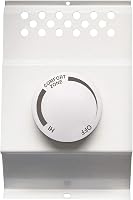
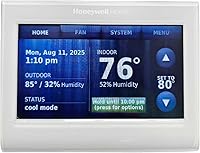
9 Best Digital 120 Volt Thermostats (November 2026)
The best digital 120 volt thermostats include the Honeywell TL7235A1003 Line Volt Pro Non-Programmable Digital for simple wall control, the Honeywell TL8230A1003 Electric Heat Digital 7 Day for weekly scheduling, and the BN-LINK Reptile Thermostat Temperature Controller for heating mats.
On this page (5 sections)
The best digital 120 volt thermostat for most compatible electric heating is the Mysa Smart Thermostat LITE, because it supports 120V or 240V line voltage, 7-day scheduling and app control.
That combination matters for many households because one model can serve more than one line voltage circuit, provided the heater load and wiring match.
For a simple wall control without scheduling, a Honeywell model may be the better fit.
But simplicity only helps if the circuit is correct, since a digital display does not change the voltage the thermostat is built for.
For a portable heater, mat or other plug-in device, choose a temperature controller instead of a wall thermostat.
A plug-in controller is built around a cord, an outlet and a probe, so it can switch equipment that was never wired into the wall.
That makes it practical for a heat mat, a greenhouse heater or a piece of brewing equipment where the sensor needs to sit close to the load.
A digital 120 volt thermostat can mean a permanent line-voltage thermostat or a corded controller with a probe.
Those formats are not interchangeable, so start with the heater voltage, wiring, load and whether you need heating only or heating and cooling.
The difference shows up in daily use as well as in setup.
A wall thermostat controls a room from a fixed position, while a probe controller follows the temperature at the probe location.
That placement can be an advantage for germination or incubation, but it can also give a misleading reading if the probe is too close to a heat source.
It helps to decide what temperature you actually need to control before you compare displays, schedules or smart features.
A room heater and a seed mat may both use electricity, but they need very different control points and safety limits.
If you want a broader comparison, see our guide to the best line voltage thermostat heat and cool.
You can also compare these picks with our best 120 volt thermostat guide.
Those extra guides can help you narrow the field once you know whether your project is a permanent heating circuit or a plug-in device.
Our picks at a glance
-
1
 Best for simple wall control
Honeywell TL7235A1003 Line Volt Pro Non-Programmable Digital
9.6/10 our score
See it on Amazon -
2
 Best for weekly scheduling
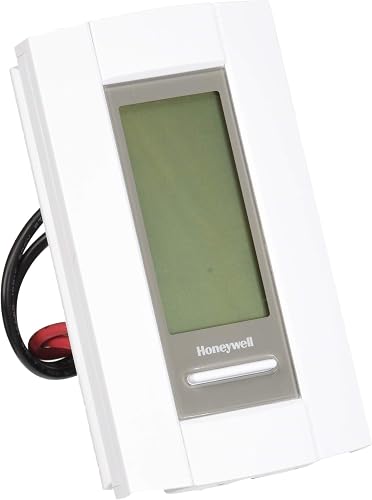
Honeywell TL8230A1003 Electric Heat Digital 7 Day
9.4/10 our score
See it on Amazon -
3
 Best for heating mats
BN-LINK Reptile Thermostat Temperature Controller
9.2/10 our score
See it on Amazon
- 4
 Check it
Mysa Smart Thermostat LITE for Electric Baseboard
Best for app scheduling - 5
 Check it
Inkbird ITC-308 Digital Temperature Controller Thermostat
Best for heating and cooling control - 6
 Check it
Aube Technologies TH115-A-120S 7-Day Programmable Line
Best for four-wire schedules - 7
 Check it
DEWENWILS Temperature Controller Outlet
Best for wide temperature ranges - 8
 Check it
LUX ELV4 Programmable Line Voltage Thermostat
Best for weekday schedules - 9
 Check it
KETOTEK KT8230 Digital Temperature Controller Thermostat Regulator
Best for high-temperature control
How we chose the best digital 120 volt thermostat
The best digital 120 volt thermostat depends on a match between the circuit and the way you use the heater.
We compared voltage, control format, programming, temperature range, stated load and the equipment each model is designed to control.
That approach keeps the choice grounded in compatibility rather than in appearance alone.
A thermostat with a clear display is of little use if it cannot switch the heater in your room or if its wiring does not match the box on the wall.
We gave the highest scores to products that offer clear digital controls and a strong fit for common 120 volt heating needs.
A 240 volt model can still be useful in this roundup, but it is not a direct choice for a 120 volt circuit.
We kept that distinction visible because the voltage label is easy to miss when you are comparing features and prices.
The same care applies to load limits, since a controller that suits a small mat may not suit a larger heater.
Our score weighs specs, features and buyer feedback against what you are shopping for.
We did not treat a smart feature as a benefit if the wiring or heater requirements make the thermostat incompatible.
Remote control, for example, is only helpful when the thermostat can be installed safely and can handle the connected load.
We also looked at how each model is likely to behave in a real room.
A backlit display helps at night, a heating indicator helps you confirm the circuit is active, and quiet operation matters in a bedroom or a study.
For probe controllers, the stated range and the probe length matter more than a room thermostat style design.
They determine whether the sensor can reach the tray, tank or enclosure and whether the control range covers the target temperature.
Programming depth was another factor, but we treated it as secondary to basic compatibility.
A weekly schedule is valuable for a home that empties during the day, yet it cannot fix a mismatched voltage or an overloaded outlet.
That is why the strongest picks tend to be straightforward about their limits.
They name the heater types they support, the wiring they need and the maximum load they can switch.
Choosing with those limits in mind leads to a shorter shortlist and a simpler installation.
It also tends to lead to a thermostat you will actually use, rather than one you replace after the first heating season.
| Product | Best for | Voltage | Control | Schedule | Our score |
|---|---|---|---|---|---|
| Honeywell TL7235A1003 Line Volt Pro Non-Programmable Digital | simple wall control | 240 volt | Button control | Non-programmable | 9.6 |
| Honeywell TL8230A1003 Electric Heat Digital 7 Day | weekly scheduling | Button control | 7-day programmable | 9.4 | |
| BN-LINK Reptile Thermostat Temperature Controller | heating mats | 120 VAC | 9.2 | ||
| Mysa Smart Thermostat LITE for Electric Baseboard | app scheduling | 9.2 | |||
| Inkbird ITC-308 Digital Temperature Controller Thermostat | heating and cooling control | 9.0 | |||
| Aube Technologies TH115-A-120S 7-Day Programmable Line | four-wire schedules | Individual daily programming | 8.9 | ||
| DEWENWILS Temperature Controller Outlet | wide temperature ranges | 8.5 | |||
| LUX ELV4 Programmable Line Voltage Thermostat | weekday schedules | 5-2 day programmable | 8.2 | ||
| KETOTEK KT8230 Digital Temperature Controller Thermostat Regulator | high-temperature control | 120 VAC | 8.0 |
The best digital 120 volt thermostat picks
The top choices divide into two groups: wall-mounted line-voltage thermostats and corded controllers. Read the setup details before choosing based on display style or scheduling alone.
Honeywell TL7235A1003 Line Volt Pro Non-Programmable Digital: Best for simple wall control
- 240-volt line-voltage design
- On-demand backlight
- Heating indicator
- Soundproof operation
This Honeywell is a clear choice for buyers who want a basic digital wall thermostat with a backlight and heating indicator. It is a 240-volt model, so confirm the circuit before ordering.
Pros
- Digital display
- On-demand backlight
- Quiet operation
Cons
- Not programmable
- 240-volt model rather than 120 volt
The Honeywell TL7235A1003 is the best fit for a buyer who wants a non-programmable digital wall thermostat with simple button control. Its on-demand backlight helps with readability, and the heating indicator gives a quick visual confirmation that the heat is on.
Honeywell describes this model as a 240-volt line-voltage thermostat with a 40–86 F control range and a 15A full-load rating at 240VAC. That makes circuit matching essential.
It is not the right default for a 120 volt circuit just because it has a digital display. To compare Honeywell models intended for 120V, see Honeywell 120-volt thermostats and check the circuit requirements.
Soundproof operation is another practical point for rooms where clicking is distracting. The thermostat is hardwired, wall mounted and includes a bracket.
Choose it when your electric heating circuit matches its 240-volt design and you want direct wall control. If you need scheduling, move to the TL8230A1003 or another programmable option.
Honeywell TL8230A1003 Electric Heat Digital 7 Day: Best for weekly scheduling
- 7-day programming
- Backlit display
- Electronic temperature control
- Early start
The TL8230A1003 fits electric heating setups where separate daily schedules matter. Its programmable design adds more control than a non-programmable wall thermostat.
Pros
- 7-day schedule
- Early start
- Large backlit display
Cons
- Needs compatible line-voltage wiring
- No warranty
The Honeywell TL8230A1003 is the strongest choice for 7-day scheduling.
It is designed for electric baseboards, convectors and fan-forced heaters with resistive-rated loads.
Separate daily programming lets you set a routine around work, sleep and time at home.
That separation can help on days when your hours change, since each day does not have to follow the same pattern.
Early start is intended to reach the programmed temperature by the programmed time, while the backlit display helps you read the controls in low light.
The display matters most in a hallway or bedroom where you may check the setting without turning on the main lights.
Its electronic temperature control is specified at ±1 F.
That precision is useful when you want the room to stay close to the set point rather than drifting widely between on and off cycles.
The product is a wired digital thermostat with button control, and the title identifies it as a 7-day programmable electric heat model.
Button control is direct and does not depend on a phone app or a Wi-Fi connection.
That suits a buyer who wants the schedule to run at the thermostat without needing a smart home system.
Choose this Honeywell when scheduling matters more than smart-home control.
Confirm the heater and line-voltage requirements before installation, and use a qualified electrician where local code or high-voltage work requires it.
A quick check of the existing wiring can save time and avoid a model that looks right on paper but will not fit the box.
BN-LINK Reptile Thermostat Temperature Controller: Best for heating mats
- 40–108 F control range
- 1,000 W maximum load
- Temperature probe
- Heating and power indicators
BN-LINK is built for heating devices such as heat mats, heat lamps and greenhouse heaters. The probe and plug-in format make it more suitable for equipment control than permanent wall installation.
Pros
- 120 VAC operation
- Bright digital display
- ETL listed
Cons
- Heating devices only
- Maximum load is 1,000 W
BN-LINK is the best pick for heating mats, heat lamps and similar plug-in devices.
It is a 120VAC controller with a 40–108 F range, a 1,000W maximum load and a temperature probe.
The 3.94 ft three-prong power cord and 4.92 ft probe give you room to position the controller and monitor the target area.
That length helps when the outlet is on one side of a shelf and the mat or tray is on the other.
Its bright display and separate heating and power indicators make the operating state easy to check.
You can see at a glance whether power is on and whether the heater is actively heating.
This model is intended for heating devices only.
BN-LINK names seed starting, plant germination, greenhouses, incubators, brooders, brewing and reptile terrariums among its uses.
Those uses share a need for steady warmth in a small, defined space rather than whole room heating.
It is not a replacement for a permanently installed wall thermostat.
Choose it when the equipment plugs into a controller and the probe should regulate the temperature.
Before use, confirm that the combined wattage of the connected device stays within the 1,000W limit.
Mysa Smart Thermostat LITE for Electric Baseboard: Best for app scheduling
- 120V or 240V line voltage
- 7-day scheduling
- Wi-Fi control
- HomeKit, Alexa and Google support
Mysa is the strongest smart option here for compatible electric baseboard and line-voltage heaters. It supports 120V or 240V circuits, but its wiring requirements rule out some installations.
Pros
- Wi-Fi and app control
- 7-day schedules
- No subscription
Cons
- Not for 24V furnaces or central heat pumps
- Requires 4 wires
Mysa is the best smart choice for compatible 120 volt electric baseboard heaters.
It supports 120V or 240V line voltage, 7-day scheduling, Wi-Fi control and voice control through HomeKit, Alexa and Google.
The key installation check is wiring.
Mysa requires 4 wires, including a neutral or a second live wire, and it does not work with a 2-wire switch loop, 24V furnaces or central heat pumps.
At 120V, the stated maximum is 1,900W.
At 240V, it is 3,800W.
Those limits should be checked against the heater in each room, since a single thermostat may control more than one unit.
Mysa also identifies baseboard, fan-forced, wall and convector heaters, plus radiant ceiling heat, as supported uses.
That range makes it flexible for homes where different rooms use different styles of electric heat.
Choose it for remote control, geofencing and app schedules when the wiring and heater load fit.
Turn off power at the breaker before installation, and use an electrician if you are not comfortable with line-voltage wiring.
The app can help with day to day changes, but the wiring check comes first.
Inkbird ITC-308 Digital Temperature Controller Thermostat: Best for heating and cooling control
- Dual relay
- Measured and set temperature displays
- High and low alarms
- Compressor delay
The Inkbird adds heating and cooling control in a plug-in controller format. Its dual display shows both measured and set temperatures, while the alarm and delay settings suit equipment that needs closer monitoring.
Pros
- Heating and cooling relays
- Wide temperature range
- Temperature probe included
Cons
- Not a permanent wall thermostat
- Maximum load is 1,100 W at 110V
The Inkbird ITC-308 is the best fit for heating and cooling equipment that needs a measured temperature display.
Its dual display shows the measured temperature and the set temperature at the same time.
That side by side view makes it easier to tell whether the equipment is actually reaching the target or still catching up.
The controller includes a temperature probe, socket and controller panel.
It supports heating and refrigeration through dual relays, and its high and low alarms can signal an out-of-range temperature or sensor problem.
An alarm is especially helpful for a freezer or an incubation setup where a slow drift could go unnoticed.
Inkbird specifies a maximum output load of 1,100W at 110V.
The controller also includes compressor delay protection, which matters when controlling refrigeration equipment.
That delay helps avoid short cycling a compressor that needs time between runs.
Use it for a freezer, heating wrap or exhaust fan when a corded controller suits the setup.
It is not a permanent wall thermostat for a household heater circuit.
Aube Technologies TH115-A-120S 7-Day Programmable Line: Best for four-wire schedules
- 4 settings per day
- 7-day programming
- Early start
- Temporary temperature override
The Aube TH115-A-120S suits electric heating installations that can use its four-wire double-pole setup. Its daily programming and temporary override help balance routine schedules with quick changes.
Pros
- Four settings per day
- Early start
- Heating command indicator
Cons
- Four-wire installation required
- No warranty
The Aube Technologies TH115-A-120S is best for individual daily schedules on a four-wire installation.
It offers 4 settings per day, separate daily programming and a temporary bypass for quick changes.
That layout suits a home where weekdays and weekends follow different routines.
The temporary bypass is useful when guests arrive or when a normal setback schedule would make the room too cool.
Its early start function is designed to reach the programmed temperature by the programmed time.
The LCD can show Fahrenheit or Celsius, and the heating command indicator shows when power is being delivered.
Seeing the heating command at a glance can help you confirm that the schedule is calling for heat.
This model is specified for four-wire double-pole installations.
That requirement is more important than the programmable feature, so check the existing wiring before choosing it.
Pick the Aube when you want a scheduled line-voltage thermostat and your installation matches its four-wire design.
Choose a simpler controller if the heater is a plug-in device.
DEWENWILS Temperature Controller Outlet: Best for wide temperature ranges
- Heating and cooling modes
- 15A output
- Power memory
- Temperature calibration
DEWENWILS is a flexible plug-in controller for heating or cooling tasks that need a broad temperature range. Its memory and calibration features help when settings must return after a power interruption.
Pros
- Heating and cooling
- 15A output
- Cyclic and countdown modes
Cons
- Plug-in controller rather than wall thermostat
- Controller is the included item
DEWENWILS is the best choice for a wide heating and cooling range in a plug-in format.
It covers -40–210 F, supports a 15A output and can handle up to 1,800W of heating capacity.
The VA display is designed to remain readable in dim conditions.
Power memory restores previous settings, while temperature calibration helps adjust for temperature differences.
Calibration can be helpful when the probe sits in a different spot from the air you care about most.
Cyclic timing, countdown on, countdown off and combined countdown modes add control beyond a basic thermostat.
Those timed modes can suit a setup where equipment should run for a set period rather than follow a room schedule.
The stated uses include incubators, reptile rooms, greenhouses, home brewing and other temperature-controlled equipment.
Choose it when you need heating and cooling modes or a broad temperature range without permanent wall wiring.
It is more equipment controller than household room thermostat.
LUX ELV4 Programmable Line Voltage Thermostat: Best for weekday schedules
- 4 periods per day
- Separate weekday and weekend programming
- Temporary override
- Low-battery indicator
The LUX ELV4 gives line-voltage heating users a weekday and weekend schedule with four periods per day. It is not compatible with heating appliances that combine a resistive element and blower fan.
Pros
- 5-2 scheduling
- Vacation hold
- Front battery access
Cons
- Not for resistive and inductive loads together
- No voltage shown in the product title
The LUX ELV4 suits weekday and weekend heating schedules for baseboard, cable and ceiling heat.
It provides 4 periods per day, a temporary override and a vacation hold.
That structure fits a household with a steady workweek and a different weekend pattern.
Front battery access and a low-battery indicator help with routine maintenance.
You can replace batteries without removing the thermostat from the wall, which keeps care simple.
The wall-mounted thermostat also has a positive off switch and a wall plate is included.
A positive off switch is handy at the end of the heating season when you want the circuit off rather than just set low.
There is one major compatibility limit: LUX says the ELV4 is not compatible with heating appliances that contain both an electric heating element and a blower fan.
Check the heater type before installation, since that detail can rule this model out.
Choose it when a 5-2 schedule is enough and you want a line-voltage wall thermostat.
For smart control, the Mysa is a better fit when its wiring requirements are met.
KETOTEK KT8230 Digital Temperature Controller Thermostat Regulator: Best for high-temperature control
- -22–572 F range
- 30A relay
- Heating and cooling
- Delay start and temperature correction
KETOTEK is for specialized temperature control where a broad range and relay switching matter. It needs an additional power supply for the load because the relay controller does not output voltage directly.
Pros
- Very wide temperature range
- 30A relay
- Alarm for temperature or sensor errors
Cons
- Requires additional power supply for the load
- More involved wiring
KETOTEK is the best pick for high-temperature or specialized relay control.
Its stated range is -22–572 F, with heating and cooling support, a 30A relay and a 2m NTC sensor.
The controller includes delay start, temperature correction and alarms for a temperature limit or sensor error.
It can save settings after a restart, which reduces repeated setup.
That memory is helpful for equipment that stays in place for weeks at a time.
KETOTEK makes an important wiring distinction: this is a relay temperature controller with no voltage output directly.
You need an additional power supply for the load, so it requires more planning than a plug-in controller.
In practice, that means the controller acts like a switch for a separate circuit rather than a simple outlet you plug a device into.
Choose it for an incubator, brooder, refrigerator, fermenter, greenhouse or reptile setup where the range and relay rating matter.
It is not the easiest choice for a simple room thermostat replacement.
How do you choose a digital 120 volt thermostat?
Choose the thermostat by circuit first, then by control style.
A 120 volt heater needs a thermostat rated for that circuit, while a 240 volt model should not be treated as a 120 volt substitute.
That first check prevents most returns and failed installations.
For a wall installation, confirm the existing wiring and heater type.
Mysa needs 4 wires, the Aube needs a four-wire double-pole installation, and LUX has a specific restriction for heaters with both resistive and inductive loads.
Those details are not minor variations, since they reflect how the thermostat powers itself and switches the heater.
For a plug-in heater or specialty device, choose a controller with a probe.
BN-LINK is heating-only, while Inkbird and DEWENWILS support heating and cooling.
The probe location will shape performance, so place it where it represents the tray, tank or enclosure you want to control.
KETOTEK needs an additional power supply for the load.
That extra step makes it a project controller rather than a simple plug in replacement.
If scheduling matters, choose a programmable wall thermostat such as the Honeywell TL8230A1003, Aube or LUX.
If remote control matters, Mysa adds Wi-Fi, app and voice options when the wiring fits.
It also helps to think about who will use the thermostat each day.
A guest or a family member may prefer large buttons and a clear display over a deep menu.
A schedule that is easy to read at the wall is more likely to be used correctly than a complex one that is rarely opened.
The same logic applies to app control, since shared access can be helpful but only if the basic wiring and load are right.
Once compatibility is settled, the remaining choice is about habits, placement and how much control you want to manage.
Digital 120 volt thermostat setup and care
Turn off power at the breaker before touching a line-voltage thermostat.
Identify the circuit and heater requirements, follow the installation instructions and use a qualified electrician when local rules require one.
That caution applies even when the replacement looks like a simple swap, since old wiring may not match the new model.
Keep probe-based controllers away from heat sources that could distort the reading.
Place the probe where it represents the area you want to control, then confirm that the connected equipment stays within the controller's voltage and watt limits.
A probe pressed against a mat or sitting in direct airflow can cause the controller to cycle at the wrong time.
It is worth checking the reading after the equipment has run for a while, not just at first switch on.
Clean a wall thermostat with power off and a dry or lightly damp cloth.
Do not block its display or controls, and check scheduled settings after a power interruption if the model does not retain them.
Dust around the sensor area can also affect how the thermostat reads the room, so keep the face and vents clear.
For plug in controllers, inspect cords and plugs for damage before each season of use.
If a cord is frayed or a plug feels loose, stop using it until it is replaced or repaired.
For more background, read What Is a Digital Thermostat? Tips and Guidance.
If your project needs cooling rather than heating, compare our best 120 volt cooling thermostat picks.
Which digital 120 volt thermostat should you buy?
Choose the Honeywell TL7235A1003 for straightforward 240-volt wall control, or the TL8230A1003 for 7-day electric heat scheduling.
Pick Mysa when you need smart control and your 120 volt wiring supports its 4-wire requirements.
Those three cover the main wall mounted paths, but they suit different homes and different habits.
The first Honeywell is the simplest choice, the second adds weekly programming, and Mysa adds remote and voice control.
For plug-in equipment, BN-LINK fits heating mats and heat lamps, Inkbird adds heating and cooling relays, and DEWENWILS covers a wider temperature range.
Choose KETOTEK only when its relay setup and additional load power supply fit your project.
That narrower choice is worth making carefully, since the wiring is more involved than a standard outlet controller.
Before you buy any of them, look at the heater label and the wiring in the box.
A short check at that stage will tell you more than a long list of features.
It will also help you avoid a thermostat that is well made but simply not made for your circuit.
Our top 3 picks at a glance
-
1
Best for simple wall control
Honeywell TL7235A1003 Line Volt Pro Non-Programmable Digital
9.6/10 our score
See it on Amazon -
2
Best for weekly scheduling
Honeywell TL8230A1003 Electric Heat Digital 7 Day
9.4/10 our score
See it on Amazon -
3
Best for heating mats
BN-LINK Reptile Thermostat Temperature Controller
9.2/10 our score
See it on Amazon
Frequently asked questions
What is a digital 120 volt thermostat?
A digital 120 volt thermostat uses an electronic display and controls equipment connected to a 120 volt circuit. Some are permanent line-voltage wall thermostats, while others are plug-in temperature controllers for heating devices.
Check the voltage, load and wiring before choosing one.
Can I use a 240 volt thermostat on 120 volts?
Do not assume a 240 volt thermostat works on a 120 volt circuit. The Honeywell TL7235A1003 is identified as a 240-volt model, while Mysa identifies support for both 120V and 240V.
Match the thermostat to the circuit and heater requirements.
What is the difference between a line-voltage thermostat and a plug-in controller?
A line-voltage thermostat is installed into the heater circuit, often on a wall. A plug-in controller uses a cord, outlet and temperature probe to switch a connected device.
BN-LINK, Inkbird and DEWENWILS use the second format, so they solve different installation problems.
Can a digital 120 volt thermostat control cooling?
Some digital 120 volt controllers support both heating and cooling, but a standard electric heat thermostat may not. Inkbird, DEWENWILS and KETOTEK identify heating and cooling control, while BN-LINK is intended for heating devices only.
Confirm the equipment type and load.