What Is the Anticipator on a Honeywell Thermostat?
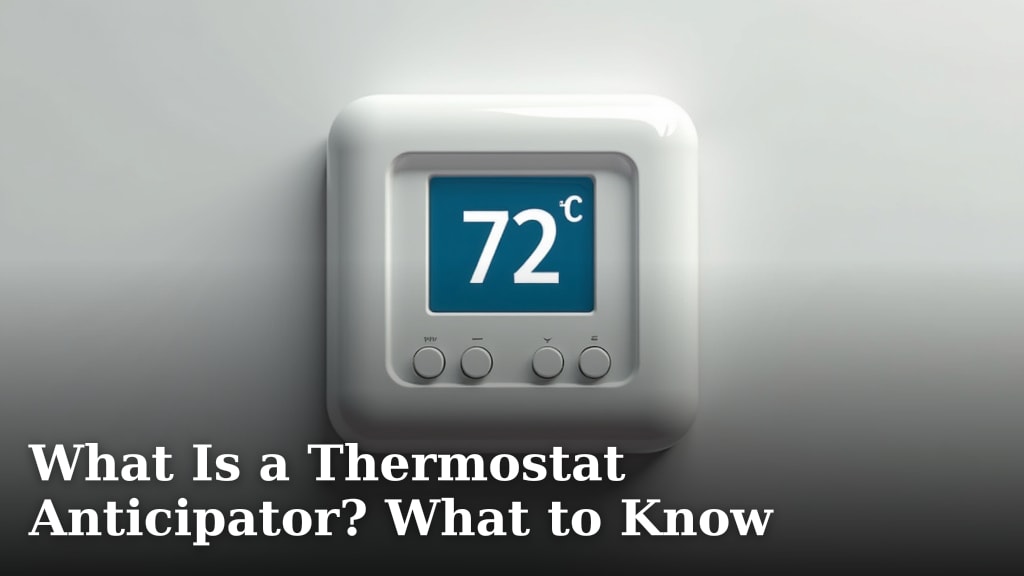
The anticipator on a Honeywell thermostat is a small adjustable control that helps end a heating call before the room reaches the set temperature, reducing temperature overshoot. It is found on some older mechanical thermostats, not every Honeywell model.
On this page (9 sections)
- What does a Honeywell thermostat anticipator do?
- Where is the anticipator on a Honeywell thermostat?
- How should you set a Honeywell heat anticipator?
- What happens if the anticipator is set incorrectly?
- Does a Honeywell anticipator work with a heat pump?
- Can room sensors solve uneven heating?
- Is a plug-in thermostat anticipator suitable for home heating?
- What should you check before adjusting an old Honeywell thermostat?
- What should you remember about a Honeywell anticipator?
The anticipator on a Honeywell thermostat is a small adjustable control on some older mechanical models that helps end a heating call before the room reaches the set temperature. This can reduce overshoot, the extra warmth that lingers after a heating system switches off.
It doesn't measure the room temperature like a second sensor. Instead, it helps the thermostat account for heat that continues to move through the system after the call for heat ends.
What does a Honeywell thermostat anticipator do?
A heat anticipator helps time the heating cycle to reduce temperature overshoot. It works alongside the thermostat's temperature-sensing element, rather than replacing it.
On compatible mechanical thermostats, a small heater warms the sensing element while the system runs. The thermostat can then switch the heat off slightly before the air reaches the setpoint, allowing for heat that will continue to spread through the room.
Thermostat controls vary by model and heating system. The anticipator isn't a universal Honeywell feature, and an electronic thermostat may manage cycle timing without a visible adjustment.
A thermostat's main job is to call for heating or cooling based on the temperature around it. For a broader overview, see [What Is the Purpose of a Thermostat?
A Practical Guide](/what-is-the-purpose-of-a-thermostat/).
Where is the anticipator on a Honeywell thermostat?
On some older mechanical models, the anticipator is inside the thermostat cover, near the temperature control. It may look like a small scale or slider with a pointer.
Turn off power to the heating system before removing the thermostat cover. Check the model's instructions to identify the part; don't assume a small adjustment near the temperature dial is the anticipator.
If the thermostat has a digital display or app controls, it likely uses electronic cycle control instead. The exact model manual can confirm what adjustments are available.
How is an anticipator different from temperature swing?
An anticipator is a physical adjustment on some mechanical thermostats, while temperature swing describes the gap between the temperature that turns heating on and the temperature that turns it off. Digital thermostats may offer cycle or swing settings instead of an anticipator.
Both approaches affect how often a system runs and how much the room temperature moves around the setpoint. Read What Is Temperature Swing on a Thermostat? for more on that difference.
How should you set a Honeywell heat anticipator?
Set the anticipator to the value specified for the heating equipment and thermostat model. The right setting depends on the system's control circuit, so a guessed setting can make the system cycle poorly.
Use the thermostat and heating equipment manuals to locate the correct instructions. If you can't find the required setting or identify the control, ask an HVAC technician to check it.
Don't use the anticipator to make the room warmer or cooler. Set the temperature with the thermostat's normal control, and use the equipment's approved instructions for any cycle adjustment.
What happens if the anticipator is set incorrectly?
An incorrect setting can contribute to heating cycles that are too short or too long, or to more temperature overshoot than you'd expect. Other faults can cause similar symptoms, so the anticipator isn't the only possible cause.
If the heat starts and stops often, note when it happens and whether the thermostat reaches its setpoint. Check the thermostat's model and system instructions before changing anything.
A smart thermostat can control heating through electronic settings rather than a mechanical anticipator. Before considering one, confirm that it matches your HVAC system and wiring; our guide to what wires a smart thermostat needs explains common wiring questions.
The Sensi Smart Thermostat has buttons, app control, and built-in installation guidance. Its manufacturer says a common wire isn't required in most applications, but check compatibility with your specific HVAC equipment before choosing it.
Does a Honeywell anticipator work with a heat pump?
A heat pump's thermostat controls depend on the equipment and thermostat model, so don't assume a mechanical heat anticipator setting applies. Follow the thermostat and heat pump instructions for the correct control setup.
Heat pumps can have different wiring and operating modes from conventional furnaces. Read [What Is a Heat Pump Thermostat?
The Complete Guide](/what-is-a-heat-pump-thermostat/) before changing a thermostat or its wiring.
If you're replacing a thermostat, match the new model to the equipment and its wiring diagram. An anticipator adjustment cannot make an incompatible thermostat work with a heat pump.
Can room sensors solve uneven heating?
A room sensor can help a compatible smart thermostat use temperature readings from another part of the home. It won't repair a mechanical anticipator or correct a heating system that cycles improperly.
The ecobee SmartSensor 2-Pack detects occupancy and shares room temperature readings with a compatible ecobee Smart Thermostat from up to 60 feet away. It may help when the thermostat's location doesn't reflect the temperature in the rooms you use.
Place a sensor where its reading would be useful, such as a bedroom, and confirm the thermostat supports it. If the heating cycle itself seems too short or too long, address that issue separately.
Is a plug-in thermostat anticipator suitable for home heating?
A plug-in temperature controller isn't a replacement for a wall thermostat's anticipator. These controllers are made for specific heating devices and use a probe to manage temperature at a separate location.
The BN-LINK Reptile Thermostat Temperature Controller is intended for heating devices such as reptile heating pads, seedling heat mats, and heat lamps. It isn't designed to control a home's furnace or central HVAC system.
Use only a controller that suits the device and its power limits. Don't connect it to home HVAC equipment unless the equipment maker explicitly approves that setup.
What should you check before adjusting an old Honeywell thermostat?
Check the model instructions, heating equipment, and symptoms before touching an anticipator. That helps distinguish a normal mechanical adjustment from a problem that needs service.
- Find the thermostat model number and its manual.
- Confirm that the system is off before removing the cover.
- Identify the anticipator using the manual's diagram.
- Look for the heating equipment's required setting.
- Stop if the adjustment or wiring isn't clear.
If the thermostat uses batteries, has a digital screen, or connects to Wi-Fi, look up its exact model rather than searching for a mechanical pointer. Battery access and wall mounting are separate from cycle timing; see how to replace batteries in a Nest thermostat or best universal thermostat wall plates if those are your next installation questions.
What should you remember about a Honeywell anticipator?
A Honeywell heat anticipator is a cycle-timing adjustment on some older mechanical thermostats. It helps shut off heat early enough to account for warmth that continues to spread through the room.
Use the model and equipment instructions to find the right setting, and don't guess at adjustments. If your thermostat lacks a visible anticipator or your system keeps cycling oddly, check its manual or contact an HVAC technician.
Frequently asked questions
What does the anticipator do on a Honeywell thermostat?
On compatible mechanical Honeywell thermostats, the heat anticipator helps end a heating call before the room reaches its set temperature. It uses a small heater near the thermostat's temperature-sensing element to anticipate room warming and reduce overshoot.
Not all Honeywell thermostats have one.
Where is the anticipator on a Honeywell thermostat?
On some older mechanical models, the heat anticipator is a small adjustable scale or slider inside the thermostat, near the temperature control and sensing mechanism. Turn off power before removing the cover, and use the model's instructions to identify parts.
Digital models generally don't have this adjustment.
How do you set a Honeywell thermostat anticipator?
Use the HVAC equipment's specified anticipator setting and the thermostat's model instructions. The correct setting depends on the heating control circuit, so don't guess or move the pointer to change how warm the room feels.
If the setting is unclear, ask an HVAC technician.
Does every Honeywell thermostat have a heat anticipator?
No. A heat anticipator is associated with some older mechanical thermostats.
Many newer digital and smart thermostats control heating cycles electronically and don't use a user-adjustable anticipator. Check the exact model manual before looking for a scale or trying to adjust one.