Which Mechanical Thermostats Work with Heat Pumps?
Some mechanical thermostats can work with heat pumps, but only when their terminals and controls match the system’s reversing valve, heating and cooling stages, and backup heat. Check the wiring diagram and equipment model before buying.
On this page (7 sections)
- Can a mechanical thermostat control a heat pump?
- What wiring should you check before choosing one?
- Does the reversing valve need an O or B setting?
- How many heating and cooling stages does the thermostat need?
- Can a mechanical thermostat handle backup or dual fuel heat?
- Which non-mechanical options can you compare?
- How do you choose the right mechanical heat pump thermostat?
Some mechanical thermostats can work with heat pumps, but only when their controls match the system’s reversing valve, heating and cooling stages, and backup heat. Check the wiring diagram and equipment model before buying.
A thermostat made for a furnace may not control a heat pump correctly. Start with the wire labels and equipment manual, then compare the functions your system needs with the thermostat’s wiring diagram.
For background on the system’s controls, read What Is a Heat Pump Thermostat? The Complete Guide.
A mechanical thermostat is a simple control style, but its wiring still needs to fit the equipment.
Can a mechanical thermostat control a heat pump?
Yes, if it is made for heat pump systems and supports the equipment’s controls. A conventional mechanical thermostat may not have the terminals needed for a reversing valve, multiple stages, or backup heat.
Heat pumps move heat rather than making it through a burner. The thermostat must tell the system when to heat or cool, and it may also need to signal the reversing valve that changes the direction of heat transfer.
Some systems use auxiliary electric heat or a second fuel source when the heat pump needs help. A thermostat that cannot call for those heat sources can leave part of the system unavailable.
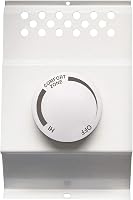
A traditional mechanical thermostat uses physical switching parts, often with a dial or lever. For a quick explanation of that control style, see [What Is a Mechanical Thermostat?
A Quick Overview](/what-is-a-mechanical-thermostat/).
What wiring should you check before choosing one?
Check the system wiring diagram and the thermostat’s supported terminals before you buy. Wire colors are not enough to confirm function, because installers can use different colors or label wires differently.
Turn off power to the heating and cooling equipment before removing a thermostat. Photograph the existing wiring and note each terminal label, then check those labels against the equipment manual.
Common heat pump connections may include:
| Terminal label | Common role | What to confirm |
|---|---|---|
| R or Rc | 24-volt power | Whether the system uses a jumper or separate power terminals |
| Y or Y1 | Compressor call | Whether the system has one or more compressor stages |
| G | Indoor fan | Whether the thermostat must control the fan separately |
| O or B | Reversing valve | Whether the valve is energized in cooling or heating |
| AUX or W | Auxiliary heat | Whether electric backup heat needs a separate call |
| E | Emergency heat | Whether the system has a separate emergency heat mode |
| L | System monitor | Whether the equipment uses a status or fault signal |
This table is a starting point, not a wiring plan. Follow the system diagram and thermostat instructions for the exact terminal mapping.
If the old thermostat has unfamiliar labels or unused wires, do not guess. Ask an HVAC technician to identify the controls before connecting a replacement.
Does the reversing valve need an O or B setting?
The thermostat must match the way the heat pump controls its reversing valve. Many systems use O or B wiring, but the correct setting depends on the equipment maker and configuration.
An O setup commonly energizes the valve in cooling; a B setup commonly energizes it in heating. Those labels are not a substitute for checking your system manual, because the specific equipment determines the correct choice.
A mismatch can make the system heat when cooling is requested or cool when heating is requested. If the equipment’s manual does not clearly identify the valve terminal or setting, have a technician confirm it.
How many heating and cooling stages does the thermostat need?
Choose a thermostat that supports at least the number of stages your equipment uses. A single-stage heat pump has different control needs from a system with two compressor stages and auxiliary heat.
Look at the outdoor unit and indoor air handler documentation for the stage count. The thermostat’s specifications should identify supported heat pump configurations, not just conventional heating and cooling.
The Honeywell TH6210U2001/U is described as supporting 2 heat / 1 cool heat pump setups, as well as 1 heat / 1 cool conventional systems. That makes it an option to compare when those controls match your equipment.
Do not assume that more supported stages automatically make a thermostat compatible. The terminal layout, reversing valve setting, backup heat, and any fuel switching still need to match.
Can a mechanical thermostat handle backup or dual fuel heat?
It can only do so when it has the right terminals and control logic for the backup system. Auxiliary electric heat and dual fuel equipment have different wiring and switching needs.
Auxiliary heat is often built into the indoor system and can run alongside the heat pump when needed. Emergency heat is a separate operating mode on some systems, so check whether your system uses distinct AUX and E terminals.
Dual fuel systems combine a heat pump with a furnace or another fuel source. Their controls must manage when to switch between heat sources; read [What Is a Dual Fuel System?
A Fast Answer](/what-is-a-dual-fuel-system/) to understand the basic setup.
The White-Rodgers 80 Series is a non-programmable heat pump thermostat whose product information says it works with heat pump models, including dual fuel control, with no outdoor sensor required. Compare thermostats for dual fuel heat pumps for other options.
Confirm that its supported wiring matches your specific heat pump and backup equipment.
Which non-mechanical options can you compare?
A thermostat can be simple to use without being a mechanical dial model. Non-programmable digital and smart controls may offer heat pump support, but you still need to verify their terminals and system compatibility.
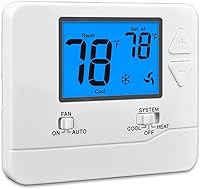
The White-Rodgers 80 Series is non-programmable and has a backlit display, keypad lockout, and adjustable temperature limits. Its manufacturer information describes compatibility with heat pump models, including dual fuel control.
The Honeywell T6 Pro is programmable and its stated configuration includes 2 heat / 1 cool heat pump support. It may be worth comparing when your heat pump needs those stages and you prefer scheduled control.
Compare more programmable thermostats for heat pumps if you want scheduled control.
For more options, see best heat pump thermostats for home and best Honeywell thermostats for heat pumps. If you want a physical barrier around a wall control, our best metal thermostat lock box guide covers guards and lock boxes.
How do you choose the right mechanical heat pump thermostat?
Choose by the wiring and controls your system requires, then decide whether a mechanical dial is essential. A heat pump compatible thermostat with the right reversing valve, stage, and backup heat support matters more than its display style.
Use this short checklist:
- Find the heat pump and air handler model numbers.
- Check the wiring diagram for the reversing valve, stages, and backup heat.
- Record the current thermostat’s terminal labels.
- Confirm that the replacement supports the same configuration.
- Ask a technician to verify uncertain wiring before installation.
If your system is heat only in an RV or small furnace, use a thermostat designed for that setup instead. See best RV heat only thermostats for RV furnaces or millivolt thermostat for pellet stove for those distinct applications.
A mechanical heat pump thermostat is a fit only when it supports your equipment’s exact controls. Choose a compatible mechanical model if you want simple manual adjustment; choose a digital or smart option if its supported wiring better matches your system.
Frequently asked questions
Can a mechanical thermostat control a heat pump?
Yes, if the thermostat is designed for heat pump wiring and supports the equipment’s reversing valve, heating and cooling stages, and backup heat. A basic heat-only or conventional thermostat may not control those functions.
Check the wiring diagram and equipment instructions before replacing one.
Does a heat pump thermostat need an O or B terminal?
Many heat pump systems use a reversing-valve control wire labeled O or B, but the correct signal depends on the equipment. Match the thermostat’s supported terminal and configuration to the heat pump’s wiring diagram, and confirm whether the system energizes the valve in heating or cooling.
Can a mechanical thermostat control auxiliary heat?
Some thermostats designed for heat pumps can call for auxiliary or emergency heat, while basic mechanical models may not support it. Check the thermostat’s wiring diagram for the required auxiliary heat terminals and confirm the heat pump’s backup heat setup before choosing.
Is the White-Rodgers 80 Series a mechanical thermostat?
The White-Rodgers 80 Series is a non-programmable heat pump thermostat, not a traditional mechanical dial thermostat. Its product information says it works with heat pump models, including dual fuel control, and does not require an outdoor sensor.
What should I check before replacing a heat pump thermostat?
Record the existing wire labels and check the heat pump and backup heat manuals before disconnecting anything. Confirm the thermostat supports the reversing valve, number of heating and cooling stages, auxiliary or emergency heat, and any dual fuel control your system uses.