Can a Young Living Diffuser Humidify a Room?
A Young Living diffuser can add a small amount of moisture, but it is not a room humidifier for dry air. Its tank and output are built for scent, so a whole house or large room still needs a true humidifier.
On this page (9 sections)
- Can a Young Living diffuser humidify a room?
- Why does a diffuser miss the mark for dry air?
- How much moisture does a room actually need?
- How do humidifiers and diffusers differ?
- Is a humidifier young living option enough for a bedroom?
- When should you choose a real humidifier instead?
- Can you use scent with a real humidifier?
- What should you do before you buy?
- What is the bottom line for humidifier young living buyers?
A Young Living diffuser will not humidify a room the way a real humidifier does. This humidifier young living question comes down to output, tank size, and coverage.
A diffuser is made to scent a small area, not to lift the humidity of a dry bedroom or living room.
That does not mean the diffuser does nothing. It puts water into the air as a fine mist.
The amount is just small, and the tank often empties before the room changes much. If dry skin, static, or cracked wood are the problem, you need a device built for that job.
Can a Young Living diffuser humidify a room?
No, not for normal room humidification needs. A room humidifier is rated for room size and daily water output.
A diffuser is rated for scent throw and runtime on a small tank.
Think of the difference in use. You might run a diffuser for one to three hours while you read.
A humidifier may need to run for many hours to keep a hygrometer steady. When the heat is on and indoor air is dry, that gap shows fast.
Measure instead of guessing. Place a hygrometer 6 to 10 feet from the mist.
Run the diffuser, then check the reading after an hour. If the number barely moves, the device is doing scent work, not humidification.
Why does a diffuser miss the mark for dry air?
A diffuser tank is too small for whole room output. Even a larger diffuser holds a fraction of what a console or whole house humidifier holds.
Once the tank is empty, the mist stops.
Runtime matters as much as tank size. Ultrasonic diffusers use little power, but they still empty a small reservoir in a few hours.
If you sleep eight hours, you may wake to dry air again. Many owners solve that by pairing a diffuser with a humidifier for dry air that can run through the night.
Placement also limits results. A diffuser on a nightstand mostly changes the air right around the bed.
A humidifier placed for room coverage spreads moisture more evenly. Keep any mist away from bedding, electronics, and wood surfaces.
How much moisture does a room actually need?
It depends on room size, outside weather, and how much air you lose. A small closed bedroom needs less water than an open living room in winter.
A hygrometer gives you a real target instead of a guess.
Start with a reading when the heat has run for a while. If the room sits well under 40 percent, dryness is likely part of the problem.
Raise humidity in small steps and check for condensation on cold windows. Too much moisture can cause its own issues.
A diffuser can be part of the routine for scent. It should not be the only plan when the hygrometer stays low.
That is where a humidifier with a larger tank and a stated coverage area earns its place.
How do humidifiers and diffusers differ?
Humidifiers move more water and diffusers move more scent. Both can use ultrasonic plates, but the tank, controls, and coverage claims are different.
| Feature | Typical diffuser | Typical room humidifier |
|---|---|---|
| Main job | Scent | Room humidity |
| Tank size | Small | Medium to large |
| Runtime | Hours | Overnight or longer |
| Coverage claim | Desk or bedside | Room or whole house |
| Oil use | Common | Only if maker allows |
Some humidifiers also accept oils or have a scent tray. That is not the same as putting oil in the water tank of every model.
Our guide on humidifier oil scents explains where oils belong and where they can harm a tank.
A best humidifier with essential oil diffuser is a compromise for some buyers. It gives real humidification first, then scent as a second job.
Check the maker directions before adding any oil.
Is a humidifier young living option enough for a bedroom?
For a small bedroom, a diffuser may feel like enough, but readings tell the truth. If the room is small, the door stays closed, and the air is only slightly dry, scent mist can raise the local reading a bit.
For a larger bedroom, an open door, or a cold climate, the effect fades. The diffuser also stops when the tank runs dry.
A true humidifier sized for the room can keep going without a refill at midnight.
Consider noise and light too. Some diffusers have bright lights or a fan sound that bothers light sleepers.
A humidifier can be noisy as well, so check placement and fan settings. The right device is the one you will actually run each night.
A novelty style can still scent a bedside area. Our roundup of the best jellyfish humidifier diffuser covers that kind of pick.
Treat it as a scent and decor device unless the tank and coverage specs say more.
When should you choose a real humidifier instead?
Winter dryness in a whole house
Choose a whole house humidifier when dryness affects the whole home. A furnace humidifier feeds moisture through ducts, so every room gets help.
That approach suits homes where static, dry throats, and cracked wood show up in more than one room.
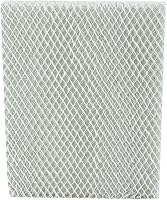
Whole house systems use pads or water panels that need care. The Honeywell Home HC26P Whole House Humidifier Pad is a paper pad measuring 10 x 13 x 1.5 inches.
It fits Honeywell Home humidifier models HE200, HE250, HE260, HE265, HE280, HE300, HE360, and HE365.
Honeywell Home says the pad helps distribute moisture more evenly through the home. The maker also says to change it twice a year.
That schedule matters, since a clogged pad can cut output even when the system still runs.
A panel that needs regular swaps
Choose a water panel replacement when your AprilAire system is the humidifier. Panels absorb water and help evaporation as furnace air passes over them.
Old panels can scale up, restrict airflow, and drop output.
The AprilAire 10 Water Panel Humidifier Filter Replacement comes as a pack of 2 for AprilAire models 110, 220, 500, 500A, 500M, 550, 550A, and 558. Each panel measures 9.5 x 9.75 x 1.75 inches and uses aluminum mesh with a porous ceramic-type coating.
AprilAire says to replace the panel twice during the season for top performance. A 2 pack can cover that plan.
Keep the old panel size handy, since a panel that is even slightly off may not seat well.
A valve that controls water flow
Choose a solenoid valve when water flow to the humidifier is the fault. A valve opens and closes the water supply.
If it sticks, the humidifier may get too little water or may leak.
The AprilAire 4040 Solenoid Valve is a 24 volt part for AprilAire models 400, 400M, 500, 500M, 600, 600M, 558, 550A, 550, 568, 560A, 560, 700, 700M, 768, 760A, and 760. It includes an in-line strainer, compression sleeve, and compression nut.
AprilAire says this valve controls the amount of water that enters the humidifier. Match the model list before you order.
A valve is not a general fix for a panel, a pad, or a humidifier motor.
Can you use scent with a real humidifier?
Yes, but only in the way the maker allows. Some humidifiers have a tray for scent pads or oil.
Others warn against oil in the tank.
The rule is simple: follow the humidifier directions, not the diffuser habit.
Oil in the wrong tank can coat parts, change output, and leave residue that is hard to clean. Hard water can also leave white dust with ultrasonic units.
Distilled water may reduce that issue, but it does not replace cleaning.
If scent is a must, look for a model with a separate tray. Our guide to the best warm mist humidifier with essential oil tray shows that setup.
Warm mist is not for every room, so check heat and placement before you buy.
What should you do before you buy?
Check room size, tank size, runtime, and oil rules before you spend. Those four items decide whether the device will help or just scent the air.
- Measure the room and note ceiling height.
- Write down the hygrometer reading with no device running.
- Compare tank size and daily output, not just looks.
- Check if oils go in the tank, a tray, or nowhere.
- Plan cleaning and pad or panel changes in advance.
- Place the unit where mist can spread without hitting walls or bedding.
If a diffuser already sits on your nightstand, keep it for scent and add a humidifier for humidity. That split often costs less than replacing a diffuser that was never built for the job.
It also lets you run scent for an hour and humidity all night.
What is the bottom line for humidifier young living buyers?
Use a Young Living diffuser for scent, and a real humidifier for dry air. That choice respects what each device was built to do.
It also stops you from chasing a quick fix that cannot hold a room reading.
Pick a diffuser if scent and mood are the goal and the room is only slightly dry. Pick a room humidifier if the hygrometer stays low, the tank must last overnight, or dryness affects more than one room.
Pick a whole house system if ducts can carry moisture to every space.
For scent plus humidity in one unit, compare the best humidifier with essential oil diffuser options and check the oil rules. For a desk or bedside scent device, the best jellyfish humidifier diffuser list fits that narrower job.
Either way, let the hygrometer make the final call.
Frequently asked questions
Can a Young Living diffuser humidify a bedroom?
A Young Living diffuser can raise moisture a little near the desk or bedside, but it will not hold a whole bedroom at a steady humidity level in dry weather. If a hygrometer stays low, use a humidifier sized for the room and keep the diffuser for scent.
How long will a diffuser tank last?
Tank size and mist setting decide runtime, and most small diffusers run for hours rather than all night on high. Check the water line before bed, choose a lower setting if you want longer runtime, and refill with plain water.
A larger humidifier tank lasts far longer.
Is a diffuser safer than a humidifier with oils?
Neither is automatically safer. Oils can coat a tank, and ultrasonic mist can carry residue from hard water, so both need cleaning and fresh water.
Follow the maker directions for oils, keep mist away from faces, and ventilate the room.
What humidity level should I aim for indoors?
Many indoor air guides point to roughly 40 to 60 percent relative humidity for comfort and home care. Use a hygrometer away from the mist outlet, adjust the humidifier in small steps, and avoid condensation on windows.