How to Fill a Honeywell Humidifier
Fill a portable Honeywell humidifier by removing its tank, adding water to the marked fill line, and replacing it securely. Whole-house Honeywell models connect to a water supply and use a water panel instead of a removable tank.
On this page (10 sections)
- How do you fill a Honeywell humidifier?
- How do Honeywell tank designs differ?
- How do you refill a Honeywell warm-mist humidifier?
- How do you fill a Honeywell whole-house humidifier?
- How much water should you add?
- What water should you use in a Honeywell humidifier?
- How do you avoid leaks after refilling?
- How often should you clean and refill it?
- How do you choose a Honeywell refill method?
- How to fill a Honeywell humidifier safely
To fill a Honeywell humidifier, add water to the tank's marked fill line, secure the cap if the model has one, and place the tank back on its base. The exact process depends on whether your Honeywell unit is top-fill, bottom-fill, a warm-mist model, or a whole-house system.
Check the model label and manual before adding water. Honeywell uses several tank designs, so a method that works for one portable humidifier may not fit another.
How do you fill a Honeywell humidifier?
Remove the tank only when your model's instructions call for it, then fill with clean water up to the marked line. Keep water away from the control panel, power cord, and electrical base.
Use these steps for most portable Honeywell humidifiers:
- Turn the humidifier off and unplug it.
- Remove the tank or open the top-fill lid.
- Add water to the fill line.
- Close the lid or tighten the tank cap.
- Check that the tank sits level and securely on the base.
- Plug the unit in and select the desired setting.
Don't force a tank into place. If water leaks after installation, turn the unit off, remove the tank, check the cap and gasket, and reseat the tank.
For a broader process that covers other brands and designs, see how to fill a humidifier.
How do Honeywell tank designs differ?
Top-fill Honeywell humidifiers accept water through an opening at the top, while bottom-fill models require the tank to be removed and inverted. Some units use a separate tank, and others combine the tank and top reservoir.
A top-fill unit is usually the simplest design for daily refills. Open the lid, pour water into the reservoir, and stop at the marked line.
A bottom-fill tank needs more handling. Remove it from the base, carry it to the sink, turn it upside down, unscrew the cap, fill it, tighten the cap, and return it upright.
A tank with a wide opening is easier to clean because you can reach more of the interior. If easy maintenance matters, compare our guide to the best humidifier easy to clean.
How do you fill a Honeywell top-fill humidifier?
Open the top reservoir and pour water directly into it without passing the maximum line. Keep the tank cover and surrounding surface dry before starting the unit.
Pour slowly near the opening to avoid splashing. If the unit has a separate mist outlet, don't pour water into that opening.
Top-fill models can suit people who refill often or have trouble lifting a full tank. A large-capacity design may reduce refill trips, but it can also be heavier to carry when full.
See the guide to top fill humidifier large capacity options for the trade-off.
How do you fill a Honeywell bottom-fill tank?
Remove the tank, turn it upside down, open the cap, and fill it at the sink. Tighten the cap before turning the tank upright again.
Inspect the cap and seal for mineral buildup before replacing the tank. A loose cap can cause dripping beneath the unit.
Carry a full tank with both hands when needed. Keep the tank upright while walking back to the base so water does not spill through the cap area.
How do you refill a Honeywell warm-mist humidifier?
Turn off and unplug a warm-mist Honeywell humidifier, then allow hot water and internal parts to cool before refilling. Never add water while the heating chamber is operating or hot.
Warm-mist designs heat water, so they need extra care around steam and hot surfaces. Follow the manual for the cooling period and cleaning steps.
Use a stable sink or counter for the refill. Wipe away spills before reconnecting power, and keep children away from the unit during operation.
If you use a different warm-mist model, our guide explains how to use a Vicks warm-mist humidifier. The controls differ, but the need to let heated parts cool remains important.
How do you fill a Honeywell whole-house humidifier?
A whole-house Honeywell humidifier usually fills through a water line, not a removable tank. The furnace system sends water across a humidifier pad or panel, and the HVAC airflow carries moisture through the ducts.
Before servicing, switch off the humidifier and follow the shutoff instructions for the water supply. Do not pour water into a whole-house cabinet unless the model manual specifically directs you to do so.
What does a Honeywell humidifier pad do?
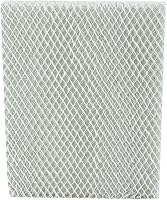
A whole-house pad holds water so moving furnace air can absorb moisture. The Honeywell Home HC26P whole-house humidifier pad measures 10 x 13 x 1.5 inches, uses paper, and fits Honeywell Home models HE200, HE250, HE260, HE265, HE280, HE300, HE360, and HE365.
Honeywell Home recommends changing this pad twice during the heating season to support moisture distribution. Confirm your model before ordering because a pad's dimensions and compatibility must match the cabinet.
What if an AprilAire panel is in the system?
An AprilAire whole-house humidifier uses a water panel rather than a portable tank. The AprilAire 10 Water Panel Humidifier Filter Replacement is a 2-pack for models 110, 220, 500, 500A, 500M, 550, 550A, and 558.
Each panel measures 9.5 x 9.75 x 1.75 inches and uses aluminum mesh with a porous, ceramic-type coating. AprilAire recommends replacing the panel twice during the season, so a 2-pack supports two replacement intervals.
This type of part does not replace the water supply or turn a whole-house unit into a tank humidifier. It supports the evaporation process after water reaches the humidifier.
When would a solenoid valve affect filling?
A solenoid valve controls water entering a whole-house humidifier. The AprilAire 4040 Solenoid Valve is a 24-volt replacement part for AprilAire models 400, 400M, 500, 500M, 600, 600M, 558, 550A, 550, 568, 560A, 560, 700, 700M, 768, 760A, and 760.
The package includes the 4040 valve, 4004 inline strainer, compression sleeve, and compression nut. Because this part connects to a water supply and 24-volt system, use the model manual or a qualified HVAC professional if you are unsure about installation.
How much water should you add?
Add only enough water to reach the tank's fill line, never above it. Overfilling can cause spills when you carry the tank or seat it on the base.
A tank's capacity does not tell you how long the humidifier will run. Mist level, room size, humidity, airflow, and the unit's operating mode all change refill timing.
For a room with very dry air, the humidifier may use water faster at a higher output. Our guide to a humidifier for dry air explains how room conditions affect your choice.
What water should you use in a Honeywell humidifier?
Follow the water instructions for your exact Honeywell model. Some portable humidifiers allow tap water, while others work better with distilled or demineralized water when mineral buildup is a concern.
Minerals can collect around the tank, base, mist outlet, or heating area. Cleaning frequency depends on the water source and how often you run the humidifier.
Never add fragrance oil, essential oil, or cleaning solution unless the manual specifically says the unit supports it. A separate diffuser is not the same as a humidifier reservoir.
How do you avoid leaks after refilling?
Check the cap, gasket, tank position, and fill line before turning the humidifier on. A leak often starts with a cap that is cross-threaded, a seal with buildup, or a tank that is not seated correctly.
Place the humidifier on a level, water-resistant surface with space around the mist outlet. Keep it away from electronics, books, and surfaces that can swell or stain.
Inspect the floor after the first few minutes of operation. Stop the unit if water collects around the base or if the tank drains unusually fast.
How often should you clean and refill it?
Refill when the tank is empty, but clean on the schedule in the Honeywell manual rather than waiting for visible scale. Empty standing water when the unit will sit unused.
Rinse the tank and reservoir as directed. Avoid abrasive tools that could damage plastic surfaces or seals.
Whole-house systems need a different maintenance routine. Replace the pad or water panel when required, keep the water path clear, and have electrical or plumbing work handled by someone qualified when needed.
How do you choose a Honeywell refill method?
Choose a top-fill Honeywell model if you want to pour water directly into the reservoir. Choose a bottom-fill design if its tank size and placement suit your room, but expect to remove and carry the tank for each refill.
Choose a whole-house system if you need ducted humidification rather than a portable tank. Its water line, pad, panel, and control system require model-specific maintenance.
For a short decision guide, compare top fill humidifier options and check whether your room needs the larger coverage discussed in Honeywell humidifier large room.
How to fill a Honeywell humidifier safely
For how to fill a Honeywell humidifier, first identify the tank design. Add water to the marked line for a top-fill unit, remove and invert a bottom-fill tank, and never hand-fill a whole-house model unless its manual says to do so.
Use the correct pad, panel, or valve when maintaining a ducted system. Empty standing water, clean the unit as directed, and stop using it if the tank leaks or the water connection needs repair.
Frequently asked questions
How often should you fill a Honeywell humidifier?
Fill a portable Honeywell humidifier whenever the tank is empty or the low-water light turns on. The timing depends on the tank size, mist setting, room conditions, and runtime.
Whole-house Honeywell humidifiers usually receive water through a supply line, so they do not need daily tank refills.
Can you fill a Honeywell humidifier from the top?
Yes, if your Honeywell model has a top-fill opening or removable top reservoir. Add water through the marked opening without exceeding the fill line.
A bottom-fill design requires you to remove the tank, turn it over, open the cap, fill it, close it firmly, and return it to the base.
Should you use distilled water in a Honeywell humidifier?
Use the water type recommended in your Honeywell manual. Distilled water can reduce mineral deposits in portable humidifiers, while tap water may be allowed on some models.
If you use tap water, clean the unit as directed and check our guide to using tap water in a humidifier.
How do you fill a whole-house Honeywell humidifier?
You normally don't fill a whole-house Honeywell humidifier by hand. A water line feeds the unit when the humidistat calls for moisture, and a water panel or pad supports evaporation.
Turn off power and water before servicing, then follow the model manual or use a qualified HVAC professional.