How to Choose a Whole House Humidifier Combo
A whole house humidifier dehumidifier combo should use separate equipment and controls sized for your home's seasonal moisture needs. Match the humidifier to your furnace, water supply and square footage, then choose dehumidifier control and drainage around your home's dampest conditions.
On this page (6 sections)
- How does a whole house humidifier and dehumidifier work?
- What should you check before choosing a combo system?
- Which humidifier components help with setup and care?
- Should you buy a matched brand system?
- How should you plan installation and maintenance?
- What is the best whole house humidifier and dehumidifier choice?
A whole house humidifier dehumidifier combo should combine separate moisture-addition and moisture-removal equipment with controls that match your HVAC system. The goal is steady seasonal control, not running both functions at the same time.
Winter air can become too dry, while summer cooling may leave the home damp. Start by identifying when the problem occurs, which rooms are affected and whether your furnace or air conditioner can support added equipment.
Dry air is often a heating season problem, while damp air often shows up in cooling season when outdoor air brings in moisture and the air conditioner runs in short cycles. Make a short list of rooms that feel dry or damp first.
Note the type of furnace and air conditioner, the age of the ductwork, and whether there is easy space near the equipment for a humidifier, a dehumidifier and their water connections. Consider how you like to manage the home day to day.
Some people prefer a simple manual setting they can adjust themselves, while others want a control that can change with the season and respond to indoor readings. If you need help with the humidifying side first, compare this humidifier for dry air guide.
You can also review our best whole house humidifier picks before choosing a system. That starting check saves time later and helps you set a sensible humidity target that can shift with outdoor temperature.
Use this section as a filter, not as a final decision. The sections that follow explain how the equipment works and how to match each choice to the system already in your home.
How does a whole house humidifier and dehumidifier work?
A whole house humidifier adds moisture to moving air, while a whole house dehumidifier removes moisture and sends drier air through the home. The two functions need different equipment, drainage and control signals, even when they share ductwork.
A furnace-mounted humidifier commonly uses water and warm forced air. An evaporative model moves air across a wet water panel, then circulates the added moisture through the ducts.
In daily use, the humidifier only works well when the furnace system is moving air as expected. If airflow is low or the humidifier is poorly positioned, moisture may not spread evenly through the home.
Dehumidification uses cooling, a dedicated dehumidifier, or another approved HVAC method to collect moisture. The installation must include a safe way to dispose of condensate.
That drain matters more than many homeowners expect. Condensate needs a clear route away from the equipment, and the route should be easy to check and clean during regular HVAC service.
A system that only has a humidity dial is not automatically a complete combo. Check whether the control can call for humidification, dehumidification or both, and confirm how those calls connect to the HVAC equipment.
A humidifier control may only start a water valve and a fan, while dehumidification may need a separate signal for a dehumidifier, a blower, or a cooling coil. Ask who coordinates those signals in your home.
A smart thermostat or a dedicated humidity control may help, but it still needs compatible terminals, wiring and equipment that can respond to each call. In shoulder seasons, when outdoor conditions sit between dry and damp, the control should also allow both sides to rest.
Service access affects how well the system is cared for over time. Pads, water panels, valves and drain traps all need inspection, so equipment tucked behind storage or hard to reach parts tend to be checked less often.
Size matters on both sides of the combo. A humidifier sized for one square footage range may be wrong for a tighter or leakier home, and a dehumidifier needs enough capacity for the dampest rooms it serves.
That is why planning starts with the home and the HVAC system, not with a single product name. When airflow, water, drain and control paths are clear, the choice of equipment becomes much simpler.
What should you check before choosing a combo system?
Check airflow, water, drainage, controls and service access before comparing equipment. These details often determine whether a whole house humidifier and dehumidifier can work together in your home.
Does your HVAC system support a whole house humidifier dehumidifier?
Identify whether your home has forced-air heating, central cooling, or both. A furnace-mounted humidifier depends on compatible airflow, while a whole-house dehumidifier may need its own duct connections and condensate drain.
Our guide to What HVAC Systems Work with Smart Thermostats? can help you understand the control side. A smart thermostat may coordinate equipment only when its terminals and software support the required humidity functions.
Where will water enter and leave the system?
A humidifier may need a water line and a drain for excess water. A dehumidifier collects condensate, so it also needs a drain route or another approved method for removing water.
Plan these routes before selecting the equipment location. A convenient service position is better than placing the unit where filters, pads, valves or drain connections are difficult to reach.
How will you control seasonal changes?
Choose controls that let you set a humidity target and change it as outdoor conditions change. You may need more moisture during heating season and less during cooling season.
Avoid treating the number on a control as proof that every room has the same humidity. Room location, air circulation, insulation and closed doors can create different conditions throughout the home.
Which humidifier components help with setup and care?
The best components depend on your existing equipment. A replacement pad helps maintain a compatible humidifier, a valve controls water flow, and a complete humidifier provides the main moisture-addition hardware.
Honeywell Home HC26P Whole House Humidifier Pad
The Honeywell Home HC26P is compatible with Honeywell Home HE200, HE250, HE260, HE265, HE280, HE300, HE360 and HE365 humidifier models. It is an evaporative pad designed to distribute moisture through the humidifier.
Its dimensions matter because the pad must fit the existing cabinet. Confirm the model and measure the old pad before ordering.
The pad is a maintenance part, not a complete whole house humidifier. Use it when your current Honeywell Home equipment already matches one of the compatible models.
For more model-specific advice, see our AprilAire 600 Humidifier Review. If you are comparing evaporative systems, our best whole-house evaporative humidifier guide covers that equipment type.
AprilAire 4040 Solenoid Valve
The AprilAire 4040 Solenoid Valve works with AprilAire models 400, 400M, 500, 500M, 600, 600M, 558, 550A, 550, 568, 560A, 560, 700, 700M, 768, 760A and 760.
It includes the 4040 valve, 4004 inline strainer, compression sleeve and compression nut. The valve controls the water entering the humidifier, so it belongs to the humidification side of the system rather than the dehumidifier side.
Match the model and voltage before installation. Electrical and water connections should be handled according to the equipment instructions and local requirements.
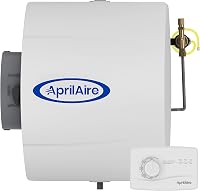
AprilAire 500M Whole-House Humidifier
The AprilAire 500M is designed for homes up to 3,600 sq. ft. in tightly built homes and has a 12 gallons per day capacity. Its manual control uses a built-in sensor to monitor indoor relative humidity while you set the humidity level.
The unit measures 10.25 x 15.63 x 13 in and uses a furnace airflow path. It includes a 24 VAC transformer, humidifier control, valves and installation instructions.
AprilAire also describes the system as using a water panel evaporator. Dry furnace air moves across the moisture-laden panel, and the resulting humidified air travels through the home's distribution system.
This model suits a buyer who wants a furnace-mounted humidifier with manual control. It does not replace a whole-house dehumidifier, so plan separate equipment for moisture removal.
For other furnace-mounted options, see our best furnace mounted whole house humidifier guide. If you use a different brand of humidifier, check the correct Vornado humidifier filter replacement before ordering any maintenance part.
Should you buy a matched brand system?
A matched brand system can simplify model compatibility, but the brand name alone does not confirm that every component works together. Match the humidifier, pad, valve, control and HVAC connections by model and electrical requirements.
The Honeywell Home pad is for specific Honeywell Home humidifiers. The AprilAire 4040 valve is for a defined group of AprilAire models, including the AprilAire 500M.
That model matching is the core of the decision. A pad must fit the cabinet it serves, a valve must match the voltage and water connections of the humidifier, and a control must speak to the equipment it calls.
The Honeywell Home HC26P is listed for HE200, HE250, HE260, HE265, HE280, HE300, HE360 and HE365. Owners of those models can check fit by name before they order, rather than relying on brand alone.
The AprilAire 4040 covers a long list of AprilAire models, including the 500M. That list is still a limit, not a general pass for every AprilAire product.
Sticking with one brand can make upkeep simpler at home. When the humidifier, pad and valve come from the same family, it is easier to confirm the right part, follow the same care schedule and keep spares that match the installed unit.
A mixed-brand installation may still be possible when the controls and equipment are designed for it. Compatibility must be confirmed before wiring or plumbing, and a similar shape does not prove a fit.
Similar shape is a common trap with pads and panels. Small differences in depth, width or height can stop a part from seating correctly, and poor fit can reduce the even spread of moisture through the humidifier.
Electrical matching deserves the same care. A valve rated for 24 VAC should not be swapped into a system with different power needs, and control wiring should follow the equipment instructions rather than guesswork.
Water connections also need a second look. Compression sleeves, nuts, strainers and supply lines must match the valve and the humidifier they serve, and any leak can create damage near the furnace.
Our best Honeywell whole house humidifier guide is useful if you already have Honeywell Home equipment. It can help you keep the humidifier and its maintenance parts within one system family.
In short, brand is a helpful starting point, but model numbers do the real work. Check the model list, confirm the fit and voltage, and leave room for service before you commit to a matched system.
How should you plan installation and maintenance?
Plan the installation around service access, airflow and water management. Leave room to inspect the pad, clean components, check the drain and reach the control connections.
Use the humidifier during the season when indoor air becomes dry, then lower or disable humidification when the home no longer needs added moisture. Dehumidification may be needed during warmer, damp periods.
Start the humidifier season with a simple inspection. Check the pad or water panel for mineral buildup, confirm the water line is clear, and make sure the cabinet and drain path are clean before the first call for moisture.
During the season, watch how the home responds rather than chasing a single number. If rooms feel comfortable and windows stay clear, the setting is likely in a good range for current outdoor conditions.
Inspect windows, exterior walls and rooms that often feel damp. Condensation can show that the humidity target is too high for current outdoor conditions, while static or dry-feeling air can signal that the home needs more moisture.
Cold weather calls for extra care with window moisture. As outdoor temperatures drop, the same indoor humidity level can cause more condensation, so lowering the target a little may protect the home while keeping air comfortable.
Replace humidifier pads according to the compatible part's guidance. The Honeywell Home HC26P is intended for twice-yearly replacement, while other models may use different parts and schedules.
Treat that twice yearly rhythm as a maintenance habit, not just a shopping reminder. Mark the dates, inspect the old pad when you remove it, and note whether buildup looks normal for your water or heavier than expected.
For the dehumidifier side, keep condensate drains clear and confirm that water flows away from the equipment. A slow drain can turn a small problem into water damage, especially near a furnace or electrical parts.
If a drain backs up, shut down the affected equipment and arrange service rather than allowing water to collect near the furnace or electrical parts. That pause protects the home while a professional finds the blockage or slope problem.
Plan for the off season as well. When humidification ends, clean and check the humidifier so it is ready for the next dry period, and confirm dehumidifier drainage before damp weather returns.
Leave access after installation, not just during it. Future service will need room to remove a pad, reach a valve, open a trap and inspect wiring, so storage should not crowd the equipment.
What is the best whole house humidifier and dehumidifier choice?
The best choice depends on the season and the equipment already in your home. Choose the AprilAire 500M when you need a manual furnace humidifier for a tightly built home up to 3,600 sq. ft.; choose the Honeywell Home HC26P when you need a compatible replacement pad; choose the AprilAire 4040 when a compatible AprilAire humidifier needs a replacement water valve.
For the complete combo, plan the dehumidifier separately. Confirm the HVAC connections, humidity controls, condensate route and service access before selecting equipment.
A humidifier adds moisture for the dry season, a dehumidifier removes it for the damp season, and neither one should be treated as a substitute for the other. None of those three choices removes the need to plan dehumidification.
If your home already has a Honeywell Home humidifier in the compatible list, the HC26P is the simple maintenance choice. It is a 10 x 13 x 1.5 inch paper pad meant to be changed twice a year.
If your AprilAire humidifier needs a water valve, the 4040 is the focused repair choice. It is a 24 VAC valve for a defined list of AprilAire models, and it includes the strainer, sleeve and nut needed for install.
If you are starting the humidifying side from scratch and want manual control, the AprilAire 500M is the whole unit choice. It is a compact furnace humidifier for homes up to 3,600 sq. ft. in tightly built homes, with 12 gallons per day capacity.
Its built-in sensor monitors indoor relative humidity, and the manual control lets you adjust the setting as outdoor conditions change. The unit uses a water panel evaporator, and dry furnace air passing over that panel carries moisture through the distribution system.
Match each part to the existing model, then have the full installation checked before operation. Before you buy, write down the humidifier model, the pad size, the valve voltage and the square footage range.
Frequently asked questions
Can one whole house humidifier dehumidifier combo use one control?
A whole house humidifier and dehumidifier may be coordinated by one home control system, but the equipment still needs separate humidity functions, wiring and drainage. Confirm that the control supports both moisture addition and removal, then have an HVAC professional check the furnace, ductwork and electrical connections.
What humidity level should a whole house system maintain?
Choose a moderate indoor humidity target and adjust it for outdoor temperature, condensation and comfort. A fixed setting may cause window moisture during cold weather or leave the home damp during cooling season, so use the control and observe the home's actual conditions.
Does a whole house humidifier need a furnace?
Many whole house evaporative humidifiers use forced-air furnace airflow to move moisture through the ducts. The AprilAire 500M is designed as a furnace humidifier, while other systems may use different airflow arrangements.
Confirm the equipment type before planning installation.
How often should a whole house humidifier pad be changed?
The Honeywell Home HC26P humidifier pad is intended to be changed twice a year. The correct interval depends on the humidifier model and water conditions, so match the replacement pad to the equipment and inspect it during seasonal maintenance.
Should I choose a portable or whole house dehumidifier?
Choose whole-house equipment when dampness affects several rooms or needs automatic ducted control. A portable unit may fit one room or a short-term problem, but it requires local placement, a drain plan and separate operation from your central HVAC system.