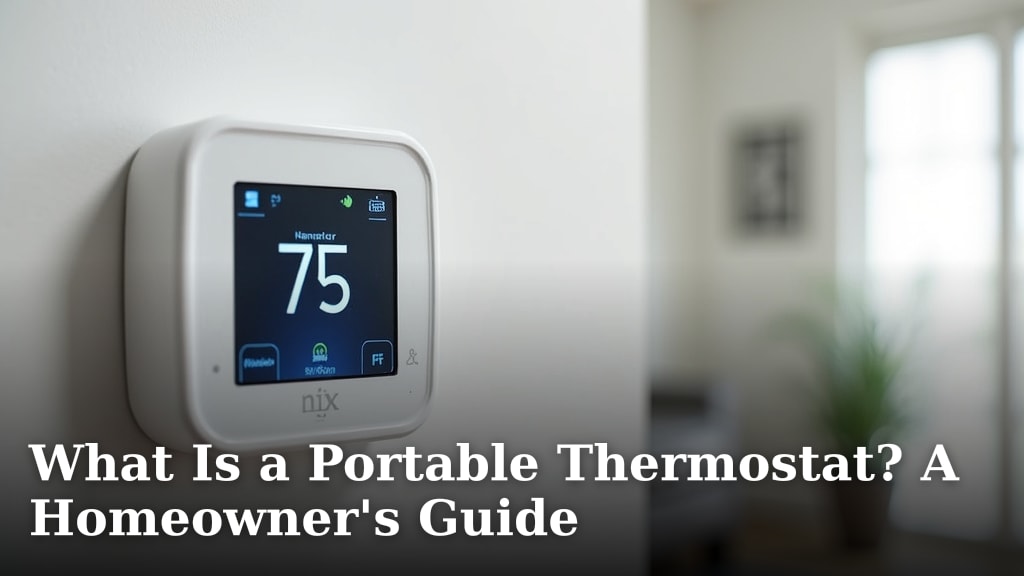
What Is a Portable Thermostat? A Homeowner’s Guide
A portable thermostat is a smart device that lets you control your home’s temperature remotely. You can adjust your heating and cooling from anywhere using a smartphone app. This makes it easy to save energy and stay comfortable without needing complex wiring.
Unlike traditional thermostats, these devices are wireless and easy to move. You can place them where you need them most for accurate readings. Many models offer features like scheduling and energy tracking. They are a simpler way to upgrade your home’s climate control.
- Portable thermostats offer remote temperature control.
- They are wireless and easy to install or move.
- Save energy by adjusting your home’s climate remotely.
- Features include scheduling and energy usage reports.
- A great option for renters or simple home upgrades.
Ready to learn more about how these handy devices work and if one is right for your home? Let’s walk through the basics to help you decide.
Understanding Your Portable Thermostat Options
So, what exactly is a portable thermostat, and how can it make your life easier? Think of it as a smart thermostat that isn’t tied down. You can move it around your home to get the most accurate temperature readings where it matters most. This is a big difference from those old thermostats usually stuck on a hallway wall. They might not reflect the actual temperature in your living room or bedroom. Portable models offer more flexibility for smarter climate control.
How Does a Portable Thermostat Work?
These devices typically connect wirelessly to your home’s heating and cooling system. Often, they use Wi-Fi to communicate. You’ll have a main unit that senses the temperature and a receiver that talks to your HVAC system. Many portable thermostats are battery-powered. This means you don’t need to worry about wiring them into your wall. They can be placed on a shelf, a table, or a stand. You then control them using a smartphone app. This app lets you set schedules, adjust the temperature, and monitor your energy use from anywhere.
Wireless Connectivity and Ease of Use
The wireless nature is a major selling point. Forget calling an electrician or dealing with complicated instructions. Most portable thermostats are designed for DIY installation. You just need to pair the thermostat unit with the receiver. This receiver then connects to your furnace or air conditioner. The app guides you through the setup process. It’s designed to be as straightforward as possible.
Remote Control Capabilities
Imagine leaving for work and realizing you left the heat on high. With a portable thermostat, you can simply open the app on your phone. You can then lower the temperature to save energy. Or, perhaps you’re coming home early on a cold day. You can turn on the heat from your car. This convenience means you can maintain comfort without waste. It’s a simple way to gain better control over your home’s environment.
Key Features to Look For
Not all portable thermostats are created equal. It’s smart to know what features can really benefit you. Think about what you want to achieve with a new thermostat. Do you want to save money on energy bills? Or are you mostly looking for added convenience?
Temperature Sensing and Placement
One of the biggest advantages is strategic placement. If your main thermostat is in a drafty entryway, it might be making your living room too cold. A portable unit can be placed in the room you’re using most. This ensures the system heats or cools the area where you are. Some models even come with wireless remote sensors. You can place these sensors in different rooms. The thermostat can then prioritize the temperature in the room with the sensor. This helps create more balanced comfort throughout your home.
Scheduling and Programmability
Most smart thermostats, including portable ones, allow for custom scheduling. You can program them to adjust the temperature automatically throughout the day. For example, you can set it to be cooler at night while you sleep. Then, it can warm up before you wake up. You can also schedule it to lower the temperature when you’re typically away from home. This feature is key for energy savings. Many experts suggest that a well-programmed thermostat can reduce heating and cooling costs by up to 10% annually (U.S. Department of Energy).
Energy Usage Monitoring
Want to see where your energy dollars are going? Many portable thermostats offer energy tracking features. The smartphone app can show you how much your heating and cooling system is running. It might even provide reports or tips on how to use less energy. This data can help you make informed decisions. You can adjust your schedule or habits to become more efficient. Understanding your usage is the first step to reducing it.
Smart Home Integration
Some advanced portable thermostats can connect with other smart home devices. This might include voice assistants like Amazon Alexa or Google Assistant. You could say, “Hey Google, set the thermostat to 70 degrees.” This adds another layer of convenience. It can also be helpful for accessibility. If you have trouble reaching or manipulating small buttons, voice control is a great option. Check the product specifications to see which smart home platforms are supported.
Who Can Benefit Most from a Portable Thermostat?
While anyone can enjoy the benefits, some homeowners will find a portable thermostat particularly useful. If you rent your home, for instance, you might not be allowed to make permanent changes to your wiring. A portable, wireless thermostat is a perfect solution. You can take it with you when you move. It’s also great for people who are new to smart home technology. They offer a simpler entry point compared to more complex systems. Plus, if you have an older home with outdated wiring, a portable option bypasses those issues entirely.
Renters and Temporary Dwellings
For those living in apartments or rental properties, making permanent modifications is usually not an option. Installing a traditional smart thermostat might require drilling holes or altering existing wiring. A portable thermostat, however, often requires no permanent installation. You can set it up easily and take it down when you move out. It’s a practical way to gain control over your energy use and comfort without violating your lease agreement.
Those Seeking Simplicity
Let’s face it, not everyone wants to spend hours figuring out complex gadgets. Portable thermostats are generally designed with user-friendliness in mind. The setup is usually straightforward, and the app interface is intuitive. If you’ve been curious about smart thermostats but felt intimidated by the options, a portable model might be the perfect starting point. You get the benefits of smart control without the hassle.
Homes with Inconsistent Temperatures
Do you have rooms that are always too hot or too cold? This is a common problem in many homes. Traditional thermostats measure the temperature at their location. If that location isn’t representative of the whole house, you’ll have issues. Portable thermostats, especially those with remote sensors, can solve this. You can place a sensor in the room you occupy most. This allows the system to adjust based on the actual comfort level where you are. This can lead to more consistent comfort throughout your home.
Making the Choice: Portable vs. Traditional Smart Thermostats
You might be wondering how a portable thermostat stacks up against a standard, wall-mounted smart thermostat. Both offer remote control and energy-saving features. The main differences lie in installation, flexibility, and sometimes, advanced features. Traditional smart thermostats are wired directly into your home’s HVAC system and power. They offer a permanent installation and often have more sophisticated features like geofencing (adjusting temperature based on your phone’s location).
However, portable thermostats shine in their ease of setup and mobility. You don’t need to worry about compatibility with existing wiring, which can be a major hurdle for some homeowners. If you’re unsure about your home’s wiring or plan to move in a few years, a portable option is often more practical. It offers many of the same smart benefits without the commitment of a permanent installation.
Here’s a quick comparison:
| Feature | Portable Thermostat | Traditional Smart Thermostat |
|---|---|---|
| Installation | Wireless, no wiring needed (battery-powered) | Requires wiring to HVAC system and power |
| Placement Flexibility | Can be moved easily, place sensor where needed | Fixed location on wall |
| Ideal For | Renters, temporary setups, simple upgrades | Homeowners, long-term installations, advanced features |
| Energy Savings | Yes, via scheduling and remote control | Yes, via scheduling, remote control, and sometimes geofencing |
| Advanced Features | Varies by model; some offer remote sensors, voice control | Often includes geofencing, more complex integrations |
When a Portable Thermostat Might Be a Better Fit
If you value simplicity and flexibility above all else, a portable thermostat is likely your best bet. It’s an excellent way to test the waters of smart home technology. You can enjoy remote control and energy savings without a complex installation process. Many people find that the ability to place a sensor in their primary living space makes a noticeable difference in comfort. This is especially true if their home has “hot” or “cold” spots.
Getting the Most Out of Your Portable Thermostat
Once you have your portable thermostat set up, there are a few things you can do to maximize its benefits. Think of it like getting a new tool; learning to use it properly helps you get the best results. Don’t just set it and forget it! Play around with the settings. Make sure it’s doing what you need it to do.
Optimize Your Schedules
Take some time to set up a detailed schedule. Consider your daily routine. When are you home? When are you sleeping? When is the house empty? Adjust the temperature accordingly. For example, many sources suggest lowering the temperature by 7-10 degrees Fahrenheit for 8 hours a day. This can lead to significant energy savings (U.S. Department of Energy). Your app should make this easy. Experiment until you find a schedule that balances comfort and savings.
Use Remote Sensors Wisely
If your model came with remote sensors, place them strategically. Put one in the room you use most often. If you have a nursery or a home office, consider placing a sensor there too. This helps ensure those areas are comfortable when occupied. The thermostat will then manage the heating and cooling based on these sensor readings. This smart placement avoids over-conditioning unused parts of your home.
Monitor Your Energy Reports
Make it a habit to check your energy usage reports. These reports can be eye-opening. They show you when your system is working the hardest. They might highlight days or times when you’re using more energy than usual. Use this information to refine your schedule or identify potential issues. For instance, if you see unusually high usage on a specific day, it might indicate an open window or door.
Here’s a quick checklist for optimizing your portable thermostat:
- Create a custom daily schedule based on your routine.
- Place remote sensors in rooms you use most often.
- Review energy usage reports regularly.
- Adjust schedules based on weather changes or new routines.
- Ensure the thermostat unit has good air circulation around it.
- Check for app updates to get the latest features.
Conclusion
A portable thermostat offers a straightforward way to gain smart temperature control. You get the convenience of remote adjustments and energy savings without complex wiring. This makes it an ideal solution for renters or homeowners looking for a simpler upgrade. By using features like scheduling and remote sensors, you can easily improve your home’s comfort and reduce energy waste. Take the next step by considering a portable thermostat to see how it fits your lifestyle and budget.
Frequently Asked Questions
Do I need my home’s Wi-Fi to use a portable thermostat?
Yes, most portable thermostats rely on your home’s Wi-Fi network to communicate with the smartphone app. This connection allows you to control the thermostat remotely from anywhere with internet access. Ensure you have a stable Wi-Fi signal in the area where you plan to place the thermostat.
Can a portable thermostat work with any heating and cooling system?
Generally, portable thermostats are designed to work with most standard HVAC systems. However, it’s essential to check the product’s compatibility with your specific furnace, air conditioner, or heat pump before purchasing. Always review the manufacturer’s specifications.
How do I know if I’m saving energy with a portable thermostat?
Many portable thermostats provide energy usage reports through their companion apps. You can track how often your system runs and identify patterns. By optimizing your schedules and using remote sensors effectively, you should see a reduction in your energy bills over time.
Are portable thermostats as accurate as wall-mounted ones?
Portable thermostats can be very accurate, especially if you place them in the main living area. Some models include remote sensors you can position in different rooms. This allows for more precise temperature readings in occupied spaces, potentially offering better comfort than a single, fixed thermostat.
What happens to my portable thermostat when I move out of a rental?
Portable thermostats are designed to be easily removed. You can simply disconnect the receiver from your HVAC system and pack up the thermostat unit. Because they don’t require permanent wiring, you can take your portable thermostat with you to your next home.