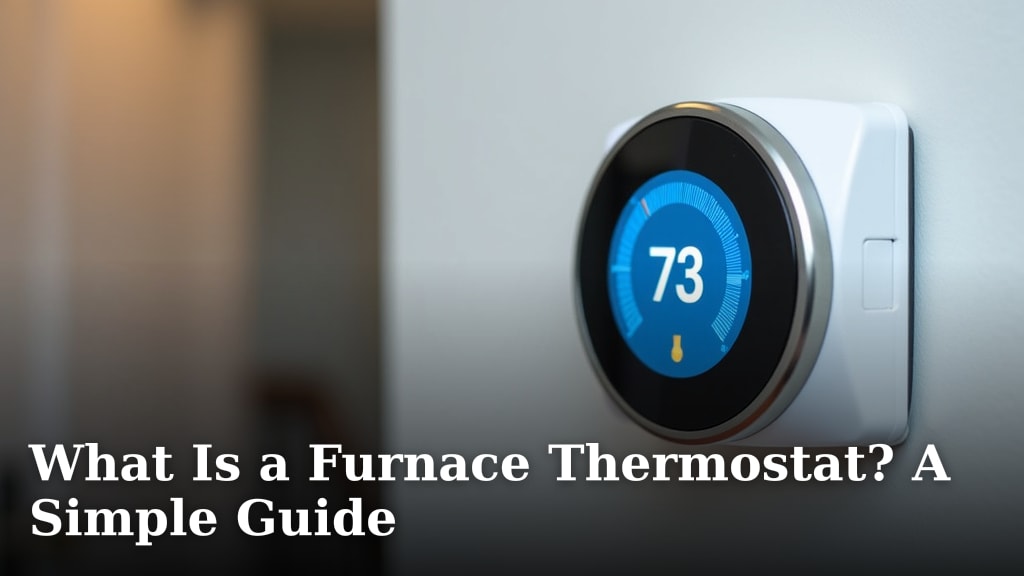
What Is a Furnace Thermostat? A Simple Guide
A furnace thermostat is a smart device that controls your home’s heating system. It’s essentially the brain of your furnace. You use it to set your desired temperature. It then tells your furnace when to turn on and off to maintain that heat. This keeps your home comfortable without wasting energy.
Think of your thermostat as the command center for your comfort. It’s not just a temperature dial anymore. Modern thermostats can learn your habits and adjust automatically. Some even connect to your Wi-Fi. This lets you control your home’s warmth from your phone. It’s a small device with a big impact on your energy bills.
- A furnace thermostat tells your heating system when to run.
- It’s how you set and maintain your home’s temperature.
- Modern thermostats offer energy savings and convenience.
- Some connect to Wi-Fi for remote control.
- It’s a key part of your home’s comfort system.
Ready to understand your thermostat better? Let’s break down exactly what it is and how it works to keep you cozy.
Understanding Your Furnace Thermostat’s Role
You have a furnace thermostat to control your home’s heating. It’s the device on your wall that lets you set the temperature. But how does it actually work? We’re going to break down the basics. You’ll learn what it is and why it’s so important for your comfort and energy use. Think of it as your home’s personal climate manager.
What Exactly Is a Furnace Thermostat?
A furnace thermostat is a temperature-sensitive device. It monitors the air temperature in your home. When the temperature drops below your setting, it signals your furnace to turn on. Once the desired temperature is reached, it tells the furnace to switch off. This simple on-and-off cycle is its primary job. It keeps your home at the temperature you prefer.
The Basic Components of a Thermostat
Most thermostats, even simple ones, have a few core parts. You’ll see a temperature sensor. This part measures the current room temperature. There’s also a control mechanism. This is where you set your desired temperature. Finally, there’s a switch. This switch connects to your heating system. It sends the “on” or “off” signals.
Temperature Sensor: The Thermostat’s ‘Eyes’
The temperature sensor is like the thermostat’s eyes. It’s constantly checking how warm or cool the air is. Older thermostats used a mercury switch with a bimetallic strip. This strip bent as the temperature changed. Modern sensors are often electronic. They use thermistors or other components to measure temperature accurately.
Control Mechanism: Setting Your Comfort Level
This is the part you interact with the most. It’s where you set your target temperature. On older models, this might be a dial or a slider. Newer digital thermostats use buttons or a touchscreen. This mechanism tells the thermostat what temperature to aim for.
The Switch: Communicating with the Furnace
The switch is the thermostat’s voice. When the sensor detects the temperature is too low, it activates the switch. This completes a circuit. That circuit sends a signal to your furnace. The furnace then ignies and begins heating your home. When the temperature rises to your set point, the switch opens the circuit, and the furnace stops.
How Your Thermostat Manages Your Heating
The thermostat doesn’t just sit there; it’s actively managing your home’s warmth. It’s like a diligent thermostat guardian. It works in a continuous loop to maintain your chosen comfort level.
The Cycle of Heating and Cooling
Let’s walk through a typical heating cycle. You set your thermostat to 70 degrees Fahrenheit. The temperature sensor reads the room at 65 degrees. The control mechanism compares this to your setting. It finds it’s too cold. The switch then closes, sending a signal to your furnace. Your furnace starts up. The air in your home begins to warm. As the furnace runs, the sensor keeps reading the temperature. When it hits 70 degrees, the thermostat tells the furnace to shut off. This cycle repeats throughout the day.
Understanding Thermostat Sensitivity (Differential)
Thermostats aren’t usually set to turn on at the exact degree. There’s a small range, called the differential or swing. For example, if your thermostat has a 1-degree differential, it might turn on the heat when the temperature drops to 69 degrees. It will then turn off when it reaches 70 degrees. This prevents the furnace from cycling on and off too frequently. Rapid cycling can strain the system. Many modern thermostats allow you to adjust this setting.
The Role of Different Thermostat Types
Not all thermostats are created equal. The type you have impacts how you interact with it and the features available. We found that understanding these differences can help you make better choices.
Manual Thermostats: The Classics
These are the simplest and often most affordable. They usually have a dial or slider. You manually adjust the temperature setting. There are no programmable features. They rely on you to remember to adjust the temperature. If you forget, you might be heating an empty house unnecessarily.
Programmable Thermostats: Saving Energy Automatically
Programmable thermostats allow you to set different temperatures for different times of day. You can program them for weekdays and weekends. For instance, you can set a lower temperature when you’re at work or asleep. Then, program it to warm up before you wake up or get home. Many studies suggest these can lead to significant energy savings (U.S. Department of Energy). This is because you’re not heating your home as much when it’s not needed.
Smart Thermostats: Connected Comfort
Smart thermostats go a step further. They connect to your home’s Wi-Fi. This allows you to control them remotely using a smartphone app. Many smart thermostats can also learn your habits. They can adjust the temperature automatically based on your schedule and preferences. Some can even sense when you’re home or away using geofencing. This offers maximum convenience and potential energy savings. Explore what a learning thermostat is and how it can optimize your home’s comfort.
Why Your Thermostat Is a Key to Energy Efficiency
Your thermostat isn’t just about staying warm. It’s a powerful tool for managing your energy consumption. The U.S. Department of Energy states that “adjusting your thermostat by 7°–10°F for 8 hours a day can save up to 10% a year on your heating and cooling bills.”
Setting Back Your Thermostat
This is the simplest way to save energy. When you leave your home or go to sleep, lower the temperature. Even a few degrees can make a difference. You don’t need to heat your home to a warm temperature when no one is there to enjoy it. This is where programmable and smart thermostats really shine. They do this for you automatically.
Avoiding Unnecessary Heating
Are you guilty of leaving the heat on high all day? Or cranking it up the moment you feel a slight chill? Doing this wastes a lot of energy. Your thermostat can help prevent this. By setting a reasonable temperature and allowing the thermostat to cycle, you avoid overheating. You only use the heat you truly need.
The Impact of Smart Thermostat Features
Smart thermostats offer advanced ways to save energy. Features like remote access mean you can turn down the heat if you forget. Learning capabilities ensure your home is heated only when you need it. Some systems even provide energy usage reports. This data can help you identify further ways to save. Many homeowners report seeing a noticeable drop in their energy bills after installing one.
When to Consider an Upgrade
If you still have an old manual thermostat, you’re likely missing out on significant savings. Upgrading to a programmable or smart thermostat can pay for itself over time. It makes managing your home’s temperature and energy use much easier. It’s a smart investment for both your comfort and your wallet.
Thermostat Troubleshooting Quick Guide
Sometimes, your thermostat might act up. Here are a few common issues and simple checks you can perform. Remember to always turn off power to your furnace at the breaker box before inspecting wiring.
- No power to the thermostat: Check your circuit breaker. Ensure the thermostat’s batteries (if applicable) are fresh.
- Furnace not turning on: Make sure the thermostat is set to “Heat” mode and the temperature is set higher than the room temperature.
- Furnace short cycling (turning on and off rapidly): This could be a thermostat wiring issue or a problem with your furnace itself. Check for any drafts near the thermostat.
- Inaccurate temperature reading: Ensure the thermostat isn’t located near a heat source (like a lamp or direct sunlight) or a draft.
- Wi-Fi connectivity issues (smart thermostats): Restart your router and the thermostat. Check your Wi-Fi password.
Conclusion
You now understand that your furnace thermostat is much more than just a temperature dial. It’s the central control for your home’s heating, managing comfort and impacting your energy bills. From its basic components like sensors and switches to advanced features in programmable and smart models, your thermostat plays a vital role. By using it wisely, especially by setting it back when you’re away or asleep, you can achieve real energy savings. If you’re still using an older model, consider upgrading to a programmable or smart thermostat. It’s a smart investment for better comfort and lower costs.
Frequently Asked Questions
Do I need a smart thermostat if I have a programmable one?
Not necessarily. A programmable thermostat can already offer significant energy savings by automatically adjusting temperatures. However, a smart thermostat adds convenience with remote control via your phone and advanced learning features that can optimize savings even further. It depends on your priorities for convenience and potential cost reductions.
How do I know if my thermostat is accurate?
You can check your thermostat’s accuracy by comparing its reading to another reliable thermometer placed nearby. Ensure the thermostat isn’t exposed to direct sunlight, drafts, or heat sources, as this can skew its readings. If it consistently shows a different temperature than other thermometers, it might be time to recalibrate or consider replacing it.
What does “furnace short cycling” mean?
Short cycling means your furnace turns on, runs for a very short time, and then turns off again, only to repeat the process. This is often caused by a thermostat that’s too sensitive or has a wiring issue, or it could indicate a problem with your furnace itself. It’s inefficient and can wear out your system faster, so it’s good to address.
Can a thermostat cause my furnace to not turn on at all?
Yes, a thermostat can prevent your furnace from turning on if it’s set to the wrong mode (like “Cool” instead of “Heat”), if the temperature setting is already met or exceeded, or if there’s a power issue to the thermostat itself. Always check your settings and battery life first.
Is it worth upgrading from a manual thermostat to a digital one?
For most homeowners, upgrading from a manual thermostat to a digital programmable or smart one is definitely worth it. Manual thermostats require constant adjustment, leading to wasted energy. Digital thermostats offer automated scheduling and better temperature control, resulting in increased comfort and lower energy bills over time.