
What Is a Non Programmable Thermostat? A Beginner’s Guide
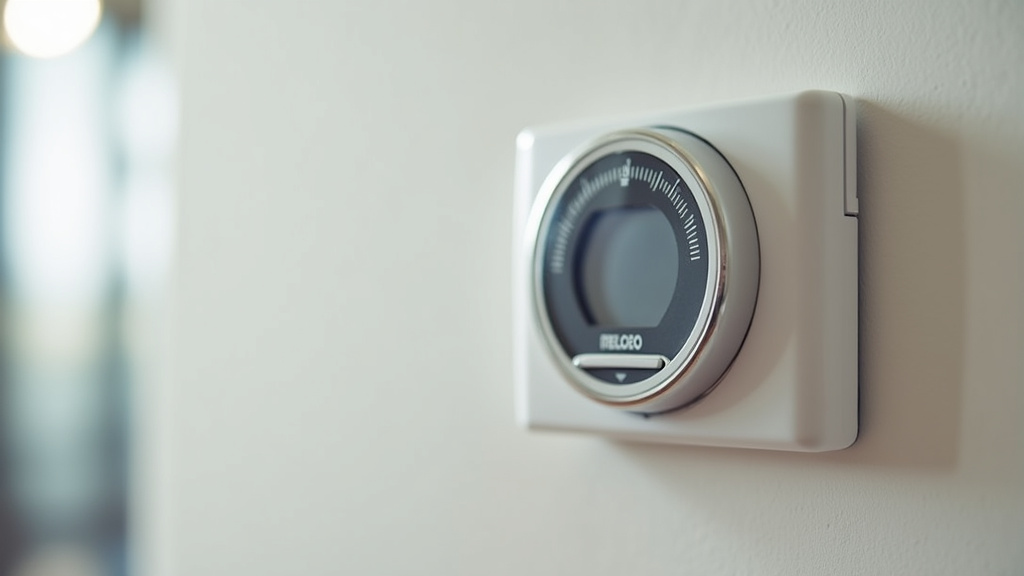
A non programmable thermostat is a basic device that allows you to manually set your home’s temperature. Unlike smart or programmable models, it does not have scheduling features. You simply turn a dial or press buttons to adjust the heat or cooling. Think of it as a simple on/off switch with temperature control. Many homes still use these straightforward devices because they are easy to operate.
These thermostats are a cost-effective choice for many homeowners. They are incredibly simple to install and use, making them a great option if you’re not tech-savvy. While they lack advanced energy-saving schedules, they still offer direct control over your comfort. We found that their simplicity is often their biggest strength for users who prefer a hands-off approach. They do not require Wi-Fi or complicated setup.
- A non programmable thermostat is a basic, manual temperature control device.
- You set the desired temperature by turning a dial or pressing buttons.
- They are very easy to use and install.
- They do not offer automatic scheduling features like smart thermostats.
- They are typically a more affordable option for home heating and cooling control.
Let’s dive into what makes these thermostats tick and if one might be the right fit for your home. We’ll cover their basic functions and how they compare to other types.
Understanding Manual Thermostats for Your Home
So, you’ve heard the term “non programmable thermostat” and you’re wondering what exactly that means for your home. Simply put, it’s the most basic type of thermostat you can get. It doesn’t do fancy schedules or connect to your phone. You just tell it what temperature you want, and it tries to make your home that temperature.
Think of it like a simple light switch, but for your heating and cooling system. You flip it on or off, and you can usually adjust a dial or press a few buttons to choose your desired warmth or coolness. Many people still use these because they’re incredibly straightforward. There’s no complex menu to navigate or Wi-Fi to worry about. Just easy temperature control.
How Does a Non Programmable Thermostat Work?
At its core, a non programmable thermostat is an automatic switch. It has a sensor that measures the current temperature in your home. When you set your desired temperature, the thermostat compares the room’s temperature to your setting. If the room is cooler than your set point (in heating mode), it signals your furnace to turn on. If it’s warmer, it signals your air conditioner to run.
Once the room reaches your set temperature, the thermostat tells your system to shut off. It then waits until the temperature drifts again before cycling your system back on. This simple on-off mechanism is what keeps your home comfortable without any user intervention, beyond setting the initial temperature. It’s a reliable, old-school method that has kept homes cozy for decades.
The Mechanical vs. Digital Distinction
You might find non programmable thermostats in two main forms: mechanical and digital. The mechanical ones often have a dial you turn and a small mercury switch or a bimetallic strip inside. These older models rely on physical components that expand or contract with temperature changes to make contact and complete a circuit, turning your HVAC system on or off.
The digital non programmable thermostats are more common now. They have an LCD screen and buttons. While they still lack scheduling, they offer a more precise temperature reading and easier adjustment. You might see numbers that clearly show the current temperature and your set point. They use electronic sensors to detect temperature changes, offering a bit more accuracy than their mechanical counterparts.
Key Features of Non Programmable Thermostats
The biggest draw of these thermostats is their simplicity of operation. You don’t need a manual to figure them out. Most have a clear display showing the current temperature and a way to adjust your desired temperature up or down. Some might have a “Heat,” “Cool,” “Off,” and “Fan” switch. That’s usually it.
Another key feature is their universal compatibility. Most non programmable thermostats will work with standard heating and cooling systems. This makes them an easy replacement if your old thermostat breaks. They don’t require special wiring or complex programming. This broad compatibility means you can often swap one out yourself without calling a professional.
Ease of Installation and Use
When we look at home upgrades, ease of installation is a big factor for many people. Non programmable thermostats excel in this area. Typically, they connect to your existing wiring with just a few screws. For most handy homeowners, replacing an old thermostat with a new non programmable one can be a DIY project that takes less than an hour. You usually just need a screwdriver and perhaps some wire strippers.
Using them is just as straightforward. There are no hidden menus or settings to get lost in. You simply adjust the temperature to your preference. If you like your home at 72 degrees Fahrenheit during the day and don’t want to think about it, you set it to 72 and forget it. This direct control appeals to a lot of users who don’t want their thermostat making decisions for them.
Cost-Effectiveness: The Budget-Friendly Choice
When it comes to your wallet, non programmable thermostats are generally the most affordable option. Their simple design means fewer components and less manufacturing cost. You can often find a basic digital model for under $50. This makes them a great choice if you’re on a tight budget or just need a reliable way to control your home’s temperature.
Their lower upfront cost extends to their running costs too. Since they don’t have advanced features like Wi-Fi connectivity or backlighting that draw power, they tend to have minimal energy consumption themselves. This means they won’t add much to your electricity bill. Plus, their straightforward operation often prevents accidental setting changes that could lead to energy waste, unlike a complicated programmable model someone might not fully understand.
When a Non Programmable Thermostat is a Good Fit
Who are these simple thermostats best for? They’re ideal for people who have consistent schedules. If you’re home most of the day, every day, and your temperature needs don’t change much, a manual thermostat works perfectly fine. You can set it and enjoy your comfortable home without needing to program anything.
They’re also perfect for individuals who find technology intimidating. If the idea of app-controlled devices and Wi-Fi connectivity makes you nervous, a non programmable thermostat is a breath of fresh air. You get reliable temperature control without any digital fuss. Many seniors or those who prefer a simple, tactile experience find these models to be the best for their needs. We found that ease of use was consistently ranked high by users who chose this type.
Understanding Potential Downsides
However, it’s important to note what you miss out on. The biggest downside is the lack of energy-saving schedules. You can’t program it to automatically lower the temperature when you’re asleep or away. This means you might be heating or cooling an empty house, which can lead to higher energy bills compared to a programmable or smart thermostat. The U.S. Department of Energy suggests that programmable thermostats can save you about 10% annually on heating and cooling costs by using setback temperatures when you’re not home (U.S. Department of Energy).
Another limitation is the absence of remote control. You can’t adjust the temperature from your phone or when you’re on vacation. If you forget to turn the system down before leaving, you’ll come home to a house that’s been running at full power all day. This lack of flexibility means you have to be physically present to make any adjustments, which isn’t ideal for busy or unpredictable lifestyles.
Comparing Non Programmable to Other Thermostats
To truly understand a non programmable thermostat, it helps to see how it stacks up against its more advanced cousins. It’s the simplest of the bunch. You have direct, manual control over the temperature. There are no schedules, no Wi-Fi, no learning capabilities.
Then you have programmable thermostats. These allow you to set different temperatures for different times of the day and days of the week. You can often set a schedule for weekdays and another for weekends. This offers better energy savings than manual thermostats if you can utilize the programming effectively. Many experts recommend using programmable thermostats for this reason.
Finally, there are smart thermostats. These connect to your home’s Wi-Fi. You can control them with your smartphone, tablet, or computer, even when you’re not home. Many smart thermostats also learn your habits and adjust the temperature automatically for optimal comfort and savings. They offer the most features and potential for energy efficiency but come with a higher price tag and a steeper learning curve.
| Feature | Non Programmable | Programmable | Smart |
|---|---|---|---|
| Ease of Use | Very Easy | Moderate | Moderate to Complex |
| Scheduling | No | Yes (pre-set times) | Yes (customizable, learns) |
| Remote Access | No | No | Yes (via app) |
| Energy Savings Potential | Low (requires manual adjustment) | Moderate | High |
| Typical Cost | $ | $$ | $$$ |
Is a Non Programmable Thermostat Right for You?
So, let’s break down if this basic thermostat is your perfect match. Consider these points:
- Your daily schedule is very consistent.
- You prefer simple, physical controls over apps.
- You’re looking for the most budget-friendly option.
- You don’t want to deal with complicated setup or learning new technology.
- You are comfortable manually adjusting the temperature when needed.
- You don’t require remote access or advanced energy-saving features.
Conclusion
You’ve learned that a non programmable thermostat is the simplest way to control your home’s temperature. It offers straightforward manual adjustments without complicated schedules or apps. We found these thermostats are a cost-effective and user-friendly choice for many homeowners, especially if you have a consistent routine or prefer not to use technology. While they lack advanced energy-saving features like programmable models, their ease of use and affordability make them a reliable option. If simplicity and direct control are your priorities, a non programmable thermostat might be the perfect fit for your home comfort needs.
Frequently Asked Questions
Can I replace my old thermostat with a non programmable one myself?
Yes, for most handy homeowners, replacing an old thermostat with a new non programmable model is a manageable DIY project. Typically, you’ll only need basic tools like a screwdriver. Just be sure to turn off the power to your HVAC system at the breaker box before starting.
Do non programmable thermostats still use a lot of electricity?
Generally, non programmable thermostats have minimal energy consumption. Because they lack features like Wi-Fi connectivity or bright backlights, they don’t draw much power. Their simple operation also helps prevent accidental energy waste by keeping settings consistent.
What if I forget to change the temperature when I leave the house?
With a non programmable thermostat, you would need to manually adjust the temperature yourself when you leave or return. Unlike programmable or smart models, it won’t automatically change settings. This means you might heat or cool an empty house if you forget to make the adjustment.
Are there different types of non programmable thermostats?
Yes, you’ll find them in two main types: mechanical and digital. Mechanical thermostats often use dials and older technology, while digital versions have an LCD screen and buttons for clearer temperature readings and easier adjustments, though both lack scheduling features.
Will a non programmable thermostat work with any heating and cooling system?
Most non programmable thermostats offer broad compatibility with standard heating and cooling systems. This makes them an easy replacement option if your current thermostat breaks. They generally don’t require special wiring or complex setup, ensuring they work with most home HVAC setups.