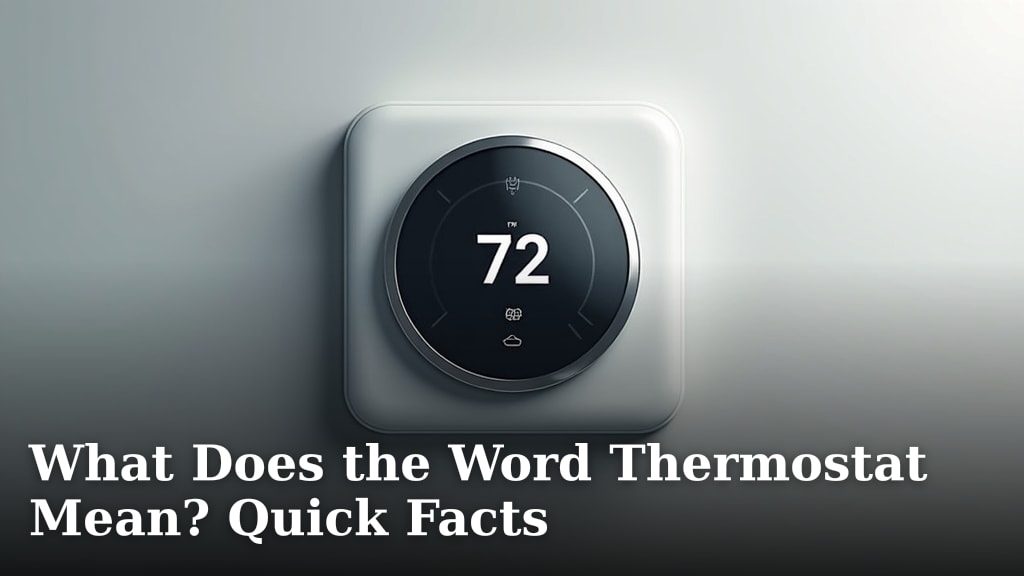
What Does the Word Thermostat Mean? Quick Facts
A thermostat is a device that automatically regulates temperature by sensing the ambient climate. It works by signaling your HVAC system to turn on or off, helping you maintain a comfortable setting in your home or office. Think of it as the brain for your heating and air conditioning.
You most commonly find a thermostat on the wall, controlling your household temperature control. Modern versions can be smart, connecting to Wi-Fi and learning your preferences. We found that its core purpose is always the same: to keep your environment from getting too hot or too cold.
- A thermostat is a device that automatically regulates temperature.
- It senses the current temperature and compares it to your desired setting.
- It then turns heating or cooling systems on or off as needed.
- Common types include manual, programmable, and smart thermostats.
- The goal is to provide comfort and save energy.
Let’s walk through exactly how this simple but essential device works and the different types you might encounter. We will cover everything from basic functions to smart features in the sections below.
Understanding the Meaning and Function of a Thermostat
A thermostat is fundamentally a temperature-sensitive switch. At its core, it’s a simple device with a big job: keeping you comfortable. We found that the word itself comes from the Greek words “thermos” (meaning heat) and “statos” (meaning standing or staying put). So, it literally means “heat-stander.” Its purpose is to make the temperature in a room or building stand still, or stay constant, at the level you choose.
This little box on your wall is more than just a dial or a screen. It’s the commander of your heating and cooling system. Without it, your furnace or air conditioner would run non-stop or not at all. That constant running would waste energy and create an uncomfortable, roller-coaster climate in your home.
The Basic Principle Behind Every Thermostat
Every thermostat, whether it’s a simple manual dial or a high-tech smart device, works on the same principle. It has two main jobs: sensing the current temperature and making a decision. It constantly asks itself one question: “Is the room too hot or too cold compared to what the homeowner set?”
When you adjust the setting on your thermostat, you’re giving it a target temperature. For example, you might set it to 68 degrees in the winter. The thermostat then uses an internal sensor to measure the room’s actual temperature. If the sensor reads 67 degrees, the thermostat signals your heater to turn on. If it reads 69 degrees, the heater stays off. This cycle repeats continuously to maintain your set point.
It’s All About the “Differential”
Professional HVAC technicians often refer to a “differential” or “swing.” This is the small range around your set temperature where the system remains off. Your thermostat might be set to 68°F, but it may not signal for heat until the temperature drops to 67°F and not signal for cooling until it rises to 69°F. We found this tiny buffer is intentional; it prevents your system from turning on and off constantly, which would waste energy and wear out equipment prematurely (Department of Energy).
How a Thermostat Actually Works: From Sensor to System
You set your desired temperature, and the thermostat takes it from there. The process involves a few key steps that happen automatically. It’s a reliable loop of measuring, comparing, and acting.
First, the temperature sensor inside the thermostat—whether a bi-metallic strip in old models or a digital thermistor in newer ones—reads the ambient air. This reading is converted into a signal. The thermostat’s control circuit then compares this signal to your set temperature. Based on this comparison, it either opens or closes an electrical circuit connected to your HVAC system.
When the circuit closes, it sends a low-voltage signal (usually 24 volts) to your furnace, air conditioner, or heat pump, telling it to turn on. When the desired temperature is reached, the thermostat opens the circuit, cutting the signal and turning the system off. It’s a straightforward conversation between two devices.
Key Components of a Standard Thermostat
- Temperature Sensor: This is the most critical part. It detects the current temperature. Modern sensors are highly accurate digital devices.
- Control Circuit: Think of this as the thermostat’s brain. It processes the sensor’s reading and decides whether to send a “start” or “stop” signal.
- User Interface: This is what you interact with. It can be a simple dial, a push-button panel, or a digital touchscreen.
- Terminal Connections: These are the screws on the back where the low-voltage wires from your HVAC system connect. Each wire (for heat, cool, fan, common) has a specific job.
Types of Thermostats for Your Home
Not all thermostats are created equal. The type you have—or choose—directly impacts your convenience and energy savings. We found the main categories differ in how they are controlled and the features they offer.
| Thermostat Type | How You Control It | Best For |
|---|---|---|
| Manual (Non-Programmable) | Adjust by hand. No memory or schedule. | Simple, low-cost needs. Basements or occasional-use rooms. |
| Programmable | Set a daily or weekly schedule in advance. | Households with regular routines. Saves energy automatically. |
| Smart (Wi-Fi Connected) | Control via smartphone app, voice, or geofencing. | Tech-savvy users wanting remote control and advanced learning features. |
A Closer Look at Programmable Thermostats
Programmable thermostats are fantastic for saving energy without sacrificing comfort. You tell it what temperature you want while you’re asleep or away, and it adjusts automatically. According to the U.S. Environmental Protection Agency’s Energy Star program, a properly used programmable thermostat can save you about 10% a year on heating and cooling. That’s real money back in your pocket.
They typically offer four main scheduling periods per day: Wake, Leave, Return, and Sleep. This means you can come home to a warm house without paying to heat it all day while you’re at work.
Common Programmable Thermostat Schedules
- Wake: Temperatures are comfortable for when you start your day.
- Leave: Temperatures are set back to save energy while the house is empty.
- Return: Temperatures return to a comfortable level for when you get home.
- Sleep: Temperatures adjust for a good night’s rest, often a bit cooler.
The Rise of the Smart Thermostat
Smart thermostats take the programmable idea and make it intelligent and connected. They don’t just follow a schedule; they can learn your habits over time. Models like the Nest Learning Thermostat or Ecobee have sensors that detect when you’re home or away, automatically adjusting to save energy. You can control them from your phone, even when you’re miles away.
Many experts say the biggest benefit is learning algorithms and geofencing. Geofencing uses your phone’s location to know when you’ve left the house, automatically setting the thermostat to “Away” mode. It’s a set-it-and-forget-it level of convenience that aligns perfectly with busy modern life.
What Does a Thermostat Look For? Signs It’s Working
You might wonder, “Is my thermostat actually doing anything?” Here are simple signs it’s communicating properly with your HVAC system. If the display is on and your system turns on and off to maintain a steady temperature, it’s working.
If your system runs constantly, doesn’t turn on at all, or the temperature on the wall unit doesn’t match what you feel in the room, there could be an issue. Sometimes it’s a simple dead battery in the thermostat. Other times, it might be a wiring issue or the thermostat is in the wrong location.
Best Location for Your Thermostat
Placement matters. Your thermostat should be on an interior wall, away from direct sunlight, drafts from windows or doors, and heat sources like vents or appliances. The U.S. Department of Energy notes that poor placement is a common cause of inaccurate readings and inefficient operation. It needs to sense the temperature of the room’s main air, not a local hot or cold spot.
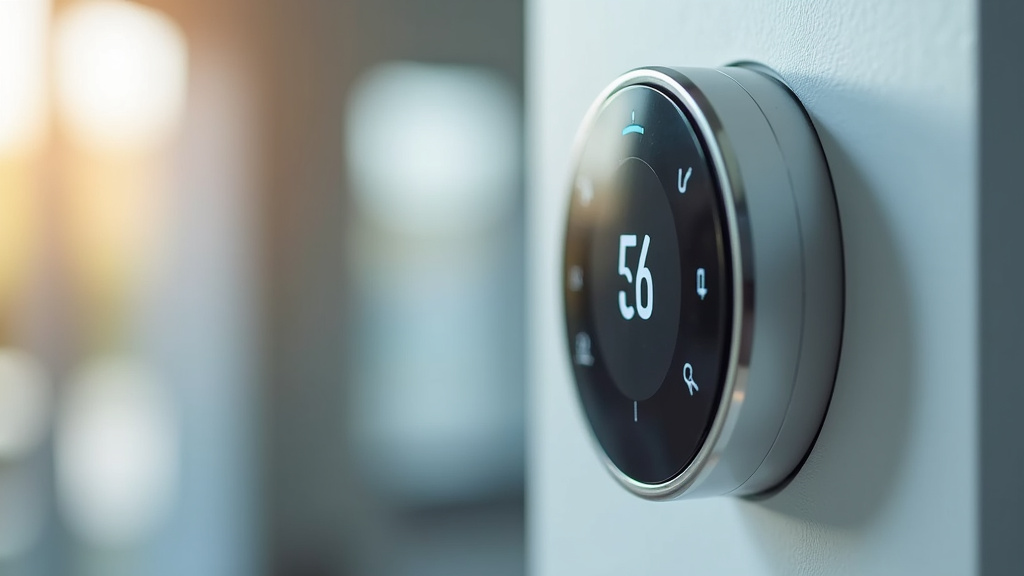
Choosing the Right Thermostat: A Practical Checklist
Upgrading your thermostat is one of the easiest energy-saving improvements you can make. Use this checklist to guide your choice.
- ✅ Check your current system’s voltage and wire configuration. Not all smart thermostats work with all HVAC systems.
- ✅ Decide if you want scheduling (programmable) or remote access and learning (smart).
- ✅ Consider important features like geofencing, room sensors for temperature balancing, and voice assistant compatibility.
- ✅ Look for energy-saving certifications like the Energy Star label, which indicates efficiency standards.
- ✅ Read the warranty and ensure the user interface (app or screen) is intuitive for you.
- ✅ Factor in potential installation complexity. Some models may require a C-wire for power, or professional installation.
Maintaining Your Thermostat for Longevity
Thermostats are durable, but they need basic care to function accurately. The most common issue we find is simply a dead battery. For models that use batteries, replace them once a year, perhaps when you change your smoke detector batteries.
Dust and dirt can also affect performance. Gently clean the unit’s exterior and the area around it with a soft, dry cloth. Never use water or harsh cleaners. If you have a very old mechanical thermostat, keeping the contacts clean can ensure a good connection. For any persistent issues, it’s best to consult a qualified HVAC technician rather than attempting internal repairs.
Conclusion
You now know that a thermostat is far more than a simple dial on your wall. It’s a smart switch that senses your home’s temperature and commands your HVAC system to keep you comfortable. From basic manual models to intelligent smart devices, the core purpose remains to maintain your desired climate and save energy. We covered how it works, the different types available, and what to look for when choosing or maintaining one. Your next step is simple: take a look at your current thermostat. If it’s old or manual, consider if an upgrade to a programmable or smart model could boost your comfort and lower your bills.
Frequently Asked Questions
How much money can a new thermostat really save me?
A programmable thermostat can save about 10% per year on heating and cooling, according to the U.S. EPA. The actual amount depends on your climate, home insulation, and how diligently you use the schedule. Smart thermostats can offer additional savings by learning your habits and adjusting automatically.
Is it hard to install a new thermostat myself?
Many DIY-inclined homeowners can install a basic thermostat, especially if it’s a like-for-like replacement. The process involves turning off power, labeling wires, and connecting them to the new unit. However, if you have a complex system, a C-wire requirement, or feel unsure, hiring a professional is the safest choice.
What is the “C-wire” everyone talks about?
The C-wire, or common wire, provides continuous 24-volt power to a smart thermostat. Many older thermostat systems lack this wire. You can check for it behind your current thermostat or consult your HVAC system’s manual. Some smart models include adapters or battery options if a C-wire isn’t present.
Can a smart thermostat work with my old furnace or air conditioner?
Most smart thermostats are compatible with standard 24-volt low-voltage systems. The key is to check your existing wiring. You’ll typically need at least four wires (R, G, Y, W) for basic heating and cooling. Compatibility information is always listed on the manufacturer’s website.
Why does my thermostat screen go blank sometimes?
A blank screen is often caused by dead batteries, so that’s the first thing to check. If it’s a wired, low-voltage model, it could indicate a tripped circuit breaker, a power outage to the HVAC system, or a problem with the furnace door switch. It’s a common sign the thermostat isn’t getting power.