What Is Remote Temperature Control? What to Know
Understanding Remote Temperature Control and How It Works
You might have heard the term and wondered, what is it exactly? Remote temperature control lets you adjust the temperature in your home, fridge, or other space from a different location using a smartphone, tablet, or computer. Think of it as having a universal remote for your thermostat or cooling unit.
This system has a few key parts. First, a smart device or sensor is placed where you want to monitor the temperature. This device sends data to a central hub or directly to the cloud. Then, an app on your phone lets you see that temperature and make changes.
The change you make in the app sends a signal back to the device. That device can then turn on your heater, air conditioner, or adjust its own settings. It’s a simple loop of monitoring and control, all from your pocket. See our guide to smart thermostat controls for a full breakdown of its capabilities.
Key Components in a Remote Control System
These systems aren’t magic. They rely on a few standard pieces of technology working together.
- Wi-Fi or Bluetooth Connectivity: This is the wireless link that carries information between your devices.
- Temperature Sensor: A small probe that accurately reads the current temperature.
- Smart Thermostat or Controller: The actual device that gets the signal and physically turns your HVAC system on or off.
- Mobile App or Web Portal: Your control center for viewing data and sending commands.
Common Types and Real-World Uses
Remote temperature control isn’t one-size-fits-all. It’s used in several familiar ways around the home and beyond. You’ll find it in two main categories: for your entire house and for specific items.
Whole-Home Climate Management
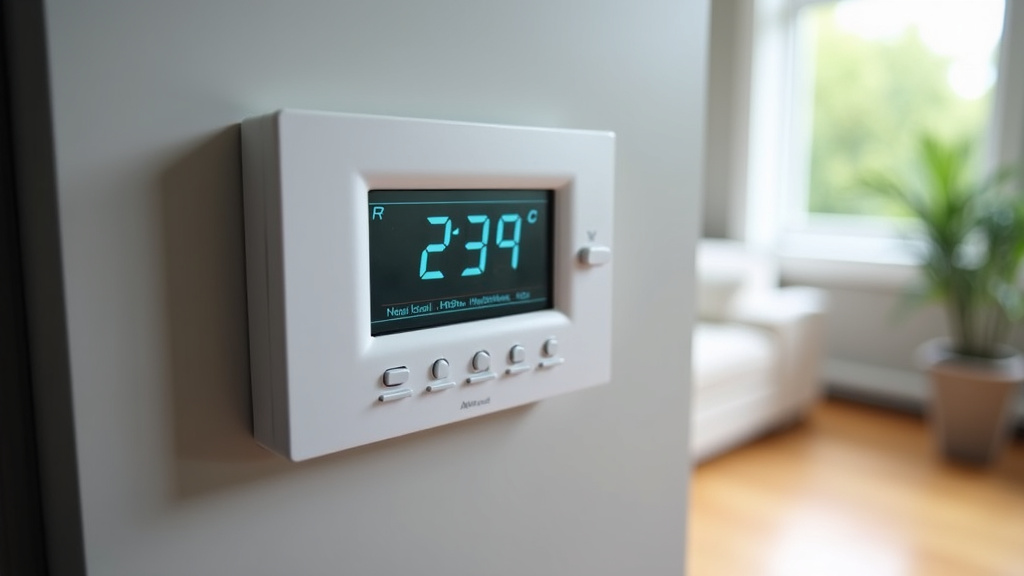
This is the most common use. A smart thermostat replaces your old wall unit. Brands like Nest or Ecobee are popular choices. They let you set schedules, adjust the heat from your couch, and even learn your preferences over time.
Many people use this to save energy. The U.S. Department of Energy suggests you can save up to 10% on heating and cooling costs by turning your thermostat back 7°-10°F for 8 hours a day. Remote control makes achieving this schedule simple.
Appliance and Space-Specific Control
Here’s where it gets interesting. You can also control temperature in a much more focused way.
- Smart Plugs for Space Heaters or Fans: A basic smart plug can turn a standard appliance on or off from your phone.
- Wine or Beverage Coolers: Premium models now have app control to perfect the chill for your drinks.
- Greenhouses or Reptile Tanks: Precise, remote monitoring and adjustment are critical for sensitive environments.
Major Benefits for Everyday Homeowners
Why would someone want this? The advantages go beyond just convenience. They touch on comfort, savings, and safety.
Convenience and Peace of Mind
Imagine you’re already in bed and realize you left the downstairs thermostat set too high. With remote control, you fix it with a few taps without getting up. It’s a small luxury that removes minor daily annoyances. You also gain peace of mind. You can check on a vacation home or an elderly relative’s house temperature to make sure it’s safe.
Energy Savings and Efficiency
The real financial benefit comes from efficiency. Smart thermostats provide detailed energy reports. We found these reports often show users exactly where they’re using the most power. You can set the system to automatically reduce heating or cooling when you’re away, a feature called geofencing. This prevents heating an empty house.
According to the EPA’s ENERGY STAR program, a properly used smart thermostat can save you about 8% on your annual heating and cooling bills. That adds up over time.
What to Consider Before You Buy
It’s tempting to jump in, but a little planning helps. You should think about compatibility, cost, and your own tech comfort level.
Compatibility Is Your First Check
Not every system works with every home. This is the most important step. You need to check your existing setup. Do you have a C-wire (common wire) for your thermostat? Many smart models require it for constant power. If you don’t, you might need an electrician to install one.
Also, check if the system works with your specific brand of furnace or air conditioner. A quick online search for your model number plus “smart thermostat compatibility” can save you a headache.
Initial Cost vs. Long-Term Savings
There is an upfront cost. Smart thermostats range from $100 to $250 or more. Basic smart plugs for appliances are cheaper, often under $30. You should weigh this against potential energy savings. The payback period depends on your energy costs and habits. For some, it’s under two years. For others, it’s more about comfort than fast payback.
A Quick Cost-Benefit Snapshot
| System Type | Average Upfront Cost | Potential Primary Benefit |
|---|---|---|
| Smart Thermostat | $125 – $250 | Whole-home energy savings |
| Smart Plug + Appliance | $15 – $40 | Adding remote control to existing items |
| Specialized Controller (e.g., for a greenhouse) | $50 – $200 | Precise, critical environment control |
Security and Privacy Basics
Any device connected to the internet brings up security questions. This is a valid concern. Most reputable brands invest heavily in security to protect their users. They use encryption for data sent between your app and the device.
You play a role, too. Always use a strong, unique password for your account. Enable two-factor authentication if the app offers it. Keep the device’s firmware updated through the app. These simple steps significantly reduce risk.
The EPA notes that while data is collected to improve the system, you should always review a company’s privacy policy. Understand what information is stored and how it is used.
Is It Worth It for You?
Remote temperature control is most helpful for certain people. It’s great for busy families, frequent travelers, or anyone who values precise comfort. If you have a regular schedule and an old thermostat, the upgrade is almost always worthwhile.
If you live in a small apartment with baseboard heating, the options are more limited but still exist. The core value is giving you more information and control with less effort.
Your Simple Buying Checklist
Ready to explore your options? Use this checklist to guide your decision. It covers the most important points.
- Check System Compatibility: Verify your HVAC wiring and model before looking at brands.
- Define Your Main Goal: Are you focused on saving money, adding convenience, or controlling a specific item?
- Assess Your Wi-Fi Strength: Ensure a stable internet connection where the device will be installed.
- Look for Utility Rebates: Many energy companies offer discounts on ENERGY STAR certified smart thermostats.
- Read Recent User Reviews: See what people say about the app experience and reliability after a few months.
Conclusion
Remote temperature control gives you a powerful combination of convenience, comfort, and potential savings. You’ve seen how it works, from whole-home smart thermostats to simple smart plugs for a space heater. The real benefits are clear: you can adjust your home’s climate from anywhere, learn about your energy use, and add a layer of safety.
The most important step is to check what works with your existing setup. Compatibility is everything. Before you browse brands, verify your HVAC wiring or the appliance you want to control. Start with that simple check, and you’ll find the right system that truly fits your home.
Frequently Asked Questions
Will a smart thermostat really lower my energy bill?
Yes, it can, but your habits play a big role. Research from the EPA’s ENERGY STAR program shows potential savings of about 8% on heating and cooling costs. The real savings come from using features like automatic schedules and geofencing to avoid heating or cooling an empty house consistently.
What is a C-wire, and do I need one for a smart thermostat?
A C-wire (common wire) provides constant power to a smart thermostat. Many models require it to operate fully without draining batteries. You can usually check for an extra, unused wire in your thermostat’s wall plate. If you don’t have one, you may need an electrician to install it.
Are these systems secure from hackers?
Reputable companies use strong encryption to protect data between your app and the device. Your responsibility is to use a strong, unique password and enable two-factor authentication if offered. Always keep the device’s firmware updated through its app to patch any security flaws.
Can I control a regular window air conditioner with my phone?
You can add basic control using a smart plug or an IR (infrared) blaster, but functionality is limited. You could turn the unit on or off remotely, but you may not be able to adjust the specific temperature setting on the AC unit itself. Check the product details carefully for compatibility.
My Wi-Fi is in a different room. Will the device still work?
Most smart thermostats and controllers need a strong, stable Wi-Fi signal where they are installed. If the signal is weak, you may experience delayed or unreliable control. You might need to use a Wi-Fi extender or choose a model with a stronger internal antenna to solve this.